Book Break: The Amazing Adventures of Kavalier and Clay

A couple years back, I recommended to my boss the book Carter Beats the Devil (which may be magically transformed into a movie at some point in the future), and she loaned me, in return, her copy of The Amazing Adventures of Kavalier and Clay. I told her at the time that it would take me a long while to get to it. I was right; I just finished it today. It’s the story of two Jewish cousins – one escaping Czechoslovakia ahead of his family; the other escaping a crippled and fatherless existence in Brooklyn – who break into the fledgling comic book business in the run-up to World War II. As soon as I cracked it, I could see the parallels with Carter. I knew I was going to love it.

As it turns out, I loved most of it. About 85 percent of the book was engaging, compelling, genius fiction. The other 15 percent left me scratching my head, picking through my own thoughts and prejudices (a good thing), and coming away with the conclusion that certain parts just didn’t add up (not so good).

Two aspects of the story stuck out like sore thumbs to me. First, one of the themes of the story is the conflict within one the characters concerning the possibility that he may be homosexual. The possibility is hinted at early in the book, and is actually presented in an interesting and thoughtful way, subtly showing his inner conflict, particularly since, at that time, a young gay man might not only be harassed and bullied, but arrested or publicly interrogated and humiliated by government officials. Toward the end of the book, we see this character realize that he has never fully dealt with this conflict, but has instead spent his life pretending that there is nothing to see here. Regardless of your feelings and beliefs about homosexuality, the unresolved turmoil of a lifetime spent going through the motions and consciously not dealing with the central problem of one’s existence is tragic, and overall, this thread ties in with themes of escape and rescue and hope that pervade the book.

However, in the middle of the book, a fair amount of time is spent on a key relationship with another gay character. Parts of this were well written, even if, as another (surprisingly sympathetic) character suggests near the end of the book, “I don’t cotton very well to these proclivities” – but given the nature of this particular protagonist and his internal conflict, I was never convinced he would have been attracted to such a handsome dingbat. Later, details and situations emerge that were particularly strange (to me, at least) and unsavory (for the protagonist). It seemed to me that this section was written with less context and introspection than the rest of the book (though I supposed it is possible that since I haven’t lived through it, I simply didn’t get it). I never grasped the character’s motivations; as a result, these few sentences and paragraphs struck me as the author attempting to illustrate “gayness” – conveying “this is gay and strange,” “this is gay and funny,” “this is gay and tragic,” rather than simply this is strange, funny, or tragic. For me, this section backfired: what I’m sure was meant to make us see this character in a sympathetic light seemed stereotypical and made me instead wonder, “What the heck is he doing? He should trust his gut – gay or not, he doesn’t belong here!”

My other objection was in the portrayal of the other protagonist’s sexuality, which was decidedly hetero. This individual is shown as a deeply emotional young man who (to our knowledge) has only loved one woman in his entire life. He is also shown, early in the book, taste-testing American cursing and slang. There is strong language scattered in bits and pieces throughout the book, including, on occasion, by this particular character – and in most cases, it fits the time, place, and situation. I was disturbed, however, to notice that, when this emotional young man who doesn’t quite understand the lingo thinks of his beloved, he does so in terms befitting a sailor. Both he, and the narrative, use abruptly vulgar terminology for anatomy and sexuality which, between two tender lovers, seemed to warrant more gentle and affectionate treatment.

I am not reflexively prudish about cursing or sexuality in books, and I have used my share of foul language – in fact, in college, I may have used up my share. But I remember, in a college psychology class, reading a study that purportedly showed that use of obscenity for emphasis when making an argument was ineffective. I’m not sure I disagree with the conclusion, but I recall perceiving a flaw in the experiment – namely, that the words chosen for “emphasis” were words and phrases that I rarely if ever heard an adult use, even in anger. They were over-the-top, the kind of thing that would shock a person to hear; it didn’t seem realistic that people would use those words and phrases in any reasonable context. Similar to the objections above, the instances in which the author chose to use obscenity to describe objects of affection seemed to me like overly intentional doses of “realism” – grit, in situations in which grit could only cause discomfort.

I spend time laying out these objections because these areas stuck out to me as inconsistent and bothersome additions to an otherwise cohesive and beautiful book. I laughed out loud at times, choked up at others, and found much inspiration for my own writing. I do not recommend it without reservation, but if my PG-descriptions of my R-rated objections above do not scare you off, I do recommend it.


Trevor Contemplates the Nature of Fear

I brought Trevor in on the train this morning. As we were waiting at the Elk River Station, I related the story of Gabe, standing with his back to the tracks on a narrow train platform in Connecticut, when a freight train blasted through. Somehow, immersed in the newness of it all, Gabe hadn’t heard it coming. “It scared the bejeebers out of him!” I laughed.

Fifteen minutes later, safely aboard the Northstar, Trevor asks, “Dad, is ‘bejeebers’ just a made-up word, or something real?”

He told me later that he couldn’t imagine what “bejeebers” would be if it was something real that had come from Gabe.

The Second Third, Week 37: Can-Do Attitude

“I am always doing that which I can not do, in order that I may learn how to do it.”
– Pablo Picasso

Jodi has commented more than once that she wishes she were more like my sister when it comes to trying new things. “Jill can do anything,” my bride tells a friend. “She painted that mural in Emma’s room, and bought a hanging lamp, cut the cord off it, and turned it into a ceiling light. She’s like, ‘I’ve never done that before; of course I can do it!'”

Jill gets that from my dad, a mostly self-taught machinist, mechanic, and builder of … well, pretty much anything, and my mom, who has been known to take a raised eyebrow or a snicker of unbelief as reason enough to turn a cartwheel in the living room, just to show she still can. (That was years ago, but please, don’t tempt her.)

I got just enough of the can-do attitude to believe, just after we were married, I could change the water pump in my car with a socket set, a couple screw drivers and wrenches, and a Xeroxed copy of the Chilton’s instructions in the open parking lot of our first apartment in Sioux Falls. When the landlord came out halfway through the procedure to point out that Jodi’s lease forbade auto repairs on the premises, I apologized, but suggested it might be best to let me finish and clean up the mess than to snarl things any further. I’ve retrofitted a flush-mount ceiling fan to hang on the level from a sloped cathedral ceiling. I drew the picture my sister projected and painted on Emma’s wall. I did these things because somebody had to do them, and I was available. But I don’t necessarily go out of my way to look for new challenges of this sort.

So this past week, Jodi and I looked at the calendar and realized that Gabe was registered for a mid-day soccer camp, and both of us had to work. We suggested he ride his bike a mile or so up the road to the middle school on quiet residential streets and paved bike paths, for the most part. We also suggested that Brendan accompany him on his bike, with his cell phone – at least on the first trip – to be sure Gabe didn’t have any problems.

I was informed that Bren hasn’t really been riding his new bike much since last summer, mostly because he didn’t “get” the gears: he couldn’t find one he liked, and whenever he shifted to another, the chain made annoying noises. Gabe’s problem was more practical: he wasn’t sure how he could ride a bike and carry his soccer ball at the same time.

I was exasperated. When I was their age (and younger!), I stripped all the “extras” off my BMX – chain guard, reflectors, handbrake, etc. – because I wanted the lightest functional bike possible, and I rode my bike to the lake near our house with a lifejacket, tackle box, fishing pole, and bucket for the catch, without issue or explanation. I explained to Brendan that he should take a minute to look at his sprockets as he shifted gears, and when his chain was making noise, so he could see what was going on – that most of the time, you just need to back the shifting mechanism off slightly once you changed gears to make the noise stop. I suggested to Gabe that there was a hands-free way to carry stuff to school that would work just as well on a bike as it does on foot: his backpack. I assured them (somewhat sharply) that they could handle this little adventure – and might even enjoy it.

Only later did it occur to me why I was that way as a kid (and as a newlywed). My dad did all his repairs – auto repairs, home repairs, you name it – himself, and required me to be with him, come sunshine, rain, or snow. I didn’t have “the knack,” but I learned to look more closely at how things worked, and learned which tools did what, and where to find them. After hours in the shop, working on my bike was a piece of cake.

And Mom and Dad set clear boundaries and rules, then gave me the freedom to roam the neighborhood, the woods, and even the docks and beaches, playing, exploring, fishing, and even hunting. If I wanted to take advantage of this freedom (and make the most of my time) I had to figure what I needed and how to transport it. We built forts in the woods, repaired bikes on the road, camped on islands in the middle of the lake, without anyone carting me around.

We do live in a different place and time, but I have consistently opted to keep the kids close to home rather than send them out on their own, and I avoid DIY projects in order to protect “family time.” As a result, my kids are well-mannered, bright, obedient … and perhaps overly dependent. In my Second Third, I need to recognize that working together with my kids, or even letting the kids do thing together on their own, is family time, too. I need to do what my folks did: create opportunities for my kids to do, to learn, and even to make mistakes – so when they are my age, whatever challenge they face, they’ll echo their Aunt Jill: “Huh. I’ve never done that. Of course I can!”

Brewing Sustenance: Beer and Sourdough

“Bread is the staff of life, but beer is life itself.” – Anonymous

I’m in the process of starting two new hobbies, and as a result, a new periodic series of posts for this blog. Some years ago, after falling in love with a world’s worth of good beers, I tried my hand at home-brewing. It was an ill-fated attempt that never produced so much as a bubble. Later, my dad tried his hand it; as I recall, his wort never quit bubbling, until finally he bottled a brew that tasted a bit like cider vinegar (the good bottles) or worse (the bad ones).

At that point, thanks to a growing variety of craft and micro brews and the increasing ease of purchasing good beer at any reasonably well supplied liquor store, I lost most of my interest in DIY beer. In the intervening years, however, I’ve had the good fortune to encounter a couple really skilled and experienced home-brewers whose beers kept the dream alive, until at last a friend here in Minnesota, named Mike, caught wind of my interest and dusted off his brewing equipment to produce (with my help, in his kitchen and basement) a summertime wheat brew. Unfortunately, we couldn’t connect on bottling, so the task fell to him, in a rush, so the flavor varied from quite good to somewhat pungent and yeasty from one bottle to the next. Still, it was an enormous step forward.

Since then, another friend, Butch, who has at least two avid homebrewers as neighbors, has taken up brewing. I had the pleasure of helping with his first batch over Father’s Day weekend, an early Autumn Amber we brewed in his garage over a propane burner for a turkey fryer, as seems to be the standard approach now.

Last night, his bride handed me a plain brown bottle from the fridge. I poured a beautiful pint, roughly the reddish-brown color of Bass Ale, with a finger’s worth of tight, pale foam at the top. The flavor was refreshing and clean, like a somewhat lighter and fruitier Newcastle. I loved it. Thoroughly.

Butch has two more batches as various stages, and this weekend, we will move them along and start the next one. I’ve nearly acquired all the equipment I need to brew my own (delayed somewhat by the purchase of a beautiful little Browning Buck Mark .22), and this fall, I will join the fray. I plan to chronicle those adventures here, as well as…SOURDOUGH!

I love sourdough bread, and actually enjoy cooking and baking when I have time. So when my dad decided he wanted someone in the family to master sourdough, not only did he sense my natural weakness in this regard, but A) he gave me two books, one with countless wonderful stories and recipes for breads, flapjacks, waffles, and doughnuts, and the other, an account of a man’s quest to travel the globe looking for ancient oven residues that would reveal sourdough recipes of the ancients; and b) he drew the neat parallel in my mind between brewing beer and “brewing” bread. (He also through making cheese into the mix, saying, “It’s all fermentation” – but I’m not quite ready to make that leap yet. Plus we can’t keep a cow or goat in town.)

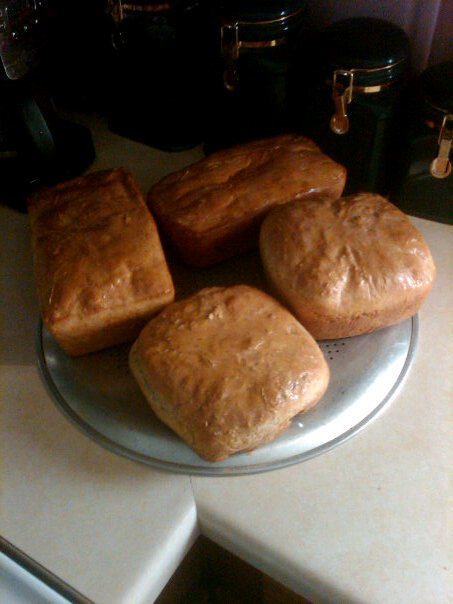
He played his cards well:

My first batch of starter, created from scratch, looked wetter and slimier than pictured above, and smelled like B.O. This one (my second batch) looked like pancake batter, bubbled almost imperceptibly slowly, and smells slightly yeasty and sour. It worked to create the deliciously sweet and hearty bread above (made with wheat germ, butter, and honey, among other things), but just barely. I’m hoping to coax this started into a higher gear, or I’ll have to start again and try to muster a more vigorous starter. But the entire family agrees: the result of my first sourdough experiment was a resounding success. With a little luck and persistence, hopefully I’ll be posting regular notes on the strange alchemy of brewing sustenance.

The Adjustment Bureau

A young, popular New York City politician suffers an unexpected electoral defeat. Suddenly he finds himself face-to-face with the girl of his dreams – a strange woman he’s never met before – in an unlikely place. Their time is short, the attraction is palpable enough for a sudden, passionate kiss, interrupted by campaign staff. She exits quickly. He has only her first name and these few moments. He delivers the speech of a lifetime, and from the jaws of defeat, snatches superstardom and frontrunner status for the next open Senate seat in New York state.

In a city as vast as this, he could never find this beautiful stranger using only her first name – but chance throws them together on a city bus, and it’s clear this is something special. Too special, in fact. He was not supposed to see her again. A group of grim, dark-suited G-men snatch him from his workplace to inform him: they are with the Adjustment Bureau, and this love affair not in The Plan. Whose plan? The Chairman’s – but you know him by many names.

What follows is a fast-paced, but coherent sci-fi romance that turned out to be the perfect mix for my bride and I – with Matt Damon doing a low-key Bourne, trying to outsmart and outpace adversaries who are nearly (but not quite!) omnipotent and omnipresent, and who are bent on keeping him from what he feels sure is true love. More than once he is ripped abruptly from Emily Blunt’s life, re-finds her, and works to regain her trust, unable to tell her what’s really going on.

It’s a solid, entertaining movie, with some language and sexuality (including two instances of a word neither Jodi or I thought was permitted in PG-13 films). And it’s thought-provoking after the fact: at one point, Damon’s character asks a more sympathetic “adjuster” if they are angels. This is not an idle observation, since the underlying problem in the movie is the problem of free will versus predestination. The film proposes a world in which beings who are less limited and more powerful than humans direct the world according to a grand scheme they themselves do not entirely comprehend. From what little I’ve read, this is in close keeping with Catholic traditions and teachings about angels – except that in the film, the adjusters suggest that they function to override human free will, which, unfettered, produced the Dark Ages and the World Wars, but with their guidance (i.e., free will only with regard to small, day-to-day choices), yields peace, happiness, and productivity. (Hmm…that sounds familiar.)

I don’t believe angels, according to Catholic teachings and belief, have the option of taking free will from us. They operate more subtly and keep the world operating according to plan…but we still choose. We make our beds, and we lie in them.

In the film, the very aggressiveness and implacability of the adjusters seem to increase our hero’s resolve and drive him to his climactic decision and the film’s resolution. It’s almost as if the adjusters themselves are off-plan…and as if that, in fact, is part of the plan.