Blogger’s Note: This was my short final paper for the third semester of the Catechetical Institute, “The Moral Life: Fulfillment in Beatitude.”
The third pillar of the Catechism of the Catholic Church (CCC), Life In Christ, pertains to the moral life, as summarized in the Ten Commandments and perfected in the Beatitudes (CCC 1965 and following). This initial point is not a small one: Many of us grow up with the commandments as the foundation for our moral life and do not mature past that point. I have seen two impacts of this in my own life. The first is a simplistic notion of sin and my own so-called goodness (“Well, I haven’t killed anyone…”). The second is a legalistic approach to practicing Catholicism, as though if I just learn the rules well enough and follow them closely enough, I can get to heaven.
But the further one reads beyond those first stone tablets, the more rules one finds, and it seems impossible to achieve holiness on our own steam. By contrast, in the Sermon on the Mount, Jesus gives us a positive (both in the emotional and legal sense) restatement of God’s laws, which both challenge and inspire us to do good instead of simply avoid evil. God’s beatitude—His kingdom, His vision, His joy and His rest (CCC 1720)—gives each of us and the Church as a whole our purpose (CCC 1719), and “confronts us with decisive moral choices”:
It invites us to purify our hearts of bad instincts and to seek the love of God above all else. It teaches us that true happiness is not found in riches or well-being, in human fame or power, or in any human achievement…but in God alone, the source of every good and all love (CCC 1723).
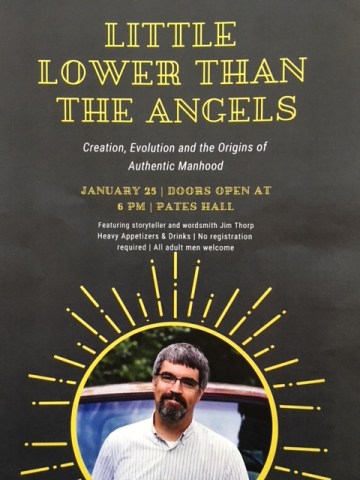 Late last month I was invited to speak to the Men’s Club at