Book Break: Lord of the World

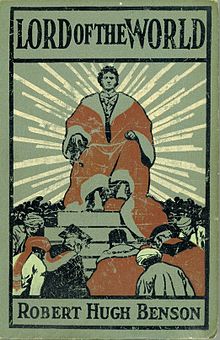
This past spring I ran across an Aleteia blog post relaying that both our current pontiff, Pope Francis, and our Pope Emeritus, Benedict XVI, have recommended the same novel to the Catholic reading public. The book–Robert Hugh Benson’s Lord of the World–is a dystopian novel about the coming of the Antichrist and the end of the world. So I bought a cheap copy for Kindle and have since devoured it. I could not put it down.

Monsignor Benson was the son of the Anglican Archbishop of Canterbury who converted to Catholicism and was ordained a priest. Though he and his work are not as well known today, he was praised in his time by great Catholic writers like Hilaire Belloc, and today by the likes of Joseph Pearce. Pearce has this to say about Lord of the World:

The world depicted in Lord of the World is one where creeping secularism and Godless humanism have triumphed over religion and traditional morality. It is a world where philosophical relativism has triumphed over objectivity; a world where, in the name of tolerance, religious doctrine is not tolerated. It is a world where euthanasia is practiced widely and religion hardly practiced at all. The lord of this nightmare world is a benign-looking politician intent on power in the name of “peace,” and intent on the destruction of religion in the name of “truth.” In such a world, only a small and shrinking Church stands resolutely against the demonic “Lord of the World.”

The novel was written in 1907, but from the world it creates, I would have guessed it had been published after one or both of the World Wars. It does feel prophetic, though I’ve ceased to be surprised by this, given the number of literary classics I’ve read in recent years that seem as though they fit our times. But Benson’s book is short, gripping, dark, terrifying at times–and beautifully represents the challenges of living a Catholic faith in a world with little use for it.

That said, it is a very Catholic book and may not be enjoyed as much by non-Catholics (unless, God willing, they have a heart very much open to learning about the faith). The cheap download for Kindle have numerous typos, but Ave Maria Press has a new edition out for those who prefer print anyway. I recommend it wholeheartedly.

We Are a Pilgrim People

“I’ll be home for Christmas, if only in my dreams.”
 
We are on the home stretch: a week out from the blessed Feast of the Nativity, Christmas, when we celebrate the birth of our Savior, Jesus Christ. Many of us, however, feel as though Christmas has been upon us for weeks now, an immense burden of gifts, lights, music, and cheer under which we labor to breathe—like a lone elf struggling to load the loot of the world into a glossy red sleigh.
 
The first Christmas was uncomfortable for a different set of reasons. In the days prior, a newly-married couple traveled from Nazareth to Bethlehem with a few essentials and a donkey. They traveled not by choice, but by order of the emperor in Rome. They arrived not to familiar faces, food, and comfort, but to a town crowded with distant kin and strangers, and the crudest of accommodations: a dugout-stable-turned-makeshift-nursery where the woman would give birth to a son.

It turned into celebration of sorts, I suppose, as angels summoned shepherds from the hills to the town to greet the newborn as they were, dirt-poor and smelling of sheep. A star, too, beckoned Magi from the East, strange and majestic, in rich robes and bearing gifts too generous for the circumstances. (I wonder if Joseph might have gripped his staff a little tighter, wondering how he, his wife, and son would make it back across the dangerous country alive while carrying gold, frankincense, and myrrh.)
 
Imagine a Christmas celebration in which only your third and fourth cousins showed up, along with the local indigent population and three fabulously wealthy foreigners—and then you had a baby the basement. Perhaps the stresses of this Christmas are more manageable from this perspective.

Mary and Joseph were displaced—from Nazareth to Bethlehem for the census; from Bethlehem to Jerusalem for the presentation of Jesus at the Temple; and in exile to Egypt, to protect their son from the murderous intent of Herod. Even as a baby, “the Son of Man has nowhere to rest his head” (Matthew 8:20).
 
In LIFT this month, we are completing our study of the Mass. As an introduction to the adult and teen lesson, we are watching a short video from elementsofthecatholicmass.com on the role of parishioners in the Mass. As the video explains, the word parishioner comes from the Greek work paraoikos, meaning pilgrim—it’s the same Greek word that gives us the English word pariah, which means outcast.
 
We don’t belong here. We, like the Holy Family, are a pilgrim people, en route to our true home with God in heaven. The Church is the ship that carries us: the ark which preserves God’s people from the storms and waves that batter and drown the rest of the world.* Let us take refuge here from the maelstrom—the dizzying spin the world has put on Christmas—and draw near, instead, to Mary, Joseph, and the newborn king of kings.
 
* * * * *
*In fact, the area of the church worship space where we sit, which we commonly call the sanctuary, is technically called the nave—which comes from the Latin word for ship.

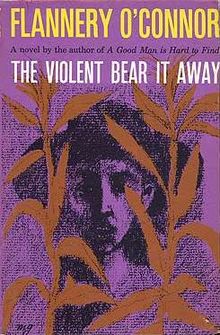
O’Connor, or Three Things to Love About The Violent Bear It Away

Blogger’s Note: Several years ago, I agreed to my friend Jacqui’s challenge to read 15 Classics in 15 Weeks. Though 15 weeks is long past, this, at last, is 15 of 15!

* * * * *
“From the days of John the Baptist until now, the kingdom of heaven suffereth violence, and the violent bear it away.” 
— Matthew 11:12 (Douay-Rheims Bible); epigraph of Flannery O’Connor’s The Violent Bear It Away

I am somewhat embarrassed to say that this was my first venture into Flannery O’Connor’s fiction, and what an introduction. It is a dark, hard, unflinching work, awful and mesmerizing, like a wreck along the highway–and yet strangely hopeful even as it descends. 

The book tells the story of Francis Marion Tarwater, an orphan boy in the mid-20th century deep South, raised with backwoods, biblical faith by his great uncle who believes himself to be a prophet and the boy to be his successor. When the uncle dies (at the very beginning of the story, so not a spoiler), the boy begins a very real spiritual struggle to discover the truth of this calling and the fate of his soul. The book builds a sense of dread even as the reader clings to threads of hopefulness, and erupts in violence both in present tense and in flashbacks–calling to mind a number of interpretations for the title and scripture verse it references.

I hesitate to say much more, for two reasons: first, this is a novel to be experienced, not spoiled or “set up,” and second, I honestly am not entirely sure what to make of it. I decided to wait a day or so before writing Three Things to Love, in order to reflect on the book–and I purposely didn’t read any commentaries. This morning, however, I read a couple of reflections on it by other people, and it appears I am not alone. O’Connor reportedly agonized over it, and readers for years have struggled with its deeper meanings and implications. On the surface, it is about the persistent pull on our hearts of both God and the world, and each person’s struggle to find freedom: will they take up the Lord’s yoke and find that it is light, or cast off the shackles of belief and live this life, for this world? It can be read (and enjoyed, after a fashion) at this level, but I am convinced there is deeper meaning here and will read it again someday.

So with that preamble, Three Things to Love about The Violent Bear It Away:
  • The Descriptions. Unlike several of the other books I read for this challenge (Tolstoy, Dostoevsky, Melville), this is a short book but still ripe with detail and description. O’Connor uses sparse, poetic language; metaphor; and simile to sculpt with words; the results a real, living people unalterably carved in stone.
  • Unflinching Honesty. O’Connor does not shy away from the darkness in humanity, and shares the thoughts and actions of her characters with relentless, sometimes shocking, honesty. At the same time, she does not succumb to the modern tendency to dwell on violence with pornographic detail–her matter-of-fact simplicity makes the book that much more compelling.
  • Eternal Themes. Faith and reason. Freedom and destiny. The nature of love. The spiritual combat. Here they are again: themes that arise in so much of great literature through the ages appearing again in 1960, set in the south of the United States. 
I feel as though I am sharing very little about this book, so maybe some comparisons would help. It reminds me in ways of two other books I enjoyed: Steinbeck’s East of Eden (one of my all-time favorite novels) and a more recent novel, Tobit’s Dog. If you like, check out those reviews to gauge whether The Violent Bear It Away might work for you.

So Grateful Tonight…

Yesterday morning we loaded the Suburban, picked up Bren’s girlfriend Olivia are 7:45 a.m. Central time, and headed to Bismarck to fetch our eldest from University of Mary. Olivia rode shotgun (five bucks who can explain why I decided to call her “Coach”) to the campus, and we played the letter game, the license plate game, talked, sang along to the iPod, and ate Hardee’s for lunch in Jamestown, N.D.

We reached UMary and Gabe and Olivia retrieved Bren from his dorm. He came out with a box, a backpack, a duffle bag, a cased guitar, an uncased mandolin, and his heavy Carhartt jacket. We had room for the duffle bag and the guitar–but we stuffed it in, crossed the river into Mandan, and headed south by southwest to the Dennis Ranch in Red Owl, S.D., for supper. Bren and Olivia held the guitar at bay with the backs of their heads. At dusk the deer were moving along the roads; darkness fell quickly, and fog rolled in, so we lost time peering in the the gray-black, watching for movement.
We finally rolled up to Robert and Cindy’s new log house around 6:30 Mountain Time. The whole clan was there, waiting, including Fr. Tyler, who escaped his parishes for a Thanksgiving with his folks, his brothers Tate and Chance, and their families. Cindy, Hope, and Cass finished dinner, wrangled kids, and entertained Jodi, Emma, Trevor, and Olivia, while Bren, Gabe, and I help Robert and his sons move in a massive plank table edged in natural bark just in time for Thanksgiving. We enjoyed burgers and hotdogs, chips and salads, carrot cake, and Emma’s best oatmeal caramel chewies, and good beer (90 Shilling , picked up in Mandan). 
We visited and laughed together until around 9:30 or so, while Lily and little ones explored every corner of the  then rearranged the gear in the Suburban and loaded up for the Venjohns. Gabe needed night driving hours, so he took the wheel, with me navigating. The fog was thick, cutting our speed in half at times, but we rolled into Black Hawk and the house on Suzie Lane at 11:30  or so.  The adults were asleep, but cousins, greeted us. (Such is life: these days the adults turn in early, and the kids stay up to greet the latecomers.)
I woke this morning at 3:30, then again around 5 or so. Dozed until a little after 6, then showered and came went upstairs. Grandma Venjohn was next up, then one by one the rest of the family rose: everyone here but Jason and Carmen, who were hosting her family in Sioux Falls. Carmel rolls and coffee (and a little orange juice) for breakfast. Chris and Tally ran a Turkey Trot in Rapid City. Grandma, Matt and Brenda, and Brad and NaCole worked on snacks and dinner and watched the parade on TV, while Grandpa and our crew headed to 9 a.m. Mass at Our Lady of the Black Hills.
Their regular priest, from Poland, was sick; the old priest who celebrated Mass looked familiar, and his deep baritone and easy humor called to me from the past. Finally, halfway through the Mass, Jodi whispered, “I think that’s Fr. Bob from Wall,” meaning the priest who was at the Catholic church in Wall, S.D., when we first met and she first lured me back to Mass. I knew as she said it she was right.
He’s on oxygen now, and didn’t stand for his homily. He reminded us we are a thanks-giving people, and that Eucharist means Thanksgiving–then he told the story of a Thanksgiving day in the service, spent in the shadow of an armored personnel carrier in the Mojave Desert, eating MREs. The men were hot, the food (pork and beans) was crummy, and guys were already scarfing it down when their leader asked Father is he would bless their meal. So he did–and it struck him that we expect to feast on Thanksgiving, and to give thanks for all we have, but some people don’t have. He ended the petitions the deacon led with “For all those who only have pork and beans today, we pray to the Lord” and then, “For those who wish they had pork and beans today…”
During the sign of peace, I never more sincerely wished peace to those around me–and I’ve never felt more blessed to receive the Eucharist. We spoke to Father afterward. He didn’t remember us, of course, but knew we knew him, and (I hope) felt the love we have for him.
We got home just in time to watch the Lions-Vikings game. Gabe, Emma, and Trev were wearing Honolulu blue and were heckled by the bulk of Jodi’s family, who are diehard Vikes fans. It was a good game; Lions won a bit before dinner, and we prayed together over the food.
Not pork and beans, but turkey, ham, potatoes, stuffing, rolls, and squash. We ate, we played games, visited more, and some of us dozed. When the girls finally decided it was time for pie, we called Brendan upstairs to sing to him–he turns 19 today. Five different pies (apple, pecan, cherry, pumpkin, and pumpkin cheesecake) and real whipped cream. Brendan got a fleece blanket in UMary colors, three books, a capo and electronic metronome for his guitar, cards, and money. Some of us took a walk, others played Shut the Box and other games. At one point I went downstairs to find Bren, Olivia, and Gabe starting a rosary, so I joined in. Such peace–and such joy that they do this by choice.
We ate a little more a little while ago. Now most of the family is playing cards: Phase 10 in the dining room; Texas Hold’Em in the kitchen. I’m surrounded by voices and laughter and love. Such joy. So grateful tonight.
And we’re here ’til Sunday.
Friends and family, I love you and am grateful for you. God bless you tonight and always.
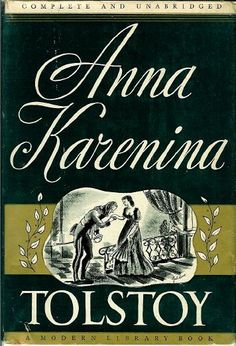
Tolstoy, or Three Things to Love About Anna Karenina

Blogger’s Note: Several years ago, I agreed to my friend Jacqui’s challenge to read 15 Classics in 15 Weeks. Though 15 weeks is long past, the end is near, this being number 14 of 15.

I am not like other men (or at least, not like many that I know). I have just past my forty-second birthday, and just read Leo Tolstoy’s immense novel Anna Karenina, by personal choice—and I loved it. 

My friend Fr. Tyler (from the Prairie Father blog) recommended it to me as “the greatest love story ever born in the mind of man and put to paper.” He has never led me astray in terms of fiction, but other men might not see that as a recommendation. I mentioned to a friend a week or so ago that I was reading it, and asked if he had ever. He laughed and said, “Ah…no.”

“It’s a great book,” I said, and again he smiled: “I don’t doubt it.” And that was that.

It is a big book (736 pages in my edition, with narrow margins and smallish type), full of Russian names and nicknames—Anna Arkadyevna Karenina, Konstantin “Kostya” Dmitrievich Lëvin, Prince Stepan “Stiva” Arkadyevich Oblonsky, Russian place names and politics, and Russian aristocrats who flavor their conversations with French and occasionally German. (Thank goodness for Google Translate!)

Despite these difficulties, I struggled to put it down. It manages to be an amazingly detailed portrait of time, place, and people, and yet remarkably universal and relevant to this time and place: 21st century America and even the 2016 election. It is heartbreakingly tragic, and incredible hopeful and uplifting. It is newly ranked among my favorite books of all time.

Without further ado, Three Things to Love About Anna Karenina:

  • Complexity of Characterization: Tolstoy sees his characters clearly and portrays them in all their complexity. Think of this: Anna is written as captivatingly beautiful; men and women alike can’t help but respond to her appearance and charm—and neither can you. This beauty could seem stereotypical or convenient for the sake of the story. It could be hammered away at like a one-note tune. But Anna is never simply beautiful.* She is captivating and tragic: people are drawn to her and repelled; her passions are apparent; her motives unknown even to herself. Tolstoy makes you love her and despair, much like her husband. And all of the characters are this way. Tolstoy is a keen observer of people: his descriptions are not of men, but of  intellectual men, simple men, dashing and pasty men, dandies and duds (sometimes within the same character).The worst have their qualities; the best have their faults. None are flawless, and so we believe in them.
  • The Art of Pacing: Tolstoy’s novel is peopled by people, and they live as we do, in time, lost in thought and out in the world. He details the lives, habits, thoughts and appearances of his characters and weaves together different story lines in a way that is simultaneous clear and keeps the reader wanting more. I had to fight the urge to flip forward when he jumped from one thread to another. As a writer, I realized in reading this that I rush everything: descriptions, details, day-to-day life. I leap from scene to scene, dialogue to dialogue, crisis to crisis—and only sketch the people involved. Tolstoy takes the time it takes. I could learn something here.
  • Religion and Culture. In March of 2011, I wrote of The Brother Karamazov, “Dostoevsky does not shy away from religion and philosophy, permitting his characters to speak at length (and in character, so not always clearly) about the existence of God, morality, humanity, science, psychology, justice, the state, and more. I was struck by how a book written circa 1880 could have so much to say about our world in 2011.” Replace Dostoevsky with Tolstoy and 2011 with 2016, and it applies here. I have been struck throughout this challenge by the fact that the true classics of literature capture the universal condition of humanity. They are not old, but timeless. It’s a pity that increasingly these books appear not to be read.
One final note: What I loved most about the book (but didn’t share as one of the Three Things, because it’s so personal to me) is that I saw myself in it. Anna’s story is obviously the focus, but the protagonist of the main parallel story, Konstantin Levin, is an idealistic, emotional man who wants to understand how the world works, but when he engages in society, in politics, it makes no sense. He drives himself to the brink by contemplating what it all means; he wants marriage and family and life in the country—and yet he struggles to enjoy these things with all the pressures he puts on his heart. 
The description of Levin before and during the birth of his first son brought me to tears. (I am not like most other men.) And finally, this:

I’ll get angry in the same way with the coachman Ivan, argue in the same way, speak my mind inappropriately, there will be the same wall between my soul’s holy of holies and other people, even my wife, I’ll accuse her in the same way of my own fear and then regret it, I’ll fail in the same way to understand with my reason why I pray, and yet I will pray—but my life now, my whole life, regardless of all that may happen to me, every minute of it, is not only not meaningless, as it was before, but has the unquestionable meaning of the good which it is in my power to put into it!

My list of 15 classics has changed somewhat over time; my next and final book will be much shorter: The Violent Bear It Away by Flannery O’Connor. Back soon!
—–
* I’m free-associating now: we recently watched an old Western on Netflix, The River of No Return, with Robert Mitchum and Marilyn Monroe. God bless Monroe, but she is a kind cinematic shorthand. She does what’s required: sing, seduce, weep, laugh, but her role in the story is, as our elder daughter once characterized her job as a toddler, to sit here and look beautiful. Anna is not that. At all.