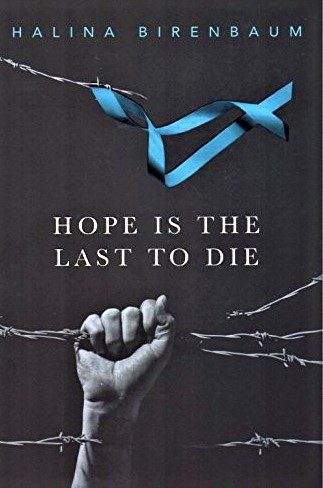
Book Break: Hope Is the Last to Die

In 2016, I was blessed to travel with my son Gabe and STMA Catholic Youth Ministry to World Youth Day in Kraków, Poland. Southern Poland is a wonderful place for a Catholic pilgrimage; so many ancient and modern saints lived and died in so small a region that every day it seemed we visited another sacred site in another blessed city. The big three, of course, were 20th century saints: St. John Paul II, St. Faustina Kowalska, and St. Maximilian Kolbe.

In the case of St. Maximilian Kolbe, we were blessed to visit his religious community at Niepokalanów as well as the concentration camp where he gave his life at Oswiecim (Auschwitz). I say blessed truly, but not in the typical sense of the word. On a sunny summer day, Auschwitz is still and green and peaceful as an cemetery, but still more somber and hushed; the fences, ruins, and the dreadful sign above the gate, “Arbeit Macht Frei” (Work Will Free You), bear silent witness to the cruelty of which humanity is capable.

As we left the camp, we passed a small booth selling items commemorating the place—most prominently, a book entitled Hope Is the Last to Die by Halina Birenbaum. Born Halina Grynsztajn to a Jewish family in Warsaw, she survived the horrors of the Warsaw Ghetto during Nazi occupation, followed by four prison camps in succession:  Majdanek and Auschwitz in Poland, and Ravensbrück, and Neustadt-Glewe in Germany.

I bought the book, as the most appropriate way to recall the place and what happened there. I finally found the courage to read it this Lent.

Continue reading
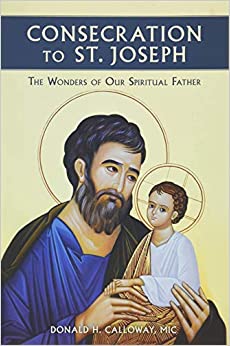
Book Break: St. Joseph, Unsung Hero

Growing up, many of my heroes were “the strong, silent type”—men of few words and decisive, often violent, action, who always knew the right thing to do and had the ability to carry it out. Small, bookish, and emotional, I admired men like that, even though I was not that type myself.

Since I didn’t grow up in the Church, I knew only a few Bible stories. The heroes of those stories seemed larger than life—even the shepherd boy, David, who slew Goliath, has already been chosen by God, anointed by Samuel, and filled with the Spirit of the Lord before he ever took the field against the Philistine.

I knew the story of the birth of Jesus, but I didn’t think of Joseph as a hero.

Continue reading

Finding Peace by Candlelight

On Ash Wednesday this year, Archbishop Hebda visited our parish and school and presided over the school Mass. During his homily, he asked the school children to give examples of prayer, fasting, and almsgiving. One boy suggested that you could fast from lights, “like, with an oil lamp or something.”

Archbishop chuckled and said he had never thought of that before. But I have.

Years ago, I ran across an article by Catholic convert, blogger, and speaker Jennifer Fulwiler entitled “8 Reasons to Turn Out the Lights During Lent.” Her experience captured my imagination, and I pitched it to my own family and those in faith formation at the time as “Firelight Fridays.”

The premise is simple—no electrical lights or screens of any kind after sundown on Fridays during Lent. The results were profound: we found ourselves congregating as a family around the candlelit kitchen table or living room, playing board games, listening to music, or just talking and laughing together as a family. It a couple hours, we would begin to feel snoozy; eventually we would, by common consensus, snuff the candles and go to bed early, sleep soundly, and rise refreshed on Saturday morning.

Continue reading

Sure Signs of Spring…

March is my least favorite month of the year. Winter is winding down, but rarely leaves quietly. It’s often cold, but also wet and windy—the worst weather conditions—and even as it warms, the white snow turns dingy gray and black, uncovering a winter’s worth of dirt and debris:

Fat Tuesday
Why should the robin be the harbinger of Spring?
Why watch for flowers?
The tulip and the thrush borrow beauty from the sun;
tug their strength up from the dark earth.
Stronger still, and darker, is the crow.
Songbirds ride the North Wind south;
flowers hang their heads and retreat beneath the snow.
The crow remains.
Feathers ruffed, dark eye glaring sidelong, he stoops;
picks bits of hide and hair from the cold pavement.
A lean meal this Christmas, but Easter comes,
and Nature’s bounty blooming black from the snow.
A stiffened ear; the rack and ripe entrails—
the crow consumes all, makes ready the house for the Master’s arrival.

He waits, black as the cloth, preaching his monosyllable, fasting.

Poem, a Day Late (February 7, 2008)

As a general rule, I don’t shovel after March 1.* Invariably we get snow in March (and even April), which means that while our neighbors’ driveways still have nice straight edges and clear entry points, ours is a lumpy and treacherous mix of snow, slush, and refreeze.

When the blustery weather finally breaks (temporarily, of course), we see our first serious warm-up and venture out for a walk around the neighborhood. The curbs and gutters run with miniature rivers and rapids; last autumn’s soggy leaves and twigs form dams creating shallow pools for passing cars to splash through, and the storm sewers roar and rumble. The plowed snow along the road melts from the bottom up, creating shelves of ice that crunch and give way beneath our boots. With no talls weeds to hide it, litter appears — the soggy remains of last fall’s lunch someone tossed out the car window before the first snow. And then, after a couple days and maybe a good, hard rain, the mud forms.

Continue reading

Perfection Reconsidered

This post appeared as a column in the Sunday, March 20, 2022, issue of the St. Michael Catholic Church bulletin.

Last Saturday, my bride and I went to morning Mass together. In the gospel, Jesus admonishes His disciples, “So be perfect, just as your heavenly Father is perfect” (Matthew 5:48).

I’ve always taken this to be a tall order—impossible, in fact, for anyone but God alone. It almost always makes me feel small, weak, and inadequate to the task. These feelings may be true, but do not seem particularly helpful when it comes to striving for sainthood.

But Father Joe tweaked my thinking with his homily Saturday morning.

“Notice,” he said, “that the Lord doesn’t say, ‘Do everything perfectly,’ but ‘Be perfect.’”

He went on to explain that, with our fallen nature, we cannot expect never to make mistakes—but that we should do the best we can in every circumstance, striving to love as God loves.

Continue reading