Three Confessions Show My Role In His Mercy

“Wherever there is repentance, there is faith. Where there is no repentance, Jesus is rejected and His Church persecuted.”

“One Bread, One Body” reflection on John 10:31-42

Over the past few weeks, a handful of lifechanging Confessions have been on my mind. Each resulted in a deepening of faith, but only after I humbled myself and turned once again to God and His Church:

A SECOND FIRST CONFESSION: Not long after Jodi and I started our family, I began to think about my dormant Catholicism. Aside from a brief period in grade school, I had grown up outside the Church and had a lot of questions, misunderstandings, and disagreements regarding Church teachings. Our priest in Michigan, Father Bill Zink, spent an hour or more allowing me to unload my spiritual baggage in his living room, then told me I should ask my questions from within the Church, after receiving the sacraments of Reconciliation and Holy Communion again—in fact, he offered to hear my confession then and there. At first I refused; I said I didn’t remember how, but he offered to help me through it. I had to acknowledge the need for mercy and accept the invitation; to let go of my pride, humble myself, and return to God. That was the beginning of my reversion.

Continue reading
Book Break: The Jungle

A few weeks ago, I attended a day-long training to become a home visitor for our local conference of the Society of St. Vincent de Paul. The most compelling part of the training was the section on what poverty looks like, from the perspective of the person living through it. This segment of the training was led by a man who was born and raised in some of the roughest areas of Chicago and Minneapolis, who was hired by the Society of St. Vincent de Paul as a teen and loved and accompanied for years, through numerous trials and triumphs. Today he is a college-educated husband and father, a successful manager and talented speaker on the state and national level, and a Vincentian for life.

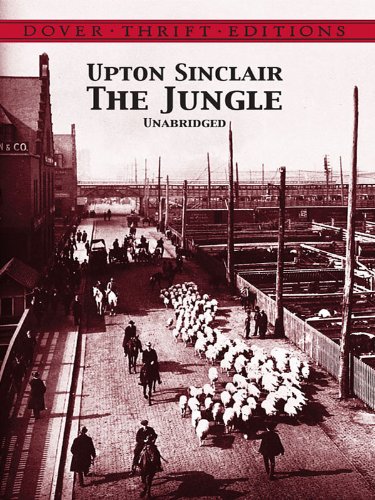
The training was thought-provoking and convicting; it, along with learning more about my own ancestors’ struggles with poverty before I was born, led me to want to dig deeper—which in turn led me to another unread book on my shelf: The Jungle by Upton Sinclair.

Sinclair was an influential muckraking journalist, author, activist, and political candidate at the turn of the 20th century. The Jungle is his fictional but detailed and realistic account of power, corruption, and poverty during this time, particularly in the stockyard district of Chicago. The book follows one immigrant family from Lithuania, who moves to America on the promise of plentiful work for good wages, and finds a corrupt system of capitalists and politicians of every stripe, at every level, keeping prices high and wages low, controlling everything from housing and food supplies in the neighboring slums to law enforcement, inspections, and elections—and driving workers to desperate measures to avoid death by illness, exposure, or starvation.

Continue reading

Gofer-Vision, or the Search for the Quintessential Tool

Yesterday I was completing a couple home projects in our basement and reminiscing with our teenage son, Trevor, as I worked. In the course of the conversation, a shared memory surfaced: Once when I was working on a different project (the kids’ treehouse, I think), I sent Trevor to the garage to get the orange carpenter’s square.

“Big, flat piece of steel, like two rulers at a right angle to each other. It should be hanging on the peg board over the work bench. Bright orange—can’t miss it.”

He was gone a long time.

* * * * *

When I was old enough to read the fractions etched into the sides of sockets and wrenches, I became my Dad’s “gofer” (as in, “Go fer this; go get that.”)—and I had an uncanny ability to look squarely at the tool my father asked for and not see it. I could not see something for several minutes straight; we never tested the upper limits of this knack of mine, primarily because the sought item would snap into focus the moment Dad disentangled himself from the drivetrain of the pickup, rolled out from beneath it on the creeper, stood, sauntered over to the bench, and pointed at it, right where he said it would be.

“Oh,” I would say sheepishly, handing it to him. “I didn’t see that there.”

Continue reading

Book Break: Hope Is the Last to Die

In 2016, I was blessed to travel with my son Gabe and STMA Catholic Youth Ministry to World Youth Day in Kraków, Poland. Southern Poland is a wonderful place for a Catholic pilgrimage; so many ancient and modern saints lived and died in so small a region that every day it seemed we visited another sacred site in another blessed city. The big three, of course, were 20th century saints: St. John Paul II, St. Faustina Kowalska, and St. Maximilian Kolbe.

In the case of St. Maximilian Kolbe, we were blessed to visit his religious community at Niepokalanów as well as the concentration camp where he gave his life at Oswiecim (Auschwitz). I say blessed truly, but not in the typical sense of the word. On a sunny summer day, Auschwitz is still and green and peaceful as an cemetery, but still more somber and hushed; the fences, ruins, and the dreadful sign above the gate, “Arbeit Macht Frei” (Work Will Free You), bear silent witness to the cruelty of which humanity is capable.

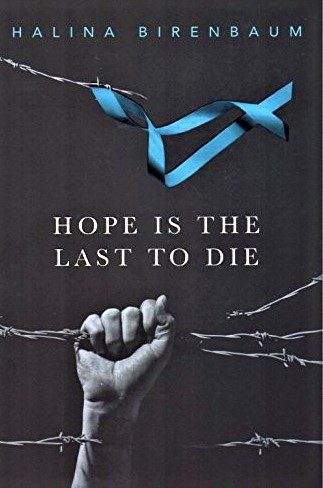
As we left the camp, we passed a small booth selling items commemorating the place—most prominently, a book entitled Hope Is the Last to Die by Halina Birenbaum. Born Halina Grynsztajn to a Jewish family in Warsaw, she survived the horrors of the Warsaw Ghetto during Nazi occupation, followed by four prison camps in succession:  Majdanek and Auschwitz in Poland, and Ravensbrück, and Neustadt-Glewe in Germany.

I bought the book, as the most appropriate way to recall the place and what happened there. I finally found the courage to read it this Lent.

Continue reading

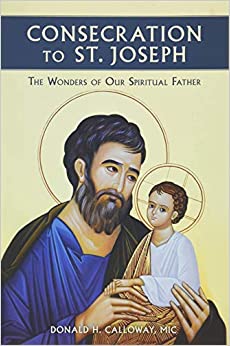
Book Break: St. Joseph, Unsung Hero

Growing up, many of my heroes were “the strong, silent type”—men of few words and decisive, often violent, action, who always knew the right thing to do and had the ability to carry it out. Small, bookish, and emotional, I admired men like that, even though I was not that type myself.

Since I didn’t grow up in the Church, I knew only a few Bible stories. The heroes of those stories seemed larger than life—even the shepherd boy, David, who slew Goliath, has already been chosen by God, anointed by Samuel, and filled with the Spirit of the Lord before he ever took the field against the Philistine.

I knew the story of the birth of Jesus, but I didn’t think of Joseph as a hero.

Continue reading