See-Through Vessel

Lord, make of me a monstrance,
The Eucharist as my heart,
That all may see your light in me
And know how great Thou art.

I wrote that little prayer-poem 14 years ago, and it has become a regular, private prayer nearly every time I receive the Blessed Sacrament. Like so many little prayers of mine, I pray it in earnest, but wonder if it will ever bear fruit.

I recently started a new job writing for the University of Mary. This required me to step away from most of my parish writing duties, so, at the August monthly staff meeting, Father invited my colleagues to offer their thoughts and affirmation of the work I’ve done over the past five years.

Continue reading
Don’t Get Comfortable

I have a longer piece to write at some point, about how St. Michael has been a spiritual home for me and my family—Ground Zero for my thorough reversion to the Catholic faith and our conversion to an authentically Catholic understanding of marriage and sexuality, not to mention the garden in which my children grew strong in faith and began to first bear fruit for the Kingdom.

I could write a book. Maybe I should someday. But today, it’s just a column on what’s next for me and my family.

Continue reading

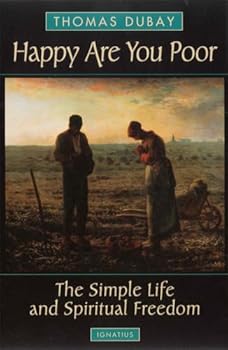
Book Break: Happy Are You Poor

For the past 20+ years, I’ve noticed several strange phenomena nearly every time a conversation turns to what the gospel says about material wealth and spiritual poverty:

  • Friendly conversations turn defensive: “We don’t have that much; so-and-so has X, and vacations every year in Y.”
  • Faithful Catholics attempt to justify themselves: “If you include Catholic school tuition, we give 10 percent like the Bible says—and we serve in other ways too!”
  • Straightforward moralists become subtle and nuanced: “What ‘poor in spirit’ actually means is…’”

And, in some cases, actual spiritual deafness occurs: I was in a conversation once in which I admitted my own struggles in this area and said I felt I needed to do more to actually love my neighbor from my own resources. A friend followed my remarks with, “It’s like Jim says…” and proceeded to relate the exact opposite message.

Father Thomas Dubay’s book Happy Are You Poor was written to combat these phenomena with clear teaching from the Gospels and the rest of sacred Scripture, edification offered by various popes and councils, and the lives of the saints. It was recommended to me by Father Daly in response to the awe I feel as Brother Jude (our second son Gabe) proceeds in his journey as a Franciscan friar and the conviction that I need to live a less self-centered and materialistic life.

Continue reading

Wednesday Witness: How Do I Love Me?

How do I love thee? Let me count the ways…

The 19th-century poet Elizabeth Barrett Browning asked the question above in her Sonnet 43. This morning, I ask a different question: How do I love ME?

I am currently reading the book Happy Are You Poor by Father Thomas Dubay, SM. It is a hard, convicting read about taking seriously the Gospel’s words regarding wealth, poverty, possessions, and sharing with those in need. What has struck me hardest thus far is Father Dubay’s insistence on the actual words of Jesus—currently, “You shall love your neighbor as yourself” (Matthew 22:39, cf. Leviticus 19:18).

How do I love myself? Among other ways:

Continue reading

Wednesday Witness: Belong, Believe, Behave

Over the past week or so, I’ve found myself reflecting on a homily delivered by Father Richards some years ago. I have written about it before; the gist of the message was this:

  • People in a group or community often insist that those who want to join behave properly and believe correctly in order to belong (Behave, Believe, Belong).
  • People on the margins, however, need a place to belong, where they can come to believe, and learn to behave (Belong, Believe, Behave).

Belong, Believe, Behave is the natural order of things. From the moment we are born into a family, we need secure attachments to our parents to form healthy, ordered relationships and learn to navigate the world. But once we find our place in the world, we often lose sight of the fact that we ever weren’t a part of it.

Continue reading