Book Break: The Relative Un-Importance of Being Earnest

Jodi and I used to watch a lot of Seinfeld. In relatively small doses, the show struck us as amusing to flat-out hilarious, although occasionally there was an episode that made us cringe or second-guess our choice of entertainment.

When the series finale rolled around, we were there with much of the rest of the country to see how it all would end. The last joke, it turned out, was on us: using courtroom testimony as the vehicle, the final episode chronicled, back-to-back-to-back, what rotten, superficial human beings Jerry and the gang were during the run of the series, then ended with a joke about how they’d already had the final conversation before. Jodi and I looked at each other with the grim realization that we had wasted a tremendous amount of time over the previous several years, to no redeeming end.

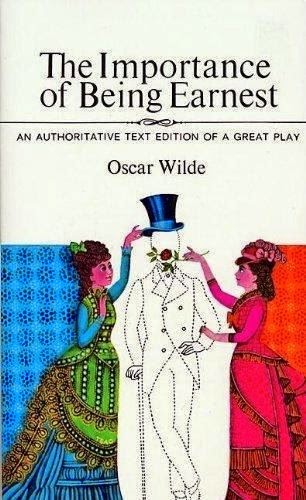
Like Seinfeld, Oscar  Wilde’s play The Importance of Being Earnest seems to me to be adamantly about nothing. Of course, like the TV show, the play has to be about something, but it sets the bar so low that it is essentially a three-act setup to a single joke, the punchline of which is a pun. Like a good sitcom episode, it is funny and short. (I read it in an evening.) I would like to say it’s witty, but I’m not sure it’s clever enough for that. It seems to me to be an exercise in style, primarily, with little substance beneath it.

Several years ago now, I read Wilde’s The Picture of Dorian Gray. That is a great story, and proof enough  in my book that Wilde was a great writer. At the time, I wrote, “It’s a great story full of people you can’t stand, living in a world of false beauty. … Part of the genius of this book is the sinking feeling that there really are people like these, and we may even know some of them.” That line holds true for Earnest, except the word “great” and the phrase “of the genius.” While I don’t regret reading it (especially given its brevity), I sincerely wish there would have been more to it.
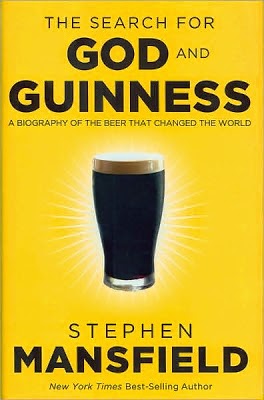
Book Break: The Search for God and Guinness

Stephen Mansfield’s book The Search for God and Guinness is a fun read on many levels. It’s a solid biography of a family, a beer, and a brand that are recognized the world over. It tells the story of a man and his sons (and their sons, and their sons…) who obsessed with the quality, production, and distribution of their “extra stout porter” to the point that they pioneered innovations in brewing, packaging, distribution, marketing, and quality control, and who care so much for their workers and their native Ireland that they pioneered onsite healthcare and wellness for employees and their families, as well as education and cultural benefits, housing and childcare, and more.

Most people assume the Guinness family was Catholic, but that is not the case — though they worked hard to benefit their Catholic workers and neighbors. Many, if not most, of the Guinness men either became involved in the brewery or became Protestant ministers — and it’s in the discussion of theology and the tap that the book becomes problematic for me. In writing about the history of beer and brewing, Mansfield credits the Catholic Church and numerous patron saints of brewing, and mentions that abbeys and monasteries throughout Europe produced good ale until the Reformation, at which point many of the abbeys and monasteries closed. However, he then goes on to credit Luther and Calvin for defending the idea that it is not sinful to take pleasure in God’s creation, thus preserving brewing and the enjoyment of beer.

“As Reformation ideas captured hearts and minds throughout Europe, priests and nuns renounced their vows, Roman Catholic cathedrals became Protestant churches, and monasteries closed, thus decreasing the production of beer. While this decline in brewing would not have deterred Martin Luther from his reforming work, he certainly would have grieved the loss of any fine brew, for he was among the great beer lovers of Christian history. … He was German, after all, and he lived at a time when beer was the European drink of choice. Moreover, having been freed from what he considered to be a narrow and life-draining legalism, he stepped into the world ready to enjoy its pleasures to the glory of God. For Luther, beer flowed best in a vibrant Christian life. (Page 28)”

“Like Luther, Calvin worked hard to hammer out a consistently biblical worldview. He wanted all of his life to be submitted to the rulership of Jesus Christ and yet did not want to miss some grace or provision of God because of flawed theology or religious excess. He and Luther had seen too much of that in their pre-Protestant lives. … This robust Reformation theology, which taught enjoying God’s creation and doing all that is not sinful for the glory of God, filtered into the centuries that followed the reformer’s work. (Page 31)”

“Clearly, then, though the Reformation diminished the production of beer temporarily by closing many of the European monasteries where beer was brewed, it also served the cause of beer and alcohol well by declaring them gifts of God and calling for their use in moderation. (Pages 32-33)”

Mansfield’s tone when discussing the Reformation is by and large heroic, to the point that it sounds as if these men were defending beer against the Catholic Church. These excerpts represent the worst of it, but this pro-Protestant tone pervades the text even though it has little to do with the story at hand, making an otherwise enjoyable read strangely slanted. Nor does Mansfield acknowledge the obvious question raised by this assessment — how does this Protestant view of beer differ from the Catholic view that fostered so many medieval abbey ales?

Long story short: If the summary above appeals to you, this is a library read, not one to add to your collection. As a biography of a beer and a brand, I enjoyed it. As religious history, I did not. Interestingly, Mansfield appears to be a bit of an equal-opportunity “faith profiler” of current and historical figures, having wrote 16 books, including The Faith of George W. Bush, The Faith of Barack Obama, Pope Benedict XVI: His Life and Mission, and Lincoln’s Battle with God. I didn’t know this before I embarked on the Guinness book.

Nettles Or Nails?

Some years back I wrote a brief personal essay on “the Jim-in-my-head.” The Jim-in-my-head is intellectually and physically fit, well-spoken and timely, gentlemanly even in revelry. He plays the upright bass and reads to his family. He hunts and fishes, writes and publishes, and still is home for dinner. He’s the idealized me, confident, unhesitating, and prudent.

Also, he does not exist.

I’ve known this all along, of course, but it hasn’t stopped me from chasing this phantom Jim, and stranger still, from feeling in recent years as though he’s slipping away. It should be no surprise, should it, that I am unable to catch a figment? But then, why these feelings of both failure and loss?

Last fall a couple of friends separately recommended to me the little book The Way, by St. Josemaria Escriva. I’ve been reading it little by little since then, waiting for the previous lesson to sink in before moving forward.

Fr. Escriva is no easy master, and his writings are loving, but direct and challenging, to the spiritually soft. One excerpt in particular has continued to influence my thinking on a daily basis:

“Many who would willingly let themselves be nailed to a Cross before the astonished gaze of a thousand onlookers cannot bear with a christian spirit the pinpricks of each day! Think, then, which is the more heroic.”  

— The Way, paragraph 204

I have said and written so many times that many people—many males, in particular—desire to be a part of something great and glorious, and our stories are filled with heroic deaths of good men. No man likes to imagine himself shrinking in the face of vice or violence, but perhaps it is easier to steel oneself for a bullet than to suffer a thousand paper cuts? Perhaps today’s nettles are heroic enough for now and serve not to wear us down, but to condition us for nails.

What’s Old Is Cool Again

One of the great pleasures I’ve discovered in recent years in antiquing with our four older kids. Rummaging through old junk and treasures is not Jodi’s favorite thing — but the kids enjoy it, and through this activity, they’ve begun to cultivate new personal interests. It’s a delight to see where their curiosity takes them.

For Emma and Trevor, antique shops are like free museums. They wander and browse and ask questions about the novelties they see — and many things appear new to young eyes. Emma is never looking to buy, but is drawn to colorful kitchen implements and old machines with buttons: manual typewriters, adding machines, cash registers, you name it. Trevor has no such particular interests, though his attention is drawn by typically boyish subjects: creatures, toys and games, and oddities. And both (in fact, all four) of the kids are becoming expert at spotting Fiesta dishes for their mother.

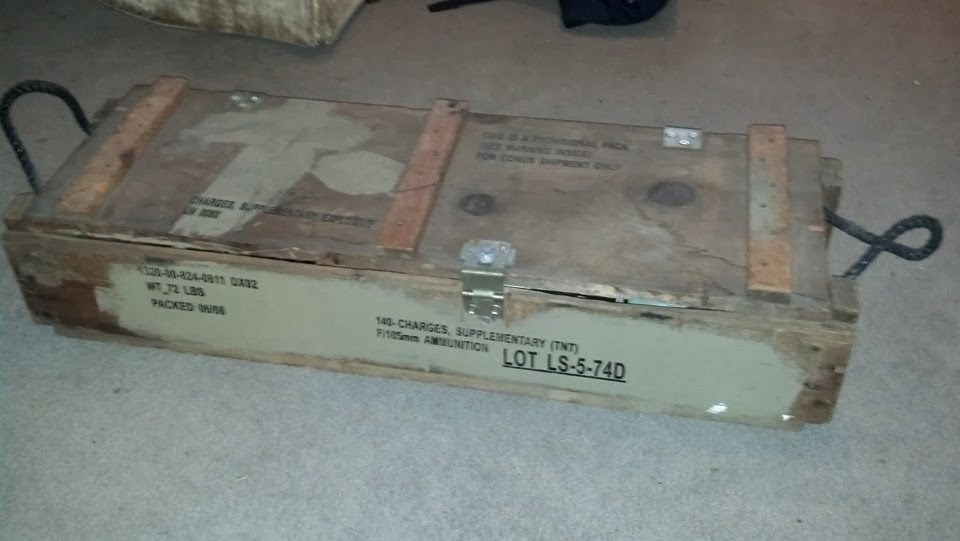
Brendan and Gabe are active antique shoppers, and prefer to have money in their pocket when they step into a shop. Gabe likes religious artwork and books, vintage hats, and Coca-Cola memorabilia, while Bren looks for military surplus, historical books, manly artifacts like hunting and camping gear, and anything to do with Vernors ginger ale. Last weekend the three of us ventured out to give Brendan some driving practice in snow and traffic, and hit a military surplus store and three antique shops. Brendan spent $20 on an explosives crate, pictured above, to complement his military ammo box, and Gabe got a steal: a like-new copy of Our Daily Bread for a dollar and change. (Brendan drooled briefly over a signed ink sketch of Captain America knocking the heads of Hitler and Hirohito together, but decided that he didn’t have a couple hundred extra bucks.)

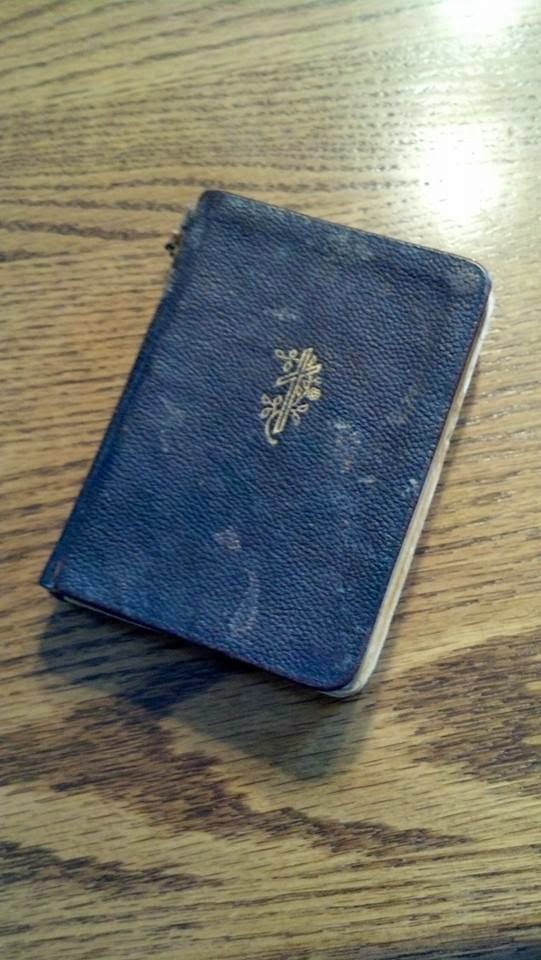
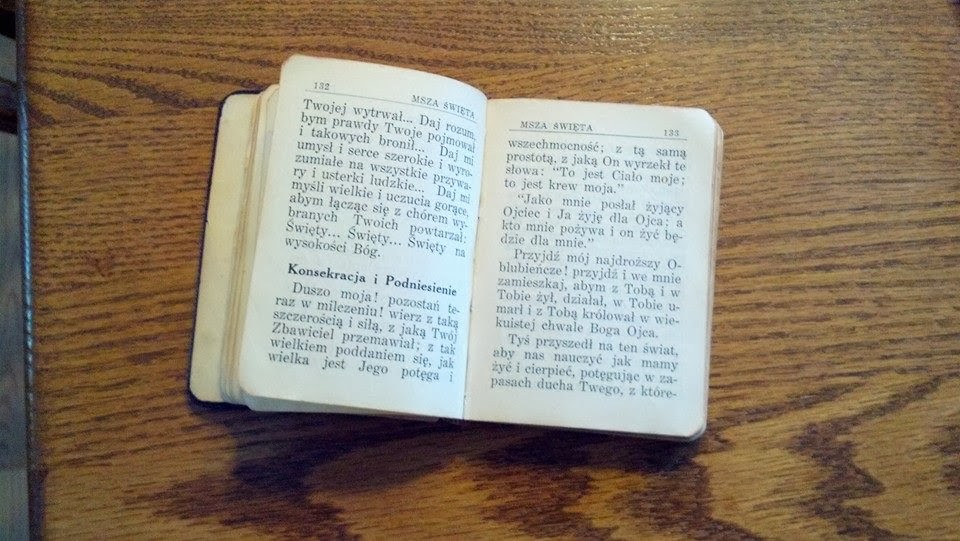
Both of these older boys show a nose for finding the right stuff and finding deals. Last spring, when Gabe and I brought Rosa (my old pickup) home from Michigan, we stopped at a junk shop in northern Wisconsin packed floor to ceiling with old stuff, new stuff, repurposed and recycled stuff — none of it marked. While the old fellow running the place made sporadic attempts to buy Rosa, Gabe nosed around the shelves of “smalls” and emerged with an inexpensive plaster-cast of the classic “praying hands” sculpture, a thimble-sized glass bottle of actual Coca-Cola, and a leather-bound Polish prayer book, pictured below. (Gabe knows how to say a few Polish words, but how he recognized this book as Polish, I don’t know.) He showed them to the old man, who was so intrigued by Gabe’s finds he charged him just a few dollars for the entire collection.

Brendan, meanwhile, has been eyeing an old, unopened six-pack of Vernors at a local shop for a year or so now. It’s priced at $50, as I recall; he went in last fall during a 20-percent-off sale, but still wasn’t sure he could drop $40 on it. He asked at the register if they could take less, and they told him the collector who was selling it had a deal with the shop that they could take 20 percent off his prices, but anything lower had to be negotiated with him in person. Brendan said thank you and walked away.

I told him later that I was impressed with his resolve. “Well, they basically told me I could get it for 20 percent off anytime, so I might as well come back another time when the guy is around,” he said.

Good thinking.

Me? I like books, boots, and beer memorabilia; shaving supplies; old tools; and all the stuff they like. Not sure who is influencing whom in this case, but with fresh eyes, what’s old is cool again.

Bren Turns 16

Our first child turns 16 today. My Facebook statement sums up my sentiments nicely: “Hard to believe my eldest son Brendan turns 16 today. He is smart, responsible, strong, gentle, persistent, respectful, and faithful — and I love him.” But don’t take my word for the type of young man he is (outstanding in many ways) or what motivates him (faith, food, personal goals, and a particular brand of ginger soda). Consider how he’s spending this special occasion:

  • The movie Cinderella Man and pie last night, and the actual Braddock-Baer fight from 1935 on YouTube this morning.
  • Breakfast burritos this morning, football this afternoon, stuffed pasta shells this evening, chocolate bundt cake for dessert — all here at home, with family.
  • No driver’s license until later this winter or early this spring — he’s got school, wrestling, Confirmation classes, and taxidermy work to earn money for a pilgrimage to Rome next summer.
  • On his birthday list: several Catholic books; the movies Big JakeCaptain America and Here Comes the Boom; the book Cinderella Man, and a “Vires et Honestas” (Strength and Honor) t-shirt from the Art of Manliness website.
  • Theology class tonight with his friends.
He opened his gifts this morning: a secondhand army dufflebag containing the following:
  • two 12-packs of Vernors, plus a book called The Vernor’s Story and a vintage Vernors recipe guide from the 1960s;
  • a handful of 100 Grand candy bars;
  • a jar each of smoked black pepper and hot dill pickles;
  • Fr. Richard Heilman’s books Church Militant Field Manual: Special Forces Training for the Life in Christ, Fortes in Fide: Church Militant Prayer Book, and Strength and Alliance: Church Militant Field Journal;
  • The Naval Academy Candidate Book: How to Prepare, How to Get In, How to Survive;
  • Three movies: Here Comes the Boom and the two recent Sherlock Holmes flicks;
  • and a set of keys to all three vehicles and the house on a Captain America key ring.
Some of it he asked for, all of it he’ll enjoy — and sweet 16 in this case is a relaxing day at home. He’s growing into a fine young man, and we’re proud of him. Much love to you on your birthday, son!