Book Break: Triumph

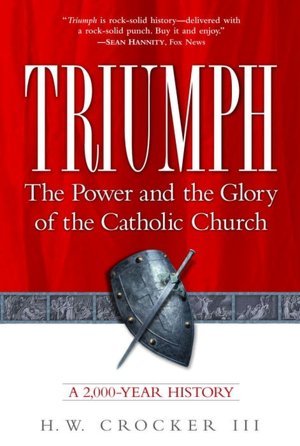
The title of this book tells you exactly what to expect. Triumph: The Power and the Glory of the Catholic Church by H.W. Crocker III was recommended to me by two or three different friends within a single month, which I found hard to ignore. It presents a well-referenced but “popular” history of the Catholic Church, written with a confident pro-Catholic bias, presumably for a Catholic audience. It was an enjoyable jaunt through the Church’s history, and it will give fire to the lukewarm. It will not, I predict, win the hearts and minds of many non-Catholic readers, should they choose to pick it up, because most will not finish it.

As I said, I enjoyed the book, but found it to be very uneven in quality. Of course, any history of an institution as old and rich as the Church cannot be confined to 427 pages without leaving out a few details. For the first half of the book, Crocker bounds through the centuries, focusing his attention on the most colorful or heroic defenders of the faith, painting a fascinating portrait of the Catholic Church ascending, but also justifying the shortcomings of its leaders in a way that borders on “the end justifies the means” at times, and dismissing sin within the Church as no worse than what was happening elsewhere, a standard I’m not sure Christ would have supported. This is not to say that the book is inaccurate — and historical context is important — but the ease with which war and wickedness are noted and discounted is disconcerting when we are called to be perfect, as God is perfect. If not perfect, we should at least be penitent…

Crocker’s unfiltered bias, wit, and sarcasm reach a fever pitch with Martin Luther and the Reformation. References to “the Hitler in Luther” and “Luther’s Khmer Rouge” suggest the author’s motivation is stirring Catholic pride and outrage rather than advancing scholarship in Church history. The criticism of Luther, Calvin, and other Protestant “fathers” is sometimes humorous, occasionally disturbing, and rarely if ever even-handed. I hope we would not tolerate a similar treatment of our priests.

The second half of the book seemed more balanced, although I’m curious if the support expressed for strong monarchies and an educated upper class over more democratic ideals is a true reflection of the 18th and 19th century Church or the author’s own preferences. I guess I have more reading to do in the regard. But the stance of the Church against the tide of liberalism, relativism, materialism, and all the other -isms encompassed in modernism did cause a warm swelling in my breast. There is wisdom in the Catholic Church, and an intellectual tradition that embraces the arts, the sciences, and the classics and needs not fear the world…if only more of us were better versed in it. I have made that a goal of my own, and Triumph provided further inspiration to pursue it.

This book is every bit as pro-Catholic as so many other accounts of world history are anti-. Personally, I would’ve liked to have seen more of the Church’s intellectual tradition itself in the book, and less of characters, wars, and political intrigue. I’d love to hear your thoughts on it, but if you read it, know what you’re getting into — especially if you are Protestant!

Book Break: The Santa of Oz?

A quick review today: as part of my ongoing reading in support of my writing, just before Christmas I checked out L. Frank Baum’s The Life and Adventures of Santa Claus and began to read it to the family. It’s a delightful book with an essentially pagan take on The Old Man’s origins and his status as a saint. It tracks his rescue from a hungry lioness by the nymph Necile when he was an abandoned infant in the Forest of Burzee (the lioness is later made to nurse the child and becomes his friend); it explains the origins of his unusual powers; the “why” behind the reindeer and little people who help him; and what motivated his mission on behalf of children in the first place.

As you might expect from the creative mind behind the Wizard of Oz, Baum’s story is delightful, quirky, and dark at times, but never too dark for children. His writing “voice” is distinctive, and I found it lent itself quite well to reading aloud. This book is a completely unique take (to my knowledge) on the Santa Claus legend, which is why I wanted to read it…but while it is kid-safe, parents may wish to read it first to see how it jives with the experience of Santa Claus in their own homes. It could also be a fun read for older kids who are beginning to question their beliefs; again, however, parents should peruse it first. The edition I read (a Signet Classics paperback, pictured) included an introduction and an afterword (the latter by a Jewish man who, as a boy, was against the very notion of Santa Claus) that make for interesting reading for adults, but might cause greater confusion for youngsters. All in all, our kids enjoyed it well enough, but afterward, Trevor said, “I think it was just a story he made up.”

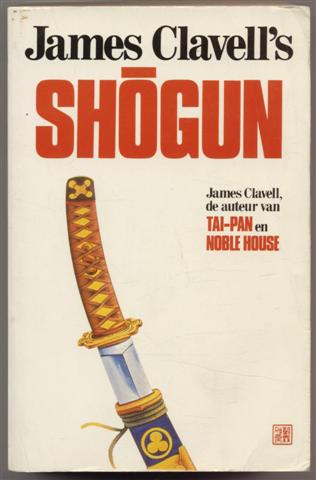
Book Break: Shogun

Cross another book off the Fiction Writing Reading List that I posted last summer: James Clavell’s Shogun. I have a vague recollection of Richard Chamberlain in a TV miniseries adaptation in the 1980s, but I’m certain it’s from the advertisements and not actually watching it. (Maybe Mom watched it? Maybe I’m thinking of The Thorn Birds?)


This book is sprawling, convoluted, vulgar, and violent  and engaging for most of it’s 1,000-plus pages. What made it most interesting to me is its point of view (or ultimate lack thereof) with regard to the cultures clashing throughout the story. Set in feudal Japan in the 1600s, the novel gives us an arrogant, foul-mouthed, and cunning English Protestant protagonist; surrounds him with a narrow-minded and ever fouler-mouthed Dutch Protestant crew; and strands them in a strict (and mostly Shinto/anti-Christian) samurai culture that is deeply enmeshed in trade with the Catholic Portuguese and rushing headlong toward civil war. Initially, it is a very anti-Catholic read; although the Protestant characters are not particularly virtuous or sympathetic characters, the initial perspective is theirs, and their biases shine through.


The British pilot is removed from the group because various samurai see value in his knowledge and his ability to antagonize the Catholics by his very existence in Japan. Gradually he gains favor, and ultimately influence, among the samurai, and becomes conflicted as he begins to see value in their way of life (and of course, falls in love with a well-known samurai woman who has converted to Catholicism).


That’s the gist…but lest you think this is Last Samurai or “Dances With Blue-Man Group” rehash, understand that A) Shogun came first, and B) no one group emerges as the noble savage. All are savage, and ultimately, the only group shown without nobility is the Dutch Protestant crew. (Clavell shows does a tremendous job writing in multiple languages and using “dialects” (written in English) and curses or other interjections to distinguish between Portuguese, Latin, “gutter Dutch,” and Japanese.) The hero never goes completely samurai, never loses his English-Protestant bias against priests and the papacy, and is always “in it for the money”—but he comes to love at least one Catholic convert, respects at least one priest, and has his life saved by another priest. He is a married father of two in England, and as such, is an adulterer; he equally enjoys Japanese views on sexuality and is horrified by them because so much is permitted in the name of pleasure. He enjoys the order, the cleanliness, the beauty of Japanese living, but not the brutality and bigotry that enforce it. Love and life here are regarded as meaningless, replaced by duty and death — as he is immersed in this culture, he begins to use it to his advantage, but it also begins to re-shape him.


Beneath this story is a violent political thriller that uncoils slowly only, to be completely understood at the very end — and perhaps not even then. According to Clavell, in a small crowded country with paper walls, politeness is paramount; everything is planned (and counter-planned, and counter-counter-planned); everyone hears and everyone knows, but no one speaks until it is to their devastating advantage. The result is a fascinating book that seems overlong at times, but not monotonous. He wrote six novels in what came to be known as his Asian Saga; Shogun was the third written, but is set the earliest in history. Rumor has it he had other Asian novels planned at the time of his death, and I have no doubt there’s a great book to be written exactly where this one leaves off.

Book Break: A History of Corruption

As I mentioned last summer, I’ve been reading a number of diverse books as research for a novel that I hope to complete in 2012. These have included three books on the Irish mob in the U.S. which, together, paint a sobering picture of corruption extending back to the earliest days of our republic.

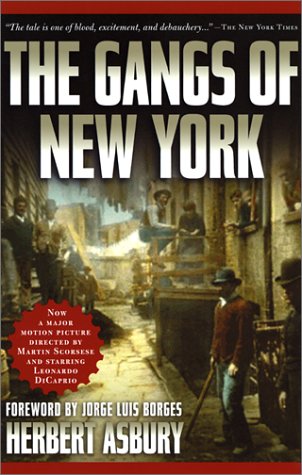
The Gangs of New York: An Informal History of the Underworld

Written by journalist Herbert Asbury and published in 1927, this book provided much of the fodder for the Scorcese film Gangs of New York, if not the actual storyline. It paints a picture of unimaginable squalor, poverty, violence, racism, and political corruption beginning in post-colonial New York City and continuing through Prohibition. Filled with colorful characters and a mix of historical facts and gangster lore and legend, it is a darkly engaging read that makes the reader question how close our animal instincts may lurk beneath our human surface. The propensity for grotesque violence among those with no hope and nothing to lose stands in sharp contrast to our usual views of American ideals and opportunity at the time of our nation’s founding. I will see the film soon, but I don’t expect to enjoy it much…

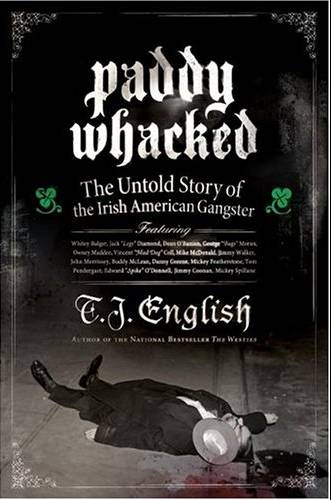
Paddy Whacked: The Untold Story of the Irish American Gangster
This 2006 volume by T.J. English draws on the Asbury book as a source, but digs deeper, extending beyond New York City to Chicago, New Orleans, Kansas City, and Boston, and including the mid- and late-20th century. The book is more explicit about the relationships between Irish mobsters and hoods and the Italian Mafia, organized labor, corporate strikebreakers, and politicians on both sides of the aisle. (It also paints a less romantic picture of the Kennedy family and suggests multiple strong motives for the assassination of President Kennedy.) It appears to be well researched and is also an engaging, if disturbing, read. Whereas The Gangs of New York made me question human nature, Paddy Whacked made me question the nature of our democracy.

Black Mass: The Irish Mob, the FBI, and a Devil’s Deal
This 2001 book by Boston Globe journalists Dick Lehr and Gerald O’Neill tells the story of the legendary South Boston crime boss Whitey Bulger: his rise to power and secret status as a federal informant whose corrupt FBI handlers protected him and his men from prosecution for years. The recent Scorcese film The Departed may have been a remake of the Hong Kong crime thriller Infernal Affairs (in some cases shot-for-shot), but the South Boston setting and the Jack Nicholson character are inspired by this true tale, and Bulger’s capture this past summer after 16 years on the lam does little to fend off the disquieting feeling that we cannot know who the bad guys are or how far their reach extends. A parallel history of Bulger’s brother, formerly a prominent state senator and president of the University of Massachuesetts, adds to that feeling…

Taken together, these books provide a sobering look at the seamy underbelly of “truth, justice, and the American way.” Strong language and violence abound, and these books won’t leave you feeling warm and fuzzy about the world, but they are good, solid reads.

Book Break: How We Decide

My latest work reading, completed just this week, was Jonah Lehrer’s How We Decide, an engaging and easy-to-read account of the brain science (as we currently understand it) behind our decisions. Drawing on ancient philosophy, modern psychology and neuroscience, and examples as diverse as military conflict, professional sports, gambling, and shopping, Lehrer exposes the strengths and weaknesses of our emotional and rational thought processes — and shows each to be inadequate without the other.


The book was a relatively quick read, understandable and action-packed, which is not always easy to achieve when writing about science. The stories used to illustrate key strengths or weaknesses of the ways in which we think are sometimes suspenseful, sometimes tragic, and always fascinating, and several times I saw myself in the concepts illustrated by the book: recognizing what I would do in a situation before I know why; looking for patterns where there are none; over-thinking in some cases, and making snap decisions in others that prove to be simply (and obviously) wrong. 


One of the more fascinating discussions, given the endless run-up to the 2012 elections, is the problem of confirmation bias, which stems from our own certainty and our resulting tendency to discount opposing evidence and emphasize that which supports our biases. Even among “non-biased,” so-called experts — for example, seasoned political journalists and commentators — the problem of overconfidence in one’s expertise causes their predictions about political results and world events to be worse than random chance. (The Wall Street Journal ran an article by the author explaining this in more detail.) Another had to do with a phenomenon called the anchoring effect, in which the brain stores potentially meaningful information that can unconsciously influence unrelated decisions. This was illustrated by an experiment in which participants were asked to recall the last two digits of their Social Security number, then were asked to write down the maximum amount they would pay for a variety of diverse items up for “auction” — and subjects with numbers on the higher end of the spectrum (00 to 99) recorded bids that were on average 300 times higher than those on the lower end. (This is the effect exploited by car dealers who post an inflated asking price on a car, which will invariably be reduced, but also subconsciously raises the amount you’re willing to pay.)


If you read Malcolm Gladwell’s The Tipping Point or Blink, you know the type of book this is. I found The Tipping Point interesting, and Blink a bit more personally revealing and useful — this book snatches the ball from Blink and runs with it. I recommend it highly, with only one caveat: the chapter on moral decisions, I think, makes a mistake in straying from psychology and brain science to comment on religion, but only shallowly. Lehrer points out instances in which the rational parts of our brain, left to their own devices, fail in making or explaining moral judgements. Often we just “know” right from wrong. He makes no real attempt to explain this “knowing” in a scientific way, aside from a vague reference to “basic primate morality” that evolved as primates became more social creatures and became aware that causing pain in another of their species was somehow bad for both the victim and the social group in general. He then dismisses religious morality as mis-ordered: 


“Religious believers assume that God invented the moral code. It was given to Moses on Mount Sinai … But this cultural narrative gets the causality wrong. Moral emotions existed long before Moses. They are writ into the primate brain. Religion simply allows us to codify these intuitions, to translate the ethics of evolutions into a straightforward legal system.”


In addition to the laughability of a “straightforward legal system” based on Judeo-Christian religious values in this day and age, there is a bigger problem here. Lehrer is mistaken to think that the faithful believe morality was invented by God at the time of Moses — as though He were just some wise and benevolent being who showed up on the scene and tried to help Moses and the Jews out. Lehrer misses the transcendence of God, in which creation, order, love, and justice are all of a piece, and he misses the chance to discuss the concept of Natural Law, another (and perhaps better) explanation for what he calls “moral emotions…writ into the primate brain.”


Even so, this chapter and the entire book are compelling, thought-provoking, and even entertaining at times — read it if you have a minute.