MELEE! The Necessity of Close-Combat Evangelization to Secure the Kingdom

Indeed, the word of God is living and effective, sharper than any two-edged sword, penetrating even between soul and spirit, joints and marrow, and able to discern reflections and thoughts of the heart. No creature is concealed from him, but everything is naked and exposed to the eyes of him to whom we must render an account. – Hebrews 4:12-13
 

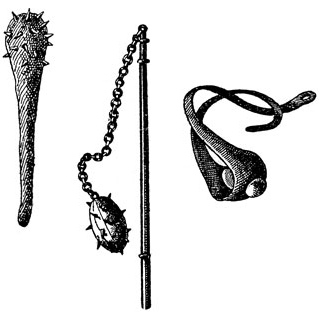
As much as I was impressed with the high-tech precision of the Navy SEALS portrayed in Act of Valor—and moved by their sacrifice for our country—I am generally more deeply affected by portrayals of the blunt savagery of older wars. I can marvel at the mathematical elegance of a sniper kill from a mile or more distant, until I recall James Michener’s account of a Polish peasant walking to meet armored and mounted invaders, carrying a length of ash wood he had induced to grow snugly around a few pieces of jagged flint, forming a homemade mace. The time required to grow your own weapon might be long enough to steel yourself to bludgeon an armored man to death, and another, and another. It seems to me that a man who would kill in this way must have the courage of his convictions. There is no hope of distance or anonymity; he must be willing to look his enemy in the eye and get his hands dirty.

* * * * *

Three recent experiences inspired this essay. [Blogger’s Note: This essay was written in 2012, to be read and critiqued in a men’s group.] The first was the continuation of a friendly debate regarding the best way to engage and challenge non-believers (here and here), in which a friend of mine indicated that the older he gets, the more he feels that polite arguments and sustained discussions are not worth his time. The second was an unexpectedly difficult Lenten struggle to hold my tongue, and the third was a men’s group’s opposition to the Health and Human Services (HHS) mandate. All three of these experiences have in common the issue of when and how we should engage those who think, feel, or believe differently than we do.
Continue reading

Byline: J. Thorp

I was doing some work for an old friend and former employer today and found myself reflecting on the wide variety of writing I’ve undertaken for pay in the past 30 years. Beginning as an undergraduate working in the Yale School of Music Concert Office, I’ve been creating marketing materials and writing profiles, features, articles, and speeches on everything from interior design to kung fu to the public impact of higher education.

So, just for kicks, here are a few recent bylines I’ve rediscovered. For those that are available online, I’ve included links.

Continue reading

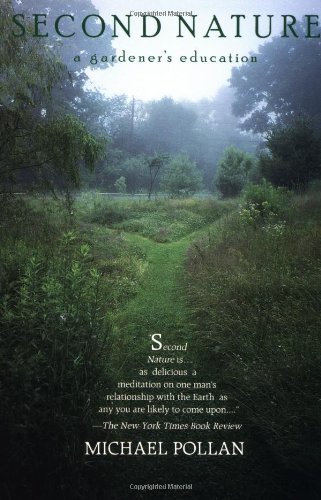
Book Break: Second Nature

I received a somewhat uneven education at Yale University, primarily because I was a 17-year-old kid when I arrived, and given a smorgasbord of courses and little guidance. Yale’s approach was to require a certain number of courses from each of four groupings, plus the prerequisites for your degree. With that as my framework and anthropology as my major, I had plenty of room in my schedule to take whatever caught my eye, from Herpetology to Polish to The History of Jazz.

The history course catalog, in particular, lured me down a rabbit hole: I took two History of the American West courses back to back, essentially two semesters following the colonial frontier westward over the history of Europeans on this continent, then a course called North American Environmental History, which traced our peculiarly American views and impacts on land, nature, and the environment over that same period.

That’s a long preamble to a book review.

Continue reading

Book Break: Laundry Love

Those who read my blog regularly know that book-related posts often include the caveat that this book might not be for everyone. In the case of one my latest reads, Laundry Love: Finding Joy in a Common Chore by Patric Richardson and Karin B. Miller, it’s definitely true, though not for the usual reasons. There is no dark or objectionable content, nor even a discouraging word, from start to finish.

However, I did make the mistake of discussing this book in mixed company exactly one time. The women were amused and ribbed me gently. The men in the room rolled their eyes and mocked me openly, then worked to change the subject. Apparently a book about doing laundry in more economical and environmentally friendly ways, written by a fellow with a deep love of vintage fashions, disco balls, and stain removal is, in fact, not for everyone.

Continue reading

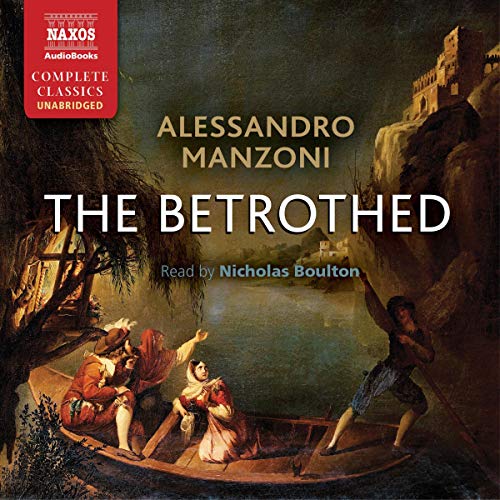
Book Break: The Betrothed by Alessandro Manzoni

I recently finished an English audio version of the 1828 Italian novel The Betrothed by Alessandro Manzoni on Audible. I first learned of this book—apparently the most famous and widely read novel in the Italian language—from a post by Joseph Pearce on the Imaginative Conservative website with the provocative title, “The Betrothed: The Greatest Novel Ever Written?” That caught my eye, because, as a somewhat educated person, I had never heard of it.

I also share all this information to distinguish this book from a much more recent young adult romance novel and two-book series of the same name by Kiera Cass. This is NOT that.

Instead, this is a wonderful historical novel set in the 1600s in Lombardy, Italy (pictured above), telling the story of two young, relatively poor, and essentially good villagers preparing for their much-desired marriage, and a cowardly priest who refuses them the sacrament after a tyrannous local lord threatens his life if he should join them. The fearful parish priest is balanced by two heroic clergy, a Franciscan friar who serves as a father and spiritual director to the pair, and the real-life Cardinal Federigo Borromeo, the heroic and holy archbishop of Milan, whose pastoral efforts bring about novel’s conclusion.

What struck me most about this novel is how timeless great literature actually is. The book is about many things, each as relatable today as in the time it was set and the time it was written, including:

Continue reading