Tolstoy, or Three Things to Love About Anna Karenina

Blogger’s Note: Several years ago, I agreed to my friend Jacqui’s challenge to read 15 Classics in 15 Weeks. Though 15 weeks is long past, the end is near, this being number 14 of 15.

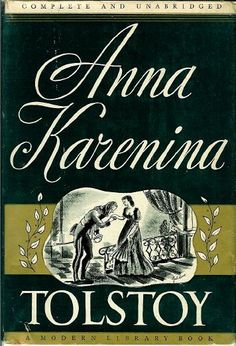
I am not like other men (or at least, not like many that I know). I have just past my forty-second birthday, and just read Leo Tolstoy’s immense novel Anna Karenina, by personal choice—and I loved it. 

My friend Fr. Tyler (from the Prairie Father blog) recommended it to me as “the greatest love story ever born in the mind of man and put to paper.” He has never led me astray in terms of fiction, but other men might not see that as a recommendation. I mentioned to a friend a week or so ago that I was reading it, and asked if he had ever. He laughed and said, “Ah…no.”

“It’s a great book,” I said, and again he smiled: “I don’t doubt it.” And that was that.

It is a big book (736 pages in my edition, with narrow margins and smallish type), full of Russian names and nicknames—Anna Arkadyevna Karenina, Konstantin “Kostya” Dmitrievich Lëvin, Prince Stepan “Stiva” Arkadyevich Oblonsky, Russian place names and politics, and Russian aristocrats who flavor their conversations with French and occasionally German. (Thank goodness for Google Translate!)

Despite these difficulties, I struggled to put it down. It manages to be an amazingly detailed portrait of time, place, and people, and yet remarkably universal and relevant to this time and place: 21st century America and even the 2016 election. It is heartbreakingly tragic, and incredible hopeful and uplifting. It is newly ranked among my favorite books of all time.

Without further ado, Three Things to Love About Anna Karenina:

  • Complexity of Characterization: Tolstoy sees his characters clearly and portrays them in all their complexity. Think of this: Anna is written as captivatingly beautiful; men and women alike can’t help but respond to her appearance and charm—and neither can you. This beauty could seem stereotypical or convenient for the sake of the story. It could be hammered away at like a one-note tune. But Anna is never simply beautiful.* She is captivating and tragic: people are drawn to her and repelled; her passions are apparent; her motives unknown even to herself. Tolstoy makes you love her and despair, much like her husband. And all of the characters are this way. Tolstoy is a keen observer of people: his descriptions are not of men, but of  intellectual men, simple men, dashing and pasty men, dandies and duds (sometimes within the same character).The worst have their qualities; the best have their faults. None are flawless, and so we believe in them.
  • The Art of Pacing: Tolstoy’s novel is peopled by people, and they live as we do, in time, lost in thought and out in the world. He details the lives, habits, thoughts and appearances of his characters and weaves together different story lines in a way that is simultaneous clear and keeps the reader wanting more. I had to fight the urge to flip forward when he jumped from one thread to another. As a writer, I realized in reading this that I rush everything: descriptions, details, day-to-day life. I leap from scene to scene, dialogue to dialogue, crisis to crisis—and only sketch the people involved. Tolstoy takes the time it takes. I could learn something here.
  • Religion and Culture. In March of 2011, I wrote of The Brother Karamazov, “Dostoevsky does not shy away from religion and philosophy, permitting his characters to speak at length (and in character, so not always clearly) about the existence of God, morality, humanity, science, psychology, justice, the state, and more. I was struck by how a book written circa 1880 could have so much to say about our world in 2011.” Replace Dostoevsky with Tolstoy and 2011 with 2016, and it applies here. I have been struck throughout this challenge by the fact that the true classics of literature capture the universal condition of humanity. They are not old, but timeless. It’s a pity that increasingly these books appear not to be read.
One final note: What I loved most about the book (but didn’t share as one of the Three Things, because it’s so personal to me) is that I saw myself in it. Anna’s story is obviously the focus, but the protagonist of the main parallel story, Konstantin Levin, is an idealistic, emotional man who wants to understand how the world works, but when he engages in society, in politics, it makes no sense. He drives himself to the brink by contemplating what it all means; he wants marriage and family and life in the country—and yet he struggles to enjoy these things with all the pressures he puts on his heart. 
The description of Levin before and during the birth of his first son brought me to tears. (I am not like most other men.) And finally, this:

I’ll get angry in the same way with the coachman Ivan, argue in the same way, speak my mind inappropriately, there will be the same wall between my soul’s holy of holies and other people, even my wife, I’ll accuse her in the same way of my own fear and then regret it, I’ll fail in the same way to understand with my reason why I pray, and yet I will pray—but my life now, my whole life, regardless of all that may happen to me, every minute of it, is not only not meaningless, as it was before, but has the unquestionable meaning of the good which it is in my power to put into it!

My list of 15 classics has changed somewhat over time; my next and final book will be much shorter: The Violent Bear It Away by Flannery O’Connor. Back soon!
—–
* I’m free-associating now: we recently watched an old Western on Netflix, The River of No Return, with Robert Mitchum and Marilyn Monroe. God bless Monroe, but she is a kind cinematic shorthand. She does what’s required: sing, seduce, weep, laugh, but her role in the story is, as our elder daughter once characterized her job as a toddler, to sit here and look beautiful. Anna is not that. At all.

Who Reigns In Your Heart?

Put no trust in princes, in children of Adam powerless to save. 
Who breathing his last, returns to the earth; that day all his planning comes to nothing. – Psalms 146:3-4

This Sunday is the Feast of Christ the King, celebrating the authority and lordship of Jesus over all of creation and marking the end of the liturgical year. Falling just before the all-consuming holiday season and the secular New Year, this feast provides us with an opportunity to reflect on what holds mastery over our hearts before the avalanche of turkey and tinsel. And since it specifically celebrates Chris’s kingship, it takes on special relevance in the aftermath of a contentious election.

Who is this Jesus who rules over all? We are blessed to have an immense icon of Christ the King in the dome of our church. This image, called Pantocrator or “ruler of all,” depicts our glorified Lord looking down from heaven, holding the Book of Life by which we are judged (God’s justice) but with His right hand raised in blessing (God’s mercy). The three-rayed halo behind His head and Greek letters in the image identify Him simultaneously as Jesus Christ (IC XC) and as “I Am Who Am” (WON), or God Himself.

This God-man is the same Jesus who was born in a stable; who grew up a carpenter’s son; who ate with sinners and challenged authorities; who said to His followers, “This is my Body; take and eat;” who suffered humiliation and torture to die on a cross; who rose from the dead and ascended to heaven; and who sent the Holy Spirit to guide the Church in these latter years. This is the same Jesus about whom Nathanael asked, “Can anything good come from Nazareth?” (John 1:46) and Thomas said, “My Lord and My God!” (John 20:28).

We have a second icon of Christ behind the altar and tabernacle, depicted in the womb of the Blessed Virgin. Though within His mother, He does not appear as an infant or as any child we have likely ever seen. His high forehead and discerning eyes convey wisdom and judgment beyond His years. This is the same Jesus that St. Augustine calls, “ever ancient, ever new” and that dwells in the tabernacle, in the Eucharist. He is the very Word of God referenced in John’s Gospel:

In the beginning was the Word, and the Word was with God, and the Word was God. He was in the beginning with God. All things came to be through him, and without him nothing came to be. What came to be through him was life, and this life was the light of the human race; the light shines in the darkness, and the darkness has not overcome it. – John 1:1-5
What joy, what hope, what light we have when He who is the very source of all blessing sits upon the throne of our hearts—and what sorrow, what despair, what darkness we experience when we yield His seat to idols: to fallen persons or passing things that will not—cannot—sustain us.

Advent begins next weekend: four weeks of penance and preparation Christmas. As the Church year ends and we prepare to welcome the newborn King of Kings, let us ask ourselves in whom we have placed our hope and trust. What or whom have we set upon the throne of our hearts? The time is now to elevate Christ to His proper place, that all else may fall into place and peace may prevail.

Your Eternity Begins Now


For the past few years, our family has joined numerous others from our parish and surrounding churches for Life Chain, an hour of silent public prayer for an end to the evil of abortion in our country. We spread out along Highway 19 between the parish school and Middle School West and stand facing the road, holding signs and praying.

On the back of the signs are suggested hymns, prayers, and petitions to guide our personal reflection during that hour. Every year, I am taken aback by the petition that asks me to pray for God’s mercy for all I have failed to do to protect life and work for an end to abortion—because every year, I am convinced I could have done more.

Now we are two weeks out from electing a new president. Most of us have likely made up our minds how we will vote—guided, I hope, by reason and a well-formed conscience.  God willing, no Catholic will cast a vote in support of abortion or its proponents. Beyond that, faithful Catholics can and do disagree on how best to combat the evils in our society by our actions at the ballot box. With that in mind, I would like to share three thoughts about the aftermath of Election Day.

First, remember the words of St. Therese of Lisieux: “The world is thy ship and not thy home.” We are a pilgrim people, and although our country is great and worth fighting for, the kingdom to which we truly belong is not here. We are called to evangelize and make disciples; to deny ourselves, take up our cross, and follow Jesus. The outcome of this election will not change our mission.

Second, we are all called by God—and not one of us is worth less in His eyes because of the votes we’ve cast, the mistakes we’ve made, or the sins we’ve committed. Whatever happens on November 8th, we will continue to suffer for our faith, as Christ foretold, and our nation and world will continue to need our light, our service, our faithful example. Cast your vote on Tuesday and move on, because we must pull together as one body, one spirit, in Christ.

Finally, we have no time to waste. Too often our efforts on behalf of the unborn, marriage, freedom of conscience, or religious liberty hinge on the headlines and reach a fever pitch every four years with the election of a new president. We support particular candidates or policies; we act as though everything is riding on the results of the next election, then shake our heads when nothing changes and go back to minding our own business.

What about the roughly 1,460 days between presidential elections?

As Catholics, our opposition to abortion and the other great evils of our time is not primarily about saving lives, but about saving souls—including our own. Obedience to Christ and His Church is a daily choice. Disobedience is also a choice. So is complacency and non-action.

Every moment, God calls; every moment we respond. Our eternity begins now.
Lord, have mercy on me for all have failed to do here in my own community to draw people to you and build your kingdom. Amen.

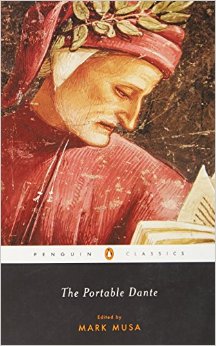
Dante, or Three Things to Love About the Divine Comedy

Blogger’s Note: Several years ago, I agreed to my friend Jacqui’s challenge to read 15 Classics in 15 Weeks. I continue to press forward, this being number 13 of 15, and at this point 15 Classics in 15 Years seems quite doable…

Late last week I finished reading Dante Alighieri’s Divine Comedy in its entirety for the first time. I had read excerpts for different classes over the years, and have read a little about the great work. The book itself was something of a pilgrimage through hell, purgatory, and heaven. This is my least favorite of the thirteen classics I’ve read so far as part of this challenge, and was tough sledding at times. Nevertheless, I do agree that this is a great literary work and worth the effort to complete at least once.

Without further ado, Three Things to Love about Dante’s Divine Comedy:

  • The Ambition. Dante the poet takes us on a journey through the Inferno (Hell), Purgatorio (Purgatory), and Paradisio (Heaven) with Dante the Pilgrim in order that the fictional Dante may change his ways and be saved. Each of these three journeys are told in verse, thirty-three cantos each, with each canto approximately 140 to 150 lines long. Along the way he meets ancient and more recent historical figures, who comment and prophesy on the political and religious turmoil of Dante’s time and place, along with sharing their own experience in the world and in the afterlife. The running commentary on the political machinations and rivalries in Dante’s home was the least interesting aspect of the book for me, but it is nonetheless impressive how much he weaves into this ambitious work.
  • The Creativity. The denizens of Hell and Purgatory, in particular, suffer in hundreds of ways peculiar to their specific sins and attachments. Dante’s Hell is hellish, disgusting and terrifying at times, culminating in an immense figure of Satan, not surrounded by flame, but eternally frozen in ice, suffering for his own sins. The journey through Purgatory is hopeful, but not easy, as imperfect souls labor to let go of those earthly things that weigh them down. Heaven, to me, was actually the least interesting of the three, in part due to the poet’s continued insistence that the beauty of the place was beyond his words and ability — but persevering to the end, to full union with God in the beatific vision, has its rewards. The last few cantos are lovely.
  • The Deep Belief. This, to me, is the greatest aspect of Dante’s masterpiece: the depth of theology, of faith, of true belief. Dante believes in the reality of Hell, and he puts people he loved in this world in that place of torment because of their sins. He peoples his poems with friends, contemporaries, nobles, and popes, explaining how and why each fell or rose, and when Dante the Pilgrim is asked to testify to his own faith, the lines resonate as the poet’s own sincere profession. Who knows how accurate a portrayal of the afterlife these poems are, but Dante gives us much to contemplate as we navigate this world.

I have begun number fourteen of fifteen classics, Tolstoy’s Anna Karenina, with that great opening line: “All happy families are alike; each unhappy family is unhappy in its own way.” It is a long book, but engaging— I hope to be done within the month!

Headed to the Motherland!

This time tomorrow, Gabe and I will be winding our way through security lines at Minneapolis-St. Paul International Airport, preparing to embark on a pilgrimage to Poland to join Pope Francis and millions of other Catholics from around the world for World Youth Day. This will be Gabe’s first flight, first international trip, and first World Youth Day; for me, it’s my second overseas trip (Iceland being the first), one of my two or three longest flights (Iceland and Hawaii), and my second World Youth Day (2002 in Toronto with Pope John Paul II).

For me, it as also very much a journey to the Motherland. My mom is a Polish Catholic farm girl whose grandparents immigrated from Poland in the first half of the 20th century: the Galubenskis and Koczwaras. The Thorp clan is so diverse in its various bloodlines that Polish has always been the nationality I’ve identified most strongly with: it’s the only foreign language I’ve heard older relatives speak, the one ethnic cuisine I’ve had older relatives cook and serve, the language I studied in college, and the only poetry I’ve ever taken the time to translate myself. Poland’s history is deep, beautiful, tragic, and heroic. And even now, remarkably Catholic.

I am blessed to make this trip with a number of friends from here in Minnesota, and especially with Gabe, whose faith as a teen almost certainly surpasses my own. It is my hope that this trip deepens my own conversion and his, so we can be the men God has called us to be with courage, joy, and zeal.

I’m sure I’ll post much more on this trip when we return. Pray for us and for our family and friends while we’re away, and know of our prayers for you! St. John Paul II, St. Maximilian Kolbe, St. Faustina Kowalska — all you great Polish saints and all you holy men and women — pray for us!