Eucharist Pep Talk for Parents


[Blogger’s Note: This is roughly the “pep talk”I gave to First Communion parents at the Wednesday, March 16, class — I am posting it here to share it with those who missed.]

The next day, the crowd that remained across the sea saw that there had been only one boat there, and that Jesus had not gone along with his disciples in the boat, but only his disciples had left. Other boats came from Tiberias near the place where they had eaten the bread when the Lord gave thanks. When the crowd saw that neither Jesus nor his disciples were there, they themselves got into boats and came to Capernaum looking for Jesus. And when they found him across the sea they said to him, “Rabbi, when did you get here?” Jesus answered them and said, “Amen, amen, I say to you, you are looking for me not because you saw signs but because you ate the loaves and were filled. Do not work for food that perishes but for the food that endures for eternal life, which the Son of Man will give you. For on him the Father, God, has set his seal.” So they said to him, “What can we do to accomplish the works of God?” Jesus answered and said to them, “This is the work of God, that you believe in the one he sent.” So they said to him, “What sign can you do, that we may see and believe in you? What can you do? Our ancestors ate manna in the desert, as it is written: ‘He gave them bread from heaven to eat.’” So Jesus said to them, “Amen, amen, I say to you, it was not Moses who gave the bread from heaven; my Father gives you the true bread from heaven. For the bread of God is that which comes down from heaven and gives life to the world.” So they said to him, “Sir, give us this bread always.” Jesus said to them, “I am the bread of life; whoever comes to me will never hunger, and whoever believes in me will never thirst. But I told you that although you have seen [me], you do not believe. Everything that the Father gives me will come to me, and I will not reject anyone who comes to me, because I came down from heaven not to do my own will but the will of the one who sent me. And this is the will of the one who sent me, that I should not lose anything of what he gave me, but that I should raise it [on] the last day. For this is the will of my Father, that everyone who sees the Son and believes in him may have eternal life, and I shall raise him [on] the last day.” — John 6:22-40

One of the striking things about this passage is that this conversation happens right after Jesus feeds 5,000 people with five loaves of bread and two fish — and already the people are asking Him for another sign, so that they can believe in Him: “What can you do?” Time and again, Jesus does incredible things, and time and again, the people doubt and ask for another sign.

This passage continues in with the famous Bread of Life discourse, in which Jesus tells the people, “I am the bread of life. Your ancestors ate the manna in the desert, but they died; this is the bread that comes down from heaven so that one may eat it and not die. I am the living bread that came down from heaven; whoever eats this bread will live forever; and the bread that I will give is my flesh for the life of the world” (John 6: 48-51)”

The people, and even his own disciples, struggle with this — it doesn’t makes sense and it offends many of them, so they begin to murmur about it. But Jesus doesn’t back down. He doesn’t say, “Oh, I met this as a metaphor.” He strengthens His language and insists that the people need to eat his flesh and drink his blood. And for many people, this is too much — they stop following Him.

Many Catholics struggle with the mystery of the Real Presence of Jesus in the Holy Eucharist, because it is a mystery. I have struggled with it, too, over the years, and so I pray with the man who asked Jesus to cure his son of a demon: “I do believe, help my unbelief!” (Mark 9:24).

As parents, we have to make a conscious effort of the will to believe this teaching and understand it as best we can. Why? Because as a Church, this is what we believe, and as a parish, this is what we are teaching your children: that Jesus is truly present, body, blood, soul, and divinity, in the Holy Eucharist. We make a big deal out of First Communion, and that’s wonderful. but if we tell our children that Jesus is truly present in the Eucharist, and the next weekend we don’t return to Mass, at some level they will know that we don’t really believe it, because if we did, nothing would keep us away!

As I said, I’ve struggled with this great mystery of our faith, as well — so I want to share a few things that helped me along the way. 
  • The first is something I’ve shared with you all before during First Communion classes. Scripture tells us that, “The word of God is living and effective” (Hebrews 4:12). What God says, is. For example, when God says, “Let there be light,” or let there be plants, animals, or people, it happens. And since Jesus is God, and since God is all good and all Truth, when Jesus says, “This is my body; take and eat,” we can trust that it is, in some mysterious way, truly his Body.
  • The second is something I noticed as I returned to the church and the sacraments: that what appeared to be a bit of bread and a sip of wine affected me in a way that no other bread and wine outside of the Mass ever did. I eat bread and occasionally drink wine outside of Mass, but never do I experience such a sense of peace and love as I do in the Eucharist.
  • The third is something that I began to do self-consciously, as an act of the will: I began to correct my thoughts and words. When I talked or thought about the Eucharist, I began to move myself from referring to the bread and wine, to the consecrated host or the consecrated wine, to the Body and Blood and Jesus. Over time, I began referring to the Eucharist as a person, Jesus, rather than a thing. This made more and more sense to me as I reflected on the fact that we often teach our children not to judge people by their appearances; it’s what’s underneath — what we can’t see — that counts. If the Eucharist is Jesus, it makes sense that the same logic applies: we should not judge the Real Presence by appearance (we see bread and wine) but what is inside and underneath (Jesus’ promise that this is His Body and Blood).
I remember, several years ago, my predecessor Carol asked me if I would lead the closing prayer for our LIFT classes. We had a brief period of Adoration at the end, and I was contemplating what I should say before the closing prayer and wondering how I got in this position. I fell to thinking about who was the most important person in the room. Certainly not me, even though I was leading prayer. Carol was the director of faith formation, but Father was there, too — so he was the most important, the leader…

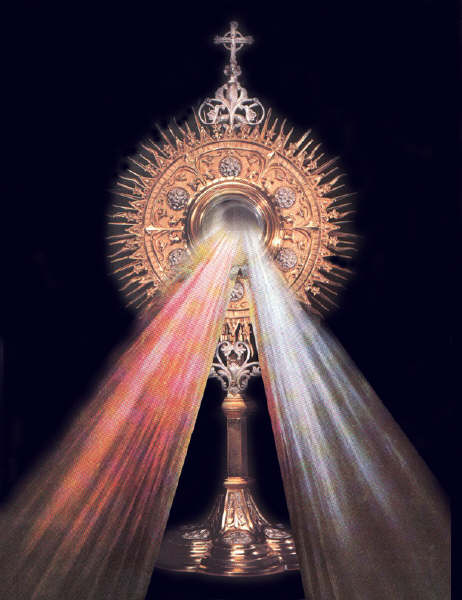
Then I looked at the monstrance and realized the truth that was staring me in the face: the most important person in the room was Jesus Christ, truly present in the Eucharist.

As parents, we must make every effort to believe this and act on it. There is no better witness, no better way to pass on the Catholic faith, than you making the Mass and Holy Eucharist the top priority in your life.

Our Faith Is Not Genetic

Last month I wrote about the power of family— in particular, parents—in keeping their children Catholic.  It’s sobering, then, to learn that the Catholic Church in the U.S. is losing members faster than it is gaining them, and that, for today’s teens, religious identity is no longer reliably inherited. In other words, Millenials aren’t likely to stay Catholic simply because their parents and grandparents were Catholic.

What does it take to keep our young people in the faith? According to a 2012 Canadian study, young adults who choose to remain Christian have four main characteristics:

  1. They have experienced God’s presence and have witnessed answered prayers.
  2. They can ask and openly discuss their real spiritual questions in their Christian community.
  3. They understand the Gospel at a deep level.
  4. And they have seen communities of faith and older adults living their faith.

Numbers 1 and 4 have to do with experiencing God, both personally and in community. Numbers 2 and 3 involve grappling with spiritual truth. Young people who have the opportunity to know and personally experience God and are encouraged to explore that knowledge and experience are more likely to choose for themselves to remain faithful to Christ and His Church.

Is that the environment we are fostering at St. Michael Catholic Church? In our homes and our schools?

Unfortunately, Catholics have a reputation—earned in many cases—for not spending much time delving into sacred Scripture and for not sharing firsthand experiences of the very real and personal God we hear about in the Bible and the Catechism. And while our Masses may be well attended, a faith that is manifested for an hour on Sunday is not the same faith that made evangelists, world travelers, and martyrs out of a dozen unknown Galileans. Their faith changed lives—their own, first and foremost. If church doesn’t change us, we’re not doing it right!

Eventually everyone makes a choice for or against Christ. So maybe it’s a good thing that we can no longer rely on birth and blood to pass our Catholicism on to the next generation.  If we acknowledge that even cradle Catholics need conversion; if we share our faith not just with those outside the Church, but with each other; if we pray for, and come to expect, God to act in our lives in personal and tangible ways, through answered prayers, spiritual gifts, vocations, and more—we will “become a people living for Christ” in every generation.

Blogger’s Note: This article appears in the Sunday, Nov. 15, parish bulletin.

The Power of Family


The family is the community in which, from childhood, one can learn moral values, begin to honor God, and make good use of freedom. Family life is an initiation into life in society. 

– from the Catechism of the Catholic Church, paragraph 2207

As I type, bishops from around the world are gathered in Rome discussing how best to preserve, strengthen, and encourage Christian families. With so many families suffering or broken, such confusion over the nature and purpose of marriage, and the constant cultural tension between anti-child forces (for reasons of overpopulation, so-called social responsibility, or personal choice and comfort) and  “child worship” (treating each child as the center of the world, deserving of the very best of everything), it’s easy to feel underappreciated and overwhelmed. It’s also easy to get caught up in the everyday hustle of school, work, sports, and recreation and lose sight of the true power of the family as a domestic church: an apprenticeship in love of God and neighbor.


The Catholic Church, in her wisdom, teaches that the family is the fundamental unit of society, with certain rights and responsibilities that no higher level social organization can ever claim. Humans are social creatures, made in the image of God, who is Himself a loving, life-giving communion of Persons—the Holy Trinity. The Catechism insists that government has a duty to protect and foster marriage and family and to help families (and not interfere) with raising and educating their children as they see fit, both in the world and in faith.

The Church, in fact, regards the education of children in the faith as a duty of parents—a point that cannot be overstated.  I sometimes hear parents say, “I want my son to make his own choice about his faith,” or “I don’t want to force it—it will mean more my daughter if she comes to God on her own path.” While it is true that, ultimately, we each make our own choice for or against Jesus Christ and His Church, we cannot entrust that choice to the sole discretion of our children—any more than we would allow them to decide whether to drink something we know to be poison. If we truly believe what the Catholic faith teaches, the choice our children face is much more stark than how they will spend their Sunday mornings—it’s about how they will spend eternity.

Next Wednesday we begin a new year of First Confession/First Communion and Confirmation classes—and as always, it is essential that parents take the lead in sharing the good news of Jesus Christ and the eternal truths of the Catholic Church. Your personal example is the most powerful witness to your children—and male role models, in particular, have extraordinary power in keeping kids Catholic. Even simple things, like reading a Bible story, putting on a tie or a dress for Mass, or taking time to pray with and bless your child before bed, make deep and lasting impressions.

Scripture reminds us, “Train the young in the way they should go; even when old, they will not swerve from it” (Proverbs  22:6 ). We are all practicing Catholics, all sinners who are in training to love as God loves. But as parents we are also powerful, and we must not neglect to use that power to bring our kids to Christ, who said, “Whoever receives one child such as this in my name receives me” (Matthew 18:5).

Blogger’s Note: This article appears in the Sunday, Oct. 18, parish bulletin.

Book Break: In the Beginning: A Catholic Understanding of the Story of Creation and the Fall

One of the many things I meant to do in the past year was to explore and review several books on the Catholic view of creation and evolution, in order to help parish parents and grandparents answer their questions on the topic and those of their children. My hope was to find a book or two that might be helpful to inquiring minds of all ages.

As usual, I bit off more than I could possibly chew and have completed only one such book. On a positive note, it was excellent.

‘In the Beginning…’ A Catholic Understanding of the Story of Creation and the Fall is an edited compilation of four Lenten homilies given by Pope Benedict XVI in 1981, when he was still Joseph Ratzinger, archbishop of Munich and Freising. His goal was to develop a catechesis of Creation for adults. The four homilies build, one upon the other, to present a clear case for what the Genesis accounts of Creation and the Fall mean and why they continue to matter:

  • The first homily, “God the Creator,” lays out the so-called conflict between the Creation account(s) and science, and discusses how and why we interpret scripture the way we do: in the context of Jesus, to whom the entirety of scripture, written over the course of centuries, points.
  • The second homily, “The Meaning of the Biblical Creation Accounts,” addresses the Creation story specifically, the reasonableness of belief in Creation, the ways in which science points to Creation, the sabbath structure and rhythm of Creation — and the emergence of the view that humanity is at conflict with nature.
  • In the third homily, “The Creation of the Human Being,” Pope Benedict focuses on the heart of the matter for many modern Catholics: where humans come from. He explains that Genesis has more to do with who we are (imago Dei, or image of God) than how we got here, then tackles evolutionary theory directly — what it can explain about our existence, and what it can’t.
  • In the fourth homily, “Sin and Salvation,” Pope Benedict discusses the Fall of Adam and Eve, and the plan for salvation, with Christ as the new Adam. In perhaps the most profound explanation for me personally, he clearly lays out why, because we are creatures created by God, obedience to God’s law is not a restriction of freedom (like we often perceive it) — we are made for this, and thrive under God’s law because it’s in our nature!
The entire book is exactly 100 pages, including the Appendix, entitled “The Consequences of Faith in Creation, which reads like a fifth homily on how we got to the point that, since the Renaissance, understanding of and belief in Creation theology has diminished to the point that it is rarely spoken of in modern Catholicism, and why our fundamental “creatureliness” is essential to our future. Pope Benedict’s style is straightforward and clear; he is obviously well-read and -researched on this topic, but makes it accessible to (though not always easy for) the patient reader. The book is less specifically about evolution that I imagined, but rewarding and worth the time. It’s fun to imagine these as homilies, sitting in the pews, wishing someone was writing all this down.

Book Break: The Unmasking of Oscar Wilde

A little more than a year ago, I wrote a brief review of Oscar Wilde’s play, The Importance of Being Earnest. I was quite disappointed in it, given how much I loved his novel The Picture of Dorian Gray when I read it in 2009, and I said so.

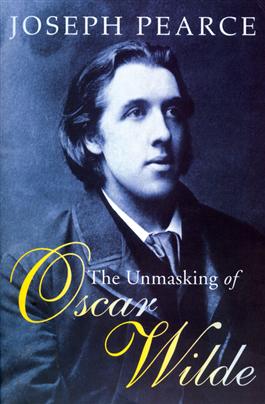
My bride’s soon-to-be sister-in-law — who is as smart and well-read as they come, and who loves Wilde — suggested that there might be more to the play than I thought. A short while later, I ran across Joseph Pearce’s book The Unmasking of Oscar Wilde. I knew only a hint about Wilde’s life and thought perhaps the finding of the this biography was providential. When I saw that it was published by the Catholic publishing house Ignatius Press, I was still more intrigued and vowed to read it. I started it this summer, and finished it last week. It is a thought-provoking, page-turning biography of a fascinating and tragic man.

For someone who knew only a little of Wilde’s purported life, the book was eye-opening on many levels. Pearce cites primary sources such as personal correspondence, several other Wilde biographies, writings from and about Wilde’s contemporaries, and even excerpts from the literature and criticism Wilde wrote and admired. He makes strong attempts to debunk a few longstanding “facts” about Wilde — e.g., that Wilde ever had syphilus — and delves deeply into the thesis that Wilde’s decadent, and ultimately destructive public persona was a mask covering a deeply moral, and tragically conflicted, core. Wilde’s personal descent from artistic genius and admired husband and father into a world of drinking, drugs, homosexuality, and prostitution is reflected in The Picture of Dorian Gray and other works — but almost without exception, those works ultimately conveyed a traditional moral. The legendary decadent was quite often a very Christian writer

Pearce makes his case for the mask analogy well, beginning with Wilde’s mother’s own tendency to cultivate little fictions about herself and to morph with the times, and Wilde’s early and frequent attraction to the romance and arresting beauty of Catholicism, which was viewed unfavorably by his father — and continuing through his apparent long-delayed conversion as he lay dying, broke and lonely.Through each period of Wilde’s life, Pearce draws upon biographical events, historical circumstances, and the often obvious conflict between Wilde’s running criticism of art and society and the deeply moral and religious poetry, fiction, and plays he created alongside it.

Pearce almost makes his case too well for my taste, in fact, building the biography upon Wilde’s love of Dante, as a long descent into Hell, followed by a climb through Purgatory toward an eleventh-hour conversion and (God willing) Paradise. Each chapter fits the construct neatly, and Pearce moves so freely between Wilde’s words and those of his contemporaries, that an inattentive reader can easily lose track of what is actually Wilde in his own words, and what is Pearce positing a reasonable theory about Wilde using the words of others, but that could be mistaken.

Upon reflection, however, I found myself convinced by Pearce’s premise and understanding of Wilde, but wishing that in each chapter he had quit hammering once the nail was driven. I suspect the flourishes that bothered me will delight many other readers.

Learning about Wilde’s life did not make me love The Importance of Being Earnest as a story or play — though it makes the origins and intentions behind the play more interesting to contemplate. Wilde’s own words in the edition I own describe the play as follows: “The play is exquisitely trivial, a delicate bubble of fancy, and it has its philosophy…That we should treat all the trivial things of life seriously, and all the serious things of life with a sincere and studied triviality.” This is the voice of Wilde’s public persona: the irreverent, boundary-breaking, drawing-room wit that made him as legendary and popular as his carnal weaknesses made him infamous. The back cover  of my copy claims that Earnest embodies more than any other play, Wilde’s “decency and warmth” by which I think it means it was lighter fare and not in danger of being attacked as indecent, as some of his more explicitly decadent and overtly moral books, like Gray, were.

So why this shift to something lighter — simultaneously less decadent and controversial, and less moral and moving? Pearce isn’t explicit about his views. But it is interesting that Wilde wrote this play during a break in the self-destructive relationship with another man, Alfred Douglas, that brought about his downfall. He hadn’t worked in some time, was deeply in debt, and had few friends upon whom he could rely for help — and he wrote a satire that, unlike his other works, appears purposely to be an exercise in style over substance, mocking conventional morality instead of leveraging immorality to drive home a moral.

It was a triumph at the box office. Perhaps necessity is the mother of invention?