The Stray: A Christmas Poem


The Stray
Well-groomed for a shepherd, fragrant for a sheep, the sleepless lad lurches, shuffle-stomp, shuffle-stomp, out of town toward the hills. Dawn spills like too much wine, red above the ridges where flock and friends, abandoned, spent the night. Alright, he mutters thickly, steadying himself as for a blow. The sun is up, and now they know.
But what a night!
Ahead a man and donkey walk a slow, steady pace. Full of grace, his wife and infant rock and sway. Clop. Clop. Both stop—and pick their path with care. They see him there. The man measures with a carpenter’s eye. Radiant and shy, the woman offers him a smile as they pass. An ass, an old goat, and a kid—he returns a toothy grin—
But what a woman!
Head pounding, heart pounding, hung-over still. Narrow path, tumbled rock, all uphill. Grumbling and stumbling, the stray finds his way to the herd. Not a word. They are like pilgrims resting at a journey’s end, world-weary and at peace. Eyes bleary, still he sees they also spent the night in light and song. Something’s amiss, he says to one.
What did I miss?

J. Thorp
12/15/16

We Are a Pilgrim People

“I’ll be home for Christmas, if only in my dreams.”
 
We are on the home stretch: a week out from the blessed Feast of the Nativity, Christmas, when we celebrate the birth of our Savior, Jesus Christ. Many of us, however, feel as though Christmas has been upon us for weeks now, an immense burden of gifts, lights, music, and cheer under which we labor to breathe—like a lone elf struggling to load the loot of the world into a glossy red sleigh.
 
The first Christmas was uncomfortable for a different set of reasons. In the days prior, a newly-married couple traveled from Nazareth to Bethlehem with a few essentials and a donkey. They traveled not by choice, but by order of the emperor in Rome. They arrived not to familiar faces, food, and comfort, but to a town crowded with distant kin and strangers, and the crudest of accommodations: a dugout-stable-turned-makeshift-nursery where the woman would give birth to a son.

It turned into celebration of sorts, I suppose, as angels summoned shepherds from the hills to the town to greet the newborn as they were, dirt-poor and smelling of sheep. A star, too, beckoned Magi from the East, strange and majestic, in rich robes and bearing gifts too generous for the circumstances. (I wonder if Joseph might have gripped his staff a little tighter, wondering how he, his wife, and son would make it back across the dangerous country alive while carrying gold, frankincense, and myrrh.)
 
Imagine a Christmas celebration in which only your third and fourth cousins showed up, along with the local indigent population and three fabulously wealthy foreigners—and then you had a baby the basement. Perhaps the stresses of this Christmas are more manageable from this perspective.

Mary and Joseph were displaced—from Nazareth to Bethlehem for the census; from Bethlehem to Jerusalem for the presentation of Jesus at the Temple; and in exile to Egypt, to protect their son from the murderous intent of Herod. Even as a baby, “the Son of Man has nowhere to rest his head” (Matthew 8:20).
 
In LIFT this month, we are completing our study of the Mass. As an introduction to the adult and teen lesson, we are watching a short video from elementsofthecatholicmass.com on the role of parishioners in the Mass. As the video explains, the word parishioner comes from the Greek work paraoikos, meaning pilgrim—it’s the same Greek word that gives us the English word pariah, which means outcast.
 
We don’t belong here. We, like the Holy Family, are a pilgrim people, en route to our true home with God in heaven. The Church is the ship that carries us: the ark which preserves God’s people from the storms and waves that batter and drown the rest of the world.* Let us take refuge here from the maelstrom—the dizzying spin the world has put on Christmas—and draw near, instead, to Mary, Joseph, and the newborn king of kings.
 
* * * * *
*In fact, the area of the church worship space where we sit, which we commonly call the sanctuary, is technically called the nave—which comes from the Latin word for ship.

Don’t Lose Your Sense of Wonder

I sometimes think of life as a high sledding hill with God at the top, giving us a push. It’s left to us to steer, but like any good father, He knows our tendencies to close our eyes or overcorrect better than we do, and so He can see every curve we’ll negotiate, every bump that will bounce us airborne, every tree we’ll hit. He sees the trajectories of other sledders and knows their tendencies, as well—He knows whose paths we’ll cross, for good or for ill, and when we’ll be blindsided. He alone has the long view, the Big Picture. We must persist with less—a glimpse of heaven through the treetops as we slip away, faster, faster…


I remember, as a boy, waiting breathlessly for Christmas. Christmas Eve was sweet agony—tossing and turning, knowing I had to fall asleep so Santa would come and yet straining my ears for the jingle of bells and the chance at a glimpse of that jolly, saintly man. I couldn’t wait for presents, of course, but I knew they would be great because I knew HE was great! And although we were not, for the most part, a church-going family, still we had a beautiful Nativity, and I knew the story of birth of Jesus. I knew, at least, that He too was a great man and a great gift to us. In these two stories, magic, hope, anticipation, and gratitude combined into one overwhelming sensation for my young heart: wonder!

Wonder seems harder to come by these days. Our science and technology have helped us explain the Heaven out of the world around us. And we have so much on our plates. In Mary’s day, she and Joseph were very much concerned with their daily bread, with doing God’s will, and with deliverance from evil. Now we have countless other worries, from careers to car repairs, birthday parties to ballgames. Beneath it all we hear the steady drumbeat to, as one retailer put it this year, “Win the Holidays.”  We seem so short of time, and the pressure on our heart squeezes it empty. Too many of us feel a hollow ache between our lungs as Christmas approaches, instead of joy and wonder.

The good news is that it’s not too late. Christmas is not a day so much as a season, which begins with the Feast of the Nativity on December 25th and continues for a dozen days: a celebration that “God so loved the world that he gave his only Son, so that everyone who believes in him might not perish but might have eternal life (John 3:16).” The good news is that Santa is ephemeral, while Christ is eternal. The good news is the Good News: that Jesus is God made flesh, that He came to live with us and suffer and die for us, that He rose again from dead, and that He saves us from our sins.

It is no wonder we sometimes feel blue at Christmas. We celebrate a joy we will not experience this side of heaven. No matter how blessed we are in this life, the gulf between what we have and what our heart yearns for in Heaven is so deep and so wide we cannot clearly see the other side or hope to cross it on our own. But Jesus came to show us the way; He gives us His Body and Blood to strengthen us, and His own Spirit to lead us.

The road that stretches before the feet of a man is a challenge to his heart long before it tests the strength of his legs. Our destiny is to run to the edge of the world and beyond, off into the darkness: sure for all our blindness, secure for all our helplessness, strong for all our weakness, gaily in love for all the pressure on our hearts.

– My Way of Life, a simplified Summa Theologica

May God bless you and yours with peace and love throughout this season and beyond. Merry Christmas!

Blogger’s Note: This article appears in the Sunday, Dec. 27, parish bulletin.

Greetings from the North Pole, Part XIII

Blogger’s Note: For several years now, we have received a Christmas letter from an Elfin correspondent, Siberius Quill. This is the 2015 installment.

Christmas 2015

My dearest children!

Greetings to you—and Sincere Prayers that neither this grey and muddy Winter nor the toppling of your tree as you were decorating has dampened your Christmas Spirit! Though your Father and eldest Brother had a time wrestling the Prickly Thing into a new stand, the old spruce looks Splendid and is holding its needles as well as can be expected given the Strain! Well done!


 Another Christmas has arrived! It has been Quite Some Time since you Elder Children have asked a question about the Old Man—his Appearance and Ways, or How he does What he does. At long last, at the urging of your own old man, lovely Lily-bell has posed a deep question, indeed: “Why is Santa’s nose so weird?” Your Father wisely pressed her on this, thinking perhaps she thought it too Red or too Jolly, but she insisted that the inside of his nose was weird. No more would she say, and I fear that’s little to go on, though not quite Nothing. I shall make an Answer that I hope will satisfy. I have spoken to his personal Physician, Vitali Mendwell, from the elfin Hospital Corps, and verily, the inside of Kris Kringle’s nose is, in fact, strange by Mortal standards: without drip or drainage or unsightly Bogeys. Even here above the Circle, he never runs down, never catches Cold, never has so much as a sniffle—truly!

Why this is nobody knows for certain: Doc Vittles, as we call him, always credits diet; Muggsy and Froth at the Buttery says it’s his daily doses of Cocoa with cayenne and cinnamon in the morning and Peppermint Tea in the evening; and the good Sisters of Perpetual Winter insist that it’s his Jolly Sanctity—the joyous reward of a Life Well-Lived! I tend to side with the Sisters: more often than not they are right, and Sinter Klaas is a Saint, after all!

It is a Joy to watch you all continue to grow in the Virtues—Faith, Hope, and Charity—not to mention height! A towering Bunch you are, like a roving Forest to elfin eyes—and I am Blessed to be able to check in on you Now and Again. Do not forget our Correspondence, and encourage your youngest sibling in All Things Christmas: but especially the Peace that comes from Giving and Serving. Heaven awaits!

A Very Happy Christmas to you all!
Yours Still and Always,

Q

Siberius Quill

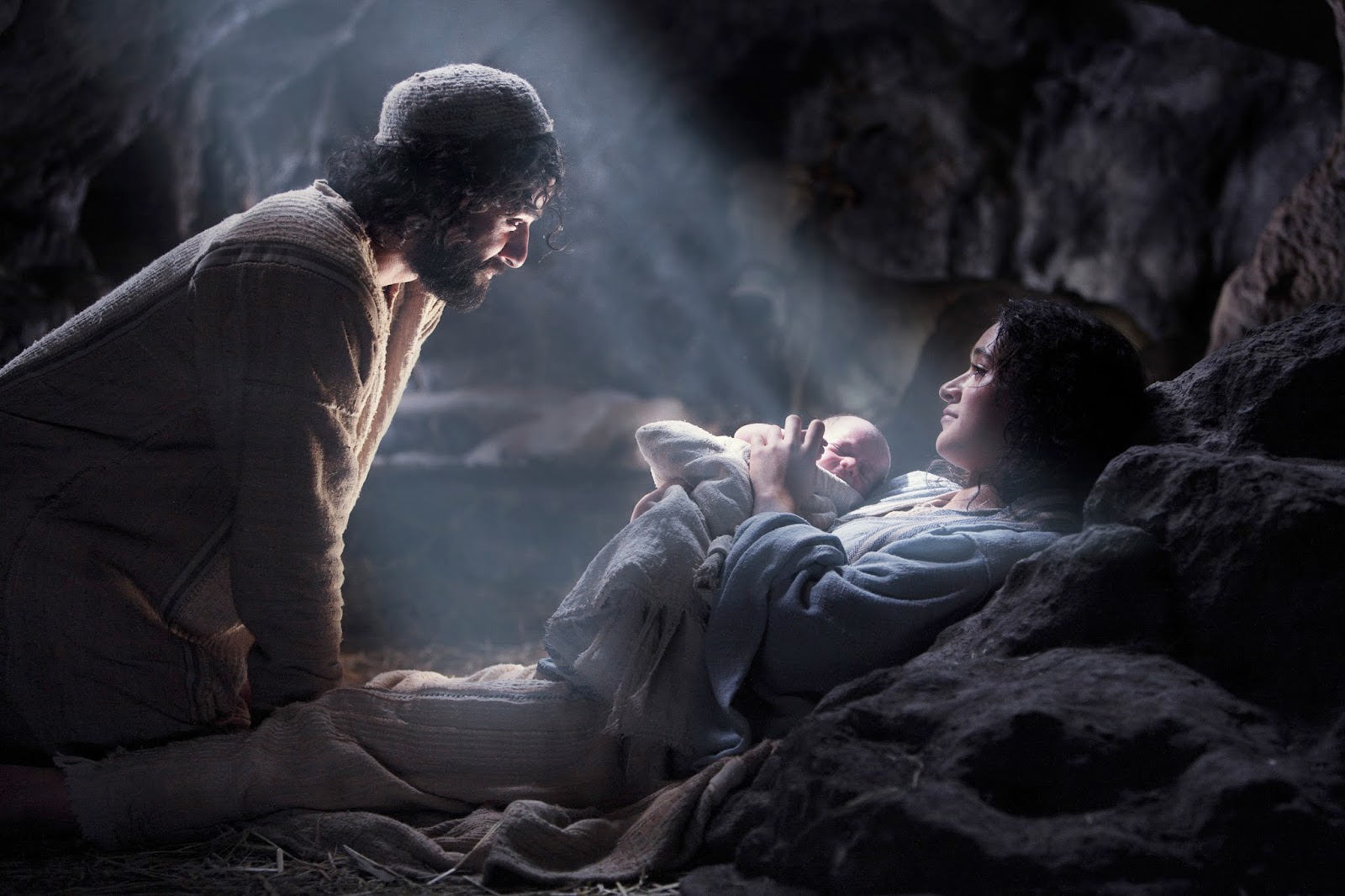
A Christmas Poem: Cave of Wonder

From the film The Nativity Story (2006), rated PG
Wrapped in secret, underground
Sleeping infant makes no sound
Bed of straw and stench of beast
Greatest born to family least
 
Rapt in secret, working man
Virgin mother, shepherd band
Wise men from a country far
Worship Him by light of star
 
Wrapped in secret, hunted one
Earthly might fears Godly son
He has come to seek and save
Born below to rise from grave
 
Rapt in secret, angels sing
Glory to the King of kings
Strength made helpless; selfless love
Here below shows God above
 
Wrapped in secret, greatest gift
By our hands of swaddling stripped
Hung upon a lifeless tree
Sacrifice for you and me
 
Rapt in secret, we the poor
Kneel in before Him evermore:
Blest be home and blest be feast
And blest are we, His servants least
 
J. Thorp
December 2015