By Parish or By Person? A Practical Approach to Evangelizing the Lost and Forming Disciples

All of the faithful find themselves at times challenged by Christ’s Great Commission to make disciples of all nations. We struggle to know how to approach those near and dear to us who may be distant from God, when to insert ourselves into the lives of others in our neighborhood and faith community who may regard our attention as an intrusion, and to what extent we should devote ourselves to those “beyond our borders” when there is so much to do in our own home and community.

In my short time as director of faith formation at our parish, two different books have been strongly recommended to me, presenting two different approaches to making disciples.  The first, Rebuilt by White and Corcoran, tells the story of a parish in Maryland that, under the leadership of a new pastor and his lay associate, has turned from a stagnant and dying community into a rapidly growing parish due to its willingness to challenge and change longstanding approaches in order to be more accessible to the lost and “dechurched.” The second, Forming Intentional Disciples by Weddell, shares 18 years of experience visiting, interviewing, and helping parishes and parish leaders become and then develop disciples who know and understand their personal gifts and give them willingly to God in order both to evangelize others and to deepen their own “lived relationship with God.”

Both books do a great job of articulating the problems we face as Catholic parishes in our modern individualistic, relativistic, and consumer society. Both reference scripture, the Magesterium, and the saints to articulate what should be done to address these problems. Both have very different approaches to execution, and we can learn a great deal by looking at them both in brief.

Rebuilt is a wildly popular book in our community and church. The authors of Rebuilt found themselves in challenged and challenging parish, and by their own admission, neither was well equipped or particularly wanted to be there. The community, as they describe it, sounds singularly unfriendly; the staff, incompetent; the regulars smug and self-satisfied. The authors find their feet when they decide to reach out to the lost in the community and make a conscious effort to create disciples—and by trial and error and what they call “dynamic orthodoxy,” they’ve been growing ever since.

You may already be getting the feeling that I didn’t love this book. Right off the bat, several details and anecdotes from concerned me, including but not limited to:

  • The willingness of the authors to lambast staff members and parishioners in print with enough specificity to leave little doubt to others in the community who they were talking about.
  • Father White’s description of a weekend spent at the beach with family and friends, after which he says “thank goodness” they didn’t go to Mass, which was poorly done from his perspective (never mind that Christ is present regardless, or that he could’ve said mass where his friends and family were).
  • Father White’s description of a young mother juggling two kids and a folding chair in his church’s gathering space, only to get frustrated and leave (never mind that he might have assisted her or asked someone else to do so).
  • Mr. Corcoran addressing his priest as Mike rather than Father.

But more than these examples, I read the book with a growing uneasiness that something was fundamentally wrong in their approach to rebuilding their parish, which would be manifested in the results. They decried systems, then described their own new systemic approach, creating a parish “weekend experience” that is likely unrecognizable to many faithful and fallen Catholics. They decried religious consumerism, then began a communications and marketing campaign and opened a snack bar. They preached reaching out to the lost, but neglected the lost in their own pews for what I call a “better class of loser” (with apologies to Randy Travis)—so-called Timonium Tim, who isn’t a believer and isn’t in the pews, who but represents a growth opportunity in a way that the older folks who sat in the pews for decades do not.

The book reads like a management book, and many of the problems and insights the authors develop early on are management problems in the areas of human resources, communications, logistics, and leadership. Somewhere along the way, these management issues were conflated and confused with deeper, spiritual concerns, leading to (from my perspective) the fundamental problem, articulated in the very last line of the book as an call to action: “Make church matter.”

Think about the pride hidden in that statement. It’s pride that assumes our problems today are unique and demand a new approach. It’s pride that develops its own lingo to label people, positioning churchpeople against the dechurched. Most strikingly, it’s pride that assumes today’s Catholic Church has somehow been rendered meaningless—and that only we can fix it.

This is not to say that the book is without merit. Corcoran and White identify real problems and issue real challenges to take the Great Commission seriously, to improve liturgical music, and to think about the obstacles faithful Catholics erect—consciously or unconciously—that make their parishes seem confusing or unwelcoming to outsiders. The problem with their approach is that, by following the model of Protestant megachurches and adopting the language of business leaders, pop songs, and Nietzsche, they have created a book and a weekend experience that are potentially confusing and unwelcoming to Catholics!

Where the authors of Rebuilt tackle the problems they see in the Catholic Church at the parish level with the goal of growing more disciples, Ms. Weddell’s book addresses the individual with the goal of growing deeper disciples. The author admits that unintentional discipleship would not be true discipleship; by “intentional discipleship” she seeks to emphasize the decision an individual makes, not simply to go fulfill an obligation or follow the rules, but to drop their nets like Peter to follow Christ—to change their way of life out of “a Holy Spirit-given ‘hunger and thirst for righteousness.’”

Weddell points to several parishes in which this God-given hunger is spreading, drawing people into a deeper relationship with Jesus and a greater willingness to share their gifts with their neighbors and the Church. The results are no less striking than those of Nativity parish in Rebuilt—except that the transformation appears to be taking place first among the people in the pews. The key to renewal in the parishes she describes is a renewed emphasis on the fact that we have a personal God with whom we can have a real, living relationship. Weddell shares data and anecdotes to illustrate that too many of the faithful in our pews, but also serving in our parish offices and at the altar, don’t believe in a personal God, don’t have a lived relationship with Him—have barely begun to move toward an intentional discipleship. We have lost sheep in our own communities, in some cases, charged with spreading a Good News they don’t understand or believe themselves.

Her solution isn’t easy. She calls Catholics to recognize that each person is unique and responding to a unique vocational call. She describes five “thresholds of conversion” that individuals move through toward discipleship, beginning with initial trust of someone or something identifiably Christian, followed by spiritual curiosity, spiritual openness, active spiritual seeking, then finally, intentional discipleship. And she insists that we “never accept a label for story.” Even if someone self-identifies as atheist, fallen away or practicing Catholic, they likely have their own idea of what that means…and none of those labels tells you where they are on their journey though these thresholds.

It is daunting to think of pursuing our mission of evangelization and conversion at such an intimate level, one person at a time—but in her own nod to the business-book genre, Weddell gives us a four-step approach (edited from Forming Intentional Disciples, pg. 188):

  1. Break the silence.
    • Talk openly about the possibility of a relationship with a personal God who loves you. Talk about your own relationship with God.
    • Talk explicitly about following Jesus—and use His name!
    • Ask others about their lived relationship with God.
    • Share the kerygma—the “Great Story of Jesus.”
  2. Offer multiple, overlapping opportunities for baptized and non-baptized people to personally encounter Jesus in the midst of his Church.
  3. Expect and plan for conversion.
  4. Lay the spiritual foundation through organized, sustained intercessory prayer.

It should be noted that Weddell devotes at least a chapter to each of these steps. Her overall approach resonates with me, not only because it reflects my own path toward a “lived relationship with God,” but also because it asks me to treat others as I would like to be treated—not as churchpeople or dechurched, Crusty Catholic or Timonium Tim, but as a unique person created in the image of God and called to loving communion with Him.

From my perspective, Forming Intentional Disciples is notably different from Rebuilt in at least two other key ways:

  • First, it’s clearly not all about us and our ability to deliver the right weekend experience in order to “make church matter.” Faith in God and the power of prayer (steps 3 and 4) are fundamental; we can’t do this alone—but we aren’t alone! 
  • Second, Forming Intentional Disciples does not treat the Mass and the sacraments as tools of evangelization. That’s not their purpose, and I would argue they aren’t particularly useful or helpful to that end. A weekend experience that welcomes those who do not profess our faith to make themselves at home and participate in the Liturgy of the Eucharist (something RCIA candidates don’t get to do) might even prove to be detrimental to the sacraments, the Church, and the faithful and dechurched alike. It could lead to more misunderstandings and conflict within the church, and hard feelings as “converts” move from “rebuilt” parishes into the wider Catholic world.

Nothing in Weddell’s approach should come as a surprise or drastically change our understanding of what we are to do as faithful Catholics—and that’s okay. Truth and beauty are as unchanging and attractive as ever—our efforts should be focused on opening the eyes of the blind, rather than trying to rebuild and make attractive what they have yet to clearly see. These days I’m working closely with a number of good, faithful Catholics who love the book Rebuilt, and we get along just fine—but it’s the Intentional Discipleship approach that is resounding in me and is shaping my efforts in the church.
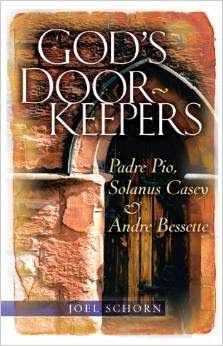
Book Break: God’s Doorkeepers

Ordinarily when I do one of these mini-reviews, I try to summarize the book as I offer my reflections on it. In the case of Joel Schorn’s wonderful little book God’s Doorkeepers, which presents the parallel biographies of three 20th century saints (though only two have been canonized to date), I’ll let the summary on the back of the book explain the work for me:
I look on my whole life as giving, and I want to give and give until there is nothing left to give. – Solanus Casey
Padre Pio and Andre Bessette would have readily agreed with Solanus Casey even though, on the surface, none of the three had much to give. All grew up in humble circumstances, each suffered poor health, and none achieved academic distinction or prominent positions in their religious orders. They were, to all appearances, the sort of people others overlook.
Yet in their lifetimes, untold numbers found physical and interior healing through their ministries, and since their deaths their fame has grown enormously. Their secret was the secret of every successful Christian life: In complete humility, they abandoned themselves to the will of God.
Bessette and Casey literally answered the door at their monasteries, and Pio was something of a spiritual doorkeeper in the confessional. God’s Doorkeepers reveals how these miracle-workers, in spite of their lowly circumstances, inspired and continue to inspire those who seek a healing encounter with God.
By way of commentary, I’ll offer this observation: I am sometimes guilty of reading Scripture or accounts of the incredible accomplishments of the ancient saints and silently wondering, “Where is God today? Why does He not show his power and love today as he’s done in the past?” I admit that I sometimes long for a sign (a parted sea, the lame walking, the dead raised) and when I don’t witness these things…I don’t lose faith, per se, but I wonder…

Continue reading

A New Calling

Blogger’s Note: For those few of you who still follow this blog and don’t attend St. Michael Catholic Church, the article below was published at our pastor’s request as a self-introduction to the community in last weekend’s parish bulletin.

As of this week, I have been your new faith formation director for one month. The transition feels fresher than that, and I feel just as green, in many ways, as on the first day in the office. As I’ve said more than once, it’s like I’m a first-time parent again: like I have been entrusted with something precious and fragile and sent home with lots of advice and no clear idea of what to expect next.

Okay, it’s not as bad as all that. My wife Jodi and I have been parishioners here for 11 years now; two of our children (Trevor and Lily) have been born and baptized here, and our older kids (Brendan, Gabe, and Emma) have been altar servers and active in the youth group and other activities. Jodi and I were youth leaders at our previous parish—St. Michael’s in Remus, Michigan—and have been LIFT catechists, liturgical ministers, Natural Family Planning and God’s Plan For a Joy-Filled Marriage witnesses, and CRHP witnesses here. I also served on the Faith Formation Advisory Committee during the transition to LIFT, so I understand what we’re trying to accomplish and know how hard Carol and Kathy have worked over the years to build our core program.

Nevertheless, this is a big shift for me. I was baptized in the Faith but not raised in it, and I became a husband and father before I became a confirmed and practicing Catholic. Until last month, I had spent my entire professional career in journalism and communications. Jodi and I have talked for several years about the possibility of me working for the Church someday, but never imagined the call would come this soon. And it is a call. This past Monday’s reading from the prophet Hosea described the Lord leading His people to a desert place and speaking to their heart—and professionally, this past year was desolate and lonely, until former colleagues, friends, and family all began to urge me to pray and to think about what I was being called to do.

I prayed. I did my best to listen. And I’m here…now what?

We visited some of our former youth group “kids” in Michigan earlier this month, one of whom was recently featured in the Diocese of Grand Rapids magazine for her beautiful pro-life witness. In the article, Natalie jokes about how much she could accomplish if God would just give her a clear to-do list. Instead she—and we—are called into a relationship and an ongoing conversation with God, in which we get to know Him day by day, enabling us to better hear, understand, and respond to His desires for us.

That’s where I find myself now. We have a beautiful parish and community, faith-filled priests, strong core programs, devout and dedicated catechists, and a rookie faith-formation director who is on the job, but still praying and listening. We have a firm foundation and so much potential—and I look forward to hearing from and working with you as we continue to become a people living for Christ.

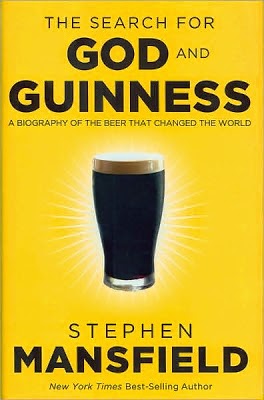
Book Break: The Search for God and Guinness

Stephen Mansfield’s book The Search for God and Guinness is a fun read on many levels. It’s a solid biography of a family, a beer, and a brand that are recognized the world over. It tells the story of a man and his sons (and their sons, and their sons…) who obsessed with the quality, production, and distribution of their “extra stout porter” to the point that they pioneered innovations in brewing, packaging, distribution, marketing, and quality control, and who care so much for their workers and their native Ireland that they pioneered onsite healthcare and wellness for employees and their families, as well as education and cultural benefits, housing and childcare, and more.

Most people assume the Guinness family was Catholic, but that is not the case — though they worked hard to benefit their Catholic workers and neighbors. Many, if not most, of the Guinness men either became involved in the brewery or became Protestant ministers — and it’s in the discussion of theology and the tap that the book becomes problematic for me. In writing about the history of beer and brewing, Mansfield credits the Catholic Church and numerous patron saints of brewing, and mentions that abbeys and monasteries throughout Europe produced good ale until the Reformation, at which point many of the abbeys and monasteries closed. However, he then goes on to credit Luther and Calvin for defending the idea that it is not sinful to take pleasure in God’s creation, thus preserving brewing and the enjoyment of beer.

“As Reformation ideas captured hearts and minds throughout Europe, priests and nuns renounced their vows, Roman Catholic cathedrals became Protestant churches, and monasteries closed, thus decreasing the production of beer. While this decline in brewing would not have deterred Martin Luther from his reforming work, he certainly would have grieved the loss of any fine brew, for he was among the great beer lovers of Christian history. … He was German, after all, and he lived at a time when beer was the European drink of choice. Moreover, having been freed from what he considered to be a narrow and life-draining legalism, he stepped into the world ready to enjoy its pleasures to the glory of God. For Luther, beer flowed best in a vibrant Christian life. (Page 28)”

“Like Luther, Calvin worked hard to hammer out a consistently biblical worldview. He wanted all of his life to be submitted to the rulership of Jesus Christ and yet did not want to miss some grace or provision of God because of flawed theology or religious excess. He and Luther had seen too much of that in their pre-Protestant lives. … This robust Reformation theology, which taught enjoying God’s creation and doing all that is not sinful for the glory of God, filtered into the centuries that followed the reformer’s work. (Page 31)”

“Clearly, then, though the Reformation diminished the production of beer temporarily by closing many of the European monasteries where beer was brewed, it also served the cause of beer and alcohol well by declaring them gifts of God and calling for their use in moderation. (Pages 32-33)”

Mansfield’s tone when discussing the Reformation is by and large heroic, to the point that it sounds as if these men were defending beer against the Catholic Church. These excerpts represent the worst of it, but this pro-Protestant tone pervades the text even though it has little to do with the story at hand, making an otherwise enjoyable read strangely slanted. Nor does Mansfield acknowledge the obvious question raised by this assessment — how does this Protestant view of beer differ from the Catholic view that fostered so many medieval abbey ales?

Long story short: If the summary above appeals to you, this is a library read, not one to add to your collection. As a biography of a beer and a brand, I enjoyed it. As religious history, I did not. Interestingly, Mansfield appears to be a bit of an equal-opportunity “faith profiler” of current and historical figures, having wrote 16 books, including The Faith of George W. Bush, The Faith of Barack Obama, Pope Benedict XVI: His Life and Mission, and Lincoln’s Battle with God. I didn’t know this before I embarked on the Guinness book.

All Sugared Up, or Birthday Blitz Wrap-Up

 A friend said the other day that it seems like we have a birthday a week in our family during the summer. That’s not quite true, but this year it has felt that way: the day before Jodi’s fiesta was Trevor’s ninth birthday, which included presents and cake. My bride’s party was a few weeks ahead of her actual birthday, and featured a wide range of delicious foods including not one, but two cakes — bringing the total that weekend to three.

Something similar happened last weekend: Jodi’s real, true birthday was Saturday, and Emma and I conspired on a pineapple upside-down cake (which was not from a mix and oh-so-delicious). But since Emma doesn’t like pineapple, she asked that we pick up a vanilla cake mix and vanilla frosting at the store so she could bake a second cake she would enjoy. Unbeknownst to me, she had also made some fondant at a friend’s house some days before and was anxious to try her hand at covering a cake.

Experiment with fondant

Whether because the fondant wasn’t completely fresh, the recipe, or something else, the fondant wouldn’t hold together at any thickness less than about a quarter inch — and Emma frosted the cake beneath the thick blanket, creating a tasty vanilla cake covered in insanely sweet Playdough. (The boys mocked Emma for it until Jodi and I reminded them how much she bakes for us; in the end, even she agreed it was too much.)

Gabe at 2:23 p.m. on his birthday
Sunday, then, was Gabe’s 13th birthday: Waffles and bacon and a new Facebook account in the morning, but (he insisted) no presents until 2:23 p.m., the minute he was born — then antiquing (he bought a ginormous old pop bottle we’d never seen before), lasagna and garlic bread, altar server at 6 p.m. Mass, and (you guessed it) cake! More specifically, brownies — but still, three cakes in a weekend once again. We played Phase 10, and the kids were more than a little wound up; I on the other hand, crashed quickly and became surly. Lily kept climbing up to (and nearly onto) the table to grab people’s cards. It was sheer, sugared chaos — and all in all, a good day.
We haven’t had a birthday party for Trevor, due to Jodi’s party, nor for Gabe, due to her actual birthday — so we’ll have at least two more small celebrations before the summer’s out. Just two cakes to go!