Half-Cocked, or The Trouble With Too Many Views

Twice in the past week I have forced myself to not write. This has been much to my discomfort, for two reasons: first, because a full 97 percent of the time, I am in the mode of forcing myself to write, which makes not doing so when I actually desire to quite irritating — like an itch you can’t scratch — and second, because in both cases the topic was near to my faith and dear to my heart.
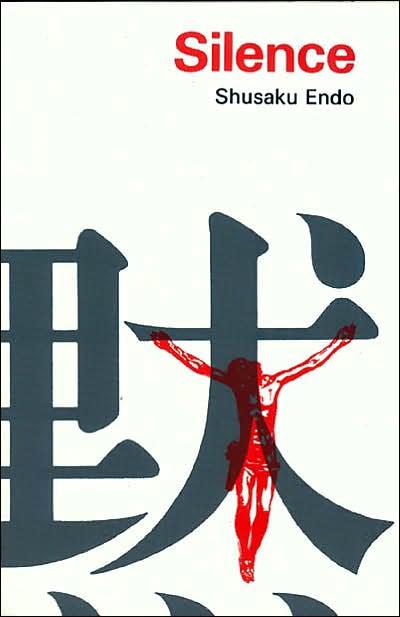
In the first instance, I had just finished a thought-provoking novel and wanted desperately to blog about it. The book, Shusako Endo’s Silence, was cautiously recommended to me by my friend Fr. Tyler as a great book, but dark and terribly sad. He was right, and as I finished, I wanted immediately to engage someone — anyone other than myself — on what it all meant.

The book is a relatively brief account of a Portuguese priest who travels secretly to feudal Japan during a time of intense persecution of Christians to discover the truth of rumors that his mentor, another Catholic priest-turned-missionary, has apostatized, or renounced, his faith and vocation. In broad terms, it deals primarily with the younger priest’s own thoughts about his priestly vocation, the poor Christians around him, the very real possibility of capture and torture, dreams of a glorious martyrdom, the brutal reality around him, and his own weaknesses.

I’m being purposefully vague. The final chapters cannot be revealed without diminishing the power of the book and straying into areas of faith of which I am ignorant, so I will go no further at this point. Suffice it to say, these final chapters are what threw me into a tailspin — what made want to talk first and think later, and what made it impossible for me to do so in good conscience. Ordinarily, I write quick, from-the-gut reviews shortly after completing a book, while it’s still fresh. But in this case, there was simply nothing I could say about the book that would not a) show my own ignorance and potentially stumble into error about our Catholic faith, or worse, drive someone else to error; b) spoil the story in order to get answers (Fr. Tyler!) and peace of mind; or c) both.

In the days since, I have thought a great deal about the book, and have regained my footing — though I still hope to discuss it in greater depth with someone who has read it and is better formed in the faith than me. I have also had a brief exchange with Fr. Tyler via Facebook — I brought myself to say this much: “[I]t’s masterful at making you ‘hate the sin and not the sinner’…” Father replied: ” For Catholics, it is a book that should contain the warning, ‘Handle with Care’.”

My caution in neither recommending nor casually reviewing this book, it appears, was not ill founded.

The second instance of holding my proverbial tongue came this morning, when I noticed a blogger for the Chronicle of Higher Education holding forth on the Natural Law and the Catholic Church’s stance on contraception. (The blogger in question is not supportive, surprise, surprise.) As I read his post, I felt the blood rise in my cheeks, and my mind raised ahead, formulating the response I would write: witty, pointed, deftly picking at the holes I saw in his arguments until they were gaping and obvious even to his likeminded readers.

My first reality check was the sheer volume of work I had to do today; I simply didn’t have time — especially to engage someone I didn’t know, personally or professionally, in an environment that was likely to be full of hostiles who were unlikely to be persuaded by wit or wisdom (let alone my own writing).

I felt a momentary pang of guilt for not standing up and being heard, until I finished the piece and reflected on my formal knowledge of the Natural Law and Aquinas’s writings (relatively little). I don’t know what the blogger knows — I feel like his expertise is not deep — but going off half-cocked might leave my own weaknesses exposed, even to someone who’s knowledge is only slight deeper than my own. A poorly formed effort would make this “Defender of the Faith” a liability, easily dismantled and dismissed — and the Church, by association.

So I said a prayer and sat on my hands. For a half-hour or so, my heart actually hurt, so badly did I want to speak out. Then something else came to mind: a passage I read yesterday, ostensibly for work, but with strong ties to my faith, written in 1852 by Blessed John Henry Newman and published in the preface to The Idea of a University (the underlining is mine, for emphasis):

“This is the emblem of [boys’] minds; at first they have no principles laid down within them as a foundation for the intellect to build upon; they have no discriminating convictions, and no grasp of consequences. And therefore they talk at random, if they talk much, and cannot help being flippant, or what is emphatically called ‘young.’ They are mere dazzled by phenomena, instead of perceiving things as they are.

“It were well if none remained boys all their lives; but what more common than the sight of grown men, talking on political or moral or religious subjects, in that offhand, idle way, which we signify by the word unreal? ‘That they simply do not know what they are talking about’ is the spontaneous silent remark of any man of sense who hears them.”

Cardinal Newman goes on to talk about the importance of impressing “upon a boy’s mind the idea of science, method, order, principles, and system; of rule and exception, of richness and harmony.”

“Let him once gain this habit of method, of starting from fixed points, of making his ground good as he goes, of distinguishing what he knows from what he does not know, and I conceive he will be gradually initiated into the largest and truest philosophical views, and will feel nothing but impatience and disgust at the random theories and imposing sophistries and dashing paradoxes, which carry away half-formed and superficial intellects.”

Cardinal Newman’s words resonated with me as I re-read them this morning. Starting from fixed points and making your ground good as you go enables you to keep your feet even as the world spins around you. This is why, in both instances this week, I hesitated – I was (wisely, I think) looking to the placement of my feet.

Newman goes on:

“Such parti-coloured ingenuities are indeed one of the chief evils of the day, and men of real talent are not slow to minister to them. An intellectual man, as the world now conceives of him, is one who is full of ‘views’ on all subjects of philosophy, on all matters of the day. It is almost thought a disgrace not to have a view at a moment’s notice on any question from the Personal Advent to the Cholera or Mesmerism.”

Indeed. When was the last time you heard anyone in a suit answer a question with a simple I don’t know?

“This is owing in great measure to the necessities of periodical literature, now so much in request. Every quarter of the year, every month, every day, there must be a supply, for the gratification of the public, of new and luminous theories on the subject of religion, foreign politics, home politics, civil economy, finance, trade, agriculture, and the colonies. Slavery, the gold fields, German philosophy, the French Empire, wellington, Peel, Ireland, must all be practiced on, day after day, by what are called original thinkers. …[T]he journalist lies under the stern obligation of extemporizing his lucid views, leading ideas and nutshell truths for the breakfast table.”

Again, he wrote this in 1852 – well before the cable TV, the internet, and the 24-hour news cycle, let alone Twitter. If the constant fluidity of views was eroding the foundations of Newman’s society, how much more so today, when the weekly or daily trickle has become an incessant torrent? (And yes, I recognize the mild irony that I am posting this on a blog.)

Today, everyone’s got an opinion. We know too much, perhaps – and we often think we know more than we do. We think we know better – especially, better than those “ignorant” souls who came before us. Poor saps. Poor Cardinal Newman.

At Yale I learned to argue, among other things, and not always in an honest manner. Unfortunately, strength of conviction and principle often seem less valued than compromise or an ill-defined “progress.” Partly in concession, partly to defend my views, which in college were considered quaint and outdated, I learned to bait-and-switch. I learned to massage my meanings as I went. And when I’m angry or impatient, I still do these things today.

But these days I find I trust people more who stand firm, even if in opposition to me, and I hope to solidify my own stances. More importantly, I hope to cultivate in myself the tendency to “spout off” less and listen more, read more, think more first. Indeed, this week I’ve found Lenten inspiration not only from Newman, but also from the Book of James (in the daily readings for this whole week) and this post from Catholic Drinkie. This Lent and thereafter, I hope to better embody the proverb, often attributed to Lincoln: “Better to remain silent and be thought a fool than to speak and remove all doubt.”
Book Break: Triumph

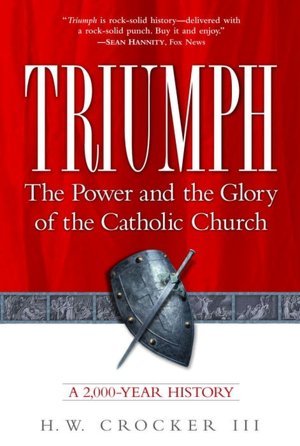
The title of this book tells you exactly what to expect. Triumph: The Power and the Glory of the Catholic Church by H.W. Crocker III was recommended to me by two or three different friends within a single month, which I found hard to ignore. It presents a well-referenced but “popular” history of the Catholic Church, written with a confident pro-Catholic bias, presumably for a Catholic audience. It was an enjoyable jaunt through the Church’s history, and it will give fire to the lukewarm. It will not, I predict, win the hearts and minds of many non-Catholic readers, should they choose to pick it up, because most will not finish it.

As I said, I enjoyed the book, but found it to be very uneven in quality. Of course, any history of an institution as old and rich as the Church cannot be confined to 427 pages without leaving out a few details. For the first half of the book, Crocker bounds through the centuries, focusing his attention on the most colorful or heroic defenders of the faith, painting a fascinating portrait of the Catholic Church ascending, but also justifying the shortcomings of its leaders in a way that borders on “the end justifies the means” at times, and dismissing sin within the Church as no worse than what was happening elsewhere, a standard I’m not sure Christ would have supported. This is not to say that the book is inaccurate — and historical context is important — but the ease with which war and wickedness are noted and discounted is disconcerting when we are called to be perfect, as God is perfect. If not perfect, we should at least be penitent…

Crocker’s unfiltered bias, wit, and sarcasm reach a fever pitch with Martin Luther and the Reformation. References to “the Hitler in Luther” and “Luther’s Khmer Rouge” suggest the author’s motivation is stirring Catholic pride and outrage rather than advancing scholarship in Church history. The criticism of Luther, Calvin, and other Protestant “fathers” is sometimes humorous, occasionally disturbing, and rarely if ever even-handed. I hope we would not tolerate a similar treatment of our priests.

The second half of the book seemed more balanced, although I’m curious if the support expressed for strong monarchies and an educated upper class over more democratic ideals is a true reflection of the 18th and 19th century Church or the author’s own preferences. I guess I have more reading to do in the regard. But the stance of the Church against the tide of liberalism, relativism, materialism, and all the other -isms encompassed in modernism did cause a warm swelling in my breast. There is wisdom in the Catholic Church, and an intellectual tradition that embraces the arts, the sciences, and the classics and needs not fear the world…if only more of us were better versed in it. I have made that a goal of my own, and Triumph provided further inspiration to pursue it.

This book is every bit as pro-Catholic as so many other accounts of world history are anti-. Personally, I would’ve liked to have seen more of the Church’s intellectual tradition itself in the book, and less of characters, wars, and political intrigue. I’d love to hear your thoughts on it, but if you read it, know what you’re getting into — especially if you are Protestant!

Greeting From the North Pole, Part IX

Blogger’s Note: Over Christmas 2003, we became annual pen-pals with an elf named Siberius Quill, and he has again delivered this year! Transcriptions of past letters from Quill can be seen here.

Christmas 2011
My dearest children!
Bless my soul, but you’ve thrown a wrinkle in my writing! Again, the four of you have been on Your Very Best Behavior (all in all), so I’ve had my attention elsewhere—joining the Watcher Corps to observe and encourage those Children-on-the-Cusp, who drift from Naughty to Nice and back again throughout the year and may need a Pre-Christmas Nudge to keep them aright. Our Director of Circumstance, Miss Incognita Trueheart, and her team of Elfin Infiltrators secretly arrange opportunities for these children to do what is Right and Good, free from distraction or wicked influence, and most “Cuspers” thereby prove their True Loving Natures and merit the Nice List.
But back to the point: Such is time to an elf already centuries old, and so engaged was I in the trials of my other Young Charges, that I overlooked the Blesséd Arrival of little Lillian Clara, your delightful Baby Sister! I had thus already penned my letter to Masters Brendan, Gabriel, and Trevor, and the lovely (and still special, regardless of what your Father says in jest), Miss Emma, when the Goodchild Twins burst into my room with bright grins, all a-flutter. Now, the Goodchilds (or Goodchildren, as they prefer to be known), are the daughters of Old Abacus, the Master Counter, who for long centuries stretching to millennia, has aided my forefathers on the Quill side with assembling The List for the Old Man, ensuring no one is left off! Plethora Goodchild is herself a Nursery Watcher, whose sole responsibility is to monitor the hospitals, huts, ambulances, and baby-rooms of the world—anywhere a New Someone might appear, and add the Infant’s name to our records. Oftentimes she knows Who and Where to watch, for her sister, Firtilitee, is an elfin Midwife, who aids in the Arrivals of our Own Kind and has an eye for spying Baby Bumps, even on humans. Indeed, it was Plethora and Firtilitee Goodchild who first told me of the Expectation and Loss of little Jude last autumn, and they have watched your Dear Mother with much joyful anticipation these several months! Welcome, Lily! A very Merry Christmas indeed! Santa is most pleased to have Another Reason to stop over, and I am grateful for another Wee One to bring along in the Ways of Christmas!
You Older Ones have asked no questions of me this year, though I suspect you hold some close to your Hearts. It is no Crime to doubt Father Christmas and his Ways, for he is not only Bold and Jolly, but also Cunning and Elusive as the Artic Fox which pilfers ptarmigans from our coops! When you seek him hardest he slips your grasp, only do not lose your Sense of Wonder—for it is there, in your sleeping and waking Dreams—that you will find the Saintly Old Sprite, warming his hands o’er the Fire of your Own Heart. You’ll know he is Real when you do the Hard Work he does—the work that Christ Himself assigned to each of us: loving Each Other, our Neighbors, and our Enemies. Christmas is not about Any of Us, after all—it is always about Someone Else entirely (and the Child in the Manger, of course).
Ah, but I ramble so, and have run out of paper! A Very Happy Christmas to you all!

Siberius Quill

Life In The Bubble, Redux

We had some friends over last Friday evening for a fall chili feed. The week was busier than we’d hoped, so up until the moment our guest began to arrive, we were still cleaning, cooking, and prepping…plus managing our kids, our dog, and our jobs. With 30 minutes to go, I was sincerely wondering if this little “get-together” was gonna be worth the effort.

Our friends began to roll in, bearing snacks and sweets, beer and wine, to complement the spread we had started in the kitchen. These were all our friends and all from St. Michael Catholic Church — and most of them knew many of the others, but I’m not sure if anyone but Jodi and me and Fr. Richards knew everyone. We said grace as a party, sampled chilis and home-brewed beers, and talked about kids (had we invited whole families, the dozen or so couples would have had more than 70 children in tow), work, school, politics, hunting, and most importantly in The Bubble, our shared faith. The men ultimately congregated in the basement, and at one point, I walked in to hear a good friend of mine relating how, at a retreat, I once stopped mid-witness, smacked by the Holy Spirit, tearful and trembling and grinning, to tell the men on that retreat, “You guys gotta try this!” Upstairs in the kitchen, three or four life-giving women of our parish were gathered near the sink I was trying to access, talking frankly about how God’s will manifests itself in our lives. I listened a moment, then quietly said, “I love you people.”

From 6:30 to midnight, our house was packed to the rafters with beautiful, prayerful men and women. Father was the first to head home, but he blessed us, upstairs and down, before he left for the night. There were friends missing — some who were going hunting or had other obligations, some we forgot in our own whirlwind of busy-ness, some who live states away in their own little bubbles — but we spent the evening basking in personal warmth and genuine love, and even the ache of their absence helped us to feel complete.

Was it worthwhile? Definitely. Scarcely a waking hour has passed since that I have not paused a moment, thought of one of these dear friends, smiled, and said, “I love you people.” And I do. We hope this will become an annual event, and we will do our best to invite all the others…

I’ve always been a big-headed, geeky, heart-on-my-sleeve kind of guy, with no athletic talent, a poor sense of direction, and few other manly aptitudes upon which to hang my hat. I’m old-fashioned, idealistic, and a hopeless romantic. I write for a living; I don’t follow sports closely; and I don’t drink much or tell off-color jokes (anymore). Often I feel like I don’t fit in. Except here, in The Bubble. Here, Jodi and I have met men and women, our brothers and sisters in Christ, who understand exactly where we’re coming from, and what we hope to be.

What a blessing. What a life.

Do Whatever He Tells You

Above: A Wedding in Cana: my sister Jill and her husband Rusty, married in the Wedding Church at Cana of Galilee, Tuesday, October 18, 2011. Photo courtesy of Stephen Ray, their pilgrimage guide, online at Catholic-Convert.com.

On the third day there was a wedding in Cana in Galilee, and the mother of Jesus was there. Jesus and his disciples were also invited to the wedding. When the wine ran short, the mother of Jesus said to him, “They have no wine.” And Jesus said to her, “Woman, how does your concern affect me? My hour has not yet come.” His mother said to the servers, “Do whatever he tells you.” Now there were six stone water jars there for Jewish ceremonial washings, each holding twenty to thirty gallons. Jesus told them, “Fill the jars with water.” So they filled them to the brim. Then he told them, “Draw some out now and take it to the headwaiter.” So they took it. And when the headwaiter tasted the water that had become wine, without knowing where it came from (although the servers who had drawn the water knew), the headwaiter called the bridegroom and said to him, “Everyone serves good wine first, and then when people have drunk freely, an inferior one; but you have kept the good wine until now.” Jesus did this as the beginning of his signs in Cana in Galilee and so revealed his glory, and his disciples began to believe in him. 

— John 2:1-11

My sister was married yesterday. I was there in spirit. I woke in the dark wee hours of Tuesday morning — 4:18 a.m. — to discover a text from Jill on my phone, sent a couple hours earlier, while I slept: “We are going to Cana right now! Won’t be long!!”
4:18 was what time? 11:18 in Jerusalem. And they were leaving Cana for lunch, according to the itinerary, so they may be there right now.
Jodi slept peacefully beside me. I lay on my back, eyes wide, and began to pray.
I learned later, via text, that at 11:18 local time, Jill and Rusty were likely walking up the aisle in the Wedding Church in Cana. For the half hour I lay awake, praying, they were promising their lives to each other. Those moments are captured in video below, courtesy of their pilgrimage guide Steve Ray at Catholic-Convert.com and FootprintsOfGodPilgrimages.com.

I wore a tux in Jill’s first wedding, a lovely outdoor ceremony on a little island in the Chippewa River in Michigan where her high-school sweetheart had grown up. We were fallen-away Catholics then — my mom, Jill, and I — and her first husband’s family was of no particular faith that I knew, so they were married by a the pastor of the Wheatland Church of Christ, who was a neighbor of my folks, in a short ecumenical service. It was a day of great joy, the start of something wonderful — though we had no idea in what way. 
Today she has two wonderful children, Kayla and Kyle, and an ex-husband who is remarried, and who by all accounts is a supportive dad and a good friend to her again. In the months that followed the breakup, she found herself seeking God, and, with Jodi’s conversion of me and Gabe’s youthful interest in the priesthood as inspiration, ultimately came back to the Catholic church. As fate (or faith) would have it, I was there in Michigan with her when she met with her priest to discuss returning to the Church and the sacraments, and having her teen and her tween baptized. I was there when, after going to Reconciliation for the first time in decades, she received the Eucharist for the first time. And when her priest told her when the baptism of the kids would be, Jill and I were amazed to realize that Jodi and I were already planning to be back in Michigan that weekend — since she had just told us that she wanted us to be their godparents. 
We were also in Michigan this past Easter when my niece and nephew made their First Communion, and Jill and Kayla were confirmed. This was my first opportunity to meet the man my sister had begun seeing during the previous year — a man with whom she was unabashedly smitten. After all she had been through, it had been strange to listen from afar as she met and fell in love with somebody new. I’ve watched a handful of female friends go through divorce, then quickly and repeatedly fall for the wrong guys, and I had to swallow hard. I don’t want to see her hurt again.

My parents, on the other hand, had met Rusty and seemed to like what they saw. That helped, especially because Dad has a knack for gauging people. Still, it was difficult to show up at Easter as the only close family member who hadn’t meant this man — and as the person (quite frankly) who was most inclined to not like him. I had my guard and filters up, but he came through clean: a genuinely nice guy who likes good music, a Catholic convert who enjoys talking about his faith, a veteran of the Navy and other life battles who loves his young son and his aging parents, and a good man who did not hesitate to say that he would gladly spend his life working hard to treat my sister right and to get her to Heaven.

They told us that weekend that they were planning to marry, although they weren’t yet engaged. Then they told us they planned to do it at the church in Cana, in the Holy Land, on a pilgrimage to learn more about their faith. We were amazed. How much more different could this possibly be from her first wedding? How far had my sister journeyed, in such a short time?

“Do whatever he tells you” — these words from Our Blessed Mother from the Gospel account of the miraculous wedding at Cana were a statement of faith in her son, that, although He insisted it was not yet his time, He would not allow a need to go unmet for God’s faithful — that  from misfortune he would work wonders in order to manifest God’s love in our lives. He did it again and again during his ministry, and again in the most profound way on the cross on Calvary.

And again yesterday, at another wedding in Cana.

Before she left, Jill told me she was thinking of ways she could have her closest family and friends with her on her wedding day: a family rosary, a lucky coin, that sort of thing. From Jodi and me and our family, she asked that I write a prayer for them to meditate upon.

I was overwhelmed. I had planned to write a letter, but the idea that I could add something substantive to this sacrament when the very location was a homily and blessing seemed like more than I could possibly deliver. I wrote a letter that said as much, then asked that, the night before their wedding or the morning of, they consider doing the following:

  • First, ask the priest to hear your confessions, that your hearts may be pure and open to God’s graces.
  • Second, read the only scripture that ever mattered to me at the time of our marriage (and the only detail of our wedding I insisted upon): Tobit 8:4-9.
  • Finally (not that the prayer of Tobiah and Sarah needs any improvement or addition), please share the following as our prayer for you both:

Father in Heaven, in your wisdom and love, You said:
“It is not good for the man to be alone.”
You made man and woman both in Your holy image,
unique in all of creation, as both spiritual and physical beings,
made for each other, as complements and co-creators, living and life-giving.

Then, in the fullness of time, you called Our Blessed Mother to bear your Son,
and St. Joseph, her husband, to raise and protect Him,
giving to our Lord and to Your people two shining stars to guide us
in holiness, obedience, fidelity, chastity, and courage
in marriage and family life.

We love you, O Lord, and we thank You for Your many blessings:
For life and love, for mercy and grace,
for Your living example of selflessness and devotion shown by Your Son, Our Lord, Jesus Christ.
We ask Your forgiveness for the times we have failed to love as You love,
and for the strength each day to forgive and to try again

O Lord, please bless my beloved and me,
that we may make a true and generous gift of self to each other and to You;
that we may be a light for each other on the pathway to heaven;
that we may be a living sign of Your love and fidelity;
and that we may be a beacon to draw others nearer to You.

This we pray with confidence in the name of Jesus Christ and through the power of the Holy Spirit. Amen.

Another friend of ours tells a story related to the biblical account of the wedding at Cana, in which we imagine ourselves as the servants, who, on the word of a wedding guest — a poor but faithful mother from Nazareth — and the orders of her son, also a guest in the house, lug six massive crocks to the city well, carrying back, on foot, more than a hundred gallons of water for who knows what purpose. As a result, they got to see Christ’s first miracle…

When I texted Jill later in the day yesterday and told her how I was with her in prayer, she agreed, and closed her reply with, “Thank you, Jim and Jodi, for leading the way…”

Sister, we were just carrying the water.