How Great Thou Art

Blogger’s Note: This popped more or less fully formed into my head after I received Communion this morning. Perhaps it’s a new prayer for our children?

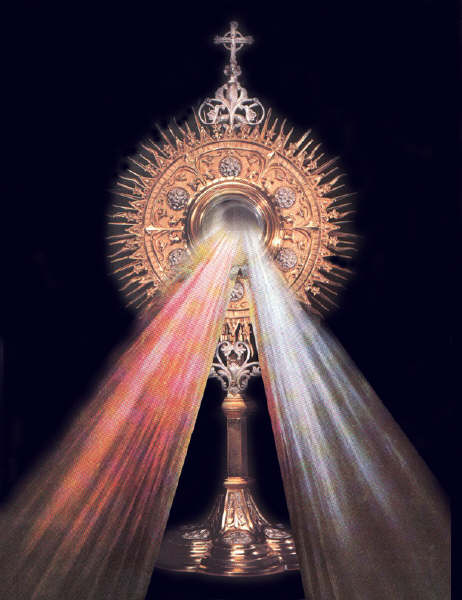
Lord, make of me a monstrance,
The Eucharist as my heart,
That all may see your light in me
And know how great Thou art.

Amen.

Who Is the Public?

I have just finished another book I would not have read if not for my job, Barry Bozeman’s Public Values and Public Interest: Counterbalancing Economic Individualism. First, permit me to confess that, left to my own devices, I would read fiction, poetry, and an occasional history — so I am being forced to broaden my horizons and get educated, which is never a bad thing. Second, let me say that, as a wannabe writer, I have many, many thoughts about this book, mostly concerning its readability. I would not say that I enjoyed it, but it did provoke thought. The primary thought it provoked may be worth sharing. I say “may be” because I am not an economist, a philosopher, a political scientist, or a public interest or public management theorist, so it’s possible that I simply didn’t get it.

My primary thought about the book is that it spends a great deal of time on the topics of whether and how it is possible to identify public values and the public interest, and contrasting those with private or individual economic values and interests (which are often not the same), but it spends remarkably little time on the question of “Who is the Public?” The author is very conscious (almost too conscious) of the limits — the squishiness — of terms like “the public interest” and “public values,” but while his book tackles “interest” and “values” at length, it gives short shrift to “public.”

Especially in the U.S., a vast nation with remarkably diverse cultures, religions, lifestyles, and economies depending on where in the country you reside, it seems to me that the more immediate the “public,” the more practical and realistic it is to identify shared public values and pursue the public interest. At the state level, this becomes less realistic: every state in which I’ve ever lived has had marked, or even deep, social, economic, political, and cultural divisions (“Outstate” or greater Minnesota versus the Twin Cities metro. East River versus West River. Downstate versus the U.P.) and different lifestyles worth protecting. At the national level, then, it seems unlikely that we could identify public values and a cohesive public interest, aside from the broad priorities of securing the nation and preserving our rights to life, liberty, and the pursuit of happiness. The difficulty of pursuing public values and the public interest is not identifying values and interests — these are abundant, diverse, and obvious — but identifying who shares them, which helps to decide at what level of society they should be implemented.

The critique of economic individualism (which, says Bozeman, is increasingly driving our public policy agenda) in the book insists that individuals in this model are concerned primarily with their own economic interests, and perhaps those of a few close others (immediate family and the like). That may be the proper definition of economic individualism, but I don’t know anyone who lives this way. As a friend in Western South Dakota has explained, in his part of the prairie, neighbors take care of each other — and if someone doesn’t contribute to the good of the community, over time they are made unwelcome. They simply don’t last. Those who remain recognize that it is in their personal interest to take public interest: to be engaged in the community and preserve their shared values and lifestyle.

I enjoy a similar experience in “The Bubble” — the devout, small-town Catholic communities in Albertville and St. Michael. My circle of public interest begins at home, with my family; then expands to encompass my parish and the people with whom I share a fundamental belief system and way of life; then to my town(s), which provide the education my children receive and the goods and services we need to live and thrive; then to my state and nation, which should be responsible for ensuring my towns, parish, and family have the opportunity and freedom to thrive. I invest what time, talent, and treasure that I am still free to spend as I wish in the circles closest to me — which makes sense, since the more distant circles I am already obligated by law to support.

It seems to me that Bozeman’s approach to identifying public values, public interest, and ultimately, instances of failure of public policy to deliver in the public interest, is useful in inverse proportion to the size and distance of the “public” considered. At the local level, the public interest is much easier to identify — because although our population is increasingly diverse, we tend to cluster together with likeminded folks who share similar values. But as long as the majority of public resources are allocated at the state and national level, we will struggle with coming up with one-size-fits-all solutions to generic political issues that approximate real-world challenges, but do not reflect the actual problems of real people living in genuine community with each other.
Amazing Grace of Motherhood

“I’m constantly amazed at the sheer power that women hold within their bodies. The power to create, to nurture, to grow. It’s such a mind-blowing thing. And not just once, but over and over again.” —a young female friend currently living in Central America

Something amazing happened last weekend: at long last, I felt our baby move. It’s been a long time coming; apparently, the position of the placenta is such that, even for Jodi, our little one’s movements were nearly imperceptible for most of the last several months. But even in recent days, when Jodi would say, “Jim! The baby’s moving!” her exclamation or the touch of my hand was enough to still whatever stirring had been underway.

I’ve said many times that this is my chief jealousy with regard to the opposite sex — that I’ll never feel the movement of my own child growing within me. Even with four children already born into this world, it’s still a thrill to experience this, even from the outside.

Something else amazing happened this weekend. At the St. Michael Catholic Church Fall Festival, Jodi received abundant congratulations—such is the genuine joy that this community finds in each and every baby, no matter how commonplace a miracle it seems in our little Catholic bubble—and at least twice, two grandfathers asked if they could hug her. One said he feels in awe of pregnant women, and the other, with his thumb and forefinger an inch apart, said, “I always feel about this tall around mothers.”

Their tremendous respect for women and motherhood resounds in my own heart—and calls to mind one of the traits that attracted me to my bride from the beginning: the fact that she was the first woman I had met since I started college who did not hesitate to say she wanted to be a wife and mother. Sexuality and fertility, procreation and co-creation, married love and family life are tremendous blessings, which, too often, we devalue or seek to avoid. Thank you, Jodi, for allowing God to work this miracle through you, as my young friend said, “not just once, but over and over again.” You are beautiful, strong, resilient — and we love you.

Related poems and postings:

If It Doesn’t Help, It Hinders

Following a session on social media at last week’s retreat at work, I decided today to re-open a Twitter account. Approximately five minutes ago, I closed it again.

I had been reading (for work) that classic of business management literature Good To Great, navigating two or three chapters devoted to the importance of an organization identifying that one thing at which they reasonably, realistically become the best, and then, with equal discipline, eliminating all those opportunities and activities, however valuable, that distract from that one thing.

It through me into a personal tailspin, and I posted a question to Facebook: “at am I going to stop doing that is keeping me from writing fiction?”

Here’s what I’ve come up with so far:

  • Twitter (completely re-eliminated), as well as much of my daily Facebook, blog, and general internet surfing (I’m thinking 30 minutes maximum across all platforms, and I have a timer. I post things quickly…but then  I let myself get sucked in.).
  • My fledgling sourdough baking habit. Brewing takes precedence; it is becoming a communal activity with friends and fellow parishioners.
  • Leisurely mornings,  snooze alarms, and any notion I can afford to sleep past 6 a.m.
  • New volunteer commitments, and any old ones I can reasonably abandon.

I also need to make the most of my work hours, to get my 40 hours in each week in as close to 40 hours as possible. I need to devote at least two hours a day to creative writing and the reading and research that will support it. And of course, regular prayer and exercise will help me stay the course, but that takes time, too. I need to cultivate these habits before the new wee one arrives in December. Wish me luck!

(Pro) Life, Without Religion, Part 2: A Little … Something

Inspired by recent ultrasounds of our tiny child resting peacefully in utero, last month I shared my response to a common abortion-rights argument: “It’s my body; it’s my choice.” In that post, I argued that, in no way could an embryo or fetus be considered the mother’s body, or even part of the mother’s body.

The question remains, then: what is it? A few possibilities come to mind: it may be a bit of foreign debris or tissue; it may be a tumor (benign or malignant); it may be nonhuman organism (like a parasite or symbiotic microorganism); or, it may be Homo sapiens – a human organism. I’ll address these possibilities one at a time:

  • Foreign debris or foreign tissue. If an embryo were nothing more than a bit of foreign matter that had somehow found its within the woman, it makes sense that her body would respond accordingly, targeting the embryo in the same way it might a sliver or a piece of shrapnel, either to eliminate it from the body or encapsulate and neutralize it. Of course, an embryo consists of living cells, so the body does not react to it as thought it were a simply a foreign object. If an embryo were living, foreign tissue, it makes sense that the woman’s immune system might react negatively to it, in the same way that it might reject a donor organ. In fact, in the vast majority of cases, the woman’s body does the opposite, suppressing it’s own immune system and laboring to provide a protective, nurturing environment and nutrients to encourage growth and development of the embryo. It is true that in certain cases (e.g., an Rh-negative mother carrying an Rh-positive fetus), the woman’s immune system may react to presence of Rh-factor in the fetus’s blood, sometimes leading to death of the fetus – however, most of the population (approximately 85 percent, I believe) is Rh-positive, so such a reaction is certainly not the norm. Nor does it change the fact that the woman’s body continues to try to accomodate the fetus even as antibodies in her blood attack the fetus’s red blood cells.
  • Benign or malignant tumor. I’ve heard it more than once “It’s just a ball of cells.” Actually, I did a little reading for this post to help ensure I’m using the right terminology, and learned that tumors are more commonly defined as a neoplasm that has formed a “lump” – and a neoplasm is a new and abnormal growth or proliferation of cells not coordinated with the body’s healthy tissue. Is an embryo a neoplasm? It is certainly a new proliferation of cells, but typically (left to its own devices), its growth is in clockwork coordination with the healthy tissue around it; in fact, the surrounding, healthy tissues of the woman’s body (left to their own devices) change to become more accommodating to the new growth – again, encouraging growth and development. To quote Arnold Schwarzenegger in Kindergarten Cop: “It’s not a tumah!
  • Parasite or other nonhuman organism. An embryo or fetus certainly derives nutrients and protection, and at some cost the woman in whose body it resides – but is it a parasite (like a tapeworm) or some other symbiotic nonhuman organism (like our gut flora and other bacteria that exist on or in our body and are beneficial or neutral to our health and well-being)? First, consider that non-human organisms (parasitic or otherwise) are not native to us nor do they spontaneously generate within us. Instead, they are acquired. Even our gut flora are acquired at birth and rapidly afterward, from our mothers and the environment. An embryo, on the other hand, is not something caught from another person or acquired from the environment which then colonizes the uterus. And while it takes the introduction of a male gamete to fertilize an egg and ultimately form an embryo, even sperm cells cannot be considered parasites or symbiotic organisms – they have a short-life span and cannot reproduce themselves or “colonize” the woman on their own; those that do not fertilize an egg ultimately die off and are eliminated.
  • Human organism. To review, start where you like: a zygote, an embryo, or a fetus. Clearly these are not non-living things; they are living cells that use nutrients and multiply. If it were merely foreign tissue or an infection, the woman’s body would work to destroy it – no abortion necessary. If it were a parasite or symbiotic organism, it would be acquired externally, not formed internally from two cells whose sole function is reproduction. Now, consider that when a sperm and egg unite and form a zygote, the result is genetically identifiable as human – 23 pairs of chromosomes is the norm, but even some variation in this number (as in the case of Down Syndrome), when permitted to develop, can result in a viable independent organism that we would recognize as human. Some will argue that a skin cell, or an eyelash, or a cancer cell might be alive and genetically human, but we kill those all the time; certainly that isn’t murder, is it?  Of course not. But as we’ve already established, an embryo clearly is not any part of the woman’s body (it’s not even a genetic match) nor is it a tumor (it is developing in coordination with the woman’s body and the result will be a viable, independent human organism). Without a doubt, an embryo is a living, human organism.
Even some abortion supporters make it this far. At this point, the arguments become much more philosophical: abortion supporters claim is that this human organism is not a human being – it is a genetically human living thing, but only a potential human being. This raises a fundamental question: What makes a human organism a human being? I’ll share how my pre-religious mind tackled that question in my next post on this topic.