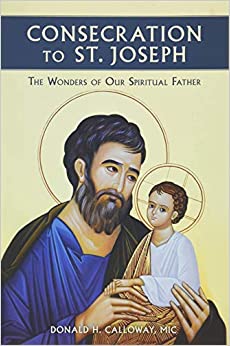
Book Break: St. Joseph, Unsung Hero

Growing up, many of my heroes were “the strong, silent type”—men of few words and decisive, often violent, action, who always knew the right thing to do and had the ability to carry it out. Small, bookish, and emotional, I admired men like that, even though I was not that type myself.

Since I didn’t grow up in the Church, I knew only a few Bible stories. The heroes of those stories seemed larger than life—even the shepherd boy, David, who slew Goliath, has already been chosen by God, anointed by Samuel, and filled with the Spirit of the Lord before he ever took the field against the Philistine.

I knew the story of the birth of Jesus, but I didn’t think of Joseph as a hero.

Continue reading

Finding Peace by Candlelight

On Ash Wednesday this year, Archbishop Hebda visited our parish and school and presided over the school Mass. During his homily, he asked the school children to give examples of prayer, fasting, and almsgiving. One boy suggested that you could fast from lights, “like, with an oil lamp or something.”

Archbishop chuckled and said he had never thought of that before. But I have.

Years ago, I ran across an article by Catholic convert, blogger, and speaker Jennifer Fulwiler entitled “8 Reasons to Turn Out the Lights During Lent.” Her experience captured my imagination, and I pitched it to my own family and those in faith formation at the time as “Firelight Fridays.”

The premise is simple—no electrical lights or screens of any kind after sundown on Fridays during Lent. The results were profound: we found ourselves congregating as a family around the candlelit kitchen table or living room, playing board games, listening to music, or just talking and laughing together as a family. It a couple hours, we would begin to feel snoozy; eventually we would, by common consensus, snuff the candles and go to bed early, sleep soundly, and rise refreshed on Saturday morning.

Continue reading

Perfection Reconsidered

This post appeared as a column in the Sunday, March 20, 2022, issue of the St. Michael Catholic Church bulletin.

Last Saturday, my bride and I went to morning Mass together. In the gospel, Jesus admonishes His disciples, “So be perfect, just as your heavenly Father is perfect” (Matthew 5:48).

I’ve always taken this to be a tall order—impossible, in fact, for anyone but God alone. It almost always makes me feel small, weak, and inadequate to the task. These feelings may be true, but do not seem particularly helpful when it comes to striving for sainthood.

But Father Joe tweaked my thinking with his homily Saturday morning.

“Notice,” he said, “that the Lord doesn’t say, ‘Do everything perfectly,’ but ‘Be perfect.’”

He went on to explain that, with our fallen nature, we cannot expect never to make mistakes—but that we should do the best we can in every circumstance, striving to love as God loves.

Continue reading

Building Spiritual Strength This Lent

My friend Jeremy and I met with our ninth-grade D-group last week to talk about Lent. The turnout was light that night, and with Ash Wednesday just a few days away, I thought I’d share some of what we discussed in hopes that others might benefit. Here are five tips for building spiritual strength this Lent:

  1. Prepare Yourself. If you haven’t already, spend some quiet time in prayer. Ask the Lord what He wants for you this Lent. If we don’t take time to prepare, we often default to the same old things we are comfortable with or we have struggled to keep in the past. Ask Him specifically about each of the three Lenten disciplines—prayer, fasting, and almsgiving—and listen for His reply in the movements of your heart. How does He want you to grow in prayer? What good thing does He want you to give up for the next several weeks? How is He asking you to love your neighbor this year?
  2. Challenge Yourself. When you ask God what He wants from you, be prepared for an answer that might push you a bit. The Lord wants us to grow in holiness, but He does not challenge us beyond our abilities. I remember the teens in our Michigan youth group saying, “I could never give up such-and such!” and immediately seeking something else to sacrifice. If the Lord challenges you to do something difficult, lean into it—ask Him how to go about it, rather than steering the conversation to a more comfortable conclusion.
  3. Pace Yourself. Don’t be afraid to start small. When we lean into a challenge and talk with God about it, He helps us come up with small ways to build our spiritual strength. For example, if the Lord calls you to step away from your smartphone, and you’re not sure you can do that for all of Lent, maybe pick one day a week to be device-free—the Lord’s Day, perhaps, or Friday. On the flip side, sometimes we enter Lent with big ideas about the sacrifices we are ready to endure, but unless we’ve been practicing small sacrifices throughout the rest of the year, we may not be ready. Self-control takes practice, but even small sacrifices made with love are pleasing to God.
  4. Push Yourself. If you start small this Lent and feel called to do more, answer that call! My bride, Jodi, often adds to her Lenten commitments each week, building spiritual strength and momentum as she gets closer to Easter. It’s a great way to push yourself, grow in holiness, and learn your limitations.
  5. Be Gentle With Yourself. If you are challenging or pushing yourself as Lent goes on, there’s a good chance you’ll slip up or fall down—and that’s okay. I have found myself at both ends of the Lenten spectrum:  either throwing up my hands and giving up entirely when I’m not perfect or trying to do too much and white-knuckling it through Lent while those around me suffer my ill temper and frustration. If you’re struggling, don’t be afraid to start again, always in prayer. Growth is the goal, not instant perfection.

Lent begins with Ash Wednesday, which is this Wednesday, March 2. Mass times are 7:45 AM (school Mass; open to all), 5:00 PM, and 7:00 PM—and don’t forget to fast and abstain from meat that day. Lenten guidelines are online at usccb.org/prayer-worship/liturgical-year/lent. Have a blessed Lent!

This post appeared as a column in the Sunday, February 27, 2022, issue of the St. Michael Catholic Church bulletin.

What ‘God Is Love’ Looks Like

I’ve been thinking lately about what is means to say that God is love. St. Thomas Aquinas teaches, “Love is willing the good of the other as other.” If God is love, then God’s very nature is to will the good of each of us, at all times and eternally. A couple weeks ago, the story of the hemorrhaging woman from St. Mark’s gospel struck me as a profound illustration of what this looks like in our world.

You’ve heard the story: Jesus is traveling with a large crowd of people to the home of Jairus, whose daughter is dying. With the crowd pressing from all sides, a woman suffering from hemorrhages for 12 years approaches Him from behind, with profound faith in who Jesus is and a deep hope that if she can just touch His cloak, she will be cured.

She succeeds in touching Him and is instantly healed.

Mark 5:30 tells us, “Jesus, aware at once that power had gone out from him, turned around in the crowd and asked, ‘Who has touched my clothes?’” Unlike other gospel healings, there was no initial conversation between Jesus and the woman before the miracle takes place. So did she somehow heal herself by tapping into His power while He wasn’t looking? Of course not—the God of the Universe is not commanded or controlled by His creatures.

So what happened here?

Continue reading