A Baby Catholic’s First Steps

be26f-cover_october_2014_web

Fr. Bill, from an article on Confession
in the Diocese of Grand Rapids magazine Faith.

I have mercy on the brain this month. At LIFT we talked about the sacrament of Confession, and several parishioners shared powerful stories of how God’s mercy had strengthened their faith. Then, in recognition of the Pope’s Year of Mercy, our parish retreat focused on God’s message of Divine Mercy. Fr. Alar’s presentations were both consoling and challenging—showing me clearly the great ocean of mercy that stretches before us and how slow we are to tap into it for ourselves, much less for others.

I made my first Communion around age 10, during a brief period in which my mom returned to the church with my sister and me. As a young husband, I attended Mass with Jodi, out of respect for tradition and curiosity more than anything else. When I became a father, I began to open up to the possibility of becoming a practicing Catholic, but I had many questions and was deeply enmeshed in many of the typical sins of young men. I hid those sins under a thick blanket of pride, convinced that I knew better about right and wrong—but Jodi’s solid, peaceful faith played on my curiosity. So one evening, I sat down in the rectory to talk with our priest.

I told Fr. Bill I wasn’t sure it was possible to know if God exists. I told him I disagreed with the Church’s teaching on birth control. I told him I didn’t understand the Church’s teachings on the real presence of Jesus in the consecrated bread and wine at Mass. I told him I couldn’t believe that a merciful God could condemn good men to Hell for not believing in Him.

Fr. Bill addressed my issues calmly and thoughtfully. He told me I had a good head on my shoulders, and God gave it to me to use. He told me not to be afraid of my doubts or questions—that even priests struggle with the same and need faith to follow God.

“But you’re not going to find the answers to these questions by holding your faith at arm’s length,” he said. “My advice is to go to Confession and begin receiving Communion again, and ask your questions from inside the Church.”

I thanked him, and he said, “I could hear your confession now, if you want.” I protested that it had been many years and I didn’t remember how, and he said, “Don’t worry—I will help you.”

So right there, in the living room of the rectory, I made the first Confession of the rest of my life—my first face-to-face Confession—with the priest who first showed me the depths of God’s mercy. I began receiving Holy Communion again the following Sunday, was Confirmed in the Church a few years later, and began a lifelong march to Calvary and Christ, because Fr. Bill saw my dignity as a son of God under layers of pride and years of sin.

Here’s the kicker: I know now that my Confession that evening wasn’t technically valid. The sins I was struggling with come in buckets; I confessed most of them that night, but not all, because some I didn’t agree were sins and had no intention of changing. But I made the best Confession I could in my ignorance and was sincerely contrite—as sorry as I could be in that moment of faltering pride and budding faith. Fr. Bill started me on a road I may not have taken otherwise. Had I waited a week, that spark may have gone out, and had he said, “Good effort…but come back when you’re ready to confess everything else I suspect you’re doing,” I may never have come back.

I need to remember that my first steps on the path to an adult faith were baby steps, small and unsteady, and that Fr. Bill saw enough in me to invite me back to communion with God. We need to see each other as he saw me—as Jesus sees every sinner—and encourage those first faltering steps.
Same Guy, Different Year

I don’t know about you, but 2016 caught me off guard. The new year leapt from behind our Christmas tree in the early morning darkness to find me unprepared and unresolved, the same shuffling sinner as last year, stumbling to the kitchen, rubbing my eyes and searching for coffee.

And now I notice Lent and Easter creeping up. Ash Wednesday, February 10, is less than three weeks away. In past years I would have broken multiple resolutions by this point and would be tempted to use Lent to get back on the horse—fasting, for example, in order to lose weight rather than gain perspective.

Since I’ve made no resolutions, however, I’m headed toward Lent with no agenda other than the humbling realization that this year’s Jim is much the same as last year’s. And in recent weeks I’ve noticed two sins within myself that, in the past, I have failed to confront and that need to be uprooted.

The first, I learned just last weekend, is a form of vanity. I worry, overmuch, about what people think of me. Not simply in terms of appearance, though if I’m honest, that’s a part of it. I worry that I’m making a bad impression, that I’m being misunderstood, that I’m coming off as a judgmental know-it-all or a sentimental fool. As a result, I want to do good work, but not always for God’s sake or even for your sake. I want to do it for my sake, so I can feel good about me.

This is hard to admit, as it’s not a particularly manly sin. All of us have the need for affirmation—but I get affirmation from so many of you and from God in prayer. Worrying about every misstep and stewing over every sideways glance or offhand comment to the point that I forget the Father smiling down on me is an evil that must be uprooted.

The second, I fear, is more humbling than the first. Between my work life and our home life, I am as busy as I have ever been, and yet I feel God pulling me toward other things He wants me to do. And I’m resisting, because Lord, I don’t have time—something’s got to give!

Then it occurs to me: perhaps I’m that something. Perhaps God wants more of me.

And then the panicky flutter starts up in my chest, like a moth realizing too late that he’s inside the shade and that beautiful Light burns. I can’t do this, I think. I’ve got to get out of here!

Yes, you can, says God. Stay with me.

I realize one of two things must be true: either I don’t truly believe God can help me, or I don’t believe He will. The first I recognize as rubbish immediately: He’s God; He can do whatever He sets His mind to.

The second is equally rubbish: He is Love and always wills the good of His people. I know this. I do.

But do I trust Him?

I’ve got a long Lent ahead of me. May your sacrifices be fruitful, drawing you nearer to Christ!

Our Faith Is Not Genetic

Last month I wrote about the power of family— in particular, parents—in keeping their children Catholic.  It’s sobering, then, to learn that the Catholic Church in the U.S. is losing members faster than it is gaining them, and that, for today’s teens, religious identity is no longer reliably inherited. In other words, Millenials aren’t likely to stay Catholic simply because their parents and grandparents were Catholic.

What does it take to keep our young people in the faith? According to a 2012 Canadian study, young adults who choose to remain Christian have four main characteristics:

  1. They have experienced God’s presence and have witnessed answered prayers.
  2. They can ask and openly discuss their real spiritual questions in their Christian community.
  3. They understand the Gospel at a deep level.
  4. And they have seen communities of faith and older adults living their faith.

Numbers 1 and 4 have to do with experiencing God, both personally and in community. Numbers 2 and 3 involve grappling with spiritual truth. Young people who have the opportunity to know and personally experience God and are encouraged to explore that knowledge and experience are more likely to choose for themselves to remain faithful to Christ and His Church.

Is that the environment we are fostering at St. Michael Catholic Church? In our homes and our schools?

Unfortunately, Catholics have a reputation—earned in many cases—for not spending much time delving into sacred Scripture and for not sharing firsthand experiences of the very real and personal God we hear about in the Bible and the Catechism. And while our Masses may be well attended, a faith that is manifested for an hour on Sunday is not the same faith that made evangelists, world travelers, and martyrs out of a dozen unknown Galileans. Their faith changed lives—their own, first and foremost. If church doesn’t change us, we’re not doing it right!

Eventually everyone makes a choice for or against Christ. So maybe it’s a good thing that we can no longer rely on birth and blood to pass our Catholicism on to the next generation.  If we acknowledge that even cradle Catholics need conversion; if we share our faith not just with those outside the Church, but with each other; if we pray for, and come to expect, God to act in our lives in personal and tangible ways, through answered prayers, spiritual gifts, vocations, and more—we will “become a people living for Christ” in every generation.

Blogger’s Note: This article appears in the Sunday, Nov. 15, parish bulletin.

The Power of Family


The family is the community in which, from childhood, one can learn moral values, begin to honor God, and make good use of freedom. Family life is an initiation into life in society. 

– from the Catechism of the Catholic Church, paragraph 2207

As I type, bishops from around the world are gathered in Rome discussing how best to preserve, strengthen, and encourage Christian families. With so many families suffering or broken, such confusion over the nature and purpose of marriage, and the constant cultural tension between anti-child forces (for reasons of overpopulation, so-called social responsibility, or personal choice and comfort) and  “child worship” (treating each child as the center of the world, deserving of the very best of everything), it’s easy to feel underappreciated and overwhelmed. It’s also easy to get caught up in the everyday hustle of school, work, sports, and recreation and lose sight of the true power of the family as a domestic church: an apprenticeship in love of God and neighbor.


The Catholic Church, in her wisdom, teaches that the family is the fundamental unit of society, with certain rights and responsibilities that no higher level social organization can ever claim. Humans are social creatures, made in the image of God, who is Himself a loving, life-giving communion of Persons—the Holy Trinity. The Catechism insists that government has a duty to protect and foster marriage and family and to help families (and not interfere) with raising and educating their children as they see fit, both in the world and in faith.

The Church, in fact, regards the education of children in the faith as a duty of parents—a point that cannot be overstated.  I sometimes hear parents say, “I want my son to make his own choice about his faith,” or “I don’t want to force it—it will mean more my daughter if she comes to God on her own path.” While it is true that, ultimately, we each make our own choice for or against Jesus Christ and His Church, we cannot entrust that choice to the sole discretion of our children—any more than we would allow them to decide whether to drink something we know to be poison. If we truly believe what the Catholic faith teaches, the choice our children face is much more stark than how they will spend their Sunday mornings—it’s about how they will spend eternity.

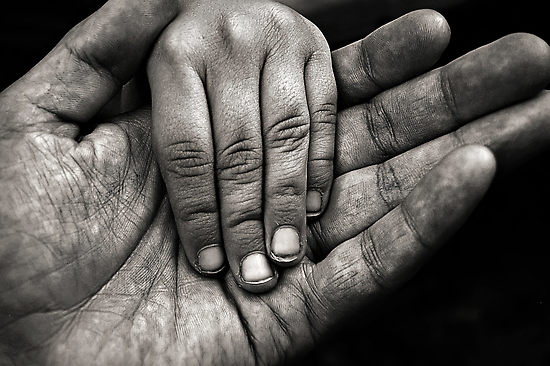
Next Wednesday we begin a new year of First Confession/First Communion and Confirmation classes—and as always, it is essential that parents take the lead in sharing the good news of Jesus Christ and the eternal truths of the Catholic Church. Your personal example is the most powerful witness to your children—and male role models, in particular, have extraordinary power in keeping kids Catholic. Even simple things, like reading a Bible story, putting on a tie or a dress for Mass, or taking time to pray with and bless your child before bed, make deep and lasting impressions.

Scripture reminds us, “Train the young in the way they should go; even when old, they will not swerve from it” (Proverbs  22:6 ). We are all practicing Catholics, all sinners who are in training to love as God loves. But as parents we are also powerful, and we must not neglect to use that power to bring our kids to Christ, who said, “Whoever receives one child such as this in my name receives me” (Matthew 18:5).

Blogger’s Note: This article appears in the Sunday, Oct. 18, parish bulletin.

We’re Not Meant to Go It Alone

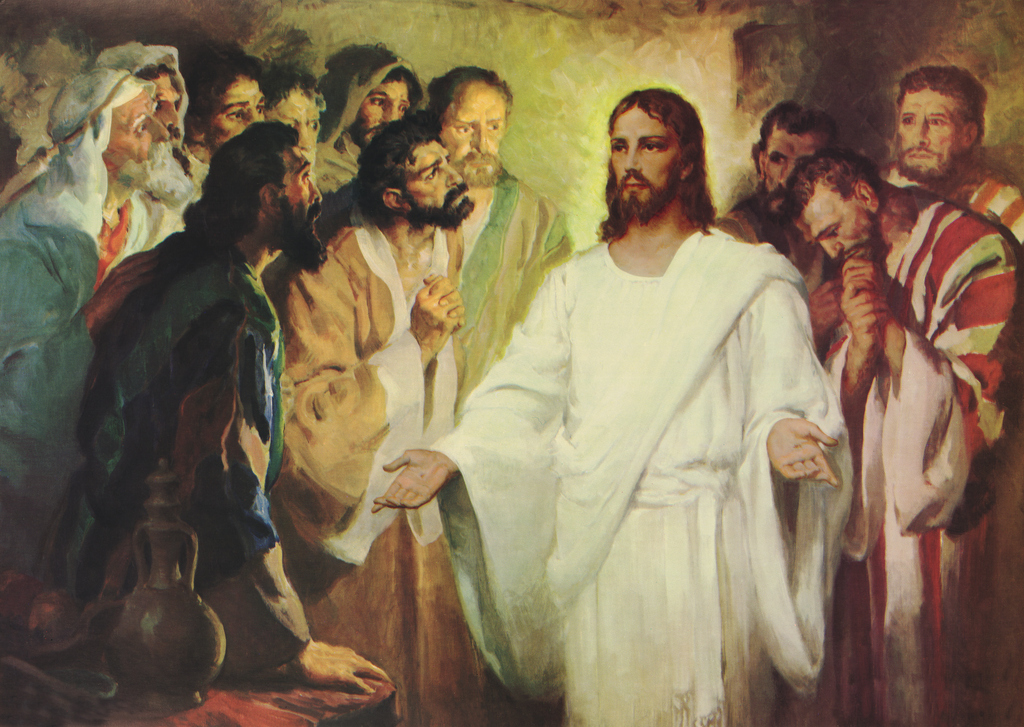
On the evening of that first day of the week, when the doors were locked, where the disciples were, for fear of the Jews, Jesus came and stood in their midst and said to them, “Peace be with you.”
– John 20:19
Imagine yourself as a follower of Jesus before His crucifixion. Imagine the excitement of coming to know the Messiah intimately and waking up each morning in his company, anticipating the day and wondering what profound teaching or miraculous sign awaits.
Now imagine that this man, whom you loved and believed to be the savior of your people, ripped from your midst and publicly tried, punished, tortured, humiliated, and put to death like a common criminal. Imagine the fear: if the Roman authorities and Jewish religious leaders could do this to such a man as Jesus, what could they do to me, a poor sinner?
What would you do?

The disciples chose, as many of us would, to keep a low profile—to remain out of sight behind locked doors. But they remained together. That’s curious.  Certainly a group of Galileans and the executed man’s mother all gathered together in one place did not escape the notice of their neighbors. Wouldn’t it have been sensible to disperse until the scandal blows over – to each return home, if only for a little while?
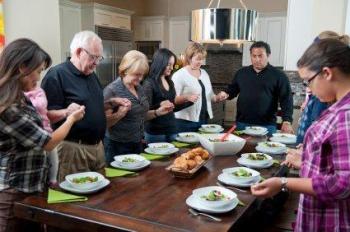
We are not meant to go it alone. We follow Christ to whatever end awaits us in communion with all believers, and we are meant to grow in faith, hope, and love; to face joy and suffering; to live and die; together as members of the Body of Christ here on earth. Only with the support of like-minded Christians can we find the courage and perseverance to pour out our blood, sweat, and tears for those who do not yet know God or His Church. This is yet another reason why our approach to faith formation and the sacraments here at St. Michael is family- and community-based.
In her book Forming Intentional Disciples, Sherry Weddell of the Catherine of Siena Institute identifies five “thresholds” that people pass through on their way to full-fledged Christian discipleship. The first of these thresholds is trust. Put simply, the first step toward conversion is finding a disciple with whom you can relate: a “known Catholic” whom you can talk to, relate to, or admire – or even just a Catholic who seems normal. Believe it or not, you begin to evangelize just by being Catholic and available to the people around you!
And while many people have said that once you leave the church, you’re in mission territory, I would argue that we’re in mission territory even in the pews! So many of your friends, neighbors, and family members – including me – fall short of intentional discipleship and need help. To that end, LIFT this year will include ice-breaker activities and some less-structured small-group time in order to help parish families get to know each other better. 

This social time is just as important as the more structured classroom time, because these are the interactions that shape how we follow Christ, individually and as a community. As we get to know each other, we begin to ask about each other’s families, share each other’s concerns, and pray for each other’s needs—and Christ Himself passes through our midst, filling us with grace and the Holy Spirit, and sharing with us His peace.

Blogger’s Note: This article appears in the Sunday, Sept. 27, parish bulletin.