Hammer and Tongs

It feels to me as though God is hammering me into something harder and more useful than I have been thus far in life. And that can only be a good thing. But in this moment, I can feel the tongs, the fire, the hammer, and cannot see the pattern.* I don’t know what He hopes to forge or even the shape He desires. I can only stay malleable and submit, trusting the Craftsman’s vision is keener than my own.

That is not easy for me. Which is likely why it must be done this way.

—–

*Please regard this as a metaphor and a sentiment I wanted to capture; nothing more. My current anxieties are minor in the big scheme of things. I just wish sometimes I could see what He sees…

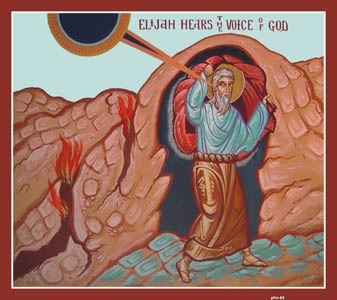
The Still, Small Voice of God

There was a strong and violent wind rending the mountains and crushing rocks before the LORD—but the LORD was not in the wind; after the wind, an earthquake—but the LORD was not in the earthquake; after the earthquake, fire—but the LORD was not in the fire; after the fire, a light silent sound.  When he heard this, Elijah hid his face in his cloak and went out and stood at the entrance of the cave. –1 Kings 19:11-13


It is Tuesday afternoon, and I am writing from home. This column should have been done and in already. It is not, because even a job working for the church is not as important as some things.

Around 9 p.m. last night my youngest son threw up, and my bride informed me she didn’t feel well either.  Between 9 p.m. and 2 a.m. or so, my son was sick probably two dozen times. Jodi did not get as sick, but was as sleepless as Trevor—and I tried to stay clear so that hopefully I could handle little Lily in the morning and keep her from catching whatever this was.

I rose and prayed with Jodi at 5:30. She felt a bit better, and Trevor was sleeping, at last.  At around 6, Emma was sick the first time, and by 8, Lily was complaining that she didn’t feel well either. I was getting ready for work—Day 2 with our new faith formation coordinator, Andrea Zachman—but had the sinking feeling that it was only a matter of time before it hit me, and that my colleagues might rather I stayed home. I was torn—I felt fine, but so had Trevor and Emma before it hit, and I had plenty of work to do. Lily seemed fine, but if she were on the verge, I didn’t want her spreading it to her friends and their families. Jodi was torn, too—she didn’t feel great, but had a mountain of work waiting for her and didn’t feel she could afford to miss a day.

And as fate would have it, we had a blanket of fresh snow on the walk, cars, and roads.

Ultimately we compromised: we both went to work briefly to take care of a few things and bring some additional work home to do around our other duties. We were out of several basic food items in our house, so I fought the blowing snow to stock up on a few things—and now here I sit, writing furiously.

We are all called by God—do you hear Him? I often imagine the God of the prophets speaking to them in a deep, thundering voice, but that’s not what we hear in first Kings, above. Elijah recognizes the Lord in “a light, silent sound”—other translations say “a sound of sheer silence” or “a still, small voice.” God whispers, as it were, drawing us close with his words, into an intimate conversation with Him.

Unfortunately, the noise of the world too often drowns Him out. We hear the voices of our colleagues and bosses ringing in our ears; the ringing of the phone and ping of emails, IMs, and texts…the traffic report…the weather…and nothing of the still, small voice of God.

Excuse me a minute: my other high-schooler, Gabe, just called—he’s sick and can’t drive himself home. Jodi and I need to go get him and the Suburban.

We are all called to a first and universal vocation of holiness. Most of us are called to live out that first vocation in terms of a second vocation to marriage and family life—we sanctify ourselves, our spouses, and our children by imaging God Who is Love. Everything else we do and are come in below that. We are created from Love, and Love is our purpose and end. That’s all. That’s enough.

Because that’s everything.

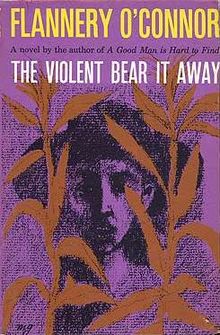
O’Connor, or Three Things to Love About The Violent Bear It Away

Blogger’s Note: Several years ago, I agreed to my friend Jacqui’s challenge to read 15 Classics in 15 Weeks. Though 15 weeks is long past, this, at last, is 15 of 15!

* * * * *
“From the days of John the Baptist until now, the kingdom of heaven suffereth violence, and the violent bear it away.” 
— Matthew 11:12 (Douay-Rheims Bible); epigraph of Flannery O’Connor’s The Violent Bear It Away

I am somewhat embarrassed to say that this was my first venture into Flannery O’Connor’s fiction, and what an introduction. It is a dark, hard, unflinching work, awful and mesmerizing, like a wreck along the highway–and yet strangely hopeful even as it descends. 

The book tells the story of Francis Marion Tarwater, an orphan boy in the mid-20th century deep South, raised with backwoods, biblical faith by his great uncle who believes himself to be a prophet and the boy to be his successor. When the uncle dies (at the very beginning of the story, so not a spoiler), the boy begins a very real spiritual struggle to discover the truth of this calling and the fate of his soul. The book builds a sense of dread even as the reader clings to threads of hopefulness, and erupts in violence both in present tense and in flashbacks–calling to mind a number of interpretations for the title and scripture verse it references.

I hesitate to say much more, for two reasons: first, this is a novel to be experienced, not spoiled or “set up,” and second, I honestly am not entirely sure what to make of it. I decided to wait a day or so before writing Three Things to Love, in order to reflect on the book–and I purposely didn’t read any commentaries. This morning, however, I read a couple of reflections on it by other people, and it appears I am not alone. O’Connor reportedly agonized over it, and readers for years have struggled with its deeper meanings and implications. On the surface, it is about the persistent pull on our hearts of both God and the world, and each person’s struggle to find freedom: will they take up the Lord’s yoke and find that it is light, or cast off the shackles of belief and live this life, for this world? It can be read (and enjoyed, after a fashion) at this level, but I am convinced there is deeper meaning here and will read it again someday.

So with that preamble, Three Things to Love about The Violent Bear It Away:
  • The Descriptions. Unlike several of the other books I read for this challenge (Tolstoy, Dostoevsky, Melville), this is a short book but still ripe with detail and description. O’Connor uses sparse, poetic language; metaphor; and simile to sculpt with words; the results a real, living people unalterably carved in stone.
  • Unflinching Honesty. O’Connor does not shy away from the darkness in humanity, and shares the thoughts and actions of her characters with relentless, sometimes shocking, honesty. At the same time, she does not succumb to the modern tendency to dwell on violence with pornographic detail–her matter-of-fact simplicity makes the book that much more compelling.
  • Eternal Themes. Faith and reason. Freedom and destiny. The nature of love. The spiritual combat. Here they are again: themes that arise in so much of great literature through the ages appearing again in 1960, set in the south of the United States. 
I feel as though I am sharing very little about this book, so maybe some comparisons would help. It reminds me in ways of two other books I enjoyed: Steinbeck’s East of Eden (one of my all-time favorite novels) and a more recent novel, Tobit’s Dog. If you like, check out those reviews to gauge whether The Violent Bear It Away might work for you.

Your Eternity Begins Now


For the past few years, our family has joined numerous others from our parish and surrounding churches for Life Chain, an hour of silent public prayer for an end to the evil of abortion in our country. We spread out along Highway 19 between the parish school and Middle School West and stand facing the road, holding signs and praying.

On the back of the signs are suggested hymns, prayers, and petitions to guide our personal reflection during that hour. Every year, I am taken aback by the petition that asks me to pray for God’s mercy for all I have failed to do to protect life and work for an end to abortion—because every year, I am convinced I could have done more.

Now we are two weeks out from electing a new president. Most of us have likely made up our minds how we will vote—guided, I hope, by reason and a well-formed conscience.  God willing, no Catholic will cast a vote in support of abortion or its proponents. Beyond that, faithful Catholics can and do disagree on how best to combat the evils in our society by our actions at the ballot box. With that in mind, I would like to share three thoughts about the aftermath of Election Day.

First, remember the words of St. Therese of Lisieux: “The world is thy ship and not thy home.” We are a pilgrim people, and although our country is great and worth fighting for, the kingdom to which we truly belong is not here. We are called to evangelize and make disciples; to deny ourselves, take up our cross, and follow Jesus. The outcome of this election will not change our mission.

Second, we are all called by God—and not one of us is worth less in His eyes because of the votes we’ve cast, the mistakes we’ve made, or the sins we’ve committed. Whatever happens on November 8th, we will continue to suffer for our faith, as Christ foretold, and our nation and world will continue to need our light, our service, our faithful example. Cast your vote on Tuesday and move on, because we must pull together as one body, one spirit, in Christ.

Finally, we have no time to waste. Too often our efforts on behalf of the unborn, marriage, freedom of conscience, or religious liberty hinge on the headlines and reach a fever pitch every four years with the election of a new president. We support particular candidates or policies; we act as though everything is riding on the results of the next election, then shake our heads when nothing changes and go back to minding our own business.

What about the roughly 1,460 days between presidential elections?

As Catholics, our opposition to abortion and the other great evils of our time is not primarily about saving lives, but about saving souls—including our own. Obedience to Christ and His Church is a daily choice. Disobedience is also a choice. So is complacency and non-action.

Every moment, God calls; every moment we respond. Our eternity begins now.
Lord, have mercy on me for all have failed to do here in my own community to draw people to you and build your kingdom. Amen.

Summer School

Lord, teach me to be generous. Teach me to serve you as you deserve; to give and not to count the cost, to fight and not to heed the wounds, to toil and not to seek for rest,to labor and not to ask for reward, save that of knowing that I do your will. 
– St. Ignatius of Loyola

This has been the shortest summer of my life.

I realize that speaking about summer in the past tense is part of my problem. But this summer, in particular, has emphasized how brief our time in this world actually is.

It has been a summer of firsts and lasts. Our first child graduated high school, so after his last wrestling banquet, prom, and awards night (and his first trip to the doctor for stitches), we attended our first graduation and registered for classes at the University of Mary for the first time. My own age doesn’t bother me much, but Brendan’s does—I can’t figure out how he could be leaving for college when I’m only just out of college myself.

June and July were relentless, planning and preparing for events at church and on the home front. On July 23, Gabe and I left for Poland with a group from three area parishes to join 2.2 million other pilgrims in Kraków for World Youth Day. It was a beautiful, faith-filled, overcrowded, and exhausting trip, packed with numerous graces and more than a few trials. We returned on Wednesday, August 3, to a house full of guests getting ready for Brendan’s grad party/college send-off on Saturday. On Sunday Jodi and I had our marriage blessed with a number of friends unknown to us when we got hitched 20 years ago, then went home to clean up from the party before Vacation Bible School, which started Monday.

Finally, on Thursday of VBS week, I left with Brendan for the Jesuit Retreat House in Demontreville. After the noise and chaos of the previous few weeks, three days of silence and reflection alongside my soon-to-be college-bound son seemed just what I needed.

On Thursday night, one of the priests advised us to pray specifically for whatever grace we hoped to gain from the retreat. Here I made a mistake: I had been anticipating rest and recuperation, but in that moment, my soul blurted out, “Intimacy with you, Jesus—I want to be close to you!”

I went to bed Thursday night expecting to sleep soundly and long for the first time in weeks. Instead I tossed and turned and woke multiple times, stiff and store and thirsty. In the wee hours of the morning, as the sky began to pale, a single verse from the Gospel of Matthew took root in my head: “Foxes have dens and birds of the sky have nests, but the Son of Man has nowhere to rest his head” (Matthew 8:20).

My eyes opened. I had prayed for intimacy with Christ and had been given the smallest taste: I was lying awake, exhausted, aching, and alone, with no one to talk with but my God. I prayed. I gave thanks for this new perspective. I slept peacefully, if briefly, until the sun rose.

This lesson—that intimacy with Jesus brings both suffering and peace—is not particularly profound, but it is important. Like a child, I had desired the benefits of heaven and God’s love without considering deeply what might be required of me. I think we do this often. Heaven sounds great if admission is free.

The retreat master offered another lesson, throughout the weekend. He told us to remember that the Holy Spirit is the Consoler: God does not motivate through discouragement, but encouragement. He wants us to take heart, not lose heart—and if He gives us a rock, it’s to build, not to bloody ourselves. Whether we seek intimacy with Jesus or not, things will change, people will come and go, time will fly, death will come. But with Christ, we can take heart: He has walked this road before, and it leads home.

O Jesus, our life here is short, and we cannot save time, but only spend it. Help me not to hoard the blessings I’ve been given, but to share them, and to pour myself out completely in union with you. Amen.