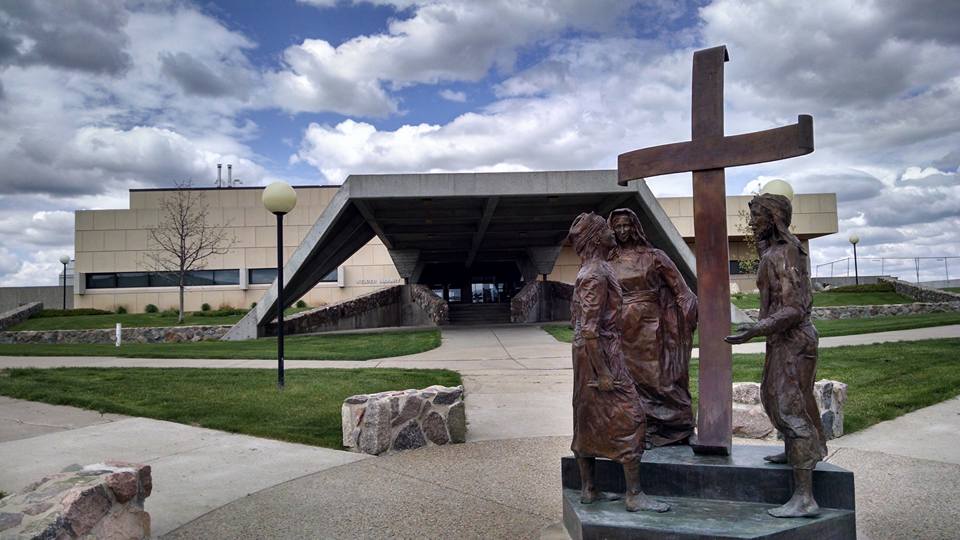
Love Does Not Divide

How long, Lord? Will you utterly forget me? How long will you hide your face from me? How long must I carry sorrow in my soul, grief in my heart day after day?  – Psalm 13:2-3

I ended last night with coverage of the shooting of Philando Castile by a police officer in Falcon Heights, Minnesota. I woke to 12 police officers shot by a sniper in Dallas, Texas.

Can you feel it? The tension in the air? A spark has been struck, I fear, that cannot be contained.

And it’s an election year. Everything is spun, hyper-analyzed, re-calculated, and spun again. Everything is us-versus-them.

Can you hear it? The rattle between my lungs of the small stony lump that passes, these days, for a human heart? I can. It has shrunken and solidified more while I slept.

I can feel my heart hardening, each time my “enemies” advance. I can feel the love draining away and the anger rising. I am tempted to turn away from those I once cared about because we don’t agree. I have no time to spend on the lost sheep with my little flock to attend.

How cavalierly we treat the salvation of souls—including our own.

Here’s what I know for certain about these shootings: Someone took a life. Someone lost a life. Both are terrible and permanent things with serious implications in this world and the next. And the proper response for most of us, who are removed from the situation, is earnest prayer for the souls of those involved and for peace.

The Evil One relishes these divisions in humanity, and fans the flames that rage around us. Instantaneous media coverage and commentary stifles reflection and discernment, prudence and justice. Politispeak and emotionalism obscure the truth, without which there can be no love. We paint our enemies with one brush and hue, and lose sight of them as unique images of God—each one a masterpiece.

Yesterday I ran across a quote from C.S. Lewis’s book Mere Christianity:

[The devil] always sends errors into the world in pairs—pairs of opposites. And he always encourages us to spend a lot of time thinking which is the worse. You see why, of course? He relies on your extra dislike of the one error to draw you gradually into the opposite one. But do not let us be fooled. We have to keep our eyes on the goal and go straight between both errors. We have no other concern than that with either of them.

Our way, as Christians, is narrow, between the errors. Our Way is Christ.

Here’s the truth, as simply as I can express it this gray morning. We have good cops and bad cops; racist, noble, and scared cops…and this morning, living and dead cops. We also have young black men who are good men and bad men; racist, noble, and scared men; and yet again, living and dead men. We have well-intentioned activists on both sides who want justice, and rabble-rousers who just want to fight.

The same applies to Muslims and Christians, to immigrants and natural-born citizens, to men and women. How do I know this? Because all of them are human, and so am I. All of these tendencies live in me, and I must choose which to follow.

It is also true that significant differences exist between the wealthy and the poor, Christianity and Islam, rural and urban America, liberals and conservatives—differences that we must acknowledge plainly and address if we hope to find peace in our communities—but none of these differences are discernible in our DNA or our soul. None are who we are.

I am Catholic, so I am at odds with the culture, with many of my friends, and with much of my family. And it’s complicated. I am a Christian, but I am at odds other Christian creeds, not to mention the non-Christian religions of the world. I’m at odds with scientism, but not science. I am at odds with supporters of abortion, same-sex marriage, and many other ideas. Faith and reason set me at odds with all of these things, but none of these persons—at least, not if I’m practicing my faith well.

So we disagree. Big deal; it happens all the time at my house.  And we each think we’re right? Well of course. If we thought we were wrong and persisted, we have more serious problems.

But one of us must be wrong? True enough—and likely both of us. But truth and love go hand-in-hand, so what are we worried about? Being proven wrong? That’s pride talking, the root of sin.

Is it possible to disagree and get along? We do it all the time with people we love. And Jesus said to love our neighbor and our enemies as we love our own selves. We have our work cut out for us.

I will give you a new heart, and a new spirit I will put within you. I will remove the heart of stone from your flesh and give you a heart of flesh. … You will live in the land I gave to your ancestors; you will be my people, and I will be your God. – Ezekiel 36-26, 28

We can bring God’s good work to fruition, but we must keep foremost in our minds our common humanity and the dignity of each person as made in the image of God. We must focus our attention on the infinite value of each soul to the Creator, and the boundless desire God has for each of us. Salvation of souls is our goal; repentance and love is our means. We cannot allow ourselves to be distracted by the concerns of this world—goods, comforts, guns, money—and lose sight of the only things worth loving: God and neighbor.  These other things are not bad in themselves, but can they get us to Heaven? Not likely, but they could drag us to Hell.

Love ought to be our first and last response. And God willing, as we learn to love as He has loved us and align our love completely with His eternal Truth, it can become our only response.
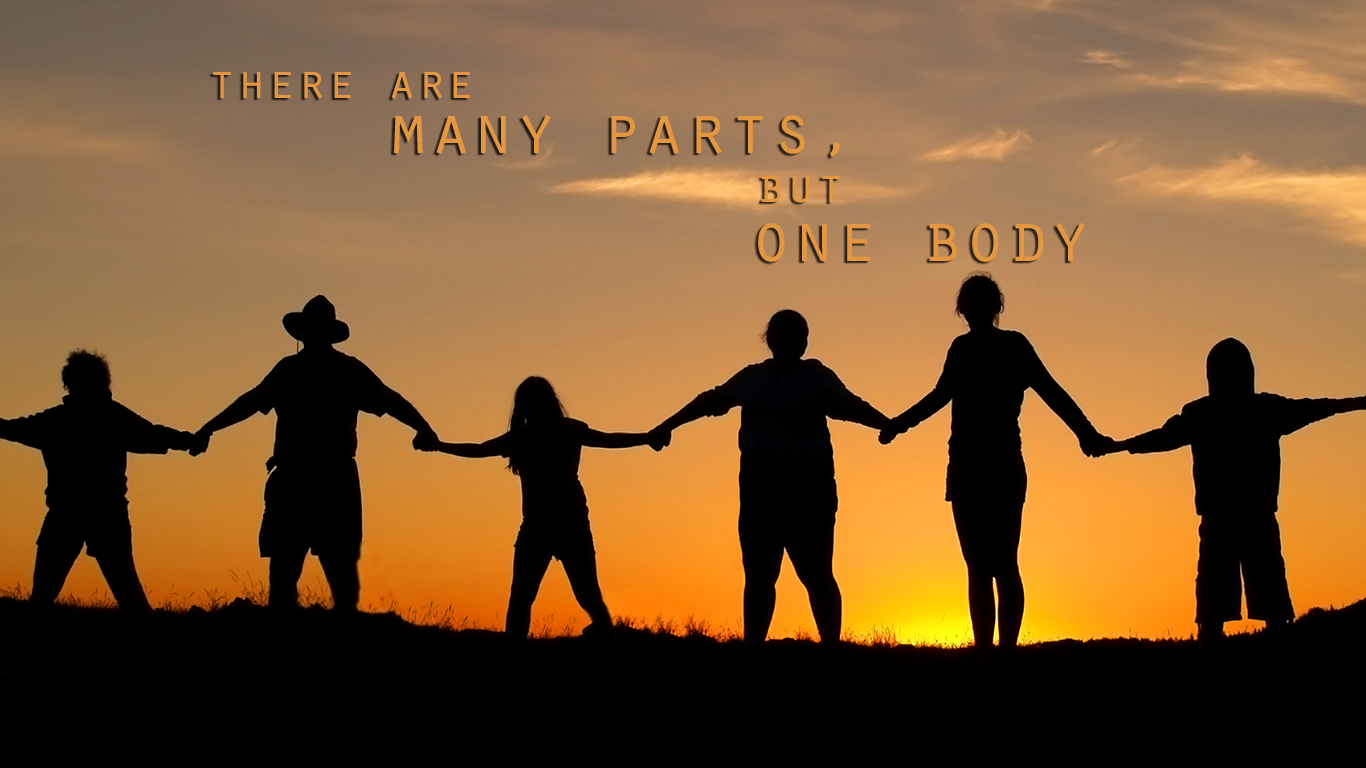
What Does It Mean to Be a Member?


This past week I finished reading The Weight of Glory, a collection of essays and lectures by the great C.S. Lewis. The piece that made the biggest impression on me was a reflection called “Membership,” in which Lewis explains the fundamental differences between what St. Paul meant when spoke of members of the Church and what we mean today.


Today, when we say someone is a member, whether of a church, a club, a team, or a family, we generally mean a unit—a part or cog in some bigger machine that shares some commonality or purpose. The emphasis is on similarity or even uniformity.

This is nearly directly the opposite of St. Paul’s usage of member in the sense of a part of body. In his first letter to the Corinthians, St. Paul emphasizes the uniqueness and irreplaceability of each part:

Now the body is not a single part, but many. If a foot should say, “Because I am not a hand I do not belong to the body,” it does not for this reason belong any less to the body. Or if an ear should say, “Because I am not an eye I do not belong to the body,” it does not for this reason belong any less to the body. If the whole body were an eye, where would the hearing be? If the whole body were hearing, where would the sense of smell be? But as it is, God placed the parts, each one of them, in the body as he intended. If they were all one part, where would the body be? But as it is, there are many parts, yet one body. The eye cannot say to the hand, “I do not need you,” nor again the head to the feet, “I do not need you.” – 1 Cor 12:14-21

God has created each of us as a unique image of Himself, with a unique purpose in the Body of Christ. That’s an exciting thought, but it also underscores the challenge of a one-size-fits-all approach to sharing our faith and the importance of each of us spending time with God to discern His purpose.

It is also important, however, not to compromise the truth of our faith in an effort to find our own path. The gospel reading a day or so after I finished reading Lewis’s essay was Matthew 5:27-32—in part:

If your right eye causes you to sin, tear it out and throw it away. It is better for you to lose one of your members than to have your whole body thrown into Gehenna. And if your right hand causes you to sin, cut it off and throw it away. It is better for you to lose one of your membersthan to have your whole body go into Gehenna.”

Our Lord is speaking in hyperbole, exaggerating to illustrate how seriously we must take repentance and avoidance of sin with our own bodies. The Body of Christ—the Church—exists for our salvation, but just like any body made with human parts, it too is prone to error and illness, and susceptible to temptation, comfort, and pleasure. Our members sin, and although the Lord desires everyone to be saved, He gives us only one way: Himself—“I am the way and the truth and the life. No one comes to the Father except through me” (John 14:6).

Jesus in Scriptures. Jesus in the Holy Catholic Church. Jesus in the sacraments, especially the Holy Eucharist. This is the path we’ve been given, and the only path we know leads to salvation. As members of the Body of Christ, it is our call to obey the Head, to pick up our cross and follow, and to bring as many others with us as we can.

St. Teresa Benedicta of the Cross (Edith Stein) said, “Do not accept anything as the truth if it lacks love, and do not accept anything as love which lacks truth! One without the other becomes a destructive lie.”

There is no good compromise. Nothing short of the Truth satisfies, and Love cannot exist without it.

The Choice Is Still Before Us

 
“Why do you call me, ‘Lord, Lord,’ but not do what I command?” – Luke 6:46
Recently I was paid a great compliment: I was called a disciple. My reaction surprised me. I didn’t feel pride or embarrassment, but alarm. My immediate concern was that if people consider me disciple, they might strive to be like me and fall short of true discipleship. The closer I get to God the more clearly I see how far I have to go. I am a tall man, but a low bar.
 

We all have a choice to make, to leave our former life behind and follow Christ to Calvary. As Deacon Ralph Poyo shared in his recent visit, it is an all-or-nothing choice. We are called to love the Lord with all our heart, mind, soul, and strength. The only way to put God first is to place everything else behind Him.

The bad news is that we cannot work hard enough or love well enough to earn heaven without God’s grace—but neither can we cease to work and presume God’s grace will carry us.

The good news is that the choice is still before us, in every interaction, every moment here on earth.

How do we make the right choice in the moment? Jesus gives us clear instructions. For example:

  • Renounce your possessions, pick up your cross, and follow—otherwise you cannot be a disciple (Matthew 16:24-16, Mark 8:34-38, Luke 9:23-26).
  • Love God, love neighbor, love enemies—it is not enough to love those who love you (Matthew 5:43-48, Luke 6:27-36).
  • Provide for the needs of others as you would for Jesus Himself—anything less is damnable (Matthew 25:31-46).

These words are like a punch to the gut for me. I have no trouble at all crying out to the Lord, but I’m terrible at doing what He commands. I go to Mass, pray pretty regularly, and try not to sin. But I enjoy my life, I dislike suffering, and I am comfortable in this community, in my circle of friends and family, in a job that suits my skills and pays the bills.

Surely I get bonus points working for the church? Didn’t the Pharisees?

We have hope, however. God seeks us constantly, loves us endlessly, wants to forgive us and welcome us home. God proves His love by sending His son to sinners, to live, suffer, and die in order to save us from our sins. We can choose today to accept this love or not. We can choose to love God back or not. We can choose to follow Jesus or not. We can make this choice right now.

But we can’t do it alone. If you are ready to change your life and follow Christ today, talk to someone today. Ask someone you regard as a disciple what to do next. They might be a little flustered at first, because discipleship is a big responsibility. If they are uncomfortable, it may mean they need someone to walk with, too. Ask them to partner with you. And if you don’t know who to talk to or want help from the parish to get started, send an email to smallgroups@stmcatholicchurch.org or call me at the parish office. 

Don’t wait. The way is narrow, but not so narrow that we can’t walk it together!

A Higher Education

As we crossed the plains of North Dakota this weekend, I made a surprising discovery: my college roommate Frank is now the Honorable Franklin R. Parker, assistant secretary of the Navy.

We were headed to Bismarck to register Brendan for his first-year classes at the University of Mary. Jodi was driving, and I sat hunched in the back seat of our little commuter car, giving Brendan and his mom some quality time up front. We had been talking to him about things that change as you move through life: interests and priorities shift, people you were close once slowly drift away. “It just sort of happens,” I said. “Often it’s not even intentional: my buddy Frank from Yale and I used to be in touch a couple times a year — we would at least exchange letters at Christmas — but this last winter I didn’t hear from him and our Christmas letter bounced back to us. They must’ve moved.”

I sat a moment, then said, “Of course, he is an attorney and has worked for some pretty big firms, so I could probably find him again in just a few minutes on Google.”

* * * * *

I pulled out my phone, entered “franklin r parker,” and voila: “President Obama Announces More Key Administration Posts.” To be sure this was, in fact, Frankie Parker of Durfee Hall D-21, I dug deeper and found his official bio page on the U.S. Navy’s website

That’s him. That’s guy I roomed with freshman and sophomore year, whose parents took us to see Ray Charles perform in New Haven, who stood up as a groomsman in our wedding at tiny St. Liborius Catholic Church in Polo, South Dakota, and whose own wedding  was a Chicagoland mashup of African-American and Asian influences with a little Cherokee thrown in.

I shared my discovery with Jodi and Brendan, and for the next hour or more, periodically shook my head, murmuring, “Wow…Frank Parker…working for the President…who knew?…assistant secretary of the Navy..huh…”

If I’m honest, a small part of me was, not jealous, but curious if I could have been something more. As evidenced by his resumé, Frank is a smart fellow, and he’s always been better at making connections than I am — but I did well in college and well in every job I’ve had since. What is it that separates two men with an Ivy league education and a liberal arts degree, such that one goes on to graduate school, prestige, and power, and the other works retail, starts a family, and lands at his local church as faith formation director?

Ever have that happen? It’s not envy — I don’t begrudge him his success or even want what he has. It’s  more like a form of pride or vanity, wondering if I could have been more than I am.

* * * * *

Ultimately I remembered something I wrote during freshman year at Yale: I came East for an education. It was never about a career for me, and I never planned to stay there. I came to learn all I could at one of the great old universities our country has to offer. And I did.

Brendan is a smart young man. He can do almost anything he sets his mind to, and for years his goal was the Naval Academy and the Marine Corps, until he began to grow deeper in his Catholic faith and realized he wasn’t sure he could trust our country’s leadership to deploy him to only just wars. Then his focus was engineering, until he began to think specifically about what he liked (understanding how things work and making stuff, like his Dziadzi) and what he didn’t like (lots of math, computer work, and CAD, like a professional engineer). He’s always loved history and enjoyed theology and literature — so he began thinking about studying, teaching, and writing about the things that he loves.

I can’t fault him for that.

* * * * *

We spent the night in the Expressway Inn in Bismarck (nicer and quieter than it sounds) and the next morning, headed out of town and up the hill to the University of Mary for Mass and registration activities. I hadn’t visited yet, and though I knew it was small, I hadn’t imagined what small might look like in this case. My last higher-education employer, the University of Minnesota, has about 51,000 students; my previous higher-ed employer, Ferris State University, boasts 14,500, and Yale has around 12,000, with a bit more than 5,000 undergraduates.

UMary, by contrast, has a total enrollment of just 3,000 — a tiny cluster of stone and concrete buildings hunkered on the edge of a high bluff overlooking the Missouri River. The buildings aren’t beautiful in any conventional sense; built in the middle of the last century for the wear and tear of young people and the wind and weather of the plains, they are low, solid structures with the quiet strength of stones unmoved by the world and its ceaseless spinning.

* * * * *

We started our day in a tiny chapel, well lit and peaceful, with a handful of prospective students and their families, current students, and administrators. We were first to arrive just behind the priest, a gray-haired Benedictine, and prayed in silence until Mass began. It being the feast of St. Mathias, the readings were focused on the selection of Mathias to replace Judas among the Apostles and Jesus’ command to love one another.

In his homily, Fr. Anthony contrasted our current presidential election process with the prayerful selection of St. Mathias, and contrasted the fame and power of our political leaders with the relative anonymity of St. Mathias both before and after his selection: basically the only things we know for sure are that he was with the other apostles in following Jesus from the beginning through the Resurrection and that he died while sharing the faith with an unbelieving world. He does not appear to have been self-seeking, but to have had one desire: to “to go and bear fruit that will remain” and to lay down his life.

I have reflected on his homily numerous times since, and while I don’t fault Frank for working hard to be where he is in his life, I am no longer curious where else I could be.

* * * * *
After Mass I told Brendan and Jodi I had a tremendous sense of peace about UMary. “This is a good place,” I said.
The original school was founded by Benedictine nuns at what was, at the time, the end of the railroad tracks headed West. During the opening session of the day, the current religious sisters who live in the monastery at the edge of the campus came to pray over the incoming students and their families. They ended their prayers with a beautifully harmonized sung blessing, and we were separated into smaller groups from the rest of the day. 
Brendan was assigned an upperclassman to his liking: a triple-major in history, Catholic studies, and secondary education; the drummer in a rock band who was studying Polish in hopes of doing graduate work in Poland. Jodi and I talked with various campus representatives, including an administrator in Admissions who said our parish’s reputation precedes us and asked what we thought it was that makes St. Michael a special place. We also wandered the campus, talking and taking a few photos, and I ended the day with a sense of great joy: I believe Brendan is where he belongs.
It is true, practically speaking, that students should enter college with some sort of plan for what they want to do with a degree — otherwise the time and money are potentially wasted. But I believe it is also true that, for good students, a structured approach to the liberal arts can help create flexible, resilient young men and women who are prepared to lead, to sacrifice, and to preserve our culture in the days to come. I believe, in choosing UMary, Brendan has chosen a higher education (higher even than Yale in the ways that count most), and I’m proud and excited to see where this path leads.

A Father’s Greatest Fear

This past week, 130 teens from our parish and school received the Sacrament of Confirmation. A few of these young people are already leaders in the community, drawing others to Christ. More will enter into the fullness of the Catholic faith and begin to live as disciples of Jesus, called to follow, and gifted to reach out to their family, friends, and strangers in new and beautiful ways.

But unfortunately, many others will view Confirmation as the last requirement of “growing up Catholic.” They will be happy to be done with religion classes and will begin almost immediately to drift away from the Church.

Last weekend my bride and I spent Sunday afternoon with three other couples trying to raise Catholic families. We talked about cultivating perseverance in our children: strengthening them to look for ways forward when the going gets tough, to have the courage of their convictions, and to fall and rise again. We talked, in particular, about the difficulty of letting our teens make decisions we don’t agree with in order for them to learn on their own those things that our experience could teach but that they won’t hear.

At least two of us agreed that our biggest fear is our children falling away from the faith. My friend said that when he shares this fear, people will seek to reassure him: You are doing everything you can; they have to make their own choices.

“In reality, it’s not about me,” he said. “I worry, because I know how long a road it is to come back.”

I would add to his observation the sobering reality of eternity, heaven, and hell. We don’t like to think about these things—hell, in particular—but Jesus speaks plainly about them. I remember, in my younger years, seeing TV commercials featuring Carol O’Connor of Archie Bunker fame, after he had lost a son to drugs and suicide, saying: “Get between your kids and drugs any way you can.”

If only we took the same approach in the spiritual life.

So how do we keep our kids Catholic? It is not as simple as demanding they show up on Sundays and Wednesdays and go through the motions. All of us have a choice to make, every day, to follow Jesus and make God and our faith the center of our lives. To deny the reality of that choice is to deny the very thing that makes us special in this universe: bodily creations with rational spirits, with intellect and will, so loved by God that He allows us the freedom to choose for or against Him.

Why would anyone choose against God? C.S. Lewis’s short novel The Great Divorce lays out many reasons, rooted primarily in the earthly things—even blessings—that we put ahead of God and cling to at the expense of Him who is all Truth and all Love. God, spouse, children, everything else—is my house in order? Not as often as I’d like.

So what hope is there for our young people? Well, we have a Redeemer who, undeserving though we are, has already suffered on our behalf, and a Father in Heaven who doesn’t want to lose our children, either. He is constantly calling them, and us, to Himself—as singer-songwriter Jon Guerra puts it: “My Father ever chasing/My Chaser ever keeping/My Keeper ever giving/My ever-living God.”

I’ve referenced before an online article called “Keeping Our Kids Catholic: The Indispensable Minimum.” The writer describes our role as parents as forming “a thread of solid formation in morals and Church teaching that will keep even our most errant kids tethered to God—and which God himself can twitch to bring them back someday.”

Ultimately our children belong to the same heavenly Father that we do, and they are His to love, to call home, to save. We are not alone, and we don’t have to do it all. We only have to do all we can.