Rise and Walk: Looking Ahead to Next Year’s Program

This past week we completed our family faith formation sessions for the year, and this weekend our LIFT first communicants will receive the Blessed Sacrament for the first time. The past year has flown by, and I suspect the summer planning season will pass even faster. We have lots of great for next year, but one of more significant changes has to do with the age of Confirmation. After extensive discussion in recent years, including our priests, committee members, catechists, and staff members at St. Michael and St. Albert parishes, we have decided to gradually shift the age of Confirmation to 8th grade for all our students.

This decision was made for several reasons, but for me, the two most compelling are these:
  • Middle-schoolers are more open to evangelization and catechesis. They are more likely to follow the lead of their parents and parish volunteers, more excited about activities and retreats, and significantly less busy. High-schoolers have other priorities, including sports, exams, driver’s ed, jobs, and social lives—and unless their faith is already a top personal priority, it is difficult to make them care.
  • We already have great success in reaching and converting middle-schoolers. We have tremendous youth ministry programs that change kids’ lives (as almost anyone who has sent their kids to Extreme Faith Camp can attest). We don’t capture the heart of every middle-schooler, but of the high-schoolers we have who stay committed to their faith through graduation and beyond, nearly all of them were hooked in middle school. Each year we have a large “bubble” of students who show up for Confirmation classes—why not move the bubble to the age at which we have proven success in reaching kids and helping to keep them Catholic

What does this mean for you? If your children attend the parish school, they will continue to be confirmed in 8th grade. If your children attend LIFT and our parish Confirmation program, the plan looks like this:

  • Next year: Tenth-grade students will see no change; they will complete the second year of the Chosen program and be confirmed in Spring 2017 as planned. Ninth-grade students will complete a more intensive, one-year Chosen program and will also be confirmed in Spring 2017.
  • 2017-18:Ninth-grade students will complete a more intensive, one-year Chosen program and will be confirmed in Spring 2018. Eighth-grade students will complete either a one-year program (either based on Chosen or the YDisciple model) and will also be confirmed in Spring 2018.
  • 2018-19:Eighth-grade students will complete a one-year program using the YDisciple model from this point forward.

The YDisciple model involves forming small groups of around eight students each, beginning in middle school, with a trained adult leader who walks with those students from middle-school until they graduate. In each discipleship group (or D-group), students continue to learn about their Catholic faith, grow in prayer and discipleship, support each other, and hold each other accountable.


This is a volunteer-intensive effort. We will need people who feel called to work with teens and share their faith, who are willing to be trained and to commit to a group of young people, and who are able to share their own lives as examples of faithful discipleship. It is a daunting task to find and train so many volunteers, but we believe this is where God is calling us, and He will make our efforts fruitful.

In fact, our need for dedicated disciples who are ready to work in the vineyard is not limited to Confirmation. We have such great needs in this parish, and so few workers. It is time for those of us who have been asleep to rise and walk, with our spouses and children, our friends and neighbors, and all those in our lives who need Christ—in short, with everyone!

20 Years a Fool: A Resurrection Story

One of the things I gave up for Lent this year was the last word. It might seem an odd thing from which to fast, but on the home front I crave the last word, savor it, seek it with such reckless abandon that I scatter piles of lesser words about the house until at last I have it. In the past I have recognized this fault in myself: that I want to be right, or at very least, heard and understood, in all things. I manage to tamp down this tendency in public, but in private, in flourishes.

Jodi knew of my sacrifice, and just prior to Holy Week, I asked for her honest assessment as to how much progress I had made. She hesitated a long moment, so I said, “It’s alright — I need you to be straight with me.”

She said, “Honestly, I haven’t noticed much of a difference.”

Just as I thought. I knew I hadn’t done well in this regard — and considering the number of times I know I bit my tongue or choked down one last pointed comment, I now knew how gluttonous my appetite for the last word had truly been.

Lent was not a complete loss, however. For one thing, my self-conscious failures led me to look for little things I could do to make up for being a jackass: simple acts of love and kindness like making the bed, which I have rarely if ever done of my own accord. For another, after this sobering conversation with my bride came Holy Week, and the sacrament of Penance, and the Triduum.

Like so many of the faithful, Holy Week crept up on me with alarming quickness and stealth. Once I realized time was short, I redoubled my efforts to hold my tongue, with at least some renewed success. On Tuesday, Jodi and I went to Confession at Mary Queen of Peace, to a young priest who cut us both to the quick, condensing a plethora of sins to a single, focused flaw, then concocting a penance to match.

In my case, he said something like this: “A simple definition of love is giving of yourself to another. A simple definition of pride is claiming for yourself what isn’t yours. All yours sins seem related to this tendency to take things for yourself: wanting to look better than you are to those around you, wanting recognition for what you do, even taking on more responsibility for what’s happening at work or in the world than belongs to you.”

For my penance, he asked me to find three people or causes to which I could give of myself before the end of Holy Week. And it helped.

After work on Holy Thursday, I shut off my computer and phone until after the Easter Vigil. It’s remarkable how peaceful it can be to escape the endless barrage of email and social media “news,” especially in an election year. Nevertheless, in the wee hours of the morning on Good Friday I found myself unable to sleep, and finally rose around 4:30 a.m. to pray and journal.

I sat near the front window with a cup of black coffee in the foreground and choral music in the back; two candles providing a flickering light so as not to deaden the dawn when it arose. My mind wandered across the years of marriage and family life, and I thought of St. Joseph, who is never quoted but ever present in the early life of Jesus in the gospels — the epitome of the “strong, silent type”; the carpenter, whose rough hands and faithful heart made dead wood bloom. Here was a model of a husband and father: quiet, hard-working, life-giving.

Life-giving…

For nearly 20 years of marriage, I have accepted the truth that I married well: a woman of beauty, faith, and virtue who was meant to guide me to Christ. For those same 20 years, I have acknowledged her as life-giver, and myself as a sponge, simply soaking up the love she pours forth.

While all of these things are true, for 20 years I’ve used them as a crutch — something to lean on in my weakness. It sounds so sweet and humble to say, “I’m not worthy,” but when did that become good enough? Should I not strive to become worthy?

For the past several years Jodi and I have helped with engaged couple retreats at our parish. Many times over those years we’ve helped to share this analogy between marriage and the Holy Trinity: God the Father loves God the Son; the Son receives that love and reflects it back to Father; and that love between them is God the Holy Spirit, “the Lord, the Giver of Life.” Similarly, a husband loves his wife; the wife receives that love and reflects it back to her husband; and the love between them becomes so tangible that it gives life — sometimes literally, resulting in a third person.

For years I’ve helped share this message without directly applying it to my role in our marriage. The husband is the life-giver. The husband initiates. His bride receives what he gives, transforms it, and gives it back — but I’m meant to the source. Not a sponge, but a spigot.

I sat, dumbfounded, as dawn arose. All these years of “wearing the pants” in this family, and Jodi has been trying to do both our jobs. When the sun finally rose, I felt like a new man. Or rather, a man rising to new life.

Dust that we are, a day later I was struggling to recall these revelations and was again longing for a sign from God to guide me — like those whom Jesus fed with a few loaves and fishes, who, the very next day, asked Him, “What can you do?

So I resolved to write them down and share them. May they be my own little resurrection story: after 20 years, a fool became more the man he is called to be. Amen.

Slaves No More

I can’t possibly afford to be here.

Two years ago, I was working in communications at the University of Minnesota. I had spent six years as the president’s speechwriter and enjoyed a solid salary, stellar benefits, and the respect and friendship of several wonderful colleagues.

Nevertheless I felt adrift. The U hired a new president, and I changed jobs three times in two years—with each one less and less to my liking. I knew I needed to make a change. I thought about working for the Church, but communications positions were few and far between; most other positions required a theology or professional degree I didn’t have, and the pay and benefits couldn’t compete with a large public university.

Plus, like too many couples, Jodi and I were not smart with our money in our younger days. We never had a budget and ran up debt almost without thinking. So when the faith formation job opened up here in our home parish, my first thought was: We can’t afford it.

Unbeknownst to me, wiser minds and more faithful hearts than mine were at work. Friends and family were praying for me. And providentially, Jodi and I had attended Financial Peace University the year before. Jodi’s brother Jason followed Dave Ramsey’s program, and it changed his life—so when new parishioners Jason and Robyn Jones brought Financial Peace University here, we saw it as a sign and joined their first course. It changed our lives, too.

I won’t walk you through the entire program—instead, I’ll share one example. Ramsey insists that a zero-base budget is essential to managing your money. Every dollar you bring in is assigned a specific role. Bills. Groceries. Giving. Savings. Even monthly “blow money,” so you can treat yourself to whatever you want, no questions asked. Each month, you tell every dollar where it goes.

“At the end of the first couple months,” we were told, “you’ll feel like you got a raise.” Why? Because when you don’t assign every dollar to a specific priority, you waste money, without even knowing it.

After living paycheck to paycheck for years, we were skeptical—but sure enough, when we started the zero-base budget, we realized we were blowing an extra $500 to $1,000 a month on…nothing. We had barely covered our bills, and we had no money left and nothing to show for it except a few greasy pizza boxes and empty beverage containers. We started budgeting this way each month and realized we had been living and giving below our potential!

So when opportunity knocked here at St. Michael, we ran the numbers and discovered I could answer the call. The incredible thing is that we have the same bills as before (gas and parking went down; healthcare went up), yet everything is covered, even with less coming in.

When we speak about it, it makes no sense—where does the money come from?—but on paper it’s clear: when we track every dollar, we can see the money was there all along. When we couldn’t see it, we didn’t realize it was missing.

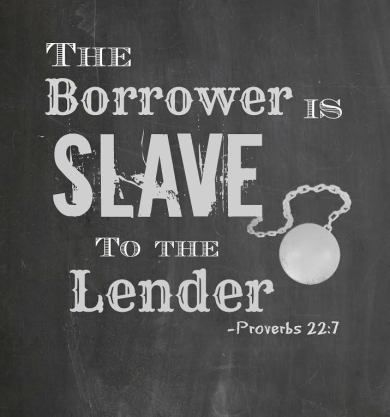
We aren’t debt free yet, but we’re on our way—and just getting on that path gave us the freedom to change, not just jobs, but our whole family dynamic and outlook. We make less money, and yet we are giving more to the church and other charities, enjoying ourselves more, paying off more debt more quickly—and worrying less. Although we still owe, we are no longer slaves to money. And that is a great feeling.

Same Guy, Different Year

I don’t know about you, but 2016 caught me off guard. The new year leapt from behind our Christmas tree in the early morning darkness to find me unprepared and unresolved, the same shuffling sinner as last year, stumbling to the kitchen, rubbing my eyes and searching for coffee.

And now I notice Lent and Easter creeping up. Ash Wednesday, February 10, is less than three weeks away. In past years I would have broken multiple resolutions by this point and would be tempted to use Lent to get back on the horse—fasting, for example, in order to lose weight rather than gain perspective.

Since I’ve made no resolutions, however, I’m headed toward Lent with no agenda other than the humbling realization that this year’s Jim is much the same as last year’s. And in recent weeks I’ve noticed two sins within myself that, in the past, I have failed to confront and that need to be uprooted.

The first, I learned just last weekend, is a form of vanity. I worry, overmuch, about what people think of me. Not simply in terms of appearance, though if I’m honest, that’s a part of it. I worry that I’m making a bad impression, that I’m being misunderstood, that I’m coming off as a judgmental know-it-all or a sentimental fool. As a result, I want to do good work, but not always for God’s sake or even for your sake. I want to do it for my sake, so I can feel good about me.

This is hard to admit, as it’s not a particularly manly sin. All of us have the need for affirmation—but I get affirmation from so many of you and from God in prayer. Worrying about every misstep and stewing over every sideways glance or offhand comment to the point that I forget the Father smiling down on me is an evil that must be uprooted.

The second, I fear, is more humbling than the first. Between my work life and our home life, I am as busy as I have ever been, and yet I feel God pulling me toward other things He wants me to do. And I’m resisting, because Lord, I don’t have time—something’s got to give!

Then it occurs to me: perhaps I’m that something. Perhaps God wants more of me.

And then the panicky flutter starts up in my chest, like a moth realizing too late that he’s inside the shade and that beautiful Light burns. I can’t do this, I think. I’ve got to get out of here!

Yes, you can, says God. Stay with me.

I realize one of two things must be true: either I don’t truly believe God can help me, or I don’t believe He will. The first I recognize as rubbish immediately: He’s God; He can do whatever He sets His mind to.

The second is equally rubbish: He is Love and always wills the good of His people. I know this. I do.

But do I trust Him?

I’ve got a long Lent ahead of me. May your sacrifices be fruitful, drawing you nearer to Christ!

The Seed Is…Me?

I’ve had a handful of conversations lately about our faith formation programs at St. Michael: what we’ve done differently this year, what’s working and what’s not, and what more I wish we’d done. I am tempted to sudden actions and grand gestures at times, and midway through the faith formation year is no exception: I am tempted to blow up what we’re doing in our parish and start over. So many people need to know that God is real, that Christ is present in the church…and I’m stewing over videos, Powerpoints, and the Catechism.
Then a good friend shares this with me, from something he is reading these days. He knows where my head has been lately, and thinks this might be helpful. He’s right.

“Commenting on the Church’s evangelizing efforts, Pope Benedict XVI warned that Catholics today must resist what he calls ‘the temptation of impatience,’ that is, the temptation to insist on ‘immediately finding great success’ and ‘large numbers.’  He says that immediate, massive growth is not God’s way.  ‘For the Kingdom of  God as well as for evangelization, the instrument and vehicle of the Kingdom of God, the parable of the grain of mustard seed, is always valid.’  He goes on to say the new phase of the Church’s evangelizing mission to the secular world will not be ‘immediately attracting the large masses that have distanced themselves from the Church by using new and more refined methods.’  Rather, it will mean ‘to dare, once again and with the humility of the small grain, to leave up to God the when and how it will grow.’”

The quotes from Pope Benedict are from “The New Evangelization:  Building a Civilization of Love,” his address to catechists and religion teachers, Jubilee of Catechists, December 12, 2000.
We talk often of planting seeds in others, not knowing where, when, or whether they will germinate. But Pope Benedict calls me to the humility of the small grain. 
What does that mean?

A seed perseveres through inclement conditions. It bides its time, then when the time and place are right, it germinates: puts roots down and sends visible growth up.
So far so good, I think.
As conditions are favorable, it continues to grow, and God willing, to put forth fruit. The plant itself has little impact on how much fruit results year to year or what becomes of the fruit once it ripens and drops. But it continues to produce, year after year, as long as it is able. 
The seed is me? That’s a thought I hadn’t thought before…