A God-Size Space

This morning’s thought comes courtesy of St. John of the Cross via Deacon Ralph Poyo, whom our parish staff had the pleasure of following on retreat yesterday, and who never actually mentioned St. John of the Cross by name.

Jesus tells us throughout the Scriptures that we must leave everything behind to follow him. Certain of these passages seem particularly harsh: “Let the dead bury the dead;” “No one who sets his hand to the plow and looks to what is left behind is worthy of the kingdom of God.” I have struggled with these passages over the years, but in the wee hours this morning, lying in the dark, I had a brief moment of clarity.

Dcn. Ralph reminded us that choosing to be a disciple of Christ (in particular, Christ crucified, since Jesus himself tells us that in order to be a disciple we must pick up our cross and follow) is a black-or-white, all-or-nothing choice. He asked us to imagine, on one hand, Jesus suffering on the cross, and on the other hand, a table filled with all these little icons of the people, places, and things of this passing world that matter to us: our spouse, children, family, and friends; our pets, possessions, and pastimes; our worries, anxieties, and sins.

Of the two, we are called to choose Christ—you shall love the Lord your God with all your heart, soul, mind, and strength—but it’s hard to embrace the cross and even harder to carry it any distance. So we are tempted to walk to the foot of the cross and break a chunk off from it, to shape that piece of the cross into another little icon representing our Christianity, and to place it on the table with the rest, our tiny God, lost in a sea of idols.

St. John of the Cross writes of the tremendous longing God has for union with us (and vice versa). He wants to live within us, but before He can enter fully, He needs a God-size space. And since our God is infinite and eternal—the source of being for everything—the only space big enough is complete emptiness. Nothing else fits where God fills.

I have thought about this before in terms of the little pieces of the world we cling to or the tiny sins we allow to continue because “they aren’t so bad.” But early this morning, it occurred to me that even clinging to the good things of this world—my wife and children, my vocation as a husband and father, my job, and the parish that I love—can push God out.

This does not mean I must give these things up, only that I let them go to make space for God. If I can empty myself completely and seek Him alone, He who is the source of all good things will fill me, and like Job, I will regain what seemed lost, and more!

God is indivisible, the ultimate All, and we cannot claim just a piece of Him—“But seek first the kingdom of God and his righteousness, and all these things will be given you besides” (Matthew 6:33).
Our Faith Is Not Genetic

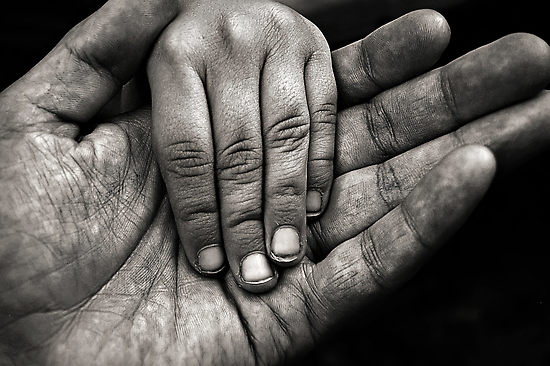
Last month I wrote about the power of family— in particular, parents—in keeping their children Catholic.  It’s sobering, then, to learn that the Catholic Church in the U.S. is losing members faster than it is gaining them, and that, for today’s teens, religious identity is no longer reliably inherited. In other words, Millenials aren’t likely to stay Catholic simply because their parents and grandparents were Catholic.

What does it take to keep our young people in the faith? According to a 2012 Canadian study, young adults who choose to remain Christian have four main characteristics:

  1. They have experienced God’s presence and have witnessed answered prayers.
  2. They can ask and openly discuss their real spiritual questions in their Christian community.
  3. They understand the Gospel at a deep level.
  4. And they have seen communities of faith and older adults living their faith.

Numbers 1 and 4 have to do with experiencing God, both personally and in community. Numbers 2 and 3 involve grappling with spiritual truth. Young people who have the opportunity to know and personally experience God and are encouraged to explore that knowledge and experience are more likely to choose for themselves to remain faithful to Christ and His Church.

Is that the environment we are fostering at St. Michael Catholic Church? In our homes and our schools?

Unfortunately, Catholics have a reputation—earned in many cases—for not spending much time delving into sacred Scripture and for not sharing firsthand experiences of the very real and personal God we hear about in the Bible and the Catechism. And while our Masses may be well attended, a faith that is manifested for an hour on Sunday is not the same faith that made evangelists, world travelers, and martyrs out of a dozen unknown Galileans. Their faith changed lives—their own, first and foremost. If church doesn’t change us, we’re not doing it right!

Eventually everyone makes a choice for or against Christ. So maybe it’s a good thing that we can no longer rely on birth and blood to pass our Catholicism on to the next generation.  If we acknowledge that even cradle Catholics need conversion; if we share our faith not just with those outside the Church, but with each other; if we pray for, and come to expect, God to act in our lives in personal and tangible ways, through answered prayers, spiritual gifts, vocations, and more—we will “become a people living for Christ” in every generation.

Blogger’s Note: This article appears in the Sunday, Nov. 15, parish bulletin.

These Least Brothers of Mine…

My brothers and sisters, show no partiality as you adhere to the faith in our glorious Lord Jesus Christ. For if a man with gold rings and fine clothes comes into your assembly, and a poor person in shabby clothes also comes in, and you pay attention to the one wearing the fine clothes and say, “Sit here, please,” while you say to the poor one, “Stand there,” or “Sit at my feet,” have you not made distinctions among yourselves and become judges with evil designs? — James 2:1-4 

Last night Jodi, Brendan, and I joined a friends of Brendan’s and his parents at Fogo de Chão Brazilian Steakhouse in downtown Minneapolis to celebrate their senior year, their acceptance into the college(s) of their choice, and a backlog of birthdays. Fogo is a carnivore’s paradise, with such an abundance and variety of fire-roasted meats that I kept thinking of Scripture’s forgiving father ordering the slaughter of the fatted calf to celebrate the prodigal son’s return. Server after server stopped by our table with skewer after skewer of beef, pork, chicken, and lamb, carving portions for us until we flipped our green coasters to red to signal, “No mas!” (or “não mais,” I supposed, in Portuguese).

We had a great time with the boys, and ate a delicious meal the likes of which we are unlikely to enjoy again any time soon, given the price. All the way home, however, and all through last night and today, I’ve been haunted by a man I do not know. I saw him only in passing as we looked for a place to park, but the impression he made is indelible.

We drove past the restaurant on Hennepin, and three or four blocks up, turned left to loop around and look for parking garage. As Jodi turned the corner, I saw what I thought was a youth seated on a skateboard, leaning against a building. As we drew nearer and went past, I beheld a man. In those brief seconds as we passed, this is how he appeared to me.

Ecce homo: Click to view full-size sketch.

He was legless, in a grubby t-shirt and dark pants cut short and sewn shut or folded under. His face was of no obvious age, but worn and creased with hard living, and his thin hair stood up in patches from his scalp. I saw that his left hand was on the sidewalk to stabilize and propel himself. His other arm was raised as though gesturing — it ended abruptly in a rounded, red stump several inches short of where his right hand should be.

Brendan saw him, too. We discussed briefly how hard it must be to live in the city, presumably on the streets, in such a condition. Then, determined not to spoil the boys’ celebration, I dropped the subject. We turned left again, backtracked a few blocks, parked, and went in to feast.

As we ate, surrounded by such abundance, I thought of him. As we paid for our decadent meal, I thought of him. As we left Minneapolis in a rush of cars, under the yellow glare of a thousand street lights, I thought of him.

Today it occurred to me that maybe some sense of injustice over the pleasures we enjoyed at dinner exaggerated his state in my memory — but I believe that was the Devil trying to lull me back to complacency. When I showed the sketch above to Brendan, he said it’s what he recalls, too. A few moments on Google turned up this brief newspaper article: apparently he’s been downtown at least since this spring.

Perhaps he is a homeless vet our country has forgotten. Perhaps he is a junkie. Regardless, no man deserves to live with their last good limb pressed to pavement, unable to see above the hoods of the stopped cars as he crosses the busy streets. How will he stand to move about the city in winter, when the salt and road grime stings his fingers and the wind bites his cheeks? Does he take the bus? Who helps him get aboard? How does he keep his skateboard with him, use the restroom, avoid those who would cause him harm? How will he survive?

Had we been walking past, not driving, I’m not sure what I would have done for him. How could I have helped? Given money? To what end? Traded shirts with him? Perhaps, on the feast day of Blessed Teresa of Calcutta, I would have stopped, hunkered down, and acknowledged him, eye to eye, man to man.

Or perhaps I would have avoided eye contact and kept walking, then muttered a guilt-ridden Hail Mary under my breath.

On the way to church this morning, I urged the kids to try offing the Mass for someone in particular, to see if that helped them focus their prayers and remain present the entire time. I committed myself to offering the Mass for this man, whom we drove past and may never see again, but who has cracked my stony heart. I had not previewed the readings for this Sunday; now that I’ve heard them, I am convinced the Lord is working on me. While it is not sinful to enjoy in moderation the pleasures of earthly life — food and drink and friendship — we must not be blind or unkind to those who seem unlovable. If we prefer the company of others to the company of those in need, we fail to follow Christ.

Lord Jesus Christ, you teach us, “Whatever you did for one of these least brothers of mine, you did for me” (Matthew 25:40). Help me, Lord, to hear the cries of the poor and to show kindness and mercy in word and deed. Forgive those times I have failed to love those you love, and strengthen me to do the hard work of charity among these “least brothers” of yours. Help me to step outside my comfort zone and serve and comfort them in prayer, word, and deed. Amen.

Blessed Mother Teresa, pray for us.

The Family That Prays Together…

Education in the faith by the parents should begin in the child’s earliest years. This already happens when family members help one another to grow in faith by the witness of a Christian life in keeping with the Gospel. Family catechesis precedes, accompanies, and enriches other forms of instruction in the faith. 

— Catechism of the Catholic Church, paragraph 2226

Seven years ago our parish switched from weekly CCD to a monthly family faith formation model we called LIFT, or Learning In Faith Together. The reason was solid: children whose parents model Catholic living and make faith and the sacraments a priority are more likely to hold onto the faith themselves. Children first experience God’s love through their parents—and the best way to keep kids Catholic is for parents to teach them by their own words and example!

Our program has changed, but our original goal—to gather as a community to help parents share their faith with their children—has not. How will this play out in our LIFT and sacrament classes this year? By emphasizing three ways we can encounter Christ in our day-to-day lives:

  • In Our Family. This year, LIFT families—adults and high-schoolers, middle- and grade-schoolers—will be covering the same monthly topics at an age-appropriate level, so that the faith-building activities for each month can be a family affair.
  • In Our Community. If the Church is the Body of Christ, then we can encounter Jesus in each other. To that end, LIFT will feature shorter lessons and more practical small-group discussions, monthly personal witnesses or speakers from the parish, and a bigger emphasis on service activities and ways of living our Catholic faith outside of the church walls.
  • In the Holy Eucharist and the Sacraments. The teens on our new LIFT Crew offered a profound, yet simple, insight. “Get people in front of the Blessed Sacrament,” they said, “and let Jesus do the work.” So this year, we will be emphasizing the essential importance of Mass and the Holy Eucharist, as well as Confession and the other sacraments, for adults and young people alike.

I often hear parents say that children learn more attending weekly religion classes. While they may learn more of the content of the faith, without the habits of regular prayer, Mass attendance, and confession, and without discussing and living their faith outside of church, that content doesn’t stick. We often speak of planting seeds, but only when good ground is properly prepared can the seeds germinate.

To that end, we are encouraging all parish families, including those in the parish school, to attend LIFT. For families who have children preparing for First Communion and Confirmation, LIFT is required except in three cases: if the children attend the parish school and have regular religion and sacrament instruction; if the children are a part of our parish home-school group and have regular religion and sacrament instruction; or if the family has no children younger than ninth grade.

We are asking for a commitment—but it’s no more than the commitment we’ve already made as baptized Catholics and disciples of Christ.

We know that the cost of LIFT can be an obstacle for families. LIFT and sacrament fees help to cover the costs of staff, materials, speakers, and retreats, but no one is ever turned away from LIFT or the sacraments due to money. Please don’t let the cost stop you from registering and attending!

If it’s a matter of time, consider this: what better investment of two hours a month can you make? Two hours a month to help lead our young people to Christ by personal example—to make disciples, who are “doers of the word, and not hearers only” (James 1:22).

We cannot save time—we only spend it. What greater gift can we spend it on than salvation?

Blogger’s Note: This article appears in the Sunday, Sept. 6, parish bulletin.

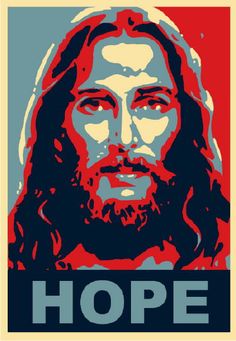
Our Hope Demands Change

I don’t know about you, but I avoid the news like the plague. No matter the source, the media today is a place of constant conflict, and it’s easy to get caught in the ceaseless spin cycle and feel as though everything is falling apart around us. It’s easy to lose the perspective that we are in this world, but not of it. And once we lose that perspective, it’s easy to lose hope.

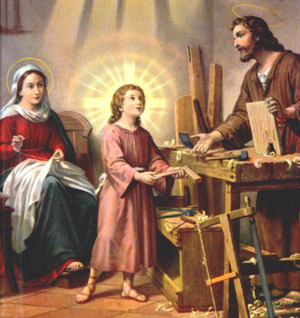
But as Catholics, our hope is in God and transcends this world. Specifically, our hope is in a personal God, who loves each of us enough to become like the least of us: wriggling and helpless in a Bethlehem stable; hungry and homeless on the road to Egypt; hard-working and cash-strapped in the wood shop in Nazareth; hounded and criticized by His own people; persecuted and abandoned by those who should have known and loved Him best. Jesus’s perfect and total Yes to the Father finally silenced the steady drumbeat of Nos that had echoed through the ages since the fall of Adam and Eve. He lived, He died, He rose again—we know this through the words of the prophets, the witness of the apostles, and the blood of martyrs. Never before have so many sacrificed everything—their very lives!—for so outlandish a claim as a God-Man who let himself be humiliated and slaughtered only to rise again from the dead. Who would die for such a thing? If you had any doubt in your mind, would you give your life?

Thousands of people have, from Jesus’s day to the present. We believe far more these days on less credible evidence, and yet we’re skeptical of this?

When the apostle Thomas encountered the resurrected Jesus in the flesh, his famous skepticism was transformed—he declared, “My Lord and my God!” Jesus replied, “Blessed are they who have not seen and have believed.”

That’s us: believers in an unseen Christ. Blessed are we who persist in the faith.

Of course, as Catholics we still encounter the living God, just not by sight. We encounter Christ in His Body, the Church, and in the sacraments—particularly the Holy Eucharist. We know that the Eucharist is the Body and Blood of Jesus by His own words: “This is my Body…This is the cup of my Blood.” Jesus is God, and just as in the Creation story, what God says, is.

This is Good News—the Best News, in fact, and we are obliged to share it. It’s not enough to just accept Christ’s mercy and grace, or receive His Body and Blood. We are called to be disciples: not dependants, and not simply students, but followers, who learn, live, and spread the Gospel. No one encounters God without changing, and indeed Jesus says whoever wishes to be His disciple must pick up His cross and follow. If we are unwilling to change our behaviors and priorities; to work, suffer, and die for the sake of the Kingdom, we are not yet full-fledged disciples.

Why should we care? Because it takes disciples to make disciples. We can’t lead others to Christ if we aren’t following in his footsteps ourselves. Fr. Mike Schmitz reminds us that Jesus gave us one job to do while He is gone: go and make disciples of all nations. When He comes back, it won’t matter that the car is waxed; the laundry, folded; or the recycling, sorted. He’s going to look around to see if we did that one thing. Our hope demands change.

Blogger’s Note: This article appear in the Sunday, July 19, parish bulletin.