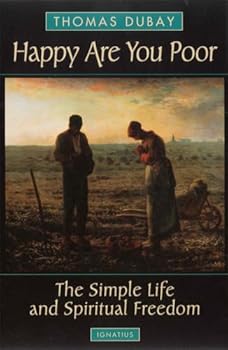
Book Break: Happy Are You Poor

For the past 20+ years, I’ve noticed several strange phenomena nearly every time a conversation turns to what the gospel says about material wealth and spiritual poverty:

  • Friendly conversations turn defensive: “We don’t have that much; so-and-so has X, and vacations every year in Y.”
  • Faithful Catholics attempt to justify themselves: “If you include Catholic school tuition, we give 10 percent like the Bible says—and we serve in other ways too!”
  • Straightforward moralists become subtle and nuanced: “What ‘poor in spirit’ actually means is…’”

And, in some cases, actual spiritual deafness occurs: I was in a conversation once in which I admitted my own struggles in this area and said I felt I needed to do more to actually love my neighbor from my own resources. A friend followed my remarks with, “It’s like Jim says…” and proceeded to relate the exact opposite message.

Father Thomas Dubay’s book Happy Are You Poor was written to combat these phenomena with clear teaching from the Gospels and the rest of sacred Scripture, edification offered by various popes and councils, and the lives of the saints. It was recommended to me by Father Daly in response to the awe I feel as Brother Jude (our second son Gabe) proceeds in his journey as a Franciscan friar and the conviction that I need to live a less self-centered and materialistic life.

Continue reading
Book Break: Small Is Still Beautiful: Economics as if Families Mattered

Providentially, my reading lately has all been cut from similar cloth: our relentless pursuit of better, newer everything and the dangers it poses to our humanity and health (physical, mental, and spiritual). This latest volume, Small Is Still Beautiful: Economics as if Families Mattered by Catholic scholar, biographer, and author Joseph Pearce was a gift from our Bismarck family, and is a reiteration and expansion on E.F. Schumacher’s 1973 classic Small Is Beautiful: Economics as if People Mattered, with a particular focuses on the environment, food supply, and land use.

In my 2017 review of Schumacher’s book, I described a couple non-academic objections and numerous things I loved about the book. I also said it seemed like the sort of book that had been read, admired, and forgotten in the powerful current of worldly progress.

Continue reading

Wednesday Witness: Borders and Boundaries

A few years ago, I worked for the Church of Saint Andrew in Elk River. The parish had a strong charism of service to those in need and a growing Hispanic community. I was able to get to know a few immigrant families through the Faith Formation and sacrament programs, as well as the parish’s Hispanic liaison. The experience gave my valuable perspective on the conditions that might cause someone to uproot their family and cross our southern border (whether legally or illegally) in search of a better life.

Saint Andrew also had an annual mission trip to Mexico. Invariably, the parishioners who traveled and served in the barrios south of the border came back with one overriding impression: Poverty there is often a deeper, darker thing than poverty here at home.

As a result of these encounters, I often found myself asking: What would I be willing to do to protect and provide for my family?

Continue reading

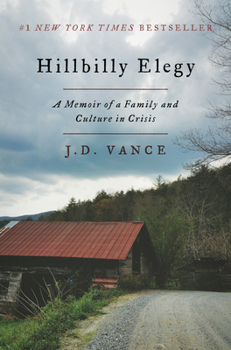
Book Break: Hillbilly Elegy by JD Vance

Last summer, when we were visiting Jodi’s parents, her mom gave me a copy of JD Vance’s memoir Hillybilly Elegy. I think she had picked it up for herself, but we were talking about the upcoming election, and she thought I had a better chance of reading it sometime in the near future. She said I could tell her about it when I did.

Well, Momma Venjohn, here you go.

In case you avoid the news: JD Vance is a young, former US senator for the state of Ohio, now vice president of the United States of America. He is a Marine Corps veteran, a graduate of Ohio State University and Yale Law School, and the author of the afore-mentioned memoir, a book-length reflection on a traumatic childhood, poverty and addiction in Appalachia and the Rust Belt, and the dysfunctional family connections that somehow got him through where so many others flounder.

Continue reading

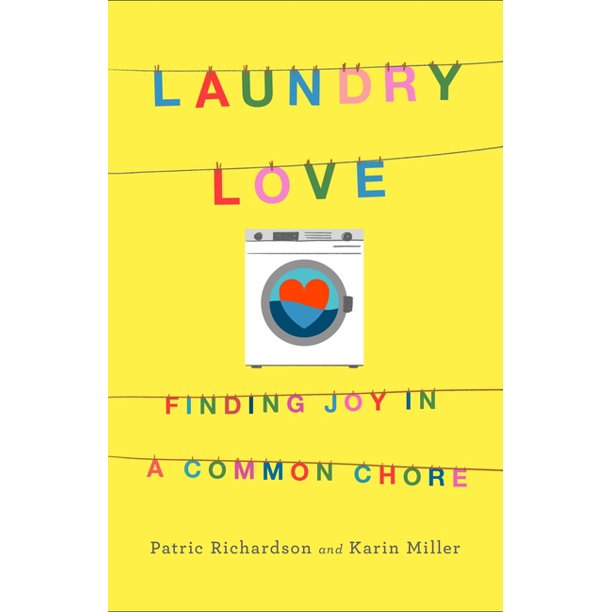
Book Break: Laundry Love

Those who read my blog regularly know that book-related posts often include the caveat that this book might not be for everyone. In the case of one my latest reads, Laundry Love: Finding Joy in a Common Chore by Patric Richardson and Karin B. Miller, it’s definitely true, though not for the usual reasons. There is no dark or objectionable content, nor even a discouraging word, from start to finish.

However, I did make the mistake of discussing this book in mixed company exactly one time. The women were amused and ribbed me gently. The men in the room rolled their eyes and mocked me openly, then worked to change the subject. Apparently a book about doing laundry in more economical and environmentally friendly ways, written by a fellow with a deep love of vintage fashions, disco balls, and stain removal is, in fact, not for everyone.

Continue reading