Movie Break: A Good Old-Fashioned Scare

Halloween night was always a favorite as a kid—and as a dad, when our kids were old enough to enjoy it. Dressing up is always fun, and, like reading fairy tales, I think traipsing about the neighborhood after dark trying to scare friends and family (not to mention the delight in a being scared and then laughing about it afterward) helps children learn to manage their fears.

Plus, CANDY! (Of course.)

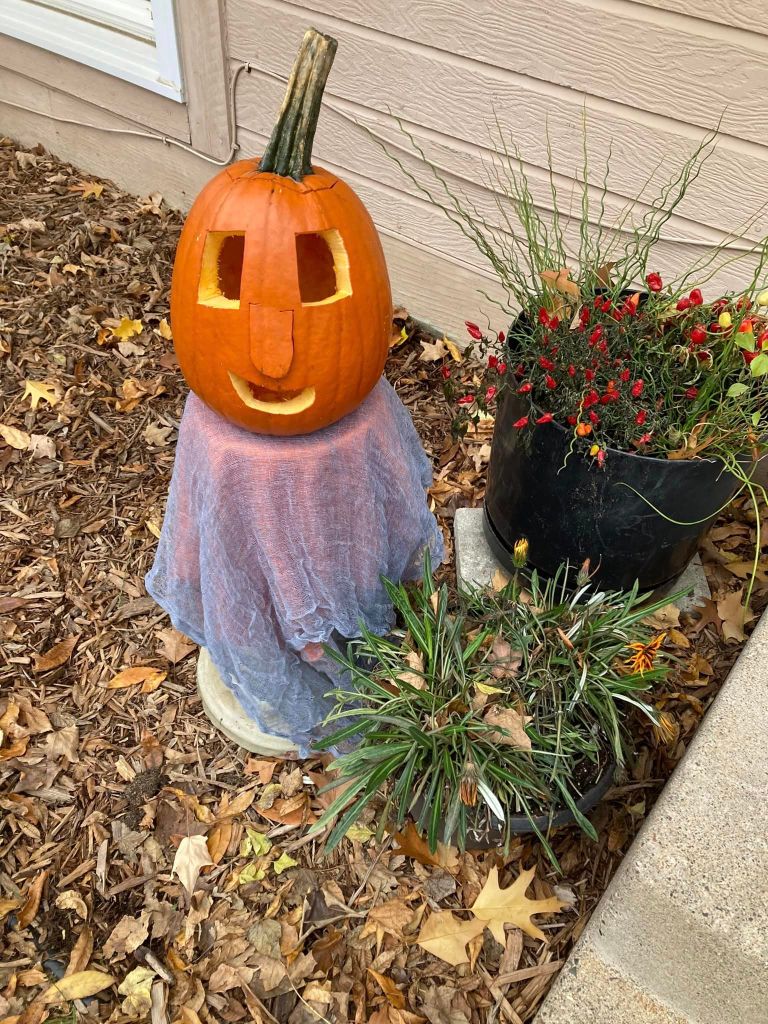
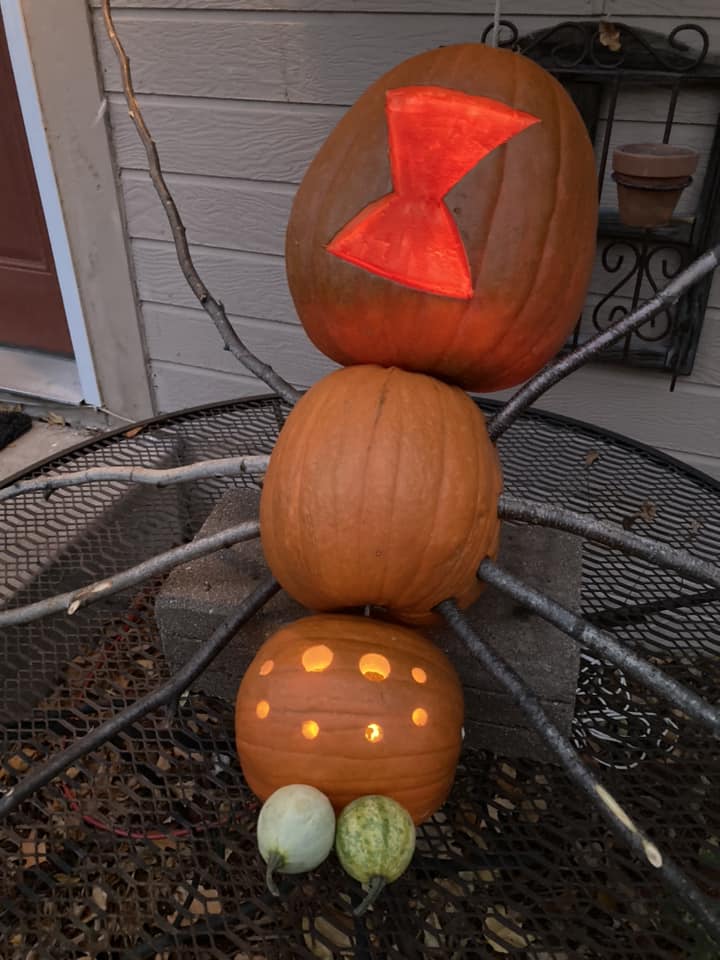
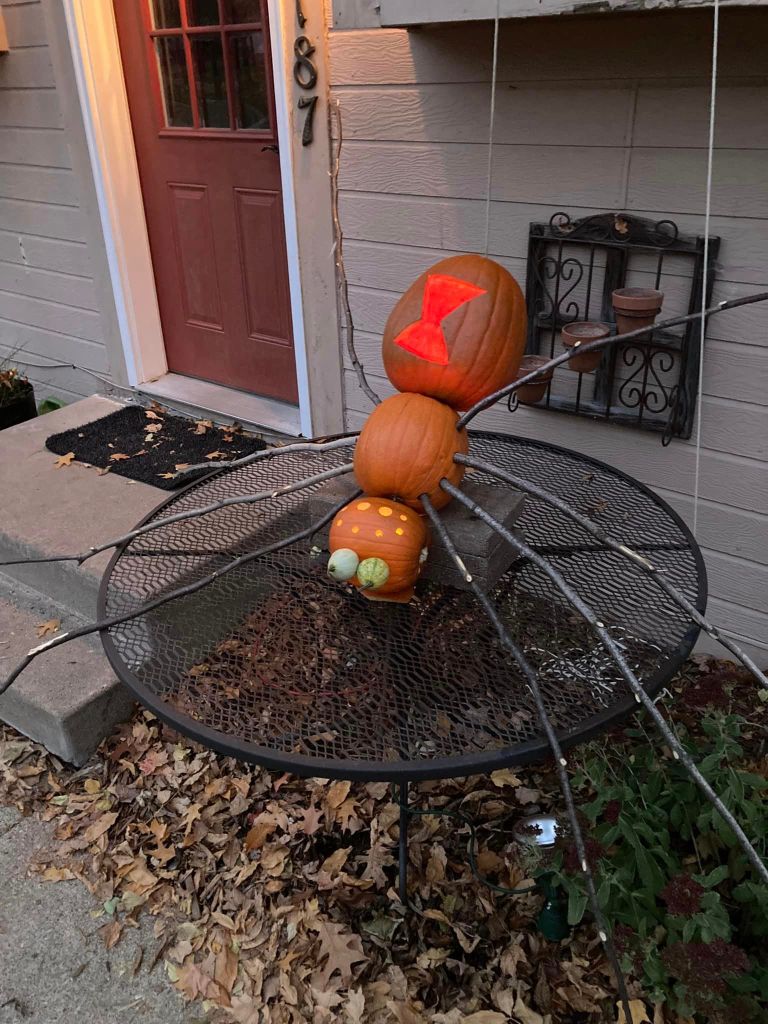
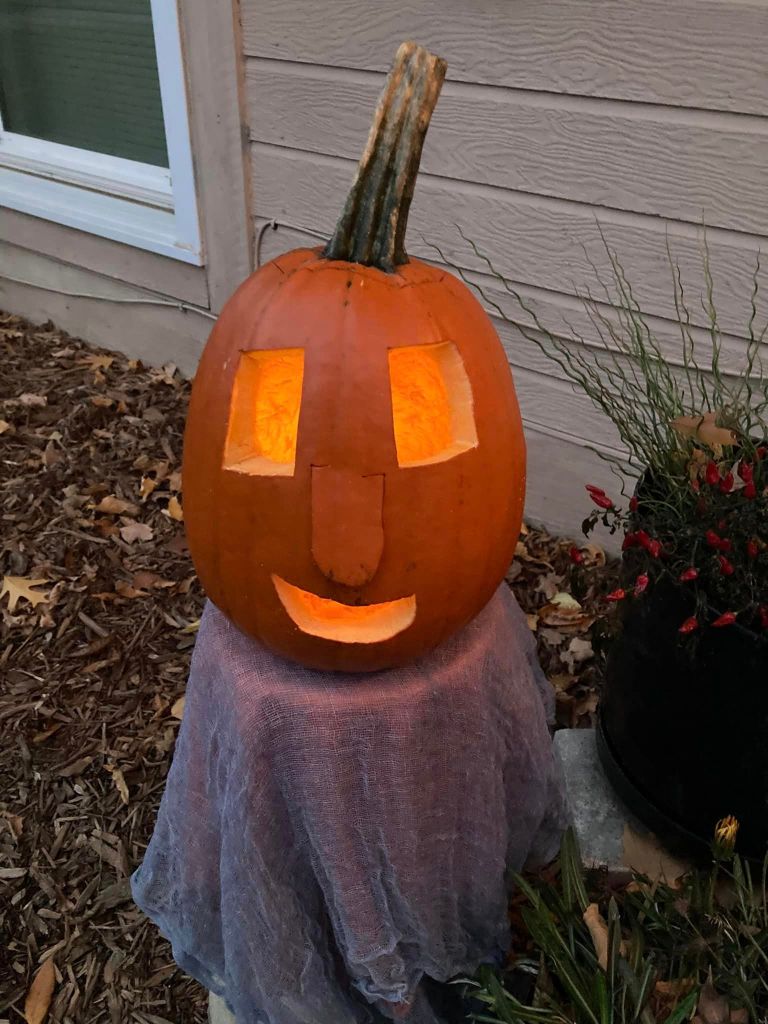
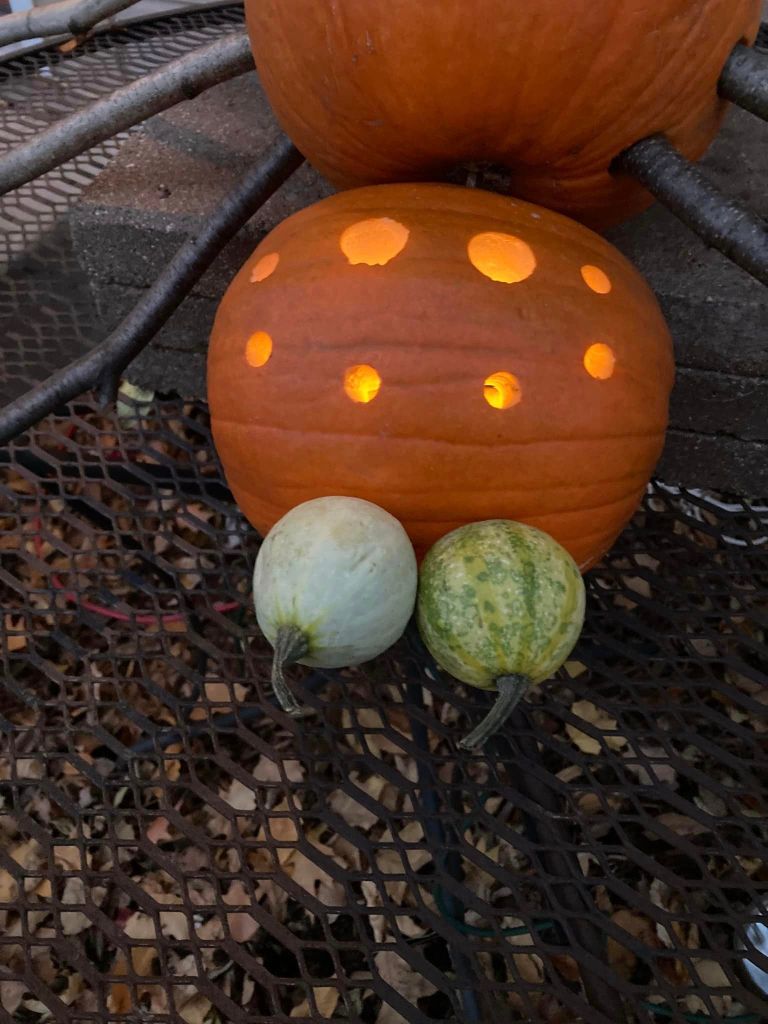
Now all but Lily have left the nest, and she is more inclined to roam the neighborhood with her middle-schooler friends than with her parents. I stayed home this year to hand out candy. I created a giant spider from three pumpkins, two gourds, eight long and crooked birch branches, and a length of rope; this Arachno-Lantern and Lily’s Schnoz-o-Lantern greeted the children and teens who haunted our doorstep, and I got to enjoy the comments and the costumes, plus two good, old-fashioned scary movies on the over-the-air MOVIES! television channel.
I’m not a big horror movie guy, especially these days. Scenes of torture and gore are not my speed; I prefer a little drama (we loved A Quiet Place), a lot of humor (Shaun of the Dead was a guilty pleasure), or a classic, somewhat campy, monster movie. The latter is what I got on All Hallows Eve.

Continue reading
Book Break: Hope Is the Last to Die

In 2016, I was blessed to travel with my son Gabe and STMA Catholic Youth Ministry to World Youth Day in Kraków, Poland. Southern Poland is a wonderful place for a Catholic pilgrimage; so many ancient and modern saints lived and died in so small a region that every day it seemed we visited another sacred site in another blessed city. The big three, of course, were 20th century saints: St. John Paul II, St. Faustina Kowalska, and St. Maximilian Kolbe.

In the case of St. Maximilian Kolbe, we were blessed to visit his religious community at Niepokalanów as well as the concentration camp where he gave his life at Oswiecim (Auschwitz). I say blessed truly, but not in the typical sense of the word. On a sunny summer day, Auschwitz is still and green and peaceful as an cemetery, but still more somber and hushed; the fences, ruins, and the dreadful sign above the gate, “Arbeit Macht Frei” (Work Will Free You), bear silent witness to the cruelty of which humanity is capable.

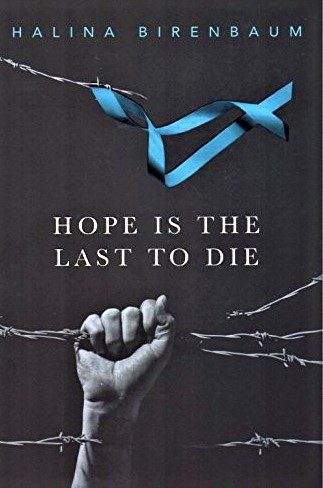
As we left the camp, we passed a small booth selling items commemorating the place—most prominently, a book entitled Hope Is the Last to Die by Halina Birenbaum. Born Halina Grynsztajn to a Jewish family in Warsaw, she survived the horrors of the Warsaw Ghetto during Nazi occupation, followed by four prison camps in succession:  Majdanek and Auschwitz in Poland, and Ravensbrück, and Neustadt-Glewe in Germany.

I bought the book, as the most appropriate way to recall the place and what happened there. I finally found the courage to read it this Lent.

Continue reading

Holiday Movie Break: Fatman

It has come to my attention recently that many of the movies I take time to write about I hesitate to wholeheartedly recommend. Sometimes I see a new take on my favorite old stories and genres: westerns and martial arts; sci-fi and time travel; fantasy and fractured fairy tales. They may be thought-provoking, but somewhat strange; often they are objectionable in some way that makes me guard against a full endorsement.

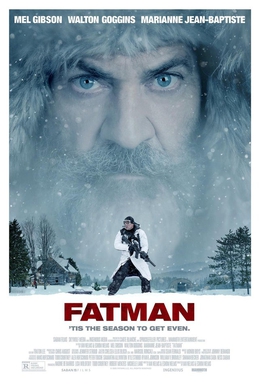
Last fall I caught wind of an upcoming movie called Fatman, featuring Mel Gibson as a world-weary Santa with a price on his head. You may know that I am a big fan of the Man in Red in almost any interation, from the saintly Bishop of Myra to Father Christmas in Narnia to the Right Jolly Old Elf of my own childhood traditions. I imagined a foul-mouthed and violent “bad Santa” bent on revenge of some sort, and I was not a fan of the idea. The trailer suggested I wasn’t far from the truth:

But then somewhere along the way I read a review that suggested it might be a bit more than it appeared. I hemmed and hawed until almost Christmas, when my older kids suggested we watch it. So we did. After the initial viewing, I was concerned that I might actually like the movie. I spoke in hushed tones to the few others I knew who had seen it. Many of them kinda liked it too.

Still, I didn’t write about it. Give it a year, I thought, to see if the novelty wears off.

Well, it didn’t. So here goes.

Continue reading

Extended Book Break: The Space Trilogy by C.S. Lewis

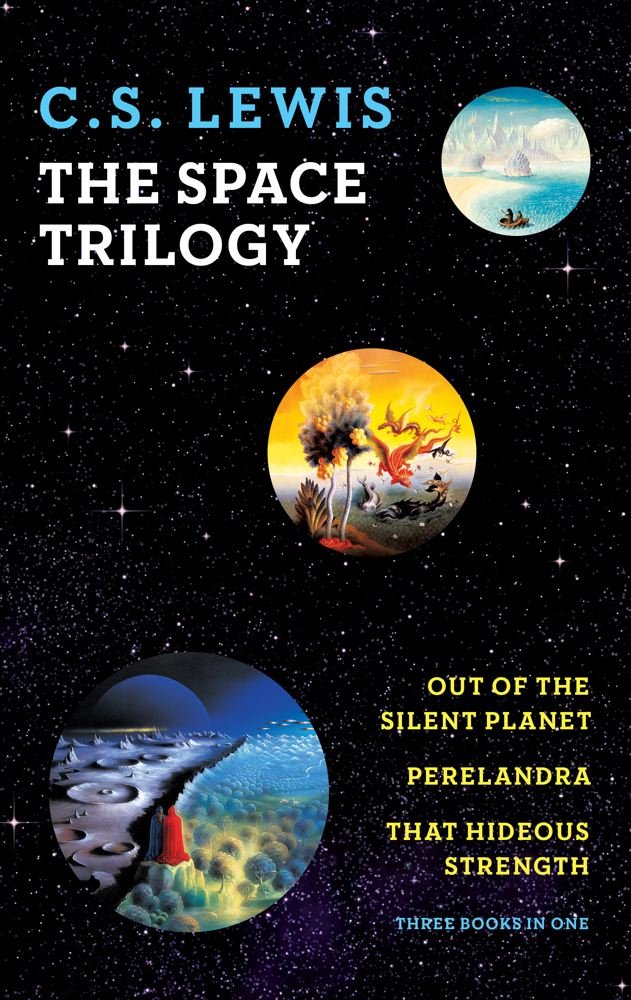
I was blessed, on my trip to Michigan and back in the past few weeks, to listen to The Space Trilogy by C.S. Lewis in its entirety. The version available on Audible, narrated by Geoffrey Howard, is approximately 24 hours of continuous listening, and worth every minute. The three books of The Space Trilogy were certainly inspired by classic science fiction of the last century, but combine these influences with fantasy, mythology, horror and Christian theology.

  • The first book, Out of the Silent Planet, is the most sci-fi of the three, delving into interplanetary space flight and exploration, extraterrestrial life-forms and more. A British linguist named Ransom is shanghaied onto a spaceship bound for a nearby planet known by its native inhabitants as Malacandra. He escapes his captors to discover multiple rational animals with very different appearances, skills and abilities, and cultures, who nevertheless live together in good-humored and mutually beneficial peace. Slowly Ransom abandons his earthly notions of power, control, and desire and strives to help the natives against the other Earthlings who seek to exploit them.
  • The second book, Perelandra, is a science-fantasy tale also involving interplanetary travel and extraterrestrial life to frame a retelling of the temptation of Eve in the Garden of Eden. Ransom agrees to travel to the planet Perelandra on an urgent mission, but with no idea what that mission is. He encounters a lone humanoid woman who lives in harmony with the world and creatures around her and is searching for her man. An old adversary arrives from Earth to tempt the woman into disobeying the higher powers she knows on Perelandra, and Ransom must again fight against his fellow man as well as demonic activity to save a pristine world from importing Earth’s sin.
  • The final book, That Hideous Strength, is as long as the first two books combined and takes place entirely on Earth, specifically, in England. It continues Ransom’s tale in a story combining dystopian fiction, Arthurian legend and horror to critique materialism, modernism, politics, education and contemporary ideas of gender and marriage. It follows a young sociologist striving to get ahead in his career by joining a new and increasingly powerful national scientific insitute, while his wife, who is struggling with bad dreams that appear to predict the future, falls in with a small band of local resistance led by an eccentric old linguist who is rumored to be contact with powerful extraterrestrials who are pure spirit and are preparing for a final battle over the fate of the Earth.
Continue reading

One-Track Mind

Have no anxiety at all, but in everything, by prayer and petition, with thanksgiving, make your requests known to God. Then the peace of God that surpasses all understanding will guard your hearts and minds in Christ Jesus.

Philippians 4:6-7

I am writing this column from my parents’ log house in rural Michigan. Yesterday our Airedale Bruno and I drove 12 hours to get here. Half the time I listened to the news on Minnesota and Wisconsin Public Radio.  

Public radio is in frustrating entity for me, and this long drive was no exception. On one hand, they interviewed interesting people about compelling topics and told wonderful stories that kept me awake and alert all morning and into the afternoon. On the other hand, nearly every story was presented with a left-leaning worldliness and a persistent godless optimism, as though this past year (and the previous three) were truly unprecedented and hellish, but now the right people with the right ideas, wielding power in the right way, can finally fix everything. Nearly all of the interviews were political, some were explicitly pagan—and none mentioned God in any meaningful way, except to reference the road not taken.

This is the divide that concerns me in our society. This is the fundamental, irreconcilable issue upon which there can be no compromise: Either God is real and created the universe and humanity according to His law and purpose, or He didn’t. Both views have profound implications on how we live together in this world.

Continue reading