In Gratitude for Those Who Carry the Water

It’s been a busy spring. One Thursday morning during the sprint through the sacraments of Confirmation and First Communion, I woke in the wee hours, unable to sleep with all the To-Dos and details swirling in my mind. So I lit a candle and prayed a rosary. I’d love to say that I am so devoted to Our Lady that I knew a half-hour spent in prayer would alleviate all my anxieties and bring me spiritual insight and peace. But in reality, I was merely begging for sleep and hoping on repetition of prayers would deliver it.

The second Luminous Mystery was the miracle of the Wedding at Cana, in which Jesus turns six stone jars full of water into wine for a bridal party that has run out. And it struck me like this: out of His gratuitous grace and mercy, Christ overlooked the apparent poor planning of the celebrating families and provided the best wine of the night in superabundance. He rewards our bumbling progress toward Him with the gift of his life-giving love, rich and red and intoxicating. And I heard Mary’s reassuring words to the servants: “Do whatever He tells you.”

I found peace in that moment, knowing that no matter what happened in the coming weeks, as long as we were listening to Christ, His love would flow forth to fortify His people.

A good friend relates to the Cana story from the perspective of the servants, who are asked to go fill the water jars (which Scripture tells us hold 20 to 30 gallons apiece) and bring them to Jesus. This is back-breaking work, yet they obey and are the primary witnesses to Christ’s first miracle. I am grateful for those who have carried the water for Kathy and me during my first year here—for our teachers and facilitators; for our deacons and priests; and especially, for the Faith Formation Advisory Committee (FFAC), which has encouraged me and shaped my thinking and efforts these past several months.

The FFAC has done tremendous work over the years, quietly carrying the water that has been poured out as wine for our parish. From leading the change to family catechesis to improving attendance and retention, evaluating program materials and curriculum, and examining trends and best practices in sacramental preparation across the archdiocese, the FFAC has transformed how we approach religious education at our parish. As a result, other parishes are coming to us to learn from us.

Indeed, the FFAC has tackled so many challenges in the past several months that committee members agreed the April meeting would be their last. Beginning in May, a new faith formation “core team,” the LIFT Crew, will take over the role of helping to plan and implement next year’s programs. And while many of the FFAC members plan to attend the team’s soon-to-be-scheduled kickoff meeting, most plan to move into other ministries.

So let’s take this opportunity to thank them by name: president Greg Huber, vice president Nicole Worms, secretary Jeannine Barthel, and committee members Nora Dehmer, Julie Ferry, Lois Pegg, and Ben Sartori. May God continue to bless and guide you and your families, your vocations and ministries—and may He reward you richly for carrying the water on behalf of St. Michael Catholic Church.

Blogger’s Note: This article appears in the Sunday, April 26, church bulletin .
O Death, Where Is Your Sting?

At long last, we celebrate Easter, and the resurrection of our Savior, Jesus Christ! Perhaps you’ve been steadfast in prayer, heartbroken and sincere in penance, and generous in alms-giving. Or perhaps you feel you’ve done too little, too late, for our Lord — perhaps you’ve slipped in your Lenten commitments or find that Easter has crept up on you almost unawares.
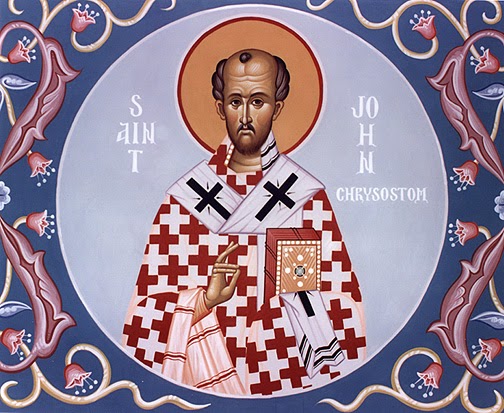
Either way, take comfort in the Easter homily below from St. John Chrysostom. Drawing on the gospel of Matthew, chapter 20, he reminds us that we never come too late to God and always receive full payment!

Easter Homily by St. John Chrysostom

Let all pious men and all lovers of God rejoice in the splendor of this feast; let the wise servants blissfully enter into the joy of their Lord; let those who have borne the burden of Lent now receive their pay, and those who have toiled since the first hour, let them now receive their due reward; let any who came after the third hour be grateful to join in the feast, and those who may have come after the sixth, let them not be afraid of being too late; for the Lord is gracious and He receives the last even as the first. He gives rest to him who comes on the eleventh hour as well as to him who has toiled since the first: yes, He has pity on the last and He serves the first; He rewards the one and praises the effort.

Come you all: enter into the joy of your Lord. You the first and you the last, receive alike your reward; you rich and you poor, dance together; you sober and you weaklings, celebrate the day; you who have kept the fast and you who have not, rejoice today. The table is richly loaded: enjoy its royal banquet. The calf is a fatted one: let no one go away hungry. All of you enjoy the banquet of faith; all of you receive the riches of his goodness. Let no one grieve over his poverty, for the universal kingdom has been revealed; let no one weep over his sins, for pardon has shone from the grave; let no one fear death, for the death of our Saviour has set us free: He has destroyed it by enduring it, He has despoiled Hades by going down into its kingdom, He has angered it by allowing it to taste of his flesh.

When Isaias foresaw all this, he cried out: “O Hades, you have been angered by encountering Him in the nether world.” Hades is angered because frustrated, it is angered because it has been mocked, it is angered because it has been destroyed, it is angered because it has been reduced to naught, it is angered because it is now captive. It seized a body, and, lo! it encountered heaven; it seized the visible, and was overcome by the invisible.

O death, where is your sting? O Hades, where is your victory? Christ is risen and you are abolished. Christ is risen and the demons are cast down. Christ is risen and the angels rejoice. Christ is risen and life is freed. Christ is risen and the tomb is emptied of the dead: for Christ, being risen from the dead, has become the Leader and Reviver of those who had fallen asleep. To Him be glory and power for ever and ever. Amen.

He is risen, indeed — let us feast and rejoice this day like no other! Alleluia!

Book Break: Saint John Paul the Great: His Five Loves

This past Christmas, our church gave to all parish and visiting families a copy of Jason Evert’s book Saint John Paul the Great: His Five Loves. I finished it this past week while recuperating, and it seems only right that on this tenth anniversary of the great man’s passing, I offer a brief review and encourage family and friends to read it.

First, let me encourage you to read the Foreword and Introduction, as both share personal anecdotes that share what sort of man Pope John Paul II was, The first half of the book, then, is a condensed and easy-to-follow biography of Karol Wojytla from his boyhood in Poland to his death at the Vatican at age 85. Some years ago, on a long solo road trip, I had the pleasure of listening to an audiobook version of George Weigel’s JPII biography, Witness to Hope — Evert’s book uses Weigel as one of several sources, and provides a great overview of the events and circumstances that shaped young Karol into Father Wotyla, then bishop, archbishop, pope, and saint. When I hear these stories, I can’t help but be proud to be (half) Polish and Catholic.

The second half of the the book uses additional sources and anecdotes to outlines the “five loves” that inspired and sustained Pope John Paul II in his priestly ministry and personal holiness:

  • Young People: From his earliest priesthood, he was drawn to youth and young adults, recognizing early on that they were the church’s best hope for the future, and that a watered-down morality would not satisfy their idealism and thirst for the challenge of living full and Godly lives.
  • Human Love: He saw, in human love and sexuality, and image of the Holy Trinity’s loving and life-giving communion, and went to extraordinary lengths to explain the unity of love, sex, marriage,and procreation and to elevate these topics to the realm of the sacred.
  • The Blessed Sacrament: His love for the Holy Eucharist and experience of the Real Presence of Jesus was so deep and strong that he spent hours in adoration and conversation with God, and more than once, located the Blessed Sacrament in hidden chapels and unknown places by his love for and sense of the Divine alone. 
  • The Virgin Mary: After the loss of his mother, and ultimately his brother and father as well, he embraced Mary, the Mother of God, as his own and never ceased his devotion to her guidance and intercession — he knew that she always leads us to Christ.
  • The Cross: He saw the dignity in the elderly, the disabled, the sick, and the suffering, and showed it to them, first by articulating the ways in which human suffering can be used to benefit others, and finally, by living his own painful and debilitating struggles in the public eye, serving the Church until his death.
Last I looked, we still had a few copies of this book in the Gathering Space. If you didn’t get one, let me know. It’s a quick and enlightening read that is almost sure to inspire!

Undset, or Three Things to Love About the Kristin Lavransdatter Trilogy


Blogger’s Note: Several years ago, I agreed to my friend Jacqui’s challenge to read 15 Classics in 15 Weeks. I continue to press forward, this being number 12 of 15, and at this point 15 Classics in 15 Years seems quite doable…

Last week I finally finished Kristin Lavransdatter trilogy. This series came highly recommended by two trusted friends; the author, Sigrid Undset, was the daughter of Norwegian atheists, a Catholic convert, and a Nobel Prize winner. The books are tremendous, insightful, and often achingly beautiful.


However, these are not easy reads. Although written in the 20th century, my translation, at least, has a voice and vocabulary hearkening to the Middle Ages, with both Norwegian and Latin scattered throughout. The author’s knowledge and love of her country’s geography and culture shines throughout the books, but could overwhelm or disorient the reader.

It can also be challenging for a man to characterize or recommend these books to others — the covers of the edition I have (pictured above) do not inspire masculine interest, nor do the titles or cover summaries:

  • “Volume I, The Bridal Wreath, describes young Kristin’s stormy romance with the dashing Erlend Nikulasson, a young man perhaps overly fond of women, of whom her father strongly disapproves.”
  • “Volume II, The Mistress of Husaby, tells of Kristin’s troubled and eventful married life on the great estate of Husaby, to which her husband has taken her.”
  • “Volume III, The Cross, shows Kristin still indomitable, reconstructing her world after the devastation of the Black Death and the loss of almost everything that she has loved.”

That said, within the past month, The Catholic Gentleman website posted an article entitled, “Kristin Lavransdatter and Your Nordic Catholic Medieval Heart,” which makes a solid (if hyperbolic) case for why every Catholic man, at least, should read these books.* Men, take this as a challenge!

Now, without further ado, Three Things to Love about the Kristin Lavransdatter trilogy:

  • Everyday Catholicism: This series is as Catholic as the day is long, although Catholicism is not what it’s “about.” I’ve never read a book in which Catholic prayers and blessings, sin and penance, were so effortlessly present and pervasive, reflecting the daily lives of the characters. If you want a glimpse into the everyday lives of the faithful during the Middle Ages, this is your ticket — this is what Christendom looked like.
  • Historical Fantasy: Although painstakingly researched and historically accurate, the style and storytelling recall great fairy tales and epic fantasy stories like The Lord of the Rings. High mountains and dark forests. Fertile valleys and fortified cities. Stories and visions of elves and trolls. Swordcraft and witchcraft. It’s all there for those brave enough to venture forth.
  • The Challenge of Marriage and Family: This, to me, is the real wealth of these tales. The story is told primarily, but not exclusively, through Kristin’s eyes, providing deep insight into love, marriage, masculinity, and motherhood from a woman’s perspective — but every character is richly drawn and complex, living with each other as best they can given their individual virtues and flaws, assumptions and knowledge. Even among those we love, there is so much we don’t know — which makes true love not as fleeting as feeling, but, ultimately, an act of the will.
I’ve got three more slots in my seemingly interminable quest to read 15 classics, and it has taken so long that my interests have changed. I think my final three books will be Dante’s Divine Comedy, Flannery O’Connor’s Collected Works, and Tolstoy’s Anna Karenina. Not sure on the order yet — I’m reading something else in the interim!

* * * * *

The comments below the post also suggest that translations other than the one pictured, by Archer and Scott, may be better or easier reads.

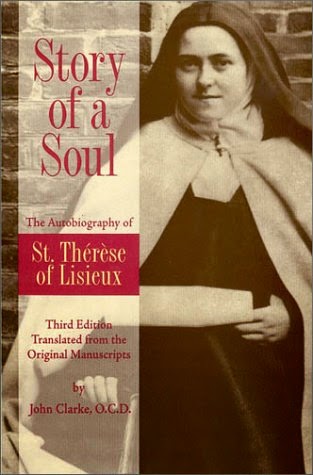
Book Break: Story of a Soul

One of the great blessings of surgery has been time to read; as a result, I’ve now finished three books that lay on my nightstand, long overdue. The first was the the autobiography of St. Therese of Lisieux, Story of a Soul. The Little Flower had been much on my mind and had shown up time and again in my prayers and study this past winter, so much so that I decided she must be trying to tell me something. I found her biography in our parish lending library, and finished in late last week.

Autobiographies, especially those that weren’t expressly written for publication, can be challenging to read, and this is no exception. St. Therese is writing out of obedience, fulfilling requests of three different prioresses to record the memories of her life. Her style is emotional, sentimental, somewhat meandering, and acutely self-aware — in fact, she acknowledges throughout the book, with good humor, that she has drifted far from the main point, but that she is writing because she was asked to, and if her work is found lacking and destroyed, it will be of no great loss to her.

It does not take long to realize this is the story of an exceptional soul from an exceptional family. From her earliest days in 19th-century France, the Martin family’s life revolved around their Catholic faith, prayer, and the sacraments. The first thing that struck me (and I believe this was one thing the little saint wished to tell me) was that in her childhood, preparation for receiving Jesus in the Holy Eucharist for the first time was the most important and most exciting thing that could happen. She understood the mystery of the Real Presence early on and longed for the sacrament with her whole being; her entire family — parents, sisters, aunts, uncles, everyone — helped her to prepare, encouraging and instructing her, helping her to make a mature first Confession, even sending this little girl on retreat to prayerfully prepare for her first Communion. We fall far short of this today, and that must change!

From an early age, St. Therese longed for the religious life of a Carmelite sister. The persistence of her vocation also struck me: she prayed long and hard on this beginning in childhood and was so strongly minded that, on a pilgrimage to Rome, she pulled rank on her local priests and bishop and cried to the Pope to let her honor him by entering Carmel at age 15. He told her she would enter if God willed it, and a short time later, the local church authorities relented.

The religious life was not without struggles for St. Therese, and it was there that she perfected her “Little Way,” which has made her so beloved the world over. She wanted to do great things for God, but was confined to a convent, young and of poor health. She could not be a priest, and would not be a missionary or a martyr. She was just a little flower on the forest floor — but the little things she did, she could do with great love. As a result she began to bite her tongue when accused or  provoked, to seek out the sisters who were avoided by others and look for ways to serve them, and to seek the good for others in every situation, regardless of the cost to herself. She began to love as God loves.

St. Therese was extraordinary, but blazed a trail that ordinary Catholics can follow, perhaps, more easily than that of the spiritual powerhouses of the Church. And I think that was another thing she wanted to tell me. This is a beautiful story of a great soul, and while it’s not a traditional page-turner, I highly recommend it.

On a related note: during the same time period as I was reading this book, a colleague gave me a booklet called “40 Days of Preparation for First Communion with St.Therese of the Child Jesus.” It is a booklet of very short daily prayers and exercises for children, based on the prayers and exercises St. Therese undertook as a girl under her family’s guidance. Unbeknownst to me, my colleague Kathy was given the same booklet by one of our priests to consider for use with this year’s First Communicants. It’s a baby step toward what our First Communion preparation ought to be. St. Therese of the Child Jesus and the Holy Face, pray for us!