The Outcasts Among Us

This parish has a wonderful reputation in the archdiocese. We have good and holy priests, deep roots, a beautiful church filled with Catholic families, and numerous vocations to the priesthood and religious life. When I tell practicing Catholics outside “the Bubble” of St. Michael where I work and worship, they know this place and tell me I am blessed.

Many of you have had the same experience—so a few facts may come as a surprise. For example, did you know that any given fall, only about half of the parish’s school-age youth are enrolled in either the LIFT program or the Catholic school? Or that each year we see a spike in LIFT enrollment among families with children in the sacrament grades—second grade for First Holy Communion; ninth and tenth grade for Confirmation—followed by a drop of about 50 percent after First Holy Communion, and nearly 100 percent after Confirmation? This tells us two things: first, the number of St. Michael youth enrolled in religious education on a regular, year-after-year basis is probably closer to 40 percent, and second, many of the Catholic families in our parish come for the sacraments but form no abiding relationship with Jesus, the Catholic Church, or the Body of Christ—the community of the faithful—present here.

Something is missing, even here in this beautiful, life-giving parish.

I was blessed to make a silent retreat to Demontreville a couple weeks ago. During one of the meals, we listened to Fr. Greg Boyle recount his work among gang members in Los Angeles, and I was struck that these young men were searching for what we all want: a place to belong. That got me thinking: who are the outcasts among us here in St. Michael? Who, in our parish, is just looking for a place to belong?

Perhaps it’s the broken family who struggles to make connections because the kids are only here every other week. Perhaps it’s the single mom who can’t attend MOMs Group because she works long hours—and wouldn’t know what to talk to the other moms about anyway. Perhaps it’s the immigrant family who finds themselves awash in a sea of white, worshiping in a way that is as solemn and foreign to them as they may appear to many of us.

Or perhaps it’s the young family that’s just settling in: Mom’s a cradle Catholic; Dad is coming around—with two young kids and an infant, juggling work and family and faith, swept along in the rush of baseball games and birthday parties. They told the priest five years ago they would raised their children Catholic, but honestly, they don’t know where to start. Mass is a struggle. They’d like to get involved, but maybe they’ll wait until First Communion. Hopefully things will settle down by then.

Those of us who feel at home here are deeply blessed, but we can sometimes forget where we started. At one time—perhaps as children, perhaps as adults—we had basic questions about the faith we were afraid to ask. At one time, someone—a priest, a friend, a stranger—took an interest and nudged us toward God. At one time, we were all on the fringes of faith and could have tipped either way. To our great benefit we fell into the open arms of Jesus.

So let’s benefit others in the same way, recognizing that the best way to deepen our own faith is to follow Christ in spreading the gospel and making disciples. Let us look for the outcasts among us, invite them in, and walk with them up the narrow path to the Cross, and our salvation.

Blogger’s Note: This article appears in the Sunday, August 23, parish bulletin.

LIFT Links for Late Summer

We’re headed into August, and summer is, for better or worse, winding down. If you’re like us, in the flurry of summer and back-to-school activities, it can be hard to find quality time to spend with God, or even with the entire family. To that end, here are a few ideas for a late summer day or weekend:

  • Lakeside Fellowship. Camp Lebanon is coming quickly, but if your summer isn’t plum full already, consider joining other St. Michael and St. Albert families the weekend of Aug. 14-16 for great food, fellowship, and lakeside fun. Details can be found here, and the registration form is here — we still need families in order to hold the entire camp for our two parishes!
  • Family Movie Night. A few years back I watched and recommend the beautiful animated movie, The Secret of Kells. Both Kells and a newer movie in the same style (which I haven’t seen), Song of the Sea, are available for unlimited streaming on Amazon Prime. Ignatius Press recently published this review of Song of the Sea — should be well worth watching. We will definitely be checking it out! (The Secret of Kells is also available on Netflix.)
  • Silent Retreat. Christ the King Retreat Center in Buffalo is hosting a men’s and women’s silent retreat in late August entitled “Sowing Seeds of Mercy.” The retreat is Aug. 21-23 at King’s House, with a suggested donation of $160. More details and registration information can be found here.
  • Spaghetti Dinner. Sometimes just having a family meal together that you don’t have to cook is the ticket to reconnecting with family. If so, you can eat for a great cause at the upcoming Kunzman Spaghetti Dinner fundraiser hosted by Knights of Columbus Council 4174 at the St. Albert Parish Center. The dinner is Sunday, Aug. 23, from 4:30 to 8 p.m., with free-will offerings to support Brother Knight Erich Kunzman and family. Erich has suffered some complications due to a significant surgery and could use our prayers and support!
Have a great rest of your summer!

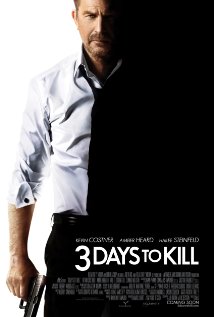
Movie Break: Three Days to Kill

Last night, I watched the recent Kevin Costner flick, Three Days to Kill. It’s the story of a CIA lifer with a broken family who may be dying of cancer, but can earn a chance to try an experimental cure for the proverbial one last job.

I’ve never been a Costner hater, and in fact, I’ve enjoyed him in a number of roles over the years, though he does bring a solidly predictable Costner vibe to most every character he plays. I guess that’s what motivated me to write a post on this movie. It’s not great by any means, and I flat didn’t like a few of aspects of it — but I really enjoyed Costner’s world-weary, worn-out spy. Early in the movie, his diagnosis is delivered matter-of-factly, punctuated flatly with, “You should get your affairs in order. The CIA thanks you for your service.” Now that he’s out of time, he realizes how much he’s lost being away from his wife and daughter doing awful work for an organization that is ready to move on, and his gruff Pittsburgh persona is endearing as he tries to relate to his family again.

Objections? The movie is an oddall mix of violence, humor, and emotion, and it certainly stretches credulity that the perpetually coughing assassin could shift gears from sickbed to superman and back and still be virtually unstoppable. The agent in  charge of this final job (three days to find and eliminate a terrorist and his henchmen in Paris, hence the title) is a young woman who inexplicably goes from a somewhat bookish professional in the opening scene to a bleach-blonde (and later raven-haired), chain-smoking (that’s just mean, given Costner’s condition) femme fatale, raising questions about her allegiances, motivations, and the contents of the mystery drug she’s giving him as a possible cure. The drug accelerates his heart rate (bad in his line of work) and causes mild hallucinations (worse) — but thankfully, alcohol will take the edge off (keeps getting better). To make things weirder, the gal insists upon dressing provocatively and meeting him in strangely lit rooms where dancers gyrate and smoke swirls…the better to provoke hallucinations and suspicions, I guess. His daughter’s boyfriend, too, is called into question, but in several cases, these were just red herrings. (The actual plot twist did take me by surprise, however — not so the reviewer on Roger Ebert’s site, but I tend to shut down my analytics until after the popcorn-muncher is over.) 

It’s the family scenes, plus a great opening gunfight, an intense melee in a deli, and an ingenious car-jacking, that make this movie worth seeing. In retrospect, it reminds me a bit of Clint Eastwood’s Unforgiven — a formerly icy killer who just wants to be left alone with his family and live up to his wife’s expectations in an environment that brings out the worst of what he’s best at. (It’s interesting that so many action movies these days involve secret agents who want to be left alone: the Bourne movies, the Taken movies, even the most recent Bond movies have this sense of world-weariness…wonder what this says about our mentality these days?)
I would say this movie is a hard PG-13 due to language, violence, seminudity and general weirdness. It could probably have been R.

Brandings

Blogger’s Note: Another past writing, from 2001. This is one of my favorite pieces of non-fiction I ever wrote, and came back to my mind following this recent post from Prairie Father. In case you are wondering, Fr. Tyler is, in fact, the Tyler mentioned below. Finally, I’m no cowboy. If my terminology is imprecise or inaccurate, forgive me. If it is offensive to cowboys, correct me in the comments!
I

The city girl behind the counter called it a marking. She wore Doc Marten sandals and just last week mistook a bird’s call for approaching cattle. Drugstore cowgirl, with her chopped blonde hair tucked beneath a curled straw hat, more Junior Brown than Tom Mix. She wants a stampede string to keep it in place should she need to chase cattle at the “marking,” and I’m smiling at the thought of her sprinting in her sandals through knee-high grass behind some rangy Angus cow, her hat tied tight beneath her chin.

II

We rose to cinnamon rolls and coffee—six a.m., and Bob’s pulling his tall, red-topped boots over his jeans; a bright silk scarf about his neck; white shirtsleeves shining softly in the morning sunlight. Bob drinks tea, not coffee; sweeps the crumbs from his long moustache, takes from the wall a straw hat with the same crease, crown and brim as his felts, and heads out, spurs jingling, to catch his pony.

The hands arrive in twos and threes, and their rigs line both sides of the driveway—crew-cab pick-ups and long stock trailers with cow-horses saddled and tied short alongside. The men gather around the plank table in the kitchen, exchanging greetings and jabs, sipping coffee and complimenting Cindy on the rolls. All wear boots and hats; many have chinks, and most wear spurs. They range in age from 15 to about 60. Chance, Bob’s youngest, wears his boots outside his pants, same as his dad; a rosy plaid western shirt, battered chinks and a black felt hat set back on his head. He’s rough and ready, a chaw in his cheek and blue eyes sparking, happily cussing the dogs.

Chance has two friends with him today—John’s dark haired and dark skinned, with baggy carpenter’s jeans and Docs on his feet. He’s clearly not cowboy, and his T-shirt reads the same as yesterday: “I’m just one big f—ing ray of sunshine, aren’t I?” (Hyphens mine, not his.) His sister, Rachel, watches Chance with dark eyes and prepares to ride—purple chinks with heart-shaped conchos; a long denim shirt opening on a white tanktop.

Straws are the hats of choice in summer; still, a few felts make an appearance. “Real cowboy hats can be any color, so long as it’s black or silverbelly,” Bob says. Rick Smiley wears a dark gray hat, for what that’s worth, and sky-blue plaid. Frank Timmons wears battered silverbelly, with a sweaty ring at the base of the crown. It sits low on his brow, so that the curled ends of his moustache are often all that escapes its shadow.

Where I come from is not far from the girl at the drugstore. I shake hands with the men around me, conspicuous in a green Filson cap that suggests I’d rather be fishing. I remember selling western boots in that same drugstore, when my own boots and the pearl-white snaps of my uniform shirt branded me a cowboy in the eyes of little boys from New Jersey—this day even my father, in his broad black hat and leather vest with antler buttons, may have dressed too plainly to be called “cowboy.”

III

A couple days later we’re eating chili around that same plank table. Bob took a call a few moments earlier from a Manhattan-based research firm conducting a survey on environmental policy and public opinion. He spends a good ten minutes on the phone with the caller, and by the time he hangs up, he has identified himself as a heterosexual white male, a conservative, a Catholic, and a staunch Republican.

“You realize,” I tell him, “that you are the enemy.”

He’s cutting cheddar with the same pocket knife he cut calves with two days ago. He’s got a saddle shop in his kitchen. He doesn’t care.

IV

The riders mount and spread across a broad expanse of grass to round up the cows and calves. We’re watching from a windy hilltop overlooking the pasture, the pond, an old windmill and a few crooked trees, with the house, pens and buildings beyond.

Bob’s oldest boy, Tyler, is leaning against Sorley, a stripped down Suzuki Samurai with a homemade plywood roof and four-wheel drive—the name comes from the little rig’s sorrel color. He’s only recently back from Winona, where he’s studying for the priesthood; he’s dressed in a plain t-shirt and sweats, untied duck boots and an old fedora. His little brother’s riding with the men below.

Tyler stands in front of the little 4×4, watching the cowboys work. He’s not like these others—he’s a big kid and prone to discussing philosophy, praying aloud in Latin or singing in Spanish—but he looks at home here and I snap a picture of him, God’s country in his eyes.

V

The cows are vaccinated, and the fire’s lit. Bob moves between groups of cowboys enjoying cookies and iced tea and assigns them to work as ropers, wrestlers, branders and cutters. Dad and John man the gate, shooing the bravest calves back into the pen. An odd pairing, to be sure—my father will lock up the brakes on the pickup at the sight of a middle finger, and this kid’s wearing as bad as that across his chest.

The ropers ride into a sea of bawling black and throw their loops. They drag the calves out by their hind feet, and the wrestlers topple them to their right sides and pounce on them, one on the head and topside foreleg, the other on the hind feet. The horses keep the rope tight, looking only slightly interested, and the riders watch. Two needles to the neck; blue smoke, the stink of burning hair and the sizzle of flesh. If it’s a bull calf, a few deft strokes with a pocket knife and a squirt of disinfectant. It’s brutal, quick and effective—strangely, the calves bawl loudest when first roped and dragged, and scarcely limp upon release.

Bob is cutting calves, and in just half an hour, his white sleeves are punctuated in red. He keeps his pocket knife in hand, wiping the blade occasionally on his chinks. It’s coarse surgery, without anesthesia or stitches, and I tell him so.

“You’re right,” he says, looking to the next calf. “It’s pretty rough, what we do to these critters.”

The smoke rolls.

VI

The latest issue of The Atlantic ran an ad for the American Indian College Fund, with the tagline, “Have you ever seen a real Indian?” The picture is of a young woman of no obvious ethnicity, with long dark hair, standing near a wooden cabinet full of microscopes. “Carly Kipp, Blackfeet,” the ad reads. “Biology major, tutor, mom, pursuing a doctorate in veterinary medicine, specializing in large-animal surgery.”

VII

The work’s nearly done, and Chance and Rachel are leaning against a gate, saying little. He dates her cousin, and he, Rachel and John spent last night beneath the stars on a hide-a-bed couch in the back of a pickup.

When the branding’s finished, it’s dinner—roast beef and beans; mashed potatoes and gravy; bread and salad and beer. Some of the men head home—the rest take up spots on the porch or the lawn. After a bit, two guitars come out, and Bob and Paul (a rancher out of Montana who owns the cattle we branded today) take turns picking—old country songs, rock older still—and discussing how music and cowboying has changed over the years.

“My wife tells me,” says Paul, “that if I want to get back to cowboying, the first thing I gotta do is get rid of about 1,500 head.”

I’m riding a sawhorse next to Chance. He takes his dad’s guitar and begins to play—bits and pieces of more recent rock songs. He finally settles into “Mary Jane’s Last Dance”—bending strings to coax all the heartbreak he can out of them, the lyrics audible only in fits and starts above his playing.

Three-year-old Brendan’s on the porch with Rachel—they’ve been splashing each other with water from a five-gallon pail, and Brendan is soaked. Rachel’s hair is dripping, and Brendan’s new “pet” clothespin is clipped to the back of his shirt—he’s been looking for it for the past twenty minutes. She’s swiped a beer from the ice-filled tub in the grass, and Brendan wants what she’s having. They play together for an hour or more, when nobody asked her to—she’ll make a mother someday. Or someone’s favorite aunt, at least.

Bob says her older sister’s a beautiful girl—could’ve been a model.

“She’s got just enough Indian—they’d take her to Elko, to the Artists’ Ride, and dress her in skins …”

Rachel’s a beauty in her own right—her mixed ancestry shows in her complexion, her dark curls and brown eyes. She’s been arguing with Bob about whether her Adidas visor qualifies as a hat.

It takes a special girl, I think, to make a visor and chinks look good.

VIII

I’m driving to work and NPR is talking to songwriter who’s latest recording is called Scar. The title cut, he said, is based loosely on his relationship with his wife—it’s about how our relationships and experiences, for better and worse, mark us for life.

Brutal, quick and effective.

J. Thorp
May 2001

The Flitter-Flutter of Tiny Wings

“Geronimo!”

For the past several days, we’ve had just two kids at home, Trevor and Lily. The elder three were at Extreme Faith Camp, Brendan as a leader, Gabe as a member of the prayer team, and Rose as a camper. Their return, I think, was bittersweet for the younger ones — although bored and (allegedly) overworked at points, they enjoyed having Mom’s and Dad’s full attention. Lily got in trouble for interrupting far less, because there was far less to interrupt. And Trev got to go to Culver’s and Jurassic World with just Jodi and me.

We parents, on the other hand, missed our teens. It took only a day or so for me to stop and calculate that we are just six years from potentially being a permanent four-person household, and eight years from Lily being alone with us, At some point unmarked in the past, the pitter-patter of tiny feet was drowned out by the flitter-flutter of tiny wings as the fledglings prepare to leave the nest.

This, I’m discovering, is going to be harder for me than the fact that I, too, am aging and yet still feel like I have much to learn — in fact, my own feelings of inexperience in this world only magnify my anxiety for my offspring. Have a taught them what they need to know to survive? Will they thrive? Will they avoid the pitfalls and snares in which Jodi and I have become entangled over the years? Have the courage to be faithful in public? To remain Catholic, with all that entails?

We see encouraging signs from each of them. Bren, now 17 and approaching his senior year, has changed his views on a military career, primarily due to moral concerns. He takes his faith very seriously: donates to Catholic causes, joins his friends for weekday Mass on Wednesdays, joins his girlfriend Olivia in the Adoration Chapel in our church. Gabe, nearly 15 and a coming sophomore, still has his eyes on the priesthood, joins his brother and friends at Wednesday Mass, and just last night asked where he could find the Divine Office that priests commit to praying daily — hinting that he’d like to take it up, but that he’d rather not do it alone. Thirteen-year-old Emma came home from having been deeply impacted by Eucharistic Adoration at camp, trembling with emotion before the Blessed Sacrament and alternating between sorrow and joy (ending on joy) as she prayed.

Yesterday I came home from the church for lunch, and popped in a DVD that would not play in my work computer. The video came up immediately, and featured Fr. Robert Barron tackling common Catholic apologetics questions in short video clips. I began cherry-picking a few that might be interesting, and Trev, who will be 11 in few days, sat down to watch. For more than an hour, we watched and discussed the rational foundations for our Catholic faith. It’s amazing to see what he absorbs in such a short time, and I pray the same has been true for the others.

Lily, of course, is only three. She knows Jesus by sight, likes to pray (the Angelus and petitions, in particular, and especially for her friends and for babies) most evenings, and is at home in our church, if not fully engaged by the Mass yet. As I continue in my job as faith formation director, planning the coming year’s program, I realize how much more we could be doing with our parish youth, and by extension, how much more I could have done with my own children. Lily will benefit from that realization — and yet when I look at her four older siblings, I wonder how much I should do differently. But how can I give anything less than my all for my family when the stakes are so high and the implications, eternal?