The Good Life

Jodi and I were talking the other day about making peace with what we have. She’s wanted a bigger house in a nicer neighborhood with more children the age of ours; I would like a bigger vehicle (like a Suburban) and think an Airstream like my sister’s would be great fun. Instead, this winter we’ll shoehorn a fifth child into a three-bedroom, mid-80s split-level and well-used Chrysler minivan…and when we want to camp, we’ll break out the tent.

Have we settled? In some sense, I suppose – but this new baby was a mutual decision and something the entire family wants more than a new house or car. Materially, we are fine with what we have.

Some folks want the best of everything, and in a free country, they are free to pursue it. As for me personally: I want to be left alone, to pursue my own version of happiness. I want a close, loving family; a good community; the freedom to worship God in the way we see fit. I want to hunt and fish when I can, to brew beer and to bake sourdough and to accidentally blow up my garage or make myself sick in the process. And I don’t need anyone to guarantee my medical care. I don’t need state-of-the-art treatment or extraordinary measures – I need a doctor I can trust and the ability to say “when.”

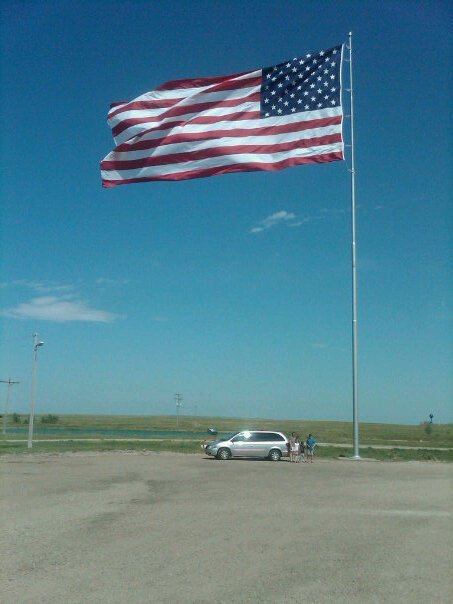
On this Independence Day, it occurs to me how blessed we are. It’s a wonderful thing to live in a country where all of these things are still possible: where Jodi and I can raise a Catholic family; choose a fifth child and not care about the gender; and do what we want with our money, our free time, and our health. It seems as though these things are at risk; that, like General Motors and AIG, our government has become both dysfunctional and “too big to fail” – and that regular folks are rapidly becoming, not the end, but the means. So today, let’s thank God that we live where we do, but recommit ourselves to the safeguarding the freedoms we celebrate – not state-run stability (which seems laughable during the current budget stalemate) but the risk and reward of happiness defined, pursued, and attained by we the people, as we see fit.

The Second Third, Week 32: Growing Up Dad

“Our similarities are different.”
– Dale Berra, son of Yogi

In my most recent Second Third post, I insisted I was becoming (rather effortlessly) more and more like my father. The interesting part, to me at least, is that the more I become like him, the starker our differences seem. Eventually we’ll be identical, and nothing alike at all!

It makes sense in a strange way. Part of Dad’s charm – and, I believe, a big part of why he looms so large in the lives of so many – is that he is thoroughly an individual. He looks how he looks, believes what he believes, and lives how he lives – and is completely unapologetic about it. You can take him or leave him, and he might prefer the latter.

I am not so thoroughly individualized. I still work in a collaborative and political environment in which one must be flexible and take alternative views (many, and often somewhat obscure, alternative views) into account. Dad is oak, not willow: straight, tall, deeply rooted, and hard; inspiring, hot-burning, and impervious to shifting winds.

We also have different aptitudes. Dad didn’t enjoy school, and wasn’t a voracious reader until later in life. He’s always been gifted with mechanical ability, spatial intelligence, and will power. In these ways I am his opposite—but (thankfully), I did inherit both his and my Mom’s persistence. Given time, I’ll make it work, make it happen, make it come out alright.

Nevertheless, I am growing into him. He is not a man of faith, but of deep conviction; my Catholic faith has led me to a similar place, in which the grays of young manhood are reconstituting into their constituent blacks and whites. His full beard and Amish-meets-mountain-man appearance have emerged in me as an unruly mop of hair and pincushion goatee, and jeans and western boots at work. His politics and inclination to be left alone are manifest in my politics and inclination to be left alone, and his willingness to be firm with his children and die for them in a heartbeat shape me more every day.

My sense of humor and involuntary tendency to play word games are his, too. One standard eye-roller for our kids: when someone says, “I’m too tired,” I ask, “Like a bicycle?” I also make up random lyrics to old songs, and spontaneously invert the first letters or sounds of word pairs…and then rhyme them to make new pairs. For example, Dad will call my mother “peety swie” and their dog, Maggie, “duppy pog” or a family favorite, “mirthless what.” (Don’t concentrate on the words; flip the first letters and sound it out…) An example from our house: I took to calling Emma Rose “Rosebud,” then “Boserud” – then ultimately “Nosecrud” if I want to get her goat. Should you find that cruel, consider that I was referred to as Dogbreath for much of my formative years. We played these games all the time when we were younger. Dad loved “runny babbit” well before I’d ever heard of the Shel Silverstein book.

I’ve been told I look more like him, sound more like him, move more like him. In my Second Third, I hope we will become just the same. Only different.

Unexpected Visit

reunion
crossing campus in the rain, sometimes i duck into mechanical engineering

it’s an excuse really; i don’t much mind the rain

behind the renovations and steel double doors,
down a long narrow hallway, is a room i’ve never entered

a door with frosted glass says plainly: research shop

the professors bear their ponderous brows in silence; the students speak a jargon of deltas
none speak to me as i pause, eye closed, to breathe deeply

the sharp tang of hot curling metal and cutting fluid,
the rumble of carbide biting steel,
the rhythmic thrum of lathe and mill and

i feel my father near: his curling hand-cut leather vest, his broad felt hat and spectacles, his beard gone gray, his calloused hands stained from years of grime and hard labor

my own hands meet softly as in prayer, long studious fingers unmarked, unmarred, so like and unlike his, and i half expect to see him there
when i open my eyes

he’s not — still i look down to see
his fingerprints
all over me

— j. thorp
june 7 2011

The Second Third, Week 29: Expressive Reading

Tonight was six-year-old Trevor’s night to lead us in prayer. He opened with an Old Testament reading from our Children’s Bible and did an admirable job: it was chock full of Hebrew names and ancient places and Biblical expressions like “The LORD’s anger was kindled against them.” He navigated it all with remarkable patience and skill, his concentration was absolute — and he almost didn’t sound like himself, since (when he reads his own books) he is quite expressive. With less difficult books, already he is mastering the skill of reading just ahead of his voice with his eyes to pick up on the cues in the text: Is there a question ahead? An exclamation? Is the character frustrated? Scared? Excited?

I, too, struggle to read expressively, mostly because until recently, it had been a long time since I’ve done so — years, in fact, since I’ve read aloud even a classic Dr. Seuss.

Then this spring I picked up The Little Prince, which I had never read before, and decided on a whim to read it to our brood, a bit to a time, after supper. It went over well with all four Thorplets, but although I had the notion of providing voices to the handful of wonderful characters who populate the book, I found it impossible, primarily because much of the time I was to emotionally, uh…engaged…to do so.

Next I tried an old favorite, Ursula Le Guin’s A Wizard of Earthsea, figuring a familiar tale might be suited to a more dramatic telling — but although I recalled the story and the characters, I quickly found the structure, style, and syntax of LeGuin’s sentences to require a great deal of concentration. At times, I had to back up and start sentences over!

I find that the more I read to the kids, the more I enjoy it. We finished the LeGuin’s book last week and will no doubt return to Earthsea again soon — but in the interim, I’ve resurrected a ghost of my own childhood, outdoor humorist Patrick F. McManus’s The Grasshopper Trap. For years growing up, every time a new McManus book came out (or a new edition of Outdoor Life magazine arrived), Mom or Dad, Jill or I, would read after supper. The first story in the book, “The Skunk Ladder,” is a classic, and the kids were quickly in stitches and begging for another. I remember these characters, too — Crazy Eddie Muldoon, Retch Sweeney, the old woodsman Rancid Crabtree, Pat’s sister the Troll — and tonight, after dinner, I began to have a little fun with voices. It was great fun, and good practice, too: in my Second Third, I intend to read aloud more often, to the older kids, to the new baby, and God willing, the grandkids. I need to hone my skills if I’ve ever going to tackle something like, of I dunno…The Hobbit?

Life In The Bubble

On two separate occasions this weekend — on Friday evening and again on Sunday morning — I found myself in deep discussions with fellow parishioners about life inside “The Bubble.” I had heard people talk about “the bubble” (lowercase) before to reference our neck of the woods: the small(ish) communities of St. Michael and Albertville, home to lots of good all-around folk. But I hadn’t realized “the bubble” was actually “The Bubble” — and has come to mean, more specifically, the thriving Catholic communities in which people still have big families and pray the rosary and make it to Mass on Sunday (and any other time they can).

On Friday, I spoke with two other men about venturing outside The Bubble to work each day, the stuff going on “out there” we can’t stomach or abide, and the challenges this poses to our faith and sanity (not to mention our employment). On Sunday, the topic was the insidious encroachment of the outside world into The Bubble — the impossibility of shutting out the world entirely, and how best to manage the slivers of darkness that pierce the iridescent dome and seek to pop! it.

Sounds almost Amish, doesn’t it?

Then on Sunday night I had a dream, in which I was floating on a rubber raft of some sort in the twilight, while gathered around me were various coworkers from jobs past and present, none of whom I ever got along with particularly well. It was a meeting of sorts, except we were adrift, and I was the target of insufficient direction, unwarranted criticism, and a couple of disturbing come-ons. By the time I reached shore I was livid…and (this being a dream) got on my black and gold Huffy Challenger 3000 bicycle and headed straight home.

Home, in this case, was my childhood home on Littlefield Lake, which was a blissful place to be a boy. I rode back to old neighborhood, but, since I was still quite angry, circled the block atop the hill that sloped down to our house and the lake, blowing off steam, knowing my family didn’t deserve the brunt of that bizarre meeting. It was a damp spring day, and the roads were muddy — it must’ve snowed recently, because although it was warm and the grass was greening, along the shoulder of the roads were piles of wet snow a snow plow had kicked up.

Finally I headed down the hill, thinking I would have to push my bike through the heap of wet snow at the end of the driveway. But when I turned the corner, a number of friends from “The Bubble” were shoveling our the end of the drive. My CRHP brother* John M. was there, laughing and throwing snow at the other workers; our dear family friends Butch and Laura were there, joyfully lending a hand; Jim V. from the KCs was there; and more.** They shouted greetings and waved me through. In the garage, Butch and Laura’s oldest son and Bren were conspiring to avoid shoveling and go fishing instead.

It is a comfort to come home each evening to a community of faith and stability — with like-minded people who know where you stand and what you aspire to be. Last night at Adoration, while praying the Third Joyful Mystery, the Incarnation, it struck me: The Word Made Flesh isn’t just the Christ child born two millenia ago; it’s the Body of Christ working in concert here in this world, today, to bring about the Kingdom of God. I’m glad to be a part of it.

—–

* Christ Renews His Parish retreat
** These names are important because they represent the spectrum: a number of fellow Catholics I know in very different ways…