Rosa Comes Home

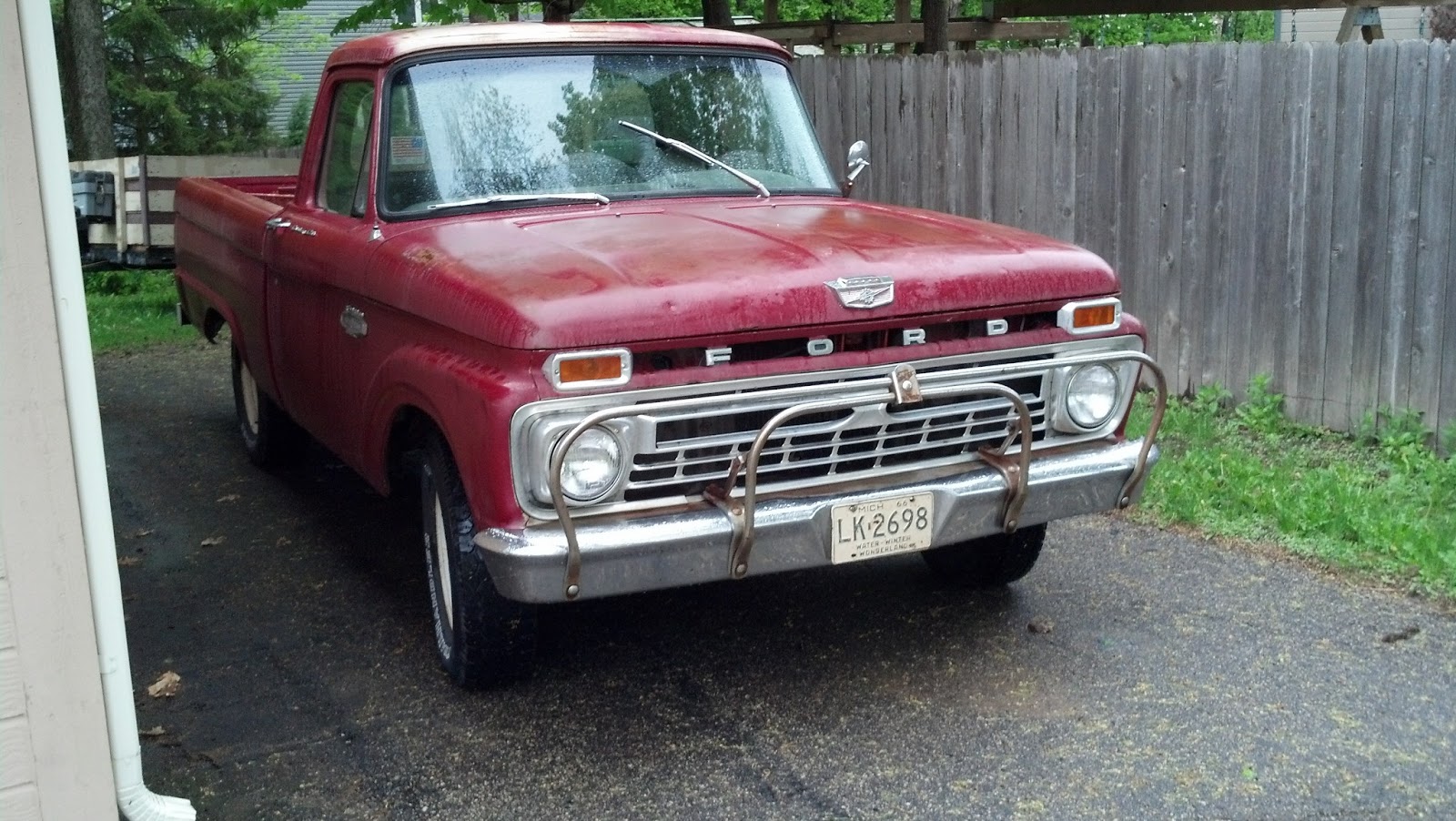
Look who’s back!

When Jodi and I first moved to Minnesota, I wanted a pickup to help with the move. We had a couple thousand dollars to spend, which won’t get you much unless, it turns out, you go “classic” — then it will get you a project truck. I’m not particularly gifted as a mechanic, but with Dad’s help, I figured we could get into something basic and make it roadworthy.

We found a ’66 Ford F-100 with a 240 straight six and three-on-the-tree — a ranch truck, “farm fresh” from Texas. The back bumper is heavy steel stamped with the dealer name: Kozelski Mtrs. West, Texas. The chrome brush guard on the front reads Smash Hit, Waco, Texas (with a lightning bolt between the Hs), and in the back window is a sunbleached sticker for 99.5 KBMA “La Fabulosa” Bryan-College Station. It had originally come to Michigan as a project truck for a father and son who had never quite gotten to it. The body and engine were solid, the electrical system and gauges were marginal, and the shift lever was inserted through a wallowed-out hole in the steering column and “secured” by a filed-down mini screwdriver that served as a pin. As you drove, the makeshift pin would sometime vibrate out, which led to a momentary thrill when the lever came off in your hand mid-shift.

We fixed it up well enough to drive it to Minnesota with a chest freezer full of beef in the back. We hauled whatever needed hauling around here for a year or so, and parked it during the winter so as to avoid getting road salt on a 40-plus-year-old body that had only two tiny rust perforations. It was a three-season vehicle only I would drive; we couldn’t fit it in the garage, and couldn’t afford to store it — so finally, we put it on Craigslist. Dad urged me not to do it. “You’ll never find another one like, and you’ll wish you had it back some day — I know from experience.”

I was only trying to get my money back out of it, but there were no takers. I thought about dropping the price. Then one afternoon, Dad called to make me a deal. He wanted to buy the pickup. He would pay us in beef over the next few years. He would take the pickup back to Michigan, drive it only during the summers, and “someday when I’m gone,” he said, “you can have it back.”

I signed the title over to him, and we were well supplied with meat.

About a year ago, I saw the old pickup again and told Dad I was glad he hadn’t let me sell it. He mentioned that if I wanted it back, I could have it — but he’d only sign back over if I promised not to sell it. This winter we shook on that deal, and today, the old girl came back home to Minnesota.

The journey back was a father-son road trip for Gabe and me — we took two days, traveling north from my folks’ place, over the Mackinac Bridge, then west across the Upper Peninsula and Wisconsin on US 2 and US 8. No more than we got on the highway, fellow motorists started rubbernecking as they passed. The old timers gave us thumbs-up or nods of approval. We stopped at a few antique shops and got a few compliments and one not-so-subtle hint that we should consider selling. We speculated that the big shiny pickups roaring past us on the highways would not still be running in 50 years. Our pickup ran like a champ the entire trip, with only three minor challenges and one momentary thrill:

  • The gauges don’t work. The gas gauge never registers more than half full, and may or may not register empty — that, coupled with an odometer that registers 7/10 to 8/10 of a mile for every actual mile traveled makes judging when to fill up a challenge. Solution? Fill up frequently. The speedometer doesn’t work — but wouldn’t you know, there’s an app for that, using your smartphone’s GPS to tell you exactly how fast your moving and in what direction.
  • The doors don’t lock — which meant I carried a backpack with me wherever we went rather than leave anything of value unattended.
  • The wipers seemed to have a mind of their own. During an Upper Peninsula downpour, they worked great — but a few hours later, when we were thinking of stopping for the night, they quit just as the rain started. Coincidentally, we had just spotted a likely looking motel, so we pulled in. This morning, they worked fine — maybe the old truck was ready to turn in, too?
  • Old-school drum brakes needed polishing? If you have driven an old vehicle, with drum brakes that aren’t somehow power-assisted, they take some getting used to, and you’re wise to give yourself a little more distance to come to a stop. When a line of cars in front of me came to a quick stop behind a vehicle turning left, I had to get on the brakes hard — and the truck pulled sharply toward the shoulder, causing the tires to howl angrily and me, Gabe, and driver in front of me a moment’s panic. Later I tried the same hard stop in a more controlled and traffic-free environment — it pulled hard to the left once, then began stopping more effectively. Little rusty, perhaps?

Dad sent us home with a wooden duck decoy he’s hoping one of the kids will repaint. The duck sat on the dash, and whenever one of us predicted something unfortunate about the truck or the trip, Gabe would knock on the only wood available — earning the decoy the moniker “Lucky Duck.” As for the old truck: she’s never had a name, but given her border town roots and faded red paint, I dubbed her Rosa. Gabe thought immediately of his sister (whom I sometimes call Rosa) and then of her patron saint, Rose of Lima — he began to call the truck “Santa Rosa de Lima” (or more accurately in Gabe-speak, “Santarosadelima!” But for me, she’ll always be La Fabulosa. Bienvenidos, chica.
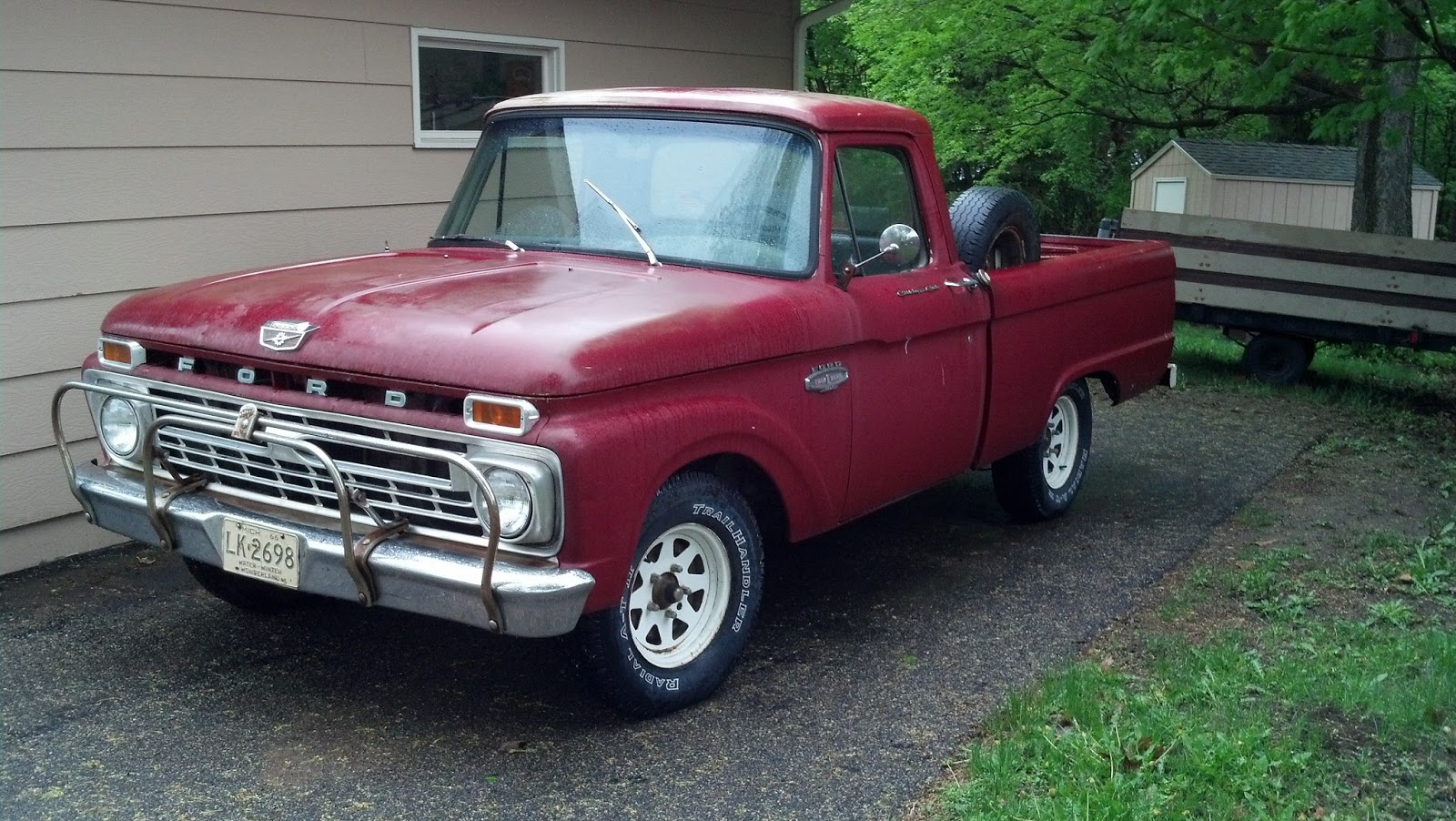
Rosa La Fabulosa: Thanks for keeping her for me, Dad!

Homebrew III: The Experiment

It’s almost time to bottle my fourth batch of homebrewed beer, a clone of Pete’s Wicked Ale brewed from a Midwest kit, which means I ought to finally report on batch three…The Experiment.

The Experiment came about like this: not long after my successful Irish Stout, some friends were gathering to brew again. I didn’t have the money to purchase another kit — but I did have a “can kit” left over from a misguided venture (retold here) into brewing a decade or so earlier when we still lived in Michigan. The can was a Munton’s Export Stout kit, containing hopped dark malt syrup and abridged instructions. I had a leftover packet of dry brewer’s yeast from my Irish Stout kit (I used a Wyeast packet instead) and, stealing an idea from a molasses stout recipe I’d seen online, I spent a few dollars on raw cane sugar to add to the mix in place of several cups of corn sugar. If all went well, I would have two cases of good dark beer for about five bucks.

I did not follow the instructions to the letter, but combined them with my past two brewing experiences – which means, primarily, that I boiled the ingredients longer. Fermentation was robust the first few days, as expected — the smell from the airlock was sweeter that the Irish stout had been, but with a whiff of hops. Unfortunately I forgot to take a hydrometer reading before sealing the primary fermenter, then dropped and broke my hydrometer during the transfer process. Since I had already drawn a sample during the transfer, I took the opportunity to taste the flat, room-temperature brew. It was sweet—not quite cloying, but sweeter than I had hoped—reminding me at first swallow more of a doppelbock than a stout (or even Samuel Adams Triple Bock, which Dad and I tried once and (like many others) did not enjoy).

I tasted it again at bottling and was again struck by the sweetness. I had read that the raw sugar could lend a “rum” taste to the brew; I hoped the carbonated bottles would not be too sweet to be drinkable.

I opened the first bottle a few weeks ago. It was poorly carbonated, winey, and sweet. I drank about half the bottle and wasn’t crazy about it, but swirled the remained bottles and moved them to a warm place in hopes of further carbonating them. I tried another earlier this month, and while the carbonation was better, the head was still thin, fizzy, and brown, and the beer itself was simply too sweet for my taste. I probably should’ve used corn sugar as recommended, but at least I’ve seen something of the effect of raw sugar in that rummy/winey taste.

In the end, I dumped all but 12 bottles, which I kept for cooking. This weekend I cooked a pot roast in one – seared it first in a cast iron pan with olive oil, then put it in the crock pot with one bottle of The Experiment, two yellow onions (chunked), garlic salt, pepper, and Worchester sauce, and let it cook most of the day. The resulting meat was delicious – so the remaining 11 bottles will be good for something!

The Second Third, Week 37: Can-Do Attitude

“I am always doing that which I can not do, in order that I may learn how to do it.”
– Pablo Picasso

Jodi has commented more than once that she wishes she were more like my sister when it comes to trying new things. “Jill can do anything,” my bride tells a friend. “She painted that mural in Emma’s room, and bought a hanging lamp, cut the cord off it, and turned it into a ceiling light. She’s like, ‘I’ve never done that before; of course I can do it!'”

Jill gets that from my dad, a mostly self-taught machinist, mechanic, and builder of … well, pretty much anything, and my mom, who has been known to take a raised eyebrow or a snicker of unbelief as reason enough to turn a cartwheel in the living room, just to show she still can. (That was years ago, but please, don’t tempt her.)

I got just enough of the can-do attitude to believe, just after we were married, I could change the water pump in my car with a socket set, a couple screw drivers and wrenches, and a Xeroxed copy of the Chilton’s instructions in the open parking lot of our first apartment in Sioux Falls. When the landlord came out halfway through the procedure to point out that Jodi’s lease forbade auto repairs on the premises, I apologized, but suggested it might be best to let me finish and clean up the mess than to snarl things any further. I’ve retrofitted a flush-mount ceiling fan to hang on the level from a sloped cathedral ceiling. I drew the picture my sister projected and painted on Emma’s wall. I did these things because somebody had to do them, and I was available. But I don’t necessarily go out of my way to look for new challenges of this sort.

So this past week, Jodi and I looked at the calendar and realized that Gabe was registered for a mid-day soccer camp, and both of us had to work. We suggested he ride his bike a mile or so up the road to the middle school on quiet residential streets and paved bike paths, for the most part. We also suggested that Brendan accompany him on his bike, with his cell phone – at least on the first trip – to be sure Gabe didn’t have any problems.

I was informed that Bren hasn’t really been riding his new bike much since last summer, mostly because he didn’t “get” the gears: he couldn’t find one he liked, and whenever he shifted to another, the chain made annoying noises. Gabe’s problem was more practical: he wasn’t sure how he could ride a bike and carry his soccer ball at the same time.

I was exasperated. When I was their age (and younger!), I stripped all the “extras” off my BMX – chain guard, reflectors, handbrake, etc. – because I wanted the lightest functional bike possible, and I rode my bike to the lake near our house with a lifejacket, tackle box, fishing pole, and bucket for the catch, without issue or explanation. I explained to Brendan that he should take a minute to look at his sprockets as he shifted gears, and when his chain was making noise, so he could see what was going on – that most of the time, you just need to back the shifting mechanism off slightly once you changed gears to make the noise stop. I suggested to Gabe that there was a hands-free way to carry stuff to school that would work just as well on a bike as it does on foot: his backpack. I assured them (somewhat sharply) that they could handle this little adventure – and might even enjoy it.

Only later did it occur to me why I was that way as a kid (and as a newlywed). My dad did all his repairs – auto repairs, home repairs, you name it – himself, and required me to be with him, come sunshine, rain, or snow. I didn’t have “the knack,” but I learned to look more closely at how things worked, and learned which tools did what, and where to find them. After hours in the shop, working on my bike was a piece of cake.

And Mom and Dad set clear boundaries and rules, then gave me the freedom to roam the neighborhood, the woods, and even the docks and beaches, playing, exploring, fishing, and even hunting. If I wanted to take advantage of this freedom (and make the most of my time) I had to figure what I needed and how to transport it. We built forts in the woods, repaired bikes on the road, camped on islands in the middle of the lake, without anyone carting me around.

We do live in a different place and time, but I have consistently opted to keep the kids close to home rather than send them out on their own, and I avoid DIY projects in order to protect “family time.” As a result, my kids are well-mannered, bright, obedient … and perhaps overly dependent. In my Second Third, I need to recognize that working together with my kids, or even letting the kids do thing together on their own, is family time, too. I need to do what my folks did: create opportunities for my kids to do, to learn, and even to make mistakes – so when they are my age, whatever challenge they face, they’ll echo their Aunt Jill: “Huh. I’ve never done that. Of course I can!”

Brewing Sustenance: Beer and Sourdough

“Bread is the staff of life, but beer is life itself.” – Anonymous

I’m in the process of starting two new hobbies, and as a result, a new periodic series of posts for this blog. Some years ago, after falling in love with a world’s worth of good beers, I tried my hand at home-brewing. It was an ill-fated attempt that never produced so much as a bubble. Later, my dad tried his hand it; as I recall, his wort never quit bubbling, until finally he bottled a brew that tasted a bit like cider vinegar (the good bottles) or worse (the bad ones).

At that point, thanks to a growing variety of craft and micro brews and the increasing ease of purchasing good beer at any reasonably well supplied liquor store, I lost most of my interest in DIY beer. In the intervening years, however, I’ve had the good fortune to encounter a couple really skilled and experienced home-brewers whose beers kept the dream alive, until at last a friend here in Minnesota, named Mike, caught wind of my interest and dusted off his brewing equipment to produce (with my help, in his kitchen and basement) a summertime wheat brew. Unfortunately, we couldn’t connect on bottling, so the task fell to him, in a rush, so the flavor varied from quite good to somewhat pungent and yeasty from one bottle to the next. Still, it was an enormous step forward.

Since then, another friend, Butch, who has at least two avid homebrewers as neighbors, has taken up brewing. I had the pleasure of helping with his first batch over Father’s Day weekend, an early Autumn Amber we brewed in his garage over a propane burner for a turkey fryer, as seems to be the standard approach now.

Last night, his bride handed me a plain brown bottle from the fridge. I poured a beautiful pint, roughly the reddish-brown color of Bass Ale, with a finger’s worth of tight, pale foam at the top. The flavor was refreshing and clean, like a somewhat lighter and fruitier Newcastle. I loved it. Thoroughly.

Butch has two more batches as various stages, and this weekend, we will move them along and start the next one. I’ve nearly acquired all the equipment I need to brew my own (delayed somewhat by the purchase of a beautiful little Browning Buck Mark .22), and this fall, I will join the fray. I plan to chronicle those adventures here, as well as…SOURDOUGH!

I love sourdough bread, and actually enjoy cooking and baking when I have time. So when my dad decided he wanted someone in the family to master sourdough, not only did he sense my natural weakness in this regard, but A) he gave me two books, one with countless wonderful stories and recipes for breads, flapjacks, waffles, and doughnuts, and the other, an account of a man’s quest to travel the globe looking for ancient oven residues that would reveal sourdough recipes of the ancients; and b) he drew the neat parallel in my mind between brewing beer and “brewing” bread. (He also through making cheese into the mix, saying, “It’s all fermentation” – but I’m not quite ready to make that leap yet. Plus we can’t keep a cow or goat in town.)

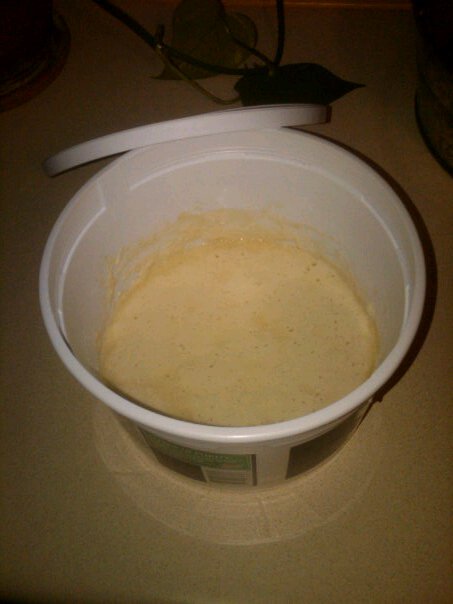
He played his cards well:

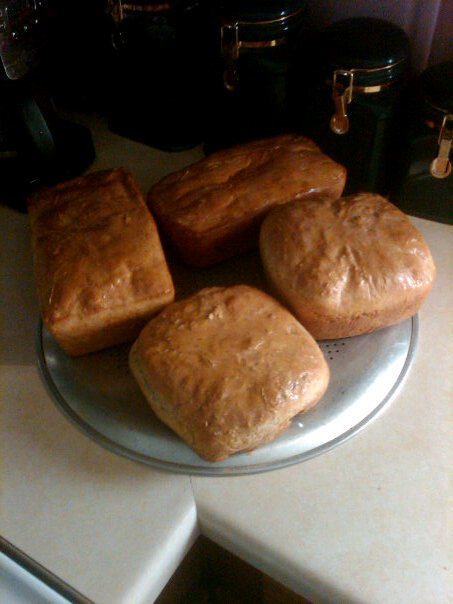
My first batch of starter, created from scratch, looked wetter and slimier than pictured above, and smelled like B.O. This one (my second batch) looked like pancake batter, bubbled almost imperceptibly slowly, and smells slightly yeasty and sour. It worked to create the deliciously sweet and hearty bread above (made with wheat germ, butter, and honey, among other things), but just barely. I’m hoping to coax this started into a higher gear, or I’ll have to start again and try to muster a more vigorous starter. But the entire family agrees: the result of my first sourdough experiment was a resounding success. With a little luck and persistence, hopefully I’ll be posting regular notes on the strange alchemy of brewing sustenance.

The Second Third, Week 34: Blessed Are the Meek

Yesterday morning, Jodi and I sat around her mother’s kitchen table with Grandma Pam, her sister, and her brother-in-law, and discussed politics, religion, and parenting. I have heard over the years that these topics are taboo to discuss in mixed company, especially with one’s in-laws, and Jodi’s brother-in-law (by his own admission) likes to stir the pot now and again. But all’s well that ends well, and when they left for home mid-morning, there were still hugs all around.

Part of the reason that it went so well may be the words of Fr. Mark’s homily on Sunday. Fr. Mark is the pastor at Our Lady of the Black Hills Catholic Church in Piedmont, S.D. He is not a big man, but his enthusiasm for his vocation, his joy in the Mass, and his genuine love of the Eucharist erupt in a loud voice that resonates to the wooden rafters of the sanctuary. He tends to gain, and keep, your attention.

On Sunday, he preached on the gospel of Matthew, chapter 11, 25-30:

At that time Jesus said in reply, “I give praise to you, Father, Lord of heaven and earth, for although you have hidden these things from the wise and the learned you have revealed them to the childlike. Yes, Father, such has been your gracious will. All things have been handed over to me by my Father. No one knows the Son except the Father, and no one knows the Father except the Son and anyone to whom the Son wishes to reveal him. Come to me, all you who labor and are burdened, and I will give you rest. Take my yoke upon you and learn from me, for I am meek and humble of heart; and you will find rest for your selves. For my yoke is easy, and my burden light.”

“Meek and humble of heart” — this from a man who would be put to death for proclaiming that he is God’s only son and the messiah, who toppled tables in the temple and drove the traders from “his father’s house” with an improvised whip of cords, who stood before the authorities unafraid and walked willingly to his doom. This is not the image of a meek man by today’s definition of the word, and in fact, the definition of meekness was the root of our discussion yesterday. Fr. Mark gave two: “not easily provoked” and “strength under control.” Afterward, Jodi’s brother-in-law said that those seemed to be reasonable definitions that worked well for the homily, but were not necessarily in keeping with the commonly accepted definition of weak, cowardly, or passive.

I’ll discuss “strength under control” in a separate post; for the purpose of this post (and the discussions at Grandma’s house), “not easily provoked” is the key. Webster’s online dictionary gives three definitions, and the first and third line up well with Father’s explanation and with Christ:

  1. Enduring injury with patience and without resentment : MILD
  2. Deficient in spirit and courage : SUBMISSIVE
  3. Not violent or strong : MODERATE

Many people do not wish to be seen as activists or evangelists, and it can be difficult to discuss one’s faith and convictions with people who have different viewpoints. It takes a deep inner strength to endeavor quietly to do right and to endure wrongs patiently, without physical or verbal violence, out of loyalty to a higher calling or greater good. The person who can do this possesses a deep inner strength and is decidedly not deficient in spirit or courage.

It is in this respect that I have re-titled and re-focused my blog this year, and that I hope, in my Second Third, to cultivate meekness in my own life, in order to facilitate civil discussions about the things that really matter with people different than myself.