Book Break: Two Volumes by Matthew B. Crawford

One of the great pleasures of these latter years as a father is receiving books and book recommendations from my grown children. The University of Mary in Bismarck, Saint John Vianney Seminary in Saint Paul, and the Franciscan Friars of the Renewal have led each of them on tremendous intellectual and spiritual journeys. Occasionally, I tag along.

This past Christmas, Brendan and Becky presented me two books I may have never encountered had Brendan not taken a surveying (as in, land measurement) course as an undergrad…a surveying course taught by a history professor with a love for useful arts and practical skills.

Both books are by Matthew B. Crawford, who holds a PhD in political philosophy and a prestigious research fellowship at the Institute for Advanced Studies at the University of Virginia. He also runs a motorcycle repair shop. In these two books, he makes a convincing case that we are ceding more and more of our will, abilities, and control to technologies and systems that make life easier by making it less lively, less human, less worth living.

Continue reading
Book Break: Hillbilly Elegy by JD Vance

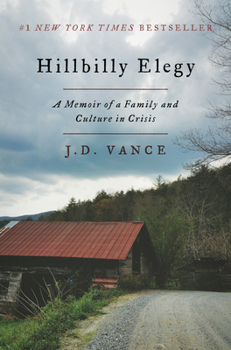
Last summer, when we were visiting Jodi’s parents, her mom gave me a copy of JD Vance’s memoir Hillybilly Elegy. I think she had picked it up for herself, but we were talking about the upcoming election, and she thought I had a better chance of reading it sometime in the near future. She said I could tell her about it when I did.

Well, Momma Venjohn, here you go.

In case you avoid the news: JD Vance is a young, former US senator for the state of Ohio, now vice president of the United States of America. He is a Marine Corps veteran, a graduate of Ohio State University and Yale Law School, and the author of the afore-mentioned memoir, a book-length reflection on a traumatic childhood, poverty and addiction in Appalachia and the Rust Belt, and the dysfunctional family connections that somehow got him through where so many others flounder.

Continue reading

Book Backlog: Three Diverse Reads

For a host of reasons, I’ve not been doing as much personal writing in recent years. I won’t promise that’s going to change yet, but I’m going to make a start, at least, with short “reviews” of three very different books I’ve read in the last year: a chance spiritual read called Beautiful Outlaw by John Eldridge; Cannery Row, a great short novel by John Steinbeck; and Shantyboat, a non-fiction account of a married couple’s journey from Ohio to New Orleans in a homemade driftboat in the 1940s, by artist and writer Harlan Hubbard.

Continue reading

Book Break: Sword of Honor

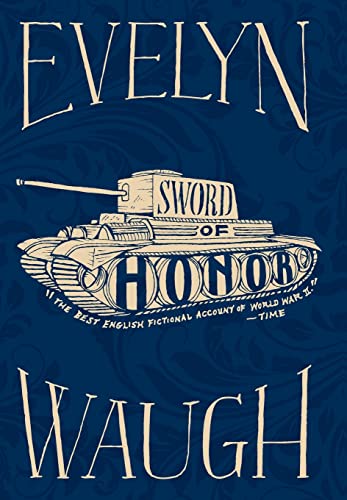
Last month, I drove to Michigan and back on consecutive weekends. Roadtripping comes easily for me, especially with a good audiobook. During the winter, I saw an article on the Imaginative Conservative website about Evelyn Waugh’s Sword of Honor trilogy, and since I haven’t read anything by Waugh since Brideshead Revisited in 2011, it seemed like a solid choice.

In case you don’t know (I didn’t): Arthur Evelyn St. John Waugh is a British man; an author, journalist, and book reviewer; a World War II veteran; and a twice-married convert to Catholicism. Sword of Honor comprises three separate novels published in chronological order: Men at Arms (1952), Officers and Gentlemen (1955), and Unconditional Surrender (1961).

The books trace the wartime story of Guy Crouchback, the only surviving son of a once well-to-do Catholic family in England, who is floundering after his beautiful but promiscuous wife leaves him for another man (and another, and another) in the early days of World War II. Despite being older than most recruits, he joins the Army to escape his loneliness and reassert himself as a man—God willing, to do something meaningful with his life.

Continue reading

MELEE! The Necessity of Close-Combat Evangelization to Secure the Kingdom

Indeed, the word of God is living and effective, sharper than any two-edged sword, penetrating even between soul and spirit, joints and marrow, and able to discern reflections and thoughts of the heart. No creature is concealed from him, but everything is naked and exposed to the eyes of him to whom we must render an account. – Hebrews 4:12-13
 

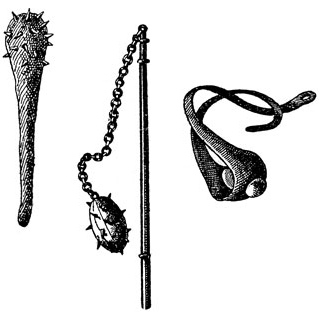
As much as I was impressed with the high-tech precision of the Navy SEALS portrayed in Act of Valor—and moved by their sacrifice for our country—I am generally more deeply affected by portrayals of the blunt savagery of older wars. I can marvel at the mathematical elegance of a sniper kill from a mile or more distant, until I recall James Michener’s account of a Polish peasant walking to meet armored and mounted invaders, carrying a length of ash wood he had induced to grow snugly around a few pieces of jagged flint, forming a homemade mace. The time required to grow your own weapon might be long enough to steel yourself to bludgeon an armored man to death, and another, and another. It seems to me that a man who would kill in this way must have the courage of his convictions. There is no hope of distance or anonymity; he must be willing to look his enemy in the eye and get his hands dirty.

* * * * *

Three recent experiences inspired this essay. [Blogger’s Note: This essay was written in 2012, to be read and critiqued in a men’s group.] The first was the continuation of a friendly debate regarding the best way to engage and challenge non-believers (here and here), in which a friend of mine indicated that the older he gets, the more he feels that polite arguments and sustained discussions are not worth his time. The second was an unexpectedly difficult Lenten struggle to hold my tongue, and the third was a men’s group’s opposition to the Health and Human Services (HHS) mandate. All three of these experiences have in common the issue of when and how we should engage those who think, feel, or believe differently than we do.

Continue reading