Book Backlog: Three Recent Reads

I’ve been struggling to find time for more casual, personal writing lately, and I now find myself with a bunch of recent books I intended to share but never got around to. Today’s quick reviews are for:

  • South of Superior, a novel by family friend Ellen Airgood (very enjoyable)
  • The Action of the Holy Spirit by Frank Sheed (clear, concise, and informative)
  • The Shallows: What the Internet is Doing to Our Brains by Nicholas Carr (disturbingly prescient and motivating)

Better brief (and late) than never…here goes!

Continue reading

Given Name

To the victor I shall give some of the hidden manna; I shall also give a white amulet upon which is inscribed a new name, which no one knows except the one who receives it.

Revelation 2:17

On Monday evening, something unusual happened—something unique in my experience, though the tradition extends back to the Book of Genesis: My son received a new name.

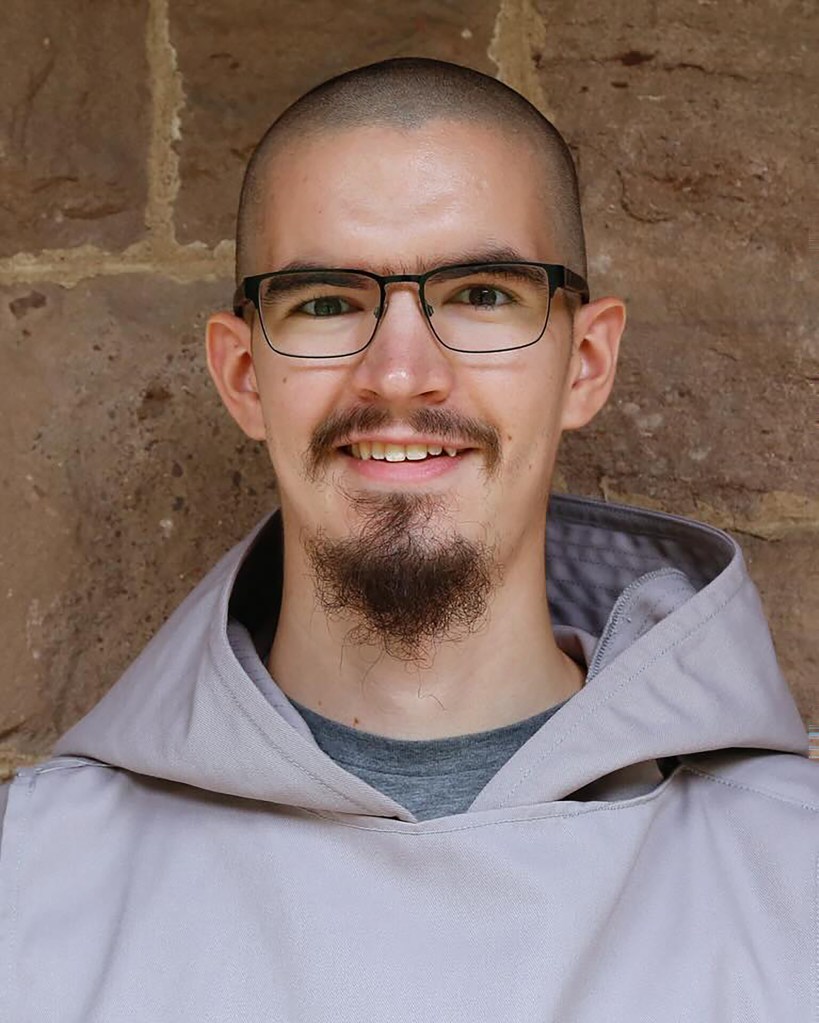
Our second son, whom we named Gabriel Venjohn Thorp, is discerning religious life with the Community of Franciscan Friars of the Renewal (CFRs). After spending the past year as postulants at St. Joseph’s Friary in Harlem, he and five other young men entered the novitiate Monday at Most Blessed Sacrament Friary in Newark, New Jersey. As novices, they received their habits—the gray hooded robe and cincture of the friars—and their new names. Our son is now Brother Jude Apostoli, of St. Michael.

In my line of work, you might call this a brand refresh: new name, new packaging, same great mission—serving as a living witness and example of the love of Christ.

Continue reading

Embracing ‘Already but Not Yet’

A few years back I was blessed to participate in the Catechetical Institute (Class of Padre Pio) at Saint Andrew Catholic Church in Elk River. I expected it to be a great learning experience: a deep dive into the what and why of Catholic teachings. I did not expect it to be as convicting, converting, and hopeful an experience as it was.

The Catechism of the Catholic Church (CCC) is a systematic overview of the Catholic faith with lots of references to sacred scripture, saints’ writings, and other Church documents that flesh out the teachings in more detail. But the overall theme of the book—and the foundation of all Church wisdom and teaching—is God’s plan of salvation, culminating in the life, death, and resurrection of Jesus Christ.

One of the great mysteries of that plan, emphasized again and again throughout the institute, is the sense of already, but not yet:

Continue reading

What Discernment Looks Like—for Us

Many of you reading know that Jodi and I have been discerning the possibility of me becoming a deacon. A deacon in the Catholic Church is an ordained member of the clergy, meaning that like priests and bishops, they receive the sacrament of Holy Orders. An ordained deacon is a deacon for life. If unmarried, he remains unmarried; if married, he does not remarry after the death of his wife. They generally serve the Church and assist priests at the altar during Mass, with certain pastoral and sacramental duties, and with teaching and preaching. Generally, they maintain their careers outside the Church, which uniquely positions them as clergy out in the world on a regular basis.

The Church recognizes two types of deacons. Transitional deacons are ordained deacons on their way to becoming ordained priests. Permanent deacons are ordained deacons who do not intend to become priests but have answered God’s call to serve the Church in this deeper way.

 In the Catholic Church, deacon is not a volunteer position or a job, but a vocational call—and for a married couple that has a vocational call as husband and wife, it ought to be a big decision. As the Institute for Diaconate Formation (IDF) here in the Archdiocese of Saint Paul and Minneapolis often puts it, Wives need to be comfortable with their husbands marrying another woman, the Church.

Continue reading

You Gotta Want It

This post appeared as a column in the May 23, 2021, issue of the St. Michael Catholic Church bulletin. It is modified from a Wednesday Witness blog post written for Saint Andrew Catholic Church.

A few years back I spoke with a teenage girl who said she wasn’t sure she wanted to be confirmed because it didn’t seem relevant to her future success. Her mind was on her grades and test scores, a degree and a career. She had things to do, and from where she sat, God’s gifts seemed quaint and His will, irrelevant.

But we are created for more than economics. We are made for love, and the sacraments give us the graces to love as God loves. Through the three sacraments of initiation—Baptism, Eucharist and Confirmation—we are welcomed into God’s family as His children; we receive the gifts, graces and fruits of the Holy Spirit; and we receive Jesus Himself so that we can become more like Him.

Continue reading