Book Break: Praying with Padre Pio

PrayingWith PioYesterday morning I finished Eileen Dunn Bertanzetti’s little book Praying With Padre Pio—a wonderful, simple introduction to the life and spirituality of one of our great 20th-century saints. As I mentioned in the past week, I’m increasingly drawn (or pointed) to St. Pio as an example and intercessor in my own life. A Capuchin monk, priest, mystic, and stigmatist from southern Italy, St. Pio has been the subject of numerous books and biographies; this one breaks his life and spiritual advice into fifteen meditations on topics of particular interest or importance to his practice of the Catholic Christian faith, such as suffering, the Eucharist, Mary, and joy in the Lord.

The book opens with a brief overview of St. Pio’s life before diving into the meditations. Each meditation opens with a one- or two-sentence summary of the topic at hand and an opening prayer. Next follows a brief biographical account of how this particular topic played out in the saint’s life. The book then presents a single question for the reader to reflect on, comparing and contrasting his or her own experience to that of St. Pio’s.

Next, the book shares Padre Pio’s own words on the topic, gleaned from letters, journals, and biographical accounts, followed by three to five reflections, from which the reader is encouraged to choose one. These exercises range from journaling to meditation to resolving to act in a way that underscores the lesson of the day. Finally, the book shares a few relevant scripture passages to reflect on and offers a closing prayer, often in St. Pio’s own words.

I read one meditation a day for the past fifteen days and found the book informative, enjoyable,  challenging, and inspiring. Every day I took something new from St. Pio’s life and spiritual practices that could be adopted to my own—and nearly every day, the topic providentially aligned with the daily scripture readings and other spiritual reading and writing I’m doing these days. This was truly an inspired find; if you are interested, it’s at the parish lending library. (I returned it yesterday, so look in the returns bin!)

A Walk on the Waves

At once Jesus spoke to them, “Take courage, it is I; do not be afraid.” Peter said to him in reply, “Lord, if it is you, command me to come to you on the water.” He said, “Come.” Peter got out of the boat and began to walk on the water toward Jesus.

– Matthew 14:27-29

Today is my last day as a parish employee. I have been profoundly blessed to work for the Church I love, in the church I love, with people I love, for a community I love, for the past three years. My father always preached, Leave it better than you found it. I pray I’ve done so. I know I’m better than you found me.

Today I leave the boat for a walk upon the waves.

Over the past several weeks, as my departure became known, I’ve heard a number of variations on the following: It’s brave of you to step out in faith like this. It’s such a powerful witness of trust: going where the Lord leads you. I’m sure you are on the right path and I can’t wait to see where it leads! Continue reading

The Virgin and the Tempest

The Virgin and the Tempest

Blogger’s Note: A close friend’s home was struck hard by the storm last Sunday morning—in all the wreck and ruin, Mary stood untouched, unfazed. Regina pacis, ora pro nobis!

At dawn she stood upon the hill and pondered things unseen;

The lake agleam with silver sun, the grass a rippling green.

A girl, she seemed, of field and fen, of flock and fish and sheaves;

Her crown, the dappled sunlight filtered through the flutt’ring leaves.

Her simple shift immaculate as she, herself unstained,

Enjoyed Creation’s morning-song—but in the west it rained.


Such peaceful virgin beauty could the Tempest not abide:

He spied her from afar and surged, a league to every stride.

He stormed and splashed and shivered homes; his thund’ring voice was heard—

With roar and flash and flood he sought to drown God’s holy Word.

In that unearthly twilight knelt the faithful ’round the stone,

And she, exposed and downcast, stood upon the hill alone.


He strode ashore in bloody rage, devouring as he came,

But naught would slake his appetite except the Virgin’s shame.

He cursed her with his forkéd tongue and lashed her with his tail;

He frothed and foamed and spewed his bile, he struck with tooth and nail.

The trees he snapped like kindling with the fury of his wings;

They came down crashing roundabout—but she began to sing.


Her hands were open to receive, her eyes closed in repose,

And all his filth and flotsam could not even foul her clothes.

She sang a canticle of joy, of gratitude and grace,

And deadfalls burst asunder at the radiance of her face.

A lullaby she sang to soothe the Child within her womb,

And at His Name, the Tempest turned and fled into the gloom.


The wood lays wasted at her feet; the grass, strewn with debris;

A splintered path of ruin marks the path on which he flees.

So stands she still upon the hill, our shelter from the storm—

Our Lady, Queen of Peace, protecting all she loves from harm.

Not David’s solitary stone nor Sparta’s gory stand

Struck such a blow as she, although she never raised a hand!

Able-Bodied

good-friday-2264164_1920Now you are Christ’s body, and individually parts of it. – 1 Corinthians 12:27
Over the past three years I’ve been blessed to serve as faith formation director for our parish and to write a monthly column in our church bulletin. I’ve tried in that time to urge us all to discipleship: to cultivate a personal relationship with Jesus every day, listening and responding to what He asks of us, seeking the lost and leading them to heaven.

It’s a big job, to be sure, but we are not alone. We are one body, with Christ as our head. Through the Apostles, the bishops, our priests, and our baptism, His mission of saving souls has been given to each of us. Individually we are ill-suited to the task of redeeming the world, but together?

Together we are unstoppable. Continue reading

Memento Mori, or Don’t Get Comfortable!

Last week I shared a humorous post about my general lack of physical fitness, in which I declaimed, “I am weary from too much rest—so comfortable it hurts.” At the time, I meant this merely in the physical sense, but this morning the spiritual meaning resonates.

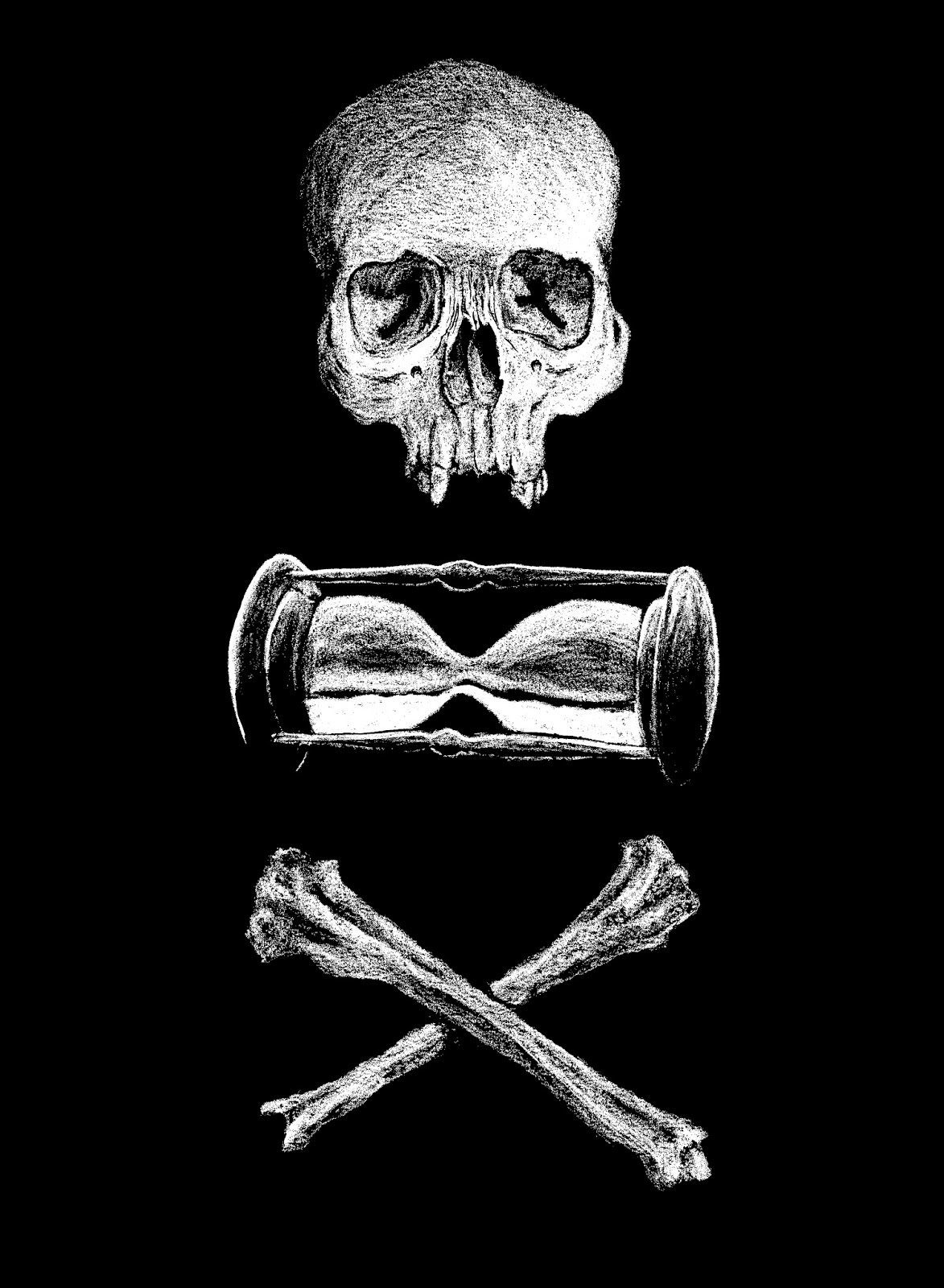
We are creatures of will and intellect, but inertia is mindless. An object at rest tends to stay at rest, and so, too, a man who behaves like an object. When we rest, we often “veg,” which is to say we give up our human and even our animal nature in exchange for potting ourselves, mindlessly, in the sun. Bloom where you’re planted is a mantra today, but we are not flowers or fruit trees. It feels good to soak the golden rays, but, lacking chlorophyll, we are not fed in this way—not for long! We are planted only at the end, and then under a stone.

Also last week, I mentioned that our family is pursuing Marian consecration. Thus far Fr. Gaitley’s book has focused on three saints who, in their separate but similar ways, gave themselves completely​ to Christ through Mary: St. Louis de Montfort, St. Maximilian Kolbe, and Mother Teresa. What struck me this morning was the sense of urgency each of these saints has:

  • St. Louis de Montfort advocated Marian consecration as “the surest, easiest, shortest, and most perfect means” to become a saint.
  • St. Maximilian Kolbe formed his Marian “army,” the Militia Immaculata, with the express goal of bringing the entire world to God through Christ under the generalship of Mary, and to do so as quickly as possible.
  • St. Teresa of Calcutta sought to satisfy the thirst of Jesus for souls and love, and to do this in the best possible way.
Notice that none of these three were satisfied with merely doing a job, or even doing it well.They sought to hear God’s call, to answer it daily, and to act with urgency, in the best way possible to bring about His will. They were not sedentary, physically or spiritually. They did not bloom where they were planted, because they never permitted themselves to be planted. They acted, each moment, as Mary would—as Christ would!—with great love, and with their eyes fixed upon eternity and the fate of the souls they encountered.
Too long have I acted as though good enough is good enough, as though I have time to spend (or not) as I please. If sainthood is the goal, let us pursue it with vigor. God willing, we’ll have eternity to rest!