Strong and Wrong or Weak and Wise?


This post appeared as a column in the Sunday, November 19, edition of the St. Michael Catholic Church bulletin.

Last Wednesday’s gospel challenged me. Jesus starts and ends with strong, provocative language—”If anyone comes to me without hating his father and mother, wife and children, brothers and sisters, and even his own life, he cannot be my disciple” (Luke 14:26) and “In the same way, every one of you who does not renounce all his possessions cannot be my disciple” (Luke 14:33).

In between, he offers two examples for our reflection. In the first, He asks who would undertake to build a tower without first calculating whether or not he could finish it; in the second, he calls to mind a king assessing the strength of an advancing army to determine whether he could successfully oppose them.

In both examples, the concern is clear: Will I be able to persevere and succeed with the resources I have at hand? But the actions and outcomes are subtly different. In the first, the builder does not take the time to calculate, and his inability to complete his tower leads to failure and ridicule. In the second, however, the king does take the time, and upon realizing he cannot win, seeks peace before the battle ever begins.

Continue reading


A Life Well-Remembered

I remember, many years ago, sitting with Dad in a homemade ice-shanty-turned-deer-shack on the Lofgren farm in Michigan, where we used to hunt. It was muzzleloader deer season, snowy and cold, and we had a little porcelain-coated gas heater to keep us warm while we watched and waited. Dad was slicing an apple with his pocketknife and placing the slices on the top of the heater, where they hissed, filling the shack with the smell of the roasting fruit.

We ate them once they were soft and warm, and talked quietly together. My father is not a religious man; that day he told me he didn’t believe in an afterlife, but that heaven and hell are how people remember you. To his way of thinking, if you were a good person and took care of your family and your neighbors, you would be loved, missed, and remembered well. You would live on in the hearts of others, and that would be heaven.

If you didn’t, you would not be missed, and your memory would fade—or worse, you would be despised in retrospect. That would be hell.

I don’t share this view personally. I believe in a real and eternal afterlife, and I trust in our merciful God to see the goodness and beauty my father has brought into this world. But in the meantime, I want to give Dad something he can use here and now: a glimpse of his “heaven” as it stands today.

Most of our family and close friends know by now that my dad has both Parkinson’s Disease and dementia. If you hadn’t heard, please know that we didn’t intend to keep you in the dark. It’s not the easiest subject to broach, especially for our emotional clan. Parkinson’s and the resulting effects on his hands and mobility have been problems for several years now. The dementia diagnosis is a newer thing. Over the past few years, Dad’s short-term memory has declined and sequential thinking has become more challenging. More recently he has begun to imagine things.

Continue reading

Leaning on the Lord

I must not look like a Jim.

For many years, casual acquaintances have consistently called me by other masculine J-names—especially John. I have been John to people who barely know me and to people who should certainly know better.

Then, several years ago, a priest friend advised me to reflect upon the young apostle John, who sits close enough to Jesus to lean against His breast (c.f. John 13:23-24). A year or two later, a different friend told me, “You are closer to Jesus than you think—leaned right against His chest, close to His Sacred Heart.” From that time forward, he purposely addresses me as John and reminds me of this connection to the youngest apostle frequently.

These two independent references to the same Gospel passage confirmed in me my spiritual proximity to St. John, and our Lord and His mother, at the Last Supper and at the foot of the Cross. It’s a beautiful blessing—but it’s also complicated, especially as a man.

I am close to my dad. I remember as a child and a younger teen stretching out to watch TV and doze on the same couch with him—and I remember, as a young man on an ill-fated elk hunt, suffering altitude sickness and shivering uncontrollably until he wrapped his arms and sleeping bag around me for a hour or more to warm me and still my convulsing body.

Dad is the man I love most in this world, but expressing these intimate moments is difficult, because as men, we don’t generally share such physical closeness publicly.

So what would it take for me, a grown man, to rest my head against the breast of Jesus in a room full of other men?

Continue reading

Family and Fruitfulness: A Father’s Perspective

It’s getting quiet around here.

This weekend, Emma and Trevor are helping with our church’s Core Team Retreat, so just Jodi, Lily, and I, along with our Airedale Bruno, are at home. It’s a preview of our new reality beginning early next month—our youngest as an only child; we, as nearly empty-nesters.

This situation is not extraordinary. Indeed it is almost inevitable, and certainly preferable to a basement full of adult children without direction or dreams. But both Jodi and I agree that the approaching transition feels different.

* * * * *

In the wee hours of Thursday morning, our oldest son Brendan, his bride, and his two little sons left Bismarck in a plane, bound for Minneapolis, Boston, and, ultimately, Rome. They arrived in the Eternal City early Friday; they will make their home in a convent apartment for 10 months out of 12 for the next two to three years as Brendan oversees Student Life for the University of Mary’s Rome campus.

We hope to visit them this spring. We didn’t travel back and forth to Bismarck often these past few years, but seeing the four of them in person just once a year—and the stark reality that an ocean and two half-continents lie between us—leaves a hollow feeling in my chest.

* * * * *

Tomorrow morning, we take our youngest son, Trevor, to Saint John Vianney Seminary (SJV) at the University of St. Thomas in Saint Paul to begin his undergraduate studies and formal discernment of priesthood. In his case, he’ll be less than an hour away, but it seems further somehow. SJV is an island of clean-cut, well-dressed young men living and praying together amid the highs and lows of life on a fairly typical college campus. The young men’s schedule is structured and rigorous; their access to technology—especially smart phones—is strictly limited; their studies are not oriented simply to a career field and a job, but to a lifelong vocational call.

Continue reading

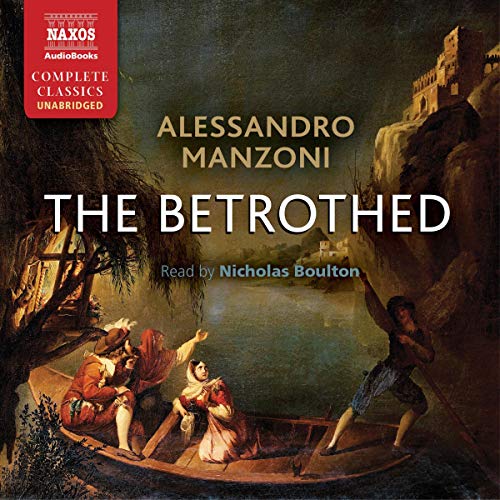
Book Break: The Betrothed by Alessandro Manzoni

I recently finished an English audio version of the 1828 Italian novel The Betrothed by Alessandro Manzoni on Audible. I first learned of this book—apparently the most famous and widely read novel in the Italian language—from a post by Joseph Pearce on the Imaginative Conservative website with the provocative title, “The Betrothed: The Greatest Novel Ever Written?” That caught my eye, because, as a somewhat educated person, I had never heard of it.

I also share all this information to distinguish this book from a much more recent young adult romance novel and two-book series of the same name by Kiera Cass. This is NOT that.

Instead, this is a wonderful historical novel set in the 1600s in Lombardy, Italy (pictured above), telling the story of two young, relatively poor, and essentially good villagers preparing for their much-desired marriage, and a cowardly priest who refuses them the sacrament after a tyrannous local lord threatens his life if he should join them. The fearful parish priest is balanced by two heroic clergy, a Franciscan friar who serves as a father and spiritual director to the pair, and the real-life Cardinal Federigo Borromeo, the heroic and holy archbishop of Milan, whose pastoral efforts bring about novel’s conclusion.

What struck me most about this novel is how timeless great literature actually is. The book is about many things, each as relatable today as in the time it was set and the time it was written, including:

Continue reading