Spiritual Fatherhood

Blogger’s Note: This is the latest in a collection of daily posts outlining my journey to the Sacred Heart over the past year or more. See an overview and links to past posts here.

Yesterday was Father’s Day. Providentially my re-consecration readings in 33 Days to Morning Glory were focused on Mary’s gradual discovery of her vocation not just to be the mother of Jesus, but the mother of the whole Church and all Christians. The book drew my attention to one scripture passage in particular, Matthew 12:46-50.

While he was still speaking to the crowds, his mother and his brothers appeared outside, wishing to speak with him. Someone told him, “Your mother and your brothers are standing outside, asking to speak with you.” But he said in reply to the one who told him, “Who is my mother? Who are my brothers?” And stretching out his hand toward his disciples, he said, “Here are my mother and my brothers. For whoever does the will of my heavenly Father is my brother, and sister, and mother.”

Fr. Gaitley explains that, among other things, this passage indicates the primacy of spiritual realities over physical realities, and in particular, spiritual parenthood over natural parenthood. Although the focus of his writing was Mary, on Father’s Day I couldn’t help but think in terms of St. Joseph and spiritual fatherhood. Continue reading
Motherland of Mercy, Part 1: St. Maximilian Kolbe

Blogger’s Note: I have no set order for these Sacred Heart posts, but am writing as Providence provides and the Spirit moves. Today the readings in 33 Days to Morning Glory shifted to focus on John Paul II, and I was called back to July 2016, World Youth Day in Kraków, Poland

Rome may be the the Eternal City and the seat of Catholic teaching authority, wisdom, and creativity in the world, but it seems to me that Poland is its bleeding, beating heart. Ravaged by wars and neighboring countries, ripped apart and reconstituted, invaded and occupied, the Poles have fought, suffered, and died for centuries, surrendering everything they had except their faith. Today, Poland is the homeland of ten 20th-century canonized Catholic saints and, I would argue, serves as the counter-cultural, Catholic conscience of Europe.

In summer of 2016, however, three specific Polish saints loomed large over World Youth Day in Kraków: the martyr of Auschwitz, St. Maximilian Kolbe; the visionary nun, St. Faustina Kowalska; and the prophetic pope, St. John Paul the Great. Each in his or her own way lived out the love of Christ in the world, pouring themselves out for the salvation of souls. Each embodied His suffering Sacred Heart. Over the next three days I will look at them, one at a time, and explain as best I can what captured my imagination about each of them. Continue reading

Journey to the Heart: A Timeline

One of the obstacles to sharing this roundabout path to the Sacred Heart with you is that in many cases it is only visible in retrospect. The sequence is hazy at this point, even to me. So I’m going to start with a timeline, which will hopefully serve as an outline for the sequence of posts to come. Though I may not write them chronologically, we ought to be able to plug them into the timeline in the end.

Part of the reason for doing this exercise at all is that every so often someone hears me say something like, “God has me here for a reason,”  “God told me such-and such,” or “God is leading me toward X,” and asks me what that means. God doesn’t speak to me audibly, but He opens some doors—in my heart, in others, and in the world—and closes others. This timeline and sequence will hopefully show what I mean.

We begin nearly two years ago… Continue reading

Memento Mori, Revisited

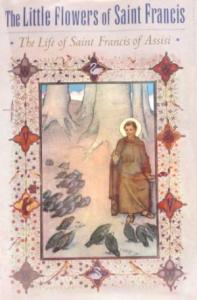
Back in April I shared a post entitled “Memento Mori, or Don’t Get Comfortable.” It was inspired by the sense of urgency I saw in the saints highlighted in Fr. Gaitley’s guide to Marian consecration, 33 Days to Morning Glory. In my reading this summer—particularly Praying With Padre Pio and The Little Flowers of St. Francis (which I’m reading now )—I continue to see this urgency. No sooner is a sin perceived than repentance and penance are undertaken; no sooner does an opportunity arise to serve or suffer than it is pursued to the full; no sooner is a prayer answered than praise and thanksgiving erupt.

LittleFlowersStFrancisCoverThis urgency is particularly edifying to me. Not only do I have a marked tendency to overestimate what I can achieve in the time I have, but I am also tempted more to presumption than despair. In other words, I’m inclined to coast and hope for the best—which is fine for a thing with wheels, but on two legs, usually turns into a long tumble downhill. Continue reading
Memento Mori, or Don’t Get Comfortable!

Last week I shared a humorous post about my general lack of physical fitness, in which I declaimed, “I am weary from too much rest—so comfortable it hurts.” At the time, I meant this merely in the physical sense, but this morning the spiritual meaning resonates.

We are creatures of will and intellect, but inertia is mindless. An object at rest tends to stay at rest, and so, too, a man who behaves like an object. When we rest, we often “veg,” which is to say we give up our human and even our animal nature in exchange for potting ourselves, mindlessly, in the sun. Bloom where you’re planted is a mantra today, but we are not flowers or fruit trees. It feels good to soak the golden rays, but, lacking chlorophyll, we are not fed in this way—not for long! We are planted only at the end, and then under a stone.

Also last week, I mentioned that our family is pursuing Marian consecration. Thus far Fr. Gaitley’s book has focused on three saints who, in their separate but similar ways, gave themselves completely​ to Christ through Mary: St. Louis de Montfort, St. Maximilian Kolbe, and Mother Teresa. What struck me this morning was the sense of urgency each of these saints has:

  • St. Louis de Montfort advocated Marian consecration as “the surest, easiest, shortest, and most perfect means” to become a saint.
  • St. Maximilian Kolbe formed his Marian “army,” the Militia Immaculata, with the express goal of bringing the entire world to God through Christ under the generalship of Mary, and to do so as quickly as possible.
  • St. Teresa of Calcutta sought to satisfy the thirst of Jesus for souls and love, and to do this in the best possible way.
Notice that none of these three were satisfied with merely doing a job, or even doing it well.They sought to hear God’s call, to answer it daily, and to act with urgency, in the best way possible to bring about His will. They were not sedentary, physically or spiritually. They did not bloom where they were planted, because they never permitted themselves to be planted. They acted, each moment, as Mary would—as Christ would!—with great love, and with their eyes fixed upon eternity and the fate of the souls they encountered.
Too long have I acted as though good enough is good enough, as though I have time to spend (or not) as I please. If sainthood is the goal, let us pursue it with vigor. God willing, we’ll have eternity to rest!