For a host of reasons, I’ve not been doing as much personal writing in recent years. I won’t promise that’s going to change yet, but I’m going to make a start, at least, with short “reviews” of three very different books I’ve read in the last year: a chance spiritual read called Beautiful Outlaw by John Eldridge; Cannery Row, a great short novel by John Steinbeck; and Shantyboat, a non-fiction account of a married couple’s journey from Ohio to New Orleans in a homemade driftboat in the 1940s, by artist and writer Harlan Hubbard.
Continue readingmemories
‘He Makes Me Lie Down in Green Pastures’
Last weekend we laid my dad to rest. When it came to death, Dad was a practical man: He wasn’t religious himself, and he didn’t want us to spend a lot of money or effort on a funeral. Sorting through his preferences and our own beliefs wasn’t completely straightforward, but I believe Mom managed admirably.
In Dad’s final months, he had shared with her that Psalm 23 was a favorite passage that his Little Grandma used to read to him when he was little. We all prayed it over him, and for him, many times during the final weeks of his life. During the burial, the line that stuck out most to me was, “He makes me lie down in green pastures.”
I believe the Lord has shepherded Dad, and all of us, well these past months.
+ + +
Continue readingThe Dad-Roll and Other Defensive Maneuvers
I am not naturally graceful. As a boy, I cast a shadow like a keyhole—a melon head atop a stick-figure body, careening through the world in whatever direction my topmost orb led me. As a teen, I lived in a narrow trailer house with my folks and spent two miserable weeks after my dad’s foot surgery finding every possible way to pinball into his elevated leg and throbbing big toe.
Today I am much the same: I move effortlessly, like an October acorn pinging from roof to car to driveway. I still drift the way I’m leaning and collide with stationary objects, softly as a poolside preschooler wearing swim-fins.
And yet, somewhere on the outer ends of my Y-chromosome is coded an instinct for self-preservation, which (to date) has kept me physically intact and free of broken bones or stitches.
Continue readingDaryl Thorp, 1948-2024
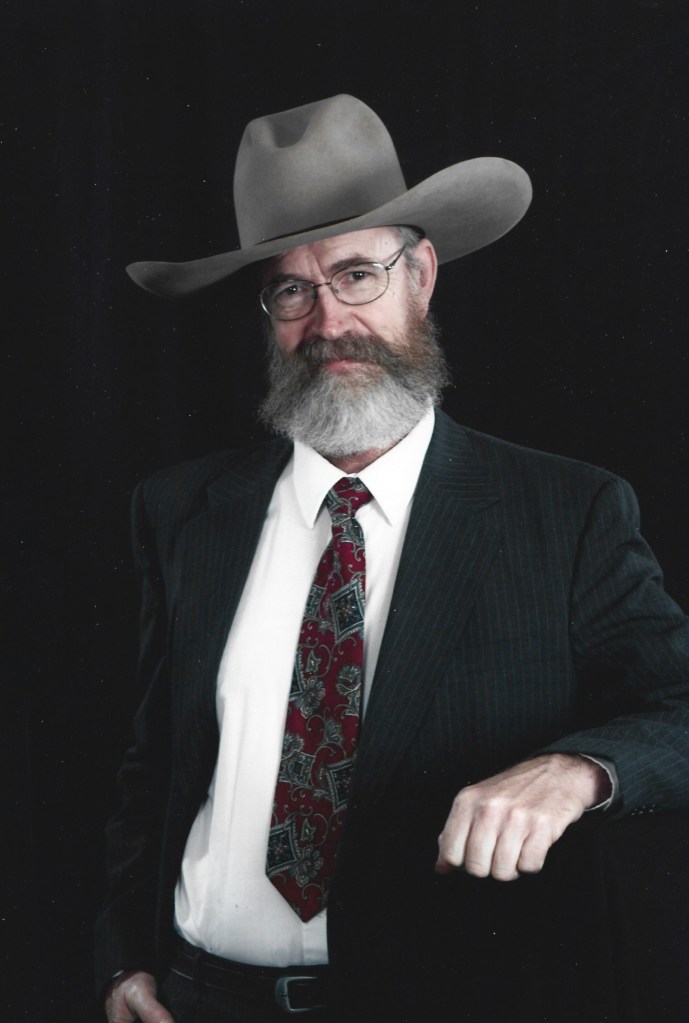
REMUS, MICHIGAN—Husband, father, machinist, and mule driver, Daryl Thorp passed away on January 28, 2024, in the log house north of Remus with his wife and children around him.
Daryl lived on his own terms. He was born in the Thumb of Michigan in 1948, the youngest of the four living children of Duane and Mary (Hawley) Thorp. He lost his mom in 1953 and spent much of his formative years with his Little Grandma. Though he was never religious, he was a deeply moral man who, even late in life, said that in everything he did, he was trying not to let Little Grandma down.
Life wasn’t easy, and by the time he was a teenager, he was already making his own way as best he could. He was bright and mechanically gifted from an early age, but he had little love for school and would rather be working with his hands or hunting and fishing. He joined the Army after high school and was blessed to be stationed in Alaska. He said the biggest thing he learned from the Army was that he didn’t want to stay in the Army, so he had better figure things out. He told a buddy he was going home to marry the neighbor girl, and he did—though at that point they had never even been on a date.
Continue readingStrong and Wrong or Weak and Wise?
This post appeared as a column in the Sunday, November 19, edition of the St. Michael Catholic Church bulletin.
Last Wednesday’s gospel challenged me. Jesus starts and ends with strong, provocative language—”If anyone comes to me without hating his father and mother, wife and children, brothers and sisters, and even his own life, he cannot be my disciple” (Luke 14:26) and “In the same way, every one of you who does not renounce all his possessions cannot be my disciple” (Luke 14:33).
In between, he offers two examples for our reflection. In the first, He asks who would undertake to build a tower without first calculating whether or not he could finish it; in the second, he calls to mind a king assessing the strength of an advancing army to determine whether he could successfully oppose them.
In both examples, the concern is clear: Will I be able to persevere and succeed with the resources I have at hand? But the actions and outcomes are subtly different. In the first, the builder does not take the time to calculate, and his inability to complete his tower leads to failure and ridicule. In the second, however, the king does take the time, and upon realizing he cannot win, seeks peace before the battle ever begins.
Continue reading Archangel Stomp