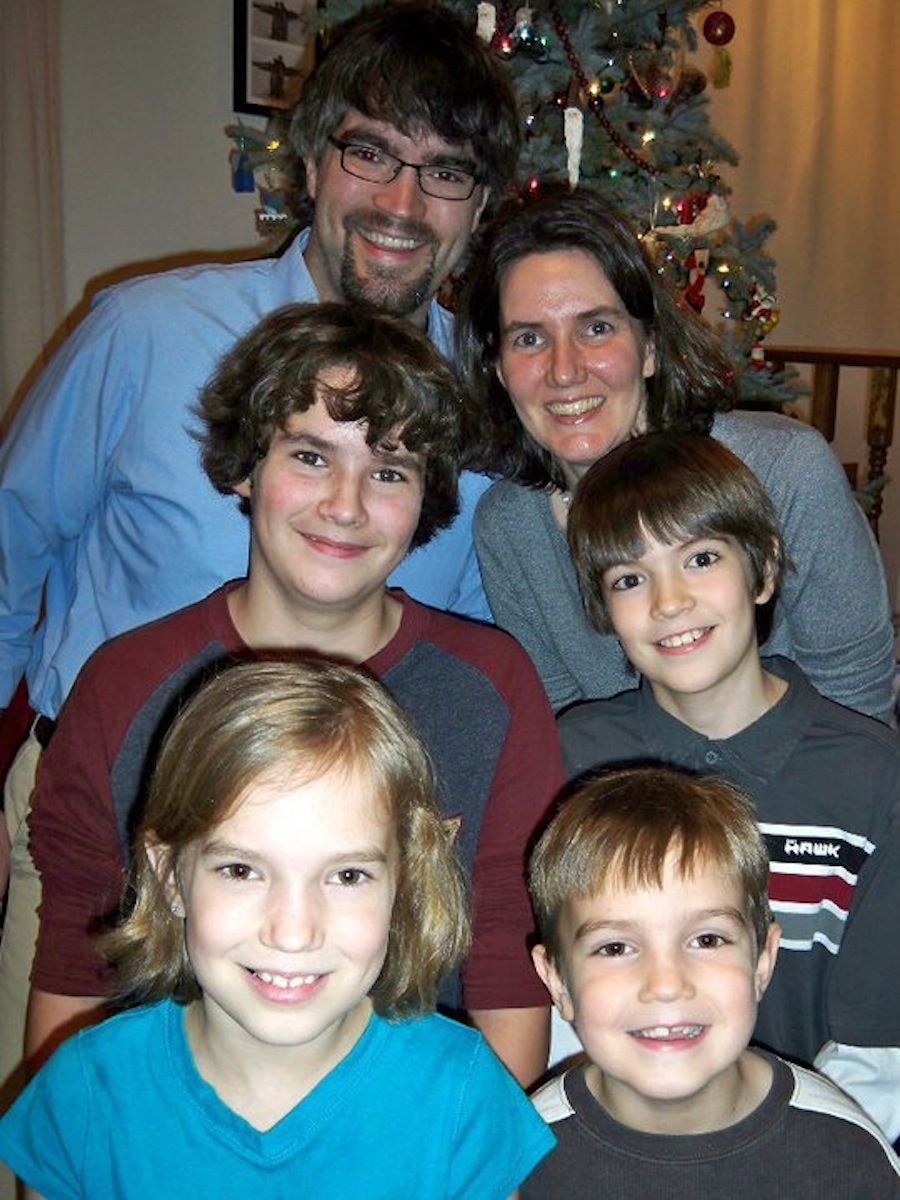
The Second Third, Week 14: Not Giving a Damn

Blogger’s Note: Yes, yes…most of you know, but occasionally I get a new visitor. So in case you’re that guy or gal, the whole idea behind these “Second Third” posts can be found here.

My father’s machinist-mentor Chuck used to have a slogan hanging on the wall of his shop, and to this day, Dad continues to quote it: Old age and treachery will overcome youth and skill. As you might guess, not being particularly skillful, I spent most of my youth thoroughly overcome by the treacherous old fellow.

Dad genuinely has different abilities and interests than me — that’s part of it — not to mention vastly more experience. But as I’ve become a father myself and watched my own children gaze in wide wonder at my courage, skill, knowledge, and strength, I find things that used to be a struggle come easier to me. In this respect, life in my Second Third is vastly more enjoyable that the previous 35 years — and I believe I know why.

See, when I was a kid, I was worried about million different things: screwing up, failing, disappointing myself, letting others down, looking stupid, getting hurt, hurting someone else, you name it. As the young samurai says in The Last Samurai, “Too many mind.” I was so wound up about about everything, so lacking in self-confidence, that I couldn’t accomplish anything without a messing up. My worries were often self-fulfilling prophecies.

My friend Father Tyler made a similar observation when he turned 30 last month: “[T]he pride which so hobbled my willingness to try then has been tempered. At thirty (especially as a professed celibate) it is much easier to not give a damn about how foolish one appears.”

I am not a professed celibate, but I can relate. I’m still not graceful, not mechanically inclined, etc. — but I can do many things I never used to simply because I’m no longer so tightly wound about them. Because I’m more secure in myself than I used to be, I can work within my limitations, ask questions, and be more patient — and it pays off more often than not.* In my Second Third, many** of the things that used to stress me and hold me back simply don’t concern me anymore. And as Fr. Tyler so aptly concluded, “To not give a damn, I am coming to understand, is one of the richest graces of full-fledged adulthood.”
________

*Of course, being 6’3″ and about 240 helps, too, at least in terms of striking fear in children, and intimidation, like treachery, goes a long way in overcoming youthful prowess. And if I force it — and I do from time to time — I still fall flat.

**Not quite all…but I’m working on it.

Groundhog Day

Blogger’s Note: My Second Third post for this week is delayed tonight in favor of a movie post that is long overdue. WARNING: This could be chock full of spoilers!

In February 1993, when the movie Groundhog Day was released, February 2 was an obscure observance, and Punxsutawney Phil was an obscure rodent attraction of which I, myself, had never heard. At that time Roger Ebert gave the film credit as a somewhat thoughtful comedy, and gave it a fairly favorable rating (3 out of 4 stars on his current web site). Twelve years later, Ebert wrote a new review of the film, adding it to his growing list of Great Movies. In the 2005 review, he says, “Certainly I underrated it in my original review; I enjoyed it so easily that I was seduced into cheerful moderation. But there are a few films, and this is one of them, that burrow into our memories and become reference points. When you find yourself needing the phrase This is like “Groundhog Day” to explain how you feel, a movie has accomplished something.”

My own experience with the film was similar. The first time I saw it, I liked it well enough: I laughed throughout and remembered the premise and specific scenes particularly well. Now, for me, there aren’t a lot of comedies I’ll go back to watch again and again (unless I’m channel-surfing and happen to catch one)…but for whatever reason, Groundhog Day struck me as worth a repeat viewing. In the years since, I’ve seen it multiple times and have grown to love the movie. For a long time, I couldn’t figure out why.

Ebert’s second review catches a glimpse of the movie’s greatness. He cites an article in a British newspaper claiming that Groundhog Day is one of the most spiritual movies of all time.

A bit much? Think about it: We have a man in Bill Murray who is completely self-absorbed and cares about no one except insofar as they serve his interests. One morning he wakes up to find himself stuck: same alarm, same room, same routine, same job. One day, same as the next.

The premise is that he is literally stuck in time and space: He wakes up in the same place on same minute of the same day of the same month of the same year. But re-read the previous paragraph. Who hasn’t gone through a similar stretch in life?

He goes through stages: shock, anger, denial. Then he comes to the conclusion that he might as well make the most of it. He eats what he wants, acts how he wants, behaves outrageously. He gathers information “one day” and uses it the “next,” to seduce an attractive women, to rob an armored car. The rules don’t apply to him. He sees himself as godlike, free to do whatever he wants.

I’ve heard multiple priests and theology buffs insist that true freedom isn’t doing whatever you want. True freedom has at least some boundaries, which protect us and enable us be secure in ourselves and so to act for the good of others. True freedom is the ability to choose to do right, as best we can.

Groundhog Day hits this nail on the head. Murray’s character is not made happy by his power, his gluttony and greed, or his conquests. He is lonely, bitter, unloved, still stuck in the same rut, and increasingly desperate. Finally he tries to kill himself…only to find himself waking up in the same spot again and again. Suicide is, literally, not the answer. He slowly discovers he wants to be loved.

The movie could have wrapped itself up with a nice moralizing bow right there, but it doesn’t. He begins to try to live each “new” day rightly. He fails, and tries again. He uses what he learns about the people he encounters to help them instead of use them. At one point, he even seems to have set the bar too high, trying to live the perfect day, to do everything right, to help everyone and eliminate any trace of suffering in the little town. In this case he fails simply because that’s not how the world works. Even when he’s doing Good Work, he’s still not God.

He gets closer and closer to love, messes up, loses it, and gets up in the morning to make another run. He tries to make each tomorrow a little better than today.

Re-read the previous paragraph. Don’t know about you, but that sounds familiar to me, too.

The Second Third, Week 11: Number-Crunched

Blogger’s Note: The whole idea behind these “Second Third” posts can be found here.

First, let me say that when I launched this Second Thirds thing, it wasn’t supposed to become the only thing I’m writing here. That’s not the intent, and I will get better about posting more.

On a somewhat related point, ever been so busy you get nauseous if you look more than a few hours ahead? Most of today I couldn’t remember what day of the week it was; I’m still not sure what day of the month it is; and I told people in my noon meetings that we needed to get started so I could get to my 11 o’clock appointment on time.

Which brings me to the point here: I’m terrible with numbers.

I was a good student in school, and math was no exception. Of course, my junior-high math teacher Mr. Thurston pointed out from time to time that my sister did better on timed tests than I did. But that’s no surprise, really: speed has never been a strength of mine, to the point that, when I was firming up my schedule for senior year of high school, I chose Physics over Typing — never mind my writing aspirations.

I’m a Word Guy, but now I fear it’s become a crutch. Jodi balances the checkbook and pays the bills. Jodi manages the calendar and orders the food. What do I do? I write eight-page Christmas letters. I haven’t had an actual math class since high school — I skated by with a couple of lab science courses. I’m a Word Guy.

The thing is, now I’m clueless. It’s not doing math that’s the problem anymore; I can’t remember numbers. Even ballpark numbers. Oh, I’m still the man of the house, and can throw a figure out there like it’s the Gospel, but increasingly my number are not grounded in anything resembling fact.

Case in point: last weekend, a friend asked how many Christmas trees we sold at the KC Christmas Tree Lot. Without hesitation, I said, “We bought 700, and sold all but 10 — we made $5,000 after expenses.”

He’s a math guy. He said, “You sold almost 700 trees, and you only cleared $5,000 profit?” Then he politely added, “Well, with expenses, maybe…”

I thought a moment. I could tell that he could tell the math didn’t work. Where had 700 come from? I racked my brain. No idea. If we had sold 700 trees to make $5,000, we would have made just…not even…not very dang much per tree.

“Uh,” I said, “I’m wrong. We didn’t have 700 trees. I have no idea where that number came from.”

I looked it up later. Closer to 250 trees.

Anyone can forget a number. But I swear, my father-in-law can look at cattle jogging by and estimate the worth of a herd based on the latest price per pound. My dad once solved an engineering problem his mentor was convinced would force him to learn trig, apparently by using arithmetic and common sense. My kids can estimate better than I can, as can Jodi.

I wracked my brain on the way home from work tonight and realized I remember how to do fractions and percents. But it took some doing. I need to exercise my numerical mind. In my Second Third, I should probably take over the checkbook or something. But don’t tell Jodi.

The Second Third, Week 8: Go With My Gut

Blogger’s Note: The whole idea behind these “Second Third” posts can be found here.

I had intended to do a short post this evening about acknowledging and embracing the fact that I am not a rationale/logical decision-maker, but instead am an emotional/gut-level guy. Had I gone with my original idea, this post would be just about over:

“I tend to make emotional decisions, but most of the time they turn out better than when I try to think through things methodically. This is true for everything from my days as a high-school athlete to test-taking, from interacting with family and choosing friends to hiring people (or choosing a job myself). In my Second Third, I need to acknowledge that as a strength and “go with my gut” more.

The end. (Not much of a post.)

However, near the end of the work day today, I experienced a prime example of why “going with the gut” can be problematic even if it tends to work…and why I tend to be apologetic about it. It involved a collaborator and dear friend of mine, who may well read this post, but to whom I will only refer as “my collaborator” or “she.” If she chooses to reveal herself, that is her choice!

Last week I worked on a draft of a document that will be public in the next couple weeks, but that requires sign-off from a number of people. It is generally easier to get that sign-off if the version you share with the various “powers-that-be” is as well-thought-out and polished as you can get it. Unfortunately, I am also an instinctive writer, so I can always use help ensuring a piece is, in fact, as well-thought-out as I feel it is. That’s where my collaborator quite often comes in.

Last week she suggested some very concrete changes to the opening of the document. I read her changes, then stewed on them a bit. I could see what she was doing, and I thought I understood why, but they didn’t feel right to me.

Late this afternoon I began revising the document based on feedback from my collaborator and another colleague. I was working from an old draft because I hadn’t figured out what to do with the opening yet, but I wasn’t planning to use my collaborator’s changes verbatim.

Just then, in she walked.

She could see what I was working on, and she could see it was the old version. She asked me if I was working from an old version. I said yes, and mumbled something about trying to incorporate other feedback. (Technically true.) We went back and forth a moment, and she left.

The truth is, in that moment I couldn’t tell her why I wasn’t using her changes. Not specifically. So I punted: a low, wobbly, short kick to boot. Embarrassing.

I worked on it. I reworked the beginning, trying to weave in the optimism and opportunity she had added, but in a way I thought suited the piece better. I could’ve sent it to the next level of review at that point, but it still wasn’t ready, and I knew it — I just didn’t know why.

I was running out of daylight and up against a deadline. This collaborator of mine is one-of-kind, a person whose perspective (both on work and life in general) has been invaluable over the past few years. So I took the new draft, with my revised beginning, to her.

As soon as she saw it, I could tell she didn’t like my opening. She started to ask me about it, and I started to cobble together an explanation of what I was trying to do. She asked what was wrong with her suggested changes, and I tried to cobble together an explanation of why I wasn’t sold her approach. Both bits of cobbling were poorly done; she explained what she didn’t like about my latest version, and ultimately I acknowledged that she was right: she had explained logically what I couldn’t put my finger on — the reason I hadn’t simply sent my version of the document up the chain of command already.

“But I’m still not sold on your wording,” I said.

We talked a bit more, not completely comfortably…and as is typical between the two of us, she said something that sparked an idea, a solution to the opening that bubbled up in both of us at almost the same moment. She voiced the idea and even jotted some notes, then I ran from the room to try to put it to words.

My collaborator read the rest of the document, then came to my office with only a few minor changes to the rest of it. I asked her to read the new opening, which I had just finished. She did.

“Yes!” she said.

“We got it!” I said.

We laughed a moment about our back-and-forth earlier.

“We don’t exactly meet in the middle,” I said. “It’s more like this…” and I spread my hands wide, then brought them up, up, and together, like an A-frame or a high peak.

She laughed. “We take it to a higher place…I like that!”

“And it’s uphill for both of us,” I added.

“And it’s harder if we’re carrying baggage,” she said.

She’s right, of course. She generally is. But the thing is, that’s how my mind works. I know if something feels right or wrong, and I like something or I don’t, well before I can explain why. It’s a weakness in some ways, because I can’t defend or explain myself very well in a collaborative working environment. It’s why I hate meetings in which people attempt to write by committee, and why I almost always volunteer to be the one to “consolidate the feedback” and revise a document.

In my Second Half, I need to figure out how to explain this as a strength. But how do you think my collaborator will respond if I don’t accept her changes and instead say, “They don’t seem right to me — I don’t why — I just know we can do better…”?