All That Wasted Time…

Several weeks ago I resumed praying the St. Joseph the Worker prayer on a daily basis for the first time in years. The Church teaches that the Holy Spirit calls us to prayer, and this was definitely a Holy Spirit inspiration. For the past month, time and again, I’ve been convicted by a few brief lines near the end of this prayer:

…having always before me the hour of death and the accounting I must then render of time ill spent, of talents unemployed, of good undone, and of my empty pride in success, which is so fatal to the work of God.

Prayer to St. Joseph the Worker

I don’t know about you, but I waste a lot of time. Oh, I get done whatever needs to get done, but that’s a low bar. The real question is, how do I spend the bulk of the time given to me?

I’m working on my old ’66 Ford pickup this summer. Three years ago it was a daily driver, until it conked out along the roadside between Elk River and home. Since then, it has sat in our driveway, in various stages of disassembly, while I tried to track down the problem and fix it. I’ve had the diagnosis and the parts for two years or so, and finally got it running again last month.

What took so long? First of all, there was the anticipation that the job was harder and the problem likely bigger than I understood. I was so worried I wouldn’t be able to finish the job that I failed to start it!

But more than that, I chose not to do it, because I had other projects, other priorities, other things I’d rather do. For example, in the past three years:

Continue reading
Three Confessions Show My Role In His Mercy

“Wherever there is repentance, there is faith. Where there is no repentance, Jesus is rejected and His Church persecuted.”

“One Bread, One Body” reflection on John 10:31-42

Over the past few weeks, a handful of lifechanging Confessions have been on my mind. Each resulted in a deepening of faith, but only after I humbled myself and turned once again to God and His Church:

A SECOND FIRST CONFESSION: Not long after Jodi and I started our family, I began to think about my dormant Catholicism. Aside from a brief period in grade school, I had grown up outside the Church and had a lot of questions, misunderstandings, and disagreements regarding Church teachings. Our priest in Michigan, Father Bill Zink, spent an hour or more allowing me to unload my spiritual baggage in his living room, then told me I should ask my questions from within the Church, after receiving the sacraments of Reconciliation and Holy Communion again—in fact, he offered to hear my confession then and there. At first I refused; I said I didn’t remember how, but he offered to help me through it. I had to acknowledge the need for mercy and accept the invitation; to let go of my pride, humble myself, and return to God. That was the beginning of my reversion.

Continue reading

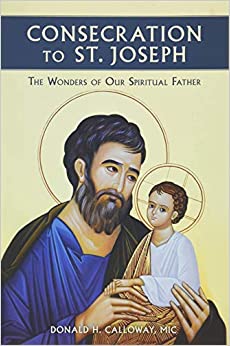
Book Break: St. Joseph, Unsung Hero

Growing up, many of my heroes were “the strong, silent type”—men of few words and decisive, often violent, action, who always knew the right thing to do and had the ability to carry it out. Small, bookish, and emotional, I admired men like that, even though I was not that type myself.

Since I didn’t grow up in the Church, I knew only a few Bible stories. The heroes of those stories seemed larger than life—even the shepherd boy, David, who slew Goliath, has already been chosen by God, anointed by Samuel, and filled with the Spirit of the Lord before he ever took the field against the Philistine.

I knew the story of the birth of Jesus, but I didn’t think of Joseph as a hero.

Continue reading

You’re at the Right Address

Note: This column is based loosely on a talk my second son Gabe and I gave to parents and teens at a nearby parish on Wednesday evening. You can watch the video here.

Often, I have wondered why God entrusted my five children to me. At times, they seem so grounded and confident that my fatherly advice seems more hindrance than help; other times they are such a mystery to me that I wonder how we could possibly be related. I am exasperated when my brokenness shows forth in their behavior, and overwhelmed when some small seed I buried and forgot about suddenly blooms in them.

This is how it is with the kingdom of God; it is as if a man were to scatter seed on the land and would sleep and rise night and day and the seed would sprout and grow, he knows not how.

Mark 4:26-27
Continue reading

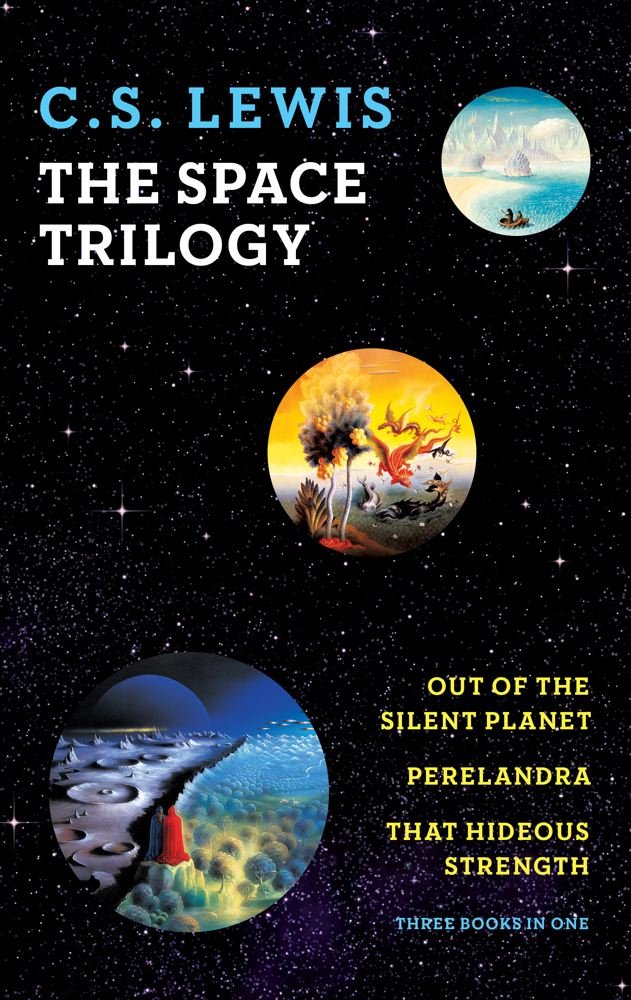
Extended Book Break: The Space Trilogy by C.S. Lewis

I was blessed, on my trip to Michigan and back in the past few weeks, to listen to The Space Trilogy by C.S. Lewis in its entirety. The version available on Audible, narrated by Geoffrey Howard, is approximately 24 hours of continuous listening, and worth every minute. The three books of The Space Trilogy were certainly inspired by classic science fiction of the last century, but combine these influences with fantasy, mythology, horror and Christian theology.

  • The first book, Out of the Silent Planet, is the most sci-fi of the three, delving into interplanetary space flight and exploration, extraterrestrial life-forms and more. A British linguist named Ransom is shanghaied onto a spaceship bound for a nearby planet known by its native inhabitants as Malacandra. He escapes his captors to discover multiple rational animals with very different appearances, skills and abilities, and cultures, who nevertheless live together in good-humored and mutually beneficial peace. Slowly Ransom abandons his earthly notions of power, control, and desire and strives to help the natives against the other Earthlings who seek to exploit them.
  • The second book, Perelandra, is a science-fantasy tale also involving interplanetary travel and extraterrestrial life to frame a retelling of the temptation of Eve in the Garden of Eden. Ransom agrees to travel to the planet Perelandra on an urgent mission, but with no idea what that mission is. He encounters a lone humanoid woman who lives in harmony with the world and creatures around her and is searching for her man. An old adversary arrives from Earth to tempt the woman into disobeying the higher powers she knows on Perelandra, and Ransom must again fight against his fellow man as well as demonic activity to save a pristine world from importing Earth’s sin.
  • The final book, That Hideous Strength, is as long as the first two books combined and takes place entirely on Earth, specifically, in England. It continues Ransom’s tale in a story combining dystopian fiction, Arthurian legend and horror to critique materialism, modernism, politics, education and contemporary ideas of gender and marriage. It follows a young sociologist striving to get ahead in his career by joining a new and increasingly powerful national scientific insitute, while his wife, who is struggling with bad dreams that appear to predict the future, falls in with a small band of local resistance led by an eccentric old linguist who is rumored to be contact with powerful extraterrestrials who are pure spirit and are preparing for a final battle over the fate of the Earth.
Continue reading