In 2016, I was blessed to travel with my son Gabe and STMA Catholic Youth Ministry to World Youth Day in Kraków, Poland. Southern Poland is a wonderful place for a Catholic pilgrimage; so many ancient and modern saints lived and died in so small a region that every day it seemed we visited another sacred site in another blessed city. The big three, of course, were 20th century saints: St. John Paul II, St. Faustina Kowalska, and St. Maximilian Kolbe.
In the case of St. Maximilian Kolbe, we were blessed to visit his religious community at Niepokalanów as well as the concentration camp where he gave his life at Oswiecim (Auschwitz). I say blessed truly, but not in the typical sense of the word. On a sunny summer day, Auschwitz is still and green and peaceful as an cemetery, but still more somber and hushed; the fences, ruins, and the dreadful sign above the gate, “Arbeit Macht Frei” (Work Will Free You), bear silent witness to the cruelty of which humanity is capable.
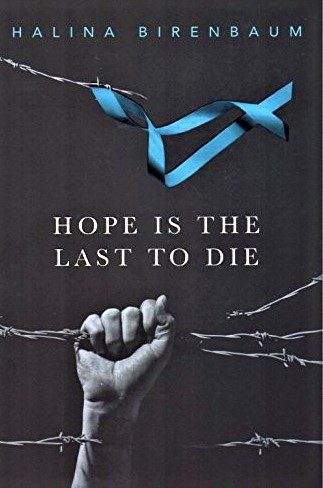
As we left the camp, we passed a small booth selling items commemorating the place—most prominently, a book entitled Hope Is the Last to Die by Halina Birenbaum. Born Halina Grynsztajn to a Jewish family in Warsaw, she survived the horrors of the Warsaw Ghetto during Nazi occupation, followed by four prison camps in succession: Majdanek and Auschwitz in Poland, and Ravensbrück, and Neustadt-Glewe in Germany.
I bought the book, as the most appropriate way to recall the place and what happened there. I finally found the courage to read it this Lent.
Continue reading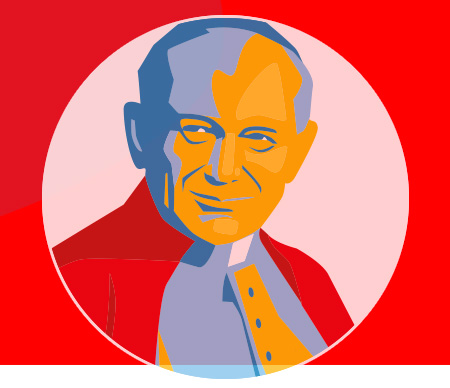 Born Karol Wojtyła in Wadowice, Poland, in 1920. Suffered the loss of his family, freedom, and country by the time he was 21 years old; risked his life under the Nazi regime to promote Polish cultural resistance and study for the priesthood. Recognized as a gifted theologian, pastor, and bishop; elected pope in 1978 and brought the Good News to 129 countries. Instrumental in the fall of dictatorships and Communism; wounded critically in an assassination attempt in 1981; credited Our Lady for preserving his life and met with and forgave the assassin. Served as pope until his death in 2005, despite declining health due to Parkinson’s and old age. One of the most recognized figures of the 20th century.
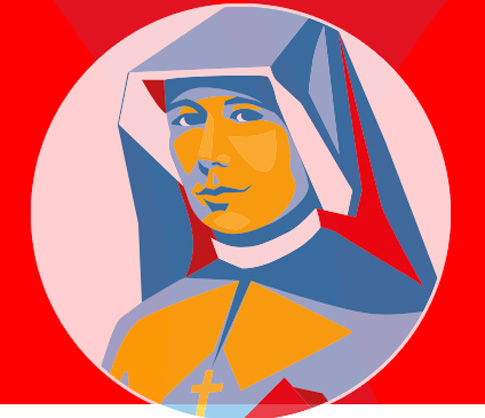 Born Helena Kowalska in Głogowiec, Poland, in 1905, to a poor, religious peasant family. Felt called to religious life at an early age, but went to work as a housekeeper to help support herself and her family. Accepted to the Sisters of Our Lady of Mercy (OLM) in Warsaw in 1924, and in 1926, received her habit and the name Sister Maria Faustina of the Blessed Sacrament. Began having visions of Jesus as “the King of Divine Mercy” in February 1931, instructing her in His love and mercy, asking her to to paint His likeness with the inscription “Jesus, I Trust in You,” and to establish a feast of mercy in the Church.
  Archangel Stomp