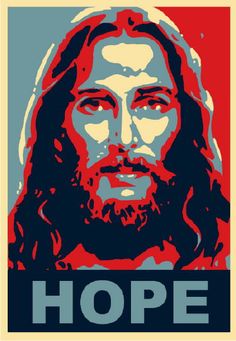
Reflection on Freedom

From my Facebook page on Nov. 3:

Reflecting on, of all things, a line from the old song Remember the Alamo: “Young Davey Crockett was singing and laughing/With gallantry fierce in his eyes/For God and for freedom, a man more than willing to die.” 

Freedom like that — courage and even joy in the face of persecution, destruction, and death — does not come from politicians, legislation, constitutions, or economies. It comes directly from God. It is not freedom from, but freedom for, and it can only be taken away by the Devil. Only he can bind us, and only if we let him. 

Make no mistake, we are free men and women. This next week, and next four years, can only change that if we allow it. 

Thank you, Lord, for this beautiful morning.

It’s another beautiful day today. We are blessed by God with life and liberty — may we be as free as that song lyric: free to laugh in the face of power, danger, and death, knowing these things cannot touch our inner mystery: that we are made in His image, out of love and for love.

I’m not suggesting armed conflict is coming, but reminding us that we are always — always! — free to do what we think is best. We may suffer for it, but suffering in this life is expected and temporary. And as the Catholic evangelist Mark Hart says, even when our legs shake, the rock upon which we stand will not be shaken.

Take courage, whatever happens. You are free, unless you yield it up yourself.

Your Eternity Begins Now


For the past few years, our family has joined numerous others from our parish and surrounding churches for Life Chain, an hour of silent public prayer for an end to the evil of abortion in our country. We spread out along Highway 19 between the parish school and Middle School West and stand facing the road, holding signs and praying.

On the back of the signs are suggested hymns, prayers, and petitions to guide our personal reflection during that hour. Every year, I am taken aback by the petition that asks me to pray for God’s mercy for all I have failed to do to protect life and work for an end to abortion—because every year, I am convinced I could have done more.

Now we are two weeks out from electing a new president. Most of us have likely made up our minds how we will vote—guided, I hope, by reason and a well-formed conscience.  God willing, no Catholic will cast a vote in support of abortion or its proponents. Beyond that, faithful Catholics can and do disagree on how best to combat the evils in our society by our actions at the ballot box. With that in mind, I would like to share three thoughts about the aftermath of Election Day.

First, remember the words of St. Therese of Lisieux: “The world is thy ship and not thy home.” We are a pilgrim people, and although our country is great and worth fighting for, the kingdom to which we truly belong is not here. We are called to evangelize and make disciples; to deny ourselves, take up our cross, and follow Jesus. The outcome of this election will not change our mission.

Second, we are all called by God—and not one of us is worth less in His eyes because of the votes we’ve cast, the mistakes we’ve made, or the sins we’ve committed. Whatever happens on November 8th, we will continue to suffer for our faith, as Christ foretold, and our nation and world will continue to need our light, our service, our faithful example. Cast your vote on Tuesday and move on, because we must pull together as one body, one spirit, in Christ.

Finally, we have no time to waste. Too often our efforts on behalf of the unborn, marriage, freedom of conscience, or religious liberty hinge on the headlines and reach a fever pitch every four years with the election of a new president. We support particular candidates or policies; we act as though everything is riding on the results of the next election, then shake our heads when nothing changes and go back to minding our own business.

What about the roughly 1,460 days between presidential elections?

As Catholics, our opposition to abortion and the other great evils of our time is not primarily about saving lives, but about saving souls—including our own. Obedience to Christ and His Church is a daily choice. Disobedience is also a choice. So is complacency and non-action.

Every moment, God calls; every moment we respond. Our eternity begins now.
Lord, have mercy on me for all have failed to do here in my own community to draw people to you and build your kingdom. Amen.

Our Hope Demands Change

I don’t know about you, but I avoid the news like the plague. No matter the source, the media today is a place of constant conflict, and it’s easy to get caught in the ceaseless spin cycle and feel as though everything is falling apart around us. It’s easy to lose the perspective that we are in this world, but not of it. And once we lose that perspective, it’s easy to lose hope.

But as Catholics, our hope is in God and transcends this world. Specifically, our hope is in a personal God, who loves each of us enough to become like the least of us: wriggling and helpless in a Bethlehem stable; hungry and homeless on the road to Egypt; hard-working and cash-strapped in the wood shop in Nazareth; hounded and criticized by His own people; persecuted and abandoned by those who should have known and loved Him best. Jesus’s perfect and total Yes to the Father finally silenced the steady drumbeat of Nos that had echoed through the ages since the fall of Adam and Eve. He lived, He died, He rose again—we know this through the words of the prophets, the witness of the apostles, and the blood of martyrs. Never before have so many sacrificed everything—their very lives!—for so outlandish a claim as a God-Man who let himself be humiliated and slaughtered only to rise again from the dead. Who would die for such a thing? If you had any doubt in your mind, would you give your life?

Thousands of people have, from Jesus’s day to the present. We believe far more these days on less credible evidence, and yet we’re skeptical of this?

When the apostle Thomas encountered the resurrected Jesus in the flesh, his famous skepticism was transformed—he declared, “My Lord and my God!” Jesus replied, “Blessed are they who have not seen and have believed.”

That’s us: believers in an unseen Christ. Blessed are we who persist in the faith.

Of course, as Catholics we still encounter the living God, just not by sight. We encounter Christ in His Body, the Church, and in the sacraments—particularly the Holy Eucharist. We know that the Eucharist is the Body and Blood of Jesus by His own words: “This is my Body…This is the cup of my Blood.” Jesus is God, and just as in the Creation story, what God says, is.

This is Good News—the Best News, in fact, and we are obliged to share it. It’s not enough to just accept Christ’s mercy and grace, or receive His Body and Blood. We are called to be disciples: not dependants, and not simply students, but followers, who learn, live, and spread the Gospel. No one encounters God without changing, and indeed Jesus says whoever wishes to be His disciple must pick up His cross and follow. If we are unwilling to change our behaviors and priorities; to work, suffer, and die for the sake of the Kingdom, we are not yet full-fledged disciples.

Why should we care? Because it takes disciples to make disciples. We can’t lead others to Christ if we aren’t following in his footsteps ourselves. Fr. Mike Schmitz reminds us that Jesus gave us one job to do while He is gone: go and make disciples of all nations. When He comes back, it won’t matter that the car is waxed; the laundry, folded; or the recycling, sorted. He’s going to look around to see if we did that one thing. Our hope demands change.

Blogger’s Note: This article appear in the Sunday, July 19, parish bulletin.

Book Break: Atlas Yawned

Several months back, when I took a break from blogging, I spent many long weeks listening to an audiobook reading of Ayn Rand’s Atlas Shrugged. From the opening chapter, I wanted to like it — it unfolds like a story that needs telling — but my guard was up: from what little I knew of the book and of Rand, I was certain to find parts of the book’s worldview objectionable.

In hindsight, I still believe there is a great story to be told in Atlas, buried among the monotonous monologues, ham-fisted philosophizing, immense egos, and sexual dysfunction and self-loathing. It is prescient in some ways, and in general, I agree with the dangers of rewarding inability and incompetence, and saw much I recognized in the progressive agenda and the corporate culture of political power, spin, and blame. On the other hand, the insistence upon ability as the sole criterion of the worth of a person, the overly simplistic and roundly negative presentation of religion, and the conflation of lust with love are fundamentally problematic for orthodox Catholics (and should be, I would argue, for Christians in general).
But as a reader and aspiring writer, the problems run deeper (or rather, shallower) than these. The books goes on and on, long after the point is made and the mystery solved. Dagny Taggart and Hank Rearden are among the brightest minds of their era, and neither can put these pieces together? The mysterious John Galt; Francisco’s odd, destructive behavior; the disappearance of the captains of industry — and no one gets it except the reader. There is an odd parallel here to The Blair Witch Project, which opened with the knowledge that the protagonists were never seen again, so that the viewer was left with little in which to be interested, except to see how they bought it. In this case, however, we know they haven’t bought it — and we’re waiting to see how long it takes for the heroes to figure it out.

Answer: A long dang time.

Really, the only thing I was a bit uncertain about right up to the reveal was who the nameless rail-worker in the Taggart terminal was, and who he was spying for. Strangely, his primary source, the ever-loyal and reasonably intelligent Eddie Willers, shared no such wonder.
The book could be half as long and thrice as engaging, if only the characters talked less and connected the dots more. I would recommend it only to help people understand the frequent political and cultural references we still hear today. I’m interested in seeing the film version, as even spread across three movies, I have trouble believing the filmmakers could have been so long-winded onscreen. This may be the rare instance in which the movie surpasses the book.

Book Break: Captivity and Freedom

I recently completed two biographies of great Americans, set roughly two hundred years apart. Both books tell stories of oppression, resistance, and the struggle for freedom. Both are great books, in very different ways. I’ll offer a few quick thoughts on each, but in short: read them!

American Cicero: The Life of Charles Carroll
by Bradley J. Birzer

American Cicero tells the story of the bastard son of a wealthy colonist who is sent abroad for a Jesuit education, is formally named his father’s heir, and returns home to Maryland to become one of the early advocates for independence from Britain and one of the foremost shapers of the fledgling American republic. If you aren’t a history buff, you may not know (and if you aren’t a Roman Catholic, you may be surprised to learn) that in his day, Charles Carroll was well educated and capable (not to mention from the wealthiest family in the colonies) and could neither vote nor serve in public office — because of his “papist”tendencies and “Romish” influences. He is also portrayed as a devout Englishman who nevertheless saw independence as a necessary fresh start for the English constitution and English law, which were being usurped and corrupted by the government elected to uphold them.

Carroll initially took the public stage by writing under a pen name in the newspapers of his home colony of Maryland (the most anti-Catholic of the lot in his day), earned the trust and admiration of Washington, Franklin, and others among the founders, and outlived them all — and relatively few have heard his name. Here is a man who, with all his money, couldn’t buy a vote (and would never have tried); who advocated against democracy and in favor of a republic based on his reading of history and the times; and who drew on the ancient Greeks and Romans and his own faith tradition, as well as contemporary thinkers, to propose limits on the power of both the government and the “mob” in order to preserve those rights. In my review of Triumph: The Power and Glory of the Catholic Church, I asked if the author’s apparent preference for the monarchies of old was personal, or somehow tied to the Church — I think you can begin to see a sensible philosophical connection here, in Carroll’s dismay at the more populist, democratic leanings of some of his contemporaries. (This is not your high school’s American history!)

The author is the Russell Amos Kirk Chair in American Studies, Professor of History and Director of the Hillsdale College Program in American Studies,  and is also the author of  J. R. R. Tolkien’s Sanctifying Myth: Understanding Middle-Earth. Birzer tells the story as much as possible though Carroll’s own public writings and private letters, and this is an academic history, so it is not a breezy read.  Nevertheless, I thoroughly enjoyed getting to know this relatively unsung Founding Father. I enjoyed Birzer’s ability to connect Carroll’s thinking to his education and core values.  This book is well worth the effort!

For additional perspective on the book and the author, check out this interview with Ignatius Insight.

Unbroken: A World War II Story of Survival, Resilience, and Redemption
by Laura Hillenbrand

This is a true-life tale of Gumpian proportions: a young misfit from a working-class Italian family (complete with a doting mother and an impeccable older brother) graduates from thieving prankster to Olympic track star and meets Hitler in the 1936 Olympics. A gifted athlete (on track to be the first man to break the four-minute mile) has his athletic career cut short by World War II and becomes a bombardier on a B-24 in the Pacific Theater, surviving a temperamental plane, numerous missions, and long odds while enjoying the celebrity of being both an athlete and an airman. A World War II veteran endures weeks adrift in a life raft with two wounded comrades, battling starvation and dehydration, sharks, madness, and occasional strafing, only to come ashore in Japanese territory and become a prisoner of war. A POW is singled out by the Japanese for his celebrity and made to endure physical, mental, and emotional tortures for more than two years of captivity. A survivor of Japanese prison camps returns home and marries a vibrant, blue-blooded beauty despite warning signs that the war has taken a psychological toll.

Any one of these story lines could make a novel or a movie in itself — the fact that all of them really happened to one man is almost too much to be believed. Louis “Louie” Zamperini is still alive, 96 years old and active decades after he should have been dead so many times. He comes from an earlier time when track stars and airmen were celebrities, and, like Norman Borlaug, is an unsung Great American who should help us redefine “hero.”

Louis Zamperini

This is not a book for the young or faint of heart — the treatment of POWs by the Japanese is brutal and horrifying, and the book includes scenes of inhumanity you may not soon forget. In this respect, it called to mind two other books I wrote about not long ago — James Clavell’s Shogun and Shusako Endo’s Silence. I recall past conversations with previous generations about how veterans of the World Wars came home and went about their lives, but veterans of later wars began to report emotional scars and psychological impacts. The implication, in some of these conversations, was that men have softened — but Unbroken makes a distinction, based on historical data, between the mental health of POWs in the European theater and POWs in the Pacific theater. This led me to ponder whether, in wars with Eastern cultures, Westerners are encounter philosophies with such different rules (or no rules at all) that we are, in fact, ill-equipped to deal with them.

The author, Laura Hillenbrand, does great work writing a biography you can’t put down, with a level of historic detail that does not diminish the readability of the book, but lets you know that she did her homework. Internet evidence suggests Louie Zamperini’s story may soon become a movie. Don’t wait for the movie — you’ll miss the chance for a fresh read of an exceptional book.