LIFT Links: Lenten Edition

Ash Wednesday is this week, marking the beginning of Lent, the penitential season that prepares us for the joy of Christ’s Resurrection at Easter. Too often we treat Lent like a do-over for our New Year’s resolutions or a chance to jumpstart our diet before swimsuit season. But Lent isn’t meant to be about loss–we fast to gain, to grow spiritually.

To that end, this week let’s look at few links on what Lent’s really about, and how to live it as a family.

One last thing: every year, people ask about “taking Sundays off” from your Lenten sacrifices. Some people insist that since Sundays are a feast day and not counted in the “40 days of Lent,” your sacrifices don’t apply to Sundays. Others say that a person out to be able to make it through the entire Lenten season, Sundays and all, without “stumbling” or “giving in.”

It is true that Sundays aren’t meant for fasting and aren’t counted among the 40 days of Lent. It may also be true that if you absolutely cannot abstain from whatever-it-is for the full Lenten season, you could be overly attached to it. My advice to my own family: decide now which you are going to observe and stick to it. If you think it would be a good disciple for you to go beerless or chocolate-free on Sundays, too, I don’t have a problem with that. Just remember that Sunday is a feast day and find ways to treat it as such. But whatever you do, don’t decide that a different day is going to be your “day off”– it’s not a day off; it’s the Lord’s Day, which makes it special — and don’t decide two weeks into Lent that maybe you could have a little just…this…once. That’s a slippery slope that quickly slides from Sundays into other days, too!

Are We Scapegoating the Most Vulnerable Among Us?

This past month, the adults in our parish faith formation program discussed Lesson 4 from Fr. Barron’s Catholicism DVD series, “Our Tainted Nature’s Solitary Boast: Mary, the Mother of God.” One of the consistent bits of feedback we heard when we started this video series last year is that sometimes Fr. Barron gets a little academic for the average lay audience — and as a result, the material and discussion questions sometimes miss the mark when it comes to generating discussion. In the case of the lesson on Mary, even the title warranted translation.

I watched most of the Mary video at least six times over the course of the past few weeks, and one part, in particular, stuck out to me as academic and not very applicable to the lives of most Catholics — until I thought about it in a new light.

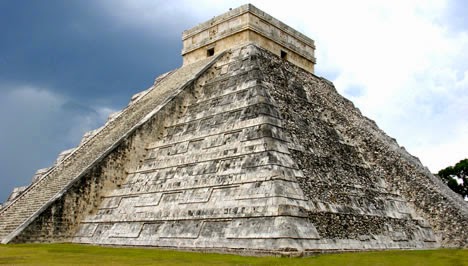
When Fr. Barron discusses Our Lady of Guadalupe and the impact her appearance to St. Juan Diego made on Mexico, he references a two key facts:

  • The fact is that within 10 years, almost the entire nation converted to Christianity — nine million souls, or roughly 3,000 people a day, every day, for decade turned to Christ.
  • With that conversion, the culture changed fundamentally, and the practice of human sacrifice to appease the gods was eliminated completely.
Then Fr. Barron goes on a brief tangent, discussing philosopher Rene Girard’s cultural theory of the scapegoat mechanism. Briefly, Girard suggests that a dynamic underlies our cultural, social, and personal relationships that serves to restore order during periods of violence or social upheaval by assigning responsibility to a particular victim or victims. The victim is punished, cast out, or killed — and in doing this the society will find itself renewed and unified in common understanding and common purpose.


We see this idea in literature, like the gut-wrenching short story “The Lottery;” in our modern history of wars and genocides; and of course, laid bare in Christ’s crucifixion and in Caiaphas, “who counseled the Jews that it was better that one man should die rather than the people (John 18:14).” Even so, I struggled to relate this theory to our lives today, until I asked myself specifically, “Who do we sacrifice today, and what underlying tension are we trying to resolve?”

It seems to me that we today sacrifice the most vulnerable among us: the unborn, the disabled, the ill, and the dying. If that’s true, to what end do we sacrifice them? 

First, let me say that most people never decide to abort a child or to assist someone in ending their lives — nor would I suggest that those who do aren’t at the end of their ropes and genuinely desperate (though, from a Catholic standpoint, they are sadly misguided). But many of us — even many who consider themselves to be good Catholics — are willing to permit the sacrifice of the vulnerable, at least in some cases. 

Why? I would argue it’s so that we won’t have to suffer with with them.

Let’s face it: most Americans (myself included) have no concept of the way much of the rest of the world lives. Most of us have no stomach for suffering, poverty, or pain. So our society allows human sacrifice and calls it mercy. We do it for the “health of the mother,” or of society, or of the planet. We tell ourselves that we have limited resources, and it’s irresponsible to lavish them on one person, one family, or one nation (never mind that many larger families get by on less, not more, than their small-family peers). Like Caiaphas, we advocate a definite “smaller” evil to avoid an indefinite “bigger” evil. We end their suffering and ours, not by giving of ourselves or sacrificing our present to make a better shared future, but by sacrificing their future — their very lives — so that we may enjoy our present.

This really hit home for me during the recent Life Chain event. Scores of people stood along Hwy 19 between St. Michael and Albertville, holding signs and praying silently for an end to abortion — and for the courage and will to do what is necessary to bring about that peaceful end. It is an uncomfortable experience to stand, exposed and silent, for an hour, confronting one’s neighbors with the evil we permit to occur so that we may live comfortably — but even moreso, perhaps, for the passersby. One young man slowed his car in the lane nearest me, looked hard into my eyes, and pumped his thick middle finger at me — watching me over his shoulder as he passed, for emphasis. I prayed him over the hill and out of sight.

Why so much anger? Because the natural fruit of evil is guilt, suffering, and death. It’s easy to allow death in the abstract, but to be confronted with it, not in anger but in charity, hurts.

Blessed Mother, pray for us, that by your example we will say yes to God, whatever the cost, and that we may suffer well ourselves so that the vulnerable may be spared. Amen.

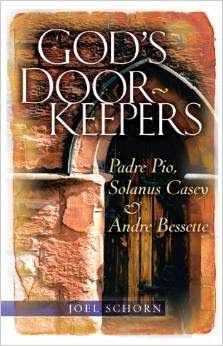
Book Break: God’s Doorkeepers

Ordinarily when I do one of these mini-reviews, I try to summarize the book as I offer my reflections on it. In the case of Joel Schorn’s wonderful little book God’s Doorkeepers, which presents the parallel biographies of three 20th century saints (though only two have been canonized to date), I’ll let the summary on the back of the book explain the work for me:
I look on my whole life as giving, and I want to give and give until there is nothing left to give. – Solanus Casey
Padre Pio and Andre Bessette would have readily agreed with Solanus Casey even though, on the surface, none of the three had much to give. All grew up in humble circumstances, each suffered poor health, and none achieved academic distinction or prominent positions in their religious orders. They were, to all appearances, the sort of people others overlook.
Yet in their lifetimes, untold numbers found physical and interior healing through their ministries, and since their deaths their fame has grown enormously. Their secret was the secret of every successful Christian life: In complete humility, they abandoned themselves to the will of God.
Bessette and Casey literally answered the door at their monasteries, and Pio was something of a spiritual doorkeeper in the confessional. God’s Doorkeepers reveals how these miracle-workers, in spite of their lowly circumstances, inspired and continue to inspire those who seek a healing encounter with God.
By way of commentary, I’ll offer this observation: I am sometimes guilty of reading Scripture or accounts of the incredible accomplishments of the ancient saints and silently wondering, “Where is God today? Why does He not show his power and love today as he’s done in the past?” I admit that I sometimes long for a sign (a parted sea, the lame walking, the dead raised) and when I don’t witness these things…I don’t lose faith, per se, but I wonder…

Continue reading

It’s In the Small Things

“You have made us for yourself, O Lord, and our hearts are restless until they rest in you.”  — St. Augustine of Hippo

It’s been awhile since I’ve blogged.

I’ve been thinking for a couple of weeks now that I’m neglecting this site. I’ve been thinking that I ought to just provide quick updates and anecdotes about the kids. That’s what my readership (largely friends and family) tend to read and comment on anyway. But I also have in my head these much grander posts I’d like to write, but can’t find the time for — and I second-guess myself about the smaller updates and think, “Why spend valuable writing time on the day-to-day, when you have bigger fish to fry?”

As a result of this back-and-forth, I’ve written nothing.

Last night, a dear friend, Fr. Tyler from Prairie Father, visited from South Dakota. As usual, we talked long and late about everything under the sun — most amusing were his interrogation of Trevor on the topic of Greek mythology, which Trevor knows primarily from Percy Jackson and not from the myths themselves, and his discussion with Gabe about the nature of reality and the unintended consequences of Copernicus’s work and the scientific method.

Later, we began to talk more practically about how we, as Catholic adults, can live our faith on a daily basis and act as missionaries wherever we happen to be. I admitted a tendency to downplay the little ways in which I can evangelize in favor of planned grand gestures in the future: a book I’d like to write, or a pilgrimage or retreat I’d like to take with friends or family. Several times during the discussion, Fr. Tyler repeated, “It’s in the details. It’s in the little things.”

“I know you’re right,” I replied at one point, “but that’s not how I’m living on a day-to-day basis.”

I’ve said before that I believe men want to be a part of something great and glorious — but although I had a great marriage and glorious family, I’m constantly, restlessly searching for that great and glorious thing — that other life — I should be leading.

It’s in the small things.

I thought about his words throughout a restless night and morning — then checked my personal email and found a new, anonymous comment on this blog post. It’s the most popular post on my little site, and I joke about it sometimes, because my web stats tell me that post, in particular, is big in Russia.

Yeah, I’m read internationally. Deal with it.

The point is, not only am I looking for the next big thing, but I downplay, and even mock, the little things I do well. Today an anonymous reader (Fr. Tyler, was that you?) reiterated the message of last night: It’s in the small things.

* * * * *

Blogger’s Postscript: Apparently I’ve written this post before. How soon we forget…