Wednesday Witness: ‘You Can’t Save the World’

This column is part of a new, weekly series on what the Lord is doing in my heart, specifically encouraging me to simplify my own life in order practice the virtue of charity and the Corporal and Spiritual Works of Mercy. Come back each Wednesday to read the latest!

I’ve always been a big-hearted and emotional fellow. As a grade-schooler, I tried to intervene when those who were littler than me (not many) were being bullied. Invariably, I took a thumping myself. But I couldn’t help it: I hurt to see others hurt.

Whenever I got wound up about some injustice or suffering, real or imaginary, Dad would say, “You can’t save the world.”

What he taught me, instead, was how to stand up for myself, to treat others with respect, and to look out for my own—my family and close friends, those whom I could count on to help take care of me.

Dad was right: I can’t save the world. I can’t even save myself. Jesus is the sole Savior of the world, and—thanks be to God—it is accomplished (John 19:30).

But I don’t think our eternal salvation is what Dad meant.

Continue reading
In Big and Small Ways, Hope Prevails

In recent months it has become apparent that I am a Worrier. Everyone has concerns, and sometimes those concerns get the better of us—but I actively pursue potential problems no matter how unlikely they may be, then chew and chew and chew on them.

I try to pass it off as a strength—foresight leads to preparation, which benefits my whole family. But the truth is less noble: Mostly, I just don’t want to appear late, ill-equipped, or foolish. Despite my best efforts, I am still trying to measure up. But to whose standard?

Jesus warns us against worry:

“So do not worry and say, ‘What are we to eat?’ or ‘What are we to drink?’ or ‘What are we to wear?’ All these things the pagans seek. Your heavenly Father knows that you need them all. But seek first the kingdom [of God] and his righteousness, and all these things will be given you besides.Do not worry about tomorrow; tomorrow will take care of itself. Sufficient for a day is its own evil.”

Matthew 6:31-34

The saints also warn us:

“Anxiety is the greatest evil that can befall a soul, except sin. God commands you to pray, but He forbids you to worry.”

St. Francis de Sales

“Let nothing perturb you, nothing frighten you. All things pass. God does not change. Patience achieves everything.”

St. Teresa of Avila

“Pray, hope, and do not worry.”

St. Padre Pio

I know this, and yet I persist in losing time and sleep, humor and hair, while fretting about the future and all its possibilities and challenges.

In the past several weeks, God has been working on this aspect of my conversion, especially in two areas of our marriage in which I am not only likely to worry but also to drive my bride nuts: travel and money.

Continue reading

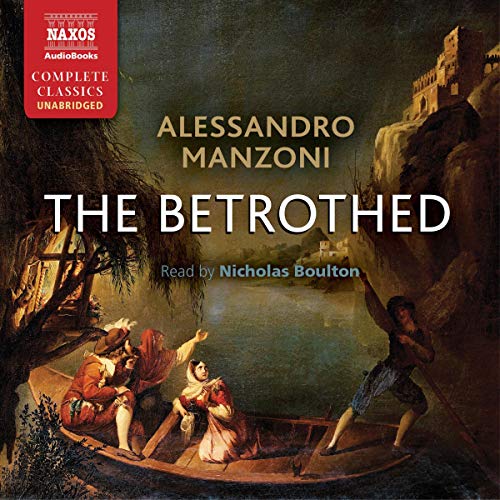
Book Break: The Betrothed by Alessandro Manzoni

I recently finished an English audio version of the 1828 Italian novel The Betrothed by Alessandro Manzoni on Audible. I first learned of this book—apparently the most famous and widely read novel in the Italian language—from a post by Joseph Pearce on the Imaginative Conservative website with the provocative title, “The Betrothed: The Greatest Novel Ever Written?” That caught my eye, because, as a somewhat educated person, I had never heard of it.

I also share all this information to distinguish this book from a much more recent young adult romance novel and two-book series of the same name by Kiera Cass. This is NOT that.

Instead, this is a wonderful historical novel set in the 1600s in Lombardy, Italy (pictured above), telling the story of two young, relatively poor, and essentially good villagers preparing for their much-desired marriage, and a cowardly priest who refuses them the sacrament after a tyrannous local lord threatens his life if he should join them. The fearful parish priest is balanced by two heroic clergy, a Franciscan friar who serves as a father and spiritual director to the pair, and the real-life Cardinal Federigo Borromeo, the heroic and holy archbishop of Milan, whose pastoral efforts bring about novel’s conclusion.

What struck me most about this novel is how timeless great literature actually is. The book is about many things, each as relatable today as in the time it was set and the time it was written, including:

Continue reading

What Discernment Looks Like—for Us

Many of you reading know that Jodi and I have been discerning the possibility of me becoming a deacon. A deacon in the Catholic Church is an ordained member of the clergy, meaning that like priests and bishops, they receive the sacrament of Holy Orders. An ordained deacon is a deacon for life. If unmarried, he remains unmarried; if married, he does not remarry after the death of his wife. They generally serve the Church and assist priests at the altar during Mass, with certain pastoral and sacramental duties, and with teaching and preaching. Generally, they maintain their careers outside the Church, which uniquely positions them as clergy out in the world on a regular basis.

The Church recognizes two types of deacons. Transitional deacons are ordained deacons on their way to becoming ordained priests. Permanent deacons are ordained deacons who do not intend to become priests but have answered God’s call to serve the Church in this deeper way.

 In the Catholic Church, deacon is not a volunteer position or a job, but a vocational call—and for a married couple that has a vocational call as husband and wife, it ought to be a big decision. As the Institute for Diaconate Formation (IDF) here in the Archdiocese of Saint Paul and Minneapolis often puts it, Wives need to be comfortable with their husbands marrying another woman, the Church.

Continue reading

Blessed to Live in ‘God’s Country’

This post appeared in the September 12, 2021, issue of the St. Michael Catholic Church bulletin.

One of the smaller blessings of the pandemic was that it forced me to find topics to write about for our parish newsletter beyond our typically active ministries. As a result, the May 2020 issue of DISCIPLE (online at stmcatholicchurch.org/disciple) provides an overview of our parish history. From the beginning, the faithfulness and self-reliance of this community was evident: German Catholic families literally carved their farms out of the wilderness along the Crow River; in the early days, the paths to get here were so poor that visiting priests came on foot rather than risking a ride on horseback.

Jodi and I moved here from Michigan in 2003. I took a job in Minneapolis and came out a month earlier than the rest of our family, shopping for a house and a parish on the weekends. The home we ultimately purchased was the first one I looked at, a mid-‘80s split-level near Four Seasons Park in Albertville. The church we chose was the first I visited too: the historic Catholic church in downtown St. Michael.

I think what drew me there first was the Old-World charm—I’m a sucker for old buildings, and old churches in particular. I arrived early that first Sunday and watched the narrow wooden pews fill and fill and fill. Old folks and young families, with toddlers tumbling into the aisles. Singing mixed with the squeals of infants. The church was overflowing with life. I checked out a couple other parishes in the area, then called Jodi and said, “We don’t have a house yet, but I think I found a church.”

Continue reading