Dante, or Three Things to Love About the Divine Comedy

Blogger’s Note: Several years ago, I agreed to my friend Jacqui’s challenge to read 15 Classics in 15 Weeks. I continue to press forward, this being number 13 of 15, and at this point 15 Classics in 15 Years seems quite doable…

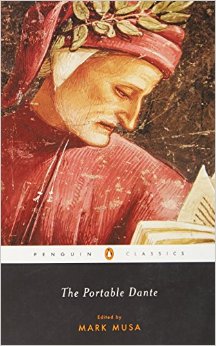
Late last week I finished reading Dante Alighieri’s Divine Comedy in its entirety for the first time. I had read excerpts for different classes over the years, and have read a little about the great work. The book itself was something of a pilgrimage through hell, purgatory, and heaven. This is my least favorite of the thirteen classics I’ve read so far as part of this challenge, and was tough sledding at times. Nevertheless, I do agree that this is a great literary work and worth the effort to complete at least once.

Without further ado, Three Things to Love about Dante’s Divine Comedy:

  • The Ambition. Dante the poet takes us on a journey through the Inferno (Hell), Purgatorio (Purgatory), and Paradisio (Heaven) with Dante the Pilgrim in order that the fictional Dante may change his ways and be saved. Each of these three journeys are told in verse, thirty-three cantos each, with each canto approximately 140 to 150 lines long. Along the way he meets ancient and more recent historical figures, who comment and prophesy on the political and religious turmoil of Dante’s time and place, along with sharing their own experience in the world and in the afterlife. The running commentary on the political machinations and rivalries in Dante’s home was the least interesting aspect of the book for me, but it is nonetheless impressive how much he weaves into this ambitious work.
  • The Creativity. The denizens of Hell and Purgatory, in particular, suffer in hundreds of ways peculiar to their specific sins and attachments. Dante’s Hell is hellish, disgusting and terrifying at times, culminating in an immense figure of Satan, not surrounded by flame, but eternally frozen in ice, suffering for his own sins. The journey through Purgatory is hopeful, but not easy, as imperfect souls labor to let go of those earthly things that weigh them down. Heaven, to me, was actually the least interesting of the three, in part due to the poet’s continued insistence that the beauty of the place was beyond his words and ability — but persevering to the end, to full union with God in the beatific vision, has its rewards. The last few cantos are lovely.
  • The Deep Belief. This, to me, is the greatest aspect of Dante’s masterpiece: the depth of theology, of faith, of true belief. Dante believes in the reality of Hell, and he puts people he loved in this world in that place of torment because of their sins. He peoples his poems with friends, contemporaries, nobles, and popes, explaining how and why each fell or rose, and when Dante the Pilgrim is asked to testify to his own faith, the lines resonate as the poet’s own sincere profession. Who knows how accurate a portrayal of the afterlife these poems are, but Dante gives us much to contemplate as we navigate this world.

I have begun number fourteen of fifteen classics, Tolstoy’s Anna Karenina, with that great opening line: “All happy families are alike; each unhappy family is unhappy in its own way.” It is a long book, but engaging— I hope to be done within the month!

Love Does Not Divide

How long, Lord? Will you utterly forget me? How long will you hide your face from me? How long must I carry sorrow in my soul, grief in my heart day after day?  – Psalm 13:2-3

I ended last night with coverage of the shooting of Philando Castile by a police officer in Falcon Heights, Minnesota. I woke to 12 police officers shot by a sniper in Dallas, Texas.

Can you feel it? The tension in the air? A spark has been struck, I fear, that cannot be contained.

And it’s an election year. Everything is spun, hyper-analyzed, re-calculated, and spun again. Everything is us-versus-them.

Can you hear it? The rattle between my lungs of the small stony lump that passes, these days, for a human heart? I can. It has shrunken and solidified more while I slept.

I can feel my heart hardening, each time my “enemies” advance. I can feel the love draining away and the anger rising. I am tempted to turn away from those I once cared about because we don’t agree. I have no time to spend on the lost sheep with my little flock to attend.

How cavalierly we treat the salvation of souls—including our own.

Here’s what I know for certain about these shootings: Someone took a life. Someone lost a life. Both are terrible and permanent things with serious implications in this world and the next. And the proper response for most of us, who are removed from the situation, is earnest prayer for the souls of those involved and for peace.

The Evil One relishes these divisions in humanity, and fans the flames that rage around us. Instantaneous media coverage and commentary stifles reflection and discernment, prudence and justice. Politispeak and emotionalism obscure the truth, without which there can be no love. We paint our enemies with one brush and hue, and lose sight of them as unique images of God—each one a masterpiece.

Yesterday I ran across a quote from C.S. Lewis’s book Mere Christianity:

[The devil] always sends errors into the world in pairs—pairs of opposites. And he always encourages us to spend a lot of time thinking which is the worse. You see why, of course? He relies on your extra dislike of the one error to draw you gradually into the opposite one. But do not let us be fooled. We have to keep our eyes on the goal and go straight between both errors. We have no other concern than that with either of them.

Our way, as Christians, is narrow, between the errors. Our Way is Christ.

Here’s the truth, as simply as I can express it this gray morning. We have good cops and bad cops; racist, noble, and scared cops…and this morning, living and dead cops. We also have young black men who are good men and bad men; racist, noble, and scared men; and yet again, living and dead men. We have well-intentioned activists on both sides who want justice, and rabble-rousers who just want to fight.

The same applies to Muslims and Christians, to immigrants and natural-born citizens, to men and women. How do I know this? Because all of them are human, and so am I. All of these tendencies live in me, and I must choose which to follow.

It is also true that significant differences exist between the wealthy and the poor, Christianity and Islam, rural and urban America, liberals and conservatives—differences that we must acknowledge plainly and address if we hope to find peace in our communities—but none of these differences are discernible in our DNA or our soul. None are who we are.

I am Catholic, so I am at odds with the culture, with many of my friends, and with much of my family. And it’s complicated. I am a Christian, but I am at odds other Christian creeds, not to mention the non-Christian religions of the world. I’m at odds with scientism, but not science. I am at odds with supporters of abortion, same-sex marriage, and many other ideas. Faith and reason set me at odds with all of these things, but none of these persons—at least, not if I’m practicing my faith well.

So we disagree. Big deal; it happens all the time at my house.  And we each think we’re right? Well of course. If we thought we were wrong and persisted, we have more serious problems.

But one of us must be wrong? True enough—and likely both of us. But truth and love go hand-in-hand, so what are we worried about? Being proven wrong? That’s pride talking, the root of sin.

Is it possible to disagree and get along? We do it all the time with people we love. And Jesus said to love our neighbor and our enemies as we love our own selves. We have our work cut out for us.

I will give you a new heart, and a new spirit I will put within you. I will remove the heart of stone from your flesh and give you a heart of flesh. … You will live in the land I gave to your ancestors; you will be my people, and I will be your God. – Ezekiel 36-26, 28

We can bring God’s good work to fruition, but we must keep foremost in our minds our common humanity and the dignity of each person as made in the image of God. We must focus our attention on the infinite value of each soul to the Creator, and the boundless desire God has for each of us. Salvation of souls is our goal; repentance and love is our means. We cannot allow ourselves to be distracted by the concerns of this world—goods, comforts, guns, money—and lose sight of the only things worth loving: God and neighbor.  These other things are not bad in themselves, but can they get us to Heaven? Not likely, but they could drag us to Hell.

Love ought to be our first and last response. And God willing, as we learn to love as He has loved us and align our love completely with His eternal Truth, it can become our only response.

A Father’s Greatest Fear

This past week, 130 teens from our parish and school received the Sacrament of Confirmation. A few of these young people are already leaders in the community, drawing others to Christ. More will enter into the fullness of the Catholic faith and begin to live as disciples of Jesus, called to follow, and gifted to reach out to their family, friends, and strangers in new and beautiful ways.

But unfortunately, many others will view Confirmation as the last requirement of “growing up Catholic.” They will be happy to be done with religion classes and will begin almost immediately to drift away from the Church.

Last weekend my bride and I spent Sunday afternoon with three other couples trying to raise Catholic families. We talked about cultivating perseverance in our children: strengthening them to look for ways forward when the going gets tough, to have the courage of their convictions, and to fall and rise again. We talked, in particular, about the difficulty of letting our teens make decisions we don’t agree with in order for them to learn on their own those things that our experience could teach but that they won’t hear.

At least two of us agreed that our biggest fear is our children falling away from the faith. My friend said that when he shares this fear, people will seek to reassure him: You are doing everything you can; they have to make their own choices.

“In reality, it’s not about me,” he said. “I worry, because I know how long a road it is to come back.”

I would add to his observation the sobering reality of eternity, heaven, and hell. We don’t like to think about these things—hell, in particular—but Jesus speaks plainly about them. I remember, in my younger years, seeing TV commercials featuring Carol O’Connor of Archie Bunker fame, after he had lost a son to drugs and suicide, saying: “Get between your kids and drugs any way you can.”

If only we took the same approach in the spiritual life.

So how do we keep our kids Catholic? It is not as simple as demanding they show up on Sundays and Wednesdays and go through the motions. All of us have a choice to make, every day, to follow Jesus and make God and our faith the center of our lives. To deny the reality of that choice is to deny the very thing that makes us special in this universe: bodily creations with rational spirits, with intellect and will, so loved by God that He allows us the freedom to choose for or against Him.

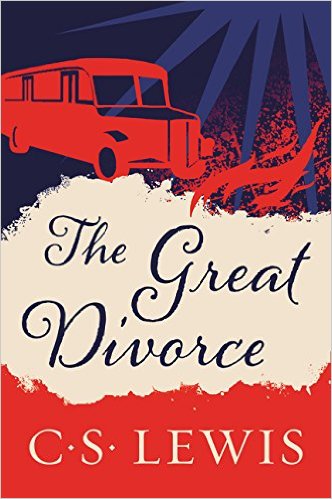
Why would anyone choose against God? C.S. Lewis’s short novel The Great Divorce lays out many reasons, rooted primarily in the earthly things—even blessings—that we put ahead of God and cling to at the expense of Him who is all Truth and all Love. God, spouse, children, everything else—is my house in order? Not as often as I’d like.

So what hope is there for our young people? Well, we have a Redeemer who, undeserving though we are, has already suffered on our behalf, and a Father in Heaven who doesn’t want to lose our children, either. He is constantly calling them, and us, to Himself—as singer-songwriter Jon Guerra puts it: “My Father ever chasing/My Chaser ever keeping/My Keeper ever giving/My ever-living God.”

I’ve referenced before an online article called “Keeping Our Kids Catholic: The Indispensable Minimum.” The writer describes our role as parents as forming “a thread of solid formation in morals and Church teaching that will keep even our most errant kids tethered to God—and which God himself can twitch to bring them back someday.”

Ultimately our children belong to the same heavenly Father that we do, and they are His to love, to call home, to save. We are not alone, and we don’t have to do it all. We only have to do all we can.

Book Break: The Great Divorce

I mentioned in an earlier post that I had a profound Good Friday, but that was only half the story. The other half of the story is that, early that Friday morning, I sought out some spiritual reading for the day, and wound up with a new top-five favorite book: C.S. Lewis’s The Great Divorce.

Of course, when reading spiritually, the Bible is always a good place to start, and I’m also making slow but steady progress through Dante’s Divine Comedy a canto or two a day. But I wanted something fresh, something I could possibly read in a day, and something related to the penitential character of Good Friday and the great saving act of our Lord.

On a hunch, I took C.S, Lewis’s The Great Divorce from the bookshelf. I have great regard for Lewis as a writer and had heard good things about the book, particularly from my good friend Angie at Take Time for Him.

Lewis had me hooked from the preface, which begins by explaining the title of his fantasy:

BLAKE WROTE the Marriage of Heaven and Hell. If I have written of their Divorce, this is not because I think myself a fit antagonist for so great a genius, nor even because I feel at all sure that I know what he meant. But in some sense or other the attempt to make that marriage is perennial. The attempt is based on the belief that reality never presents us with an absolutely unavoidable “either-or”; that, granted skill and patience and (above all) time enough, some way of embracing both alternatives can always be found; that mere development or adjustment or refinement will somehow turn evil into good without our being called on for a final and total rejection of anything we should like to retain.

The book begins with our narrator in line at a bus stop in a grey and gloomy town, surrounded by people he doesn’t know and wouldn’t want to — unsure of where he is or where he’s going. It unfolds like Dante’s Divine Comedy in modern miniature: a pilgrim’s journey from hell to the edge of heaven in just 128 pages. I’m reading Dante now, too, canto by canto, and it is powerful in its way, but this held my attention from the preface to the end, with every word relevant to this sinner and this sinful time. Lewis articulates with poetic beauty and unflinching honesty the glory of God and his angels and saints, the pain of detaching from this world, and the stubbornness, the grasping, the pride and distrust that keep even “good” people from choosing God and reaching Heaven.

The book challenges the reader particularly on the Greatest Commandment: “You must love the Lord your God with all your heart, with all your soul, and with all your mind” (Matthew 22:37). On this point, Dante provides an unintended summary (being some seven centuries older) which, as providence would have it, I read over lunch on Easter Monday. In Purgatorio, Canto IX, Lines 127-132, he writes the words of the angel guarding the gates of Purgatory proper:

“I hold these keys from Peter, who advised
‘Admit to many, rather than too few,
if they but cast themselves before your feet.'” 
Then pushing back the portal’s holy door,
“Enter,” he said to us, “but first be warned;
to look back means to go back out again.”

We sin when we put anything — even the blessings of life on this good Earth — ahead of loving and seeking God. Pilgrim after pilgrim turns his or her back on Heaven because the cost of entry is too high: the cost of admitting that they are mere creatures and of letting go of their earthly pleasures, passions, and prejudices. They want Heaven on their own terms and choose Hell to feel like they have some say in the matter. They cannot stand the humiliation of grace as an unmerited gift.

It is a powerful book: perhaps tied at this moment with Steinbeck’s East of Eden as my favorite of all time (although Tolkein’s The Lord of the Rings (which I still need to review as an adult) and Sigrid Unset’s Kristin Lavransdatter trilogy are right up there, too!) It paints a stark and revealing picture of how far so many of us have to go to be purged of all sin. So I will end this post with Lewis’s words from the Preface, on a hopeful note:

I do not think that all who choose wrong roads perish; but their rescue consists in being put back on the right road. A wrong sum can be put right: but only by going back till you find the error and working it afresh from that point, never by simply going on. Evil can be undone, but it cannot “develop” into good. Time does not heal it. The spell must be unwound, bit by bit, “with backward mutters of dissevering power”– or else not. It is still “either-or.” If we insist on keeping Hell (or even earth) we shall not see Heaven: if we accept Heaven we shall not be able to retain even the smallest and most intimate souvenirs of Hell. I believe, to be sure, that any man who reaches Heaven will find that what he abandoned (even in plucking out his right eye) was precisely nothing: that the kernel of what he was really seeking even in his most depraved wishes will be there, beyond expectation, waiting for him in “the High Countries.”

The Great Divorce. Find it. Read it.

20 Years a Fool: A Resurrection Story

One of the things I gave up for Lent this year was the last word. It might seem an odd thing from which to fast, but on the home front I crave the last word, savor it, seek it with such reckless abandon that I scatter piles of lesser words about the house until at last I have it. In the past I have recognized this fault in myself: that I want to be right, or at very least, heard and understood, in all things. I manage to tamp down this tendency in public, but in private, in flourishes.

Jodi knew of my sacrifice, and just prior to Holy Week, I asked for her honest assessment as to how much progress I had made. She hesitated a long moment, so I said, “It’s alright — I need you to be straight with me.”

She said, “Honestly, I haven’t noticed much of a difference.”

Just as I thought. I knew I hadn’t done well in this regard — and considering the number of times I know I bit my tongue or choked down one last pointed comment, I now knew how gluttonous my appetite for the last word had truly been.

Lent was not a complete loss, however. For one thing, my self-conscious failures led me to look for little things I could do to make up for being a jackass: simple acts of love and kindness like making the bed, which I have rarely if ever done of my own accord. For another, after this sobering conversation with my bride came Holy Week, and the sacrament of Penance, and the Triduum.

Like so many of the faithful, Holy Week crept up on me with alarming quickness and stealth. Once I realized time was short, I redoubled my efforts to hold my tongue, with at least some renewed success. On Tuesday, Jodi and I went to Confession at Mary Queen of Peace, to a young priest who cut us both to the quick, condensing a plethora of sins to a single, focused flaw, then concocting a penance to match.

In my case, he said something like this: “A simple definition of love is giving of yourself to another. A simple definition of pride is claiming for yourself what isn’t yours. All yours sins seem related to this tendency to take things for yourself: wanting to look better than you are to those around you, wanting recognition for what you do, even taking on more responsibility for what’s happening at work or in the world than belongs to you.”

For my penance, he asked me to find three people or causes to which I could give of myself before the end of Holy Week. And it helped.

After work on Holy Thursday, I shut off my computer and phone until after the Easter Vigil. It’s remarkable how peaceful it can be to escape the endless barrage of email and social media “news,” especially in an election year. Nevertheless, in the wee hours of the morning on Good Friday I found myself unable to sleep, and finally rose around 4:30 a.m. to pray and journal.

I sat near the front window with a cup of black coffee in the foreground and choral music in the back; two candles providing a flickering light so as not to deaden the dawn when it arose. My mind wandered across the years of marriage and family life, and I thought of St. Joseph, who is never quoted but ever present in the early life of Jesus in the gospels — the epitome of the “strong, silent type”; the carpenter, whose rough hands and faithful heart made dead wood bloom. Here was a model of a husband and father: quiet, hard-working, life-giving.

Life-giving…

For nearly 20 years of marriage, I have accepted the truth that I married well: a woman of beauty, faith, and virtue who was meant to guide me to Christ. For those same 20 years, I have acknowledged her as life-giver, and myself as a sponge, simply soaking up the love she pours forth.

While all of these things are true, for 20 years I’ve used them as a crutch — something to lean on in my weakness. It sounds so sweet and humble to say, “I’m not worthy,” but when did that become good enough? Should I not strive to become worthy?

For the past several years Jodi and I have helped with engaged couple retreats at our parish. Many times over those years we’ve helped to share this analogy between marriage and the Holy Trinity: God the Father loves God the Son; the Son receives that love and reflects it back to Father; and that love between them is God the Holy Spirit, “the Lord, the Giver of Life.” Similarly, a husband loves his wife; the wife receives that love and reflects it back to her husband; and the love between them becomes so tangible that it gives life — sometimes literally, resulting in a third person.

For years I’ve helped share this message without directly applying it to my role in our marriage. The husband is the life-giver. The husband initiates. His bride receives what he gives, transforms it, and gives it back — but I’m meant to the source. Not a sponge, but a spigot.

I sat, dumbfounded, as dawn arose. All these years of “wearing the pants” in this family, and Jodi has been trying to do both our jobs. When the sun finally rose, I felt like a new man. Or rather, a man rising to new life.

Dust that we are, a day later I was struggling to recall these revelations and was again longing for a sign from God to guide me — like those whom Jesus fed with a few loaves and fishes, who, the very next day, asked Him, “What can you do?

So I resolved to write them down and share them. May they be my own little resurrection story: after 20 years, a fool became more the man he is called to be. Amen.