The Prodigal Communicant

I love Sundays. Generally, we begin with Mass, then brunch with whomever is home. We clean up as a family, then maybe read or take a nap. In early afternoon, we might tackle a small project together or go for a drive (maybe to pick up some more flowers for the front yard). Then we’ll have a snack or a treat and play a game or take a long walk. We come home, prepare and eat dinner together (and clean up again), then watch something we can all enjoy before prayers, bed, and the start of a new week.

When Trevor was home, 11:00 AM Mass was the norm: He loved to serve ad orientem, with incense and chant. Lily, on the other hand, struggles with both smoke and crowds of people, so she prefers 7:30 AM—which means most Sundays, even coffee waits until after church.

Unless Jodi and I are serving, arriving early for 7:30 AM Mass has proven to be a challenge, and too often I find myself throwing a quick salute to Father as we scurry to our pew before the processional. As a result, frequently my mind is racing when I kneel to pray and then stand as the music begins. I usually arrive at the Collect (the first “Let us pray…”) with my intentions intact, but—unless I’m a reader—somewhere between first and second readings, my mind begins to rush ahead.

So, brunch this morning…we have enough eggs, but the sausage isn’t thawed yet. And we need fruit. We could stop on the way home. Should probably fill the car, too—but I guess that could wait if we’re going run to Ace later for mulch.

Mulch. What else did we need at Ace?

Continue reading
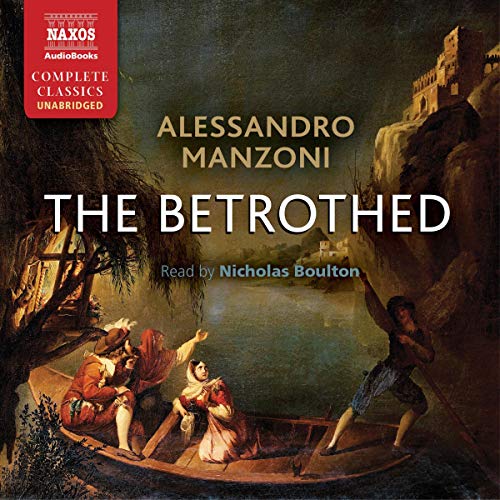
Book Break: The Betrothed by Alessandro Manzoni

I recently finished an English audio version of the 1828 Italian novel The Betrothed by Alessandro Manzoni on Audible. I first learned of this book—apparently the most famous and widely read novel in the Italian language—from a post by Joseph Pearce on the Imaginative Conservative website with the provocative title, “The Betrothed: The Greatest Novel Ever Written?” That caught my eye, because, as a somewhat educated person, I had never heard of it.

I also share all this information to distinguish this book from a much more recent young adult romance novel and two-book series of the same name by Kiera Cass. This is NOT that.

Instead, this is a wonderful historical novel set in the 1600s in Lombardy, Italy (pictured above), telling the story of two young, relatively poor, and essentially good villagers preparing for their much-desired marriage, and a cowardly priest who refuses them the sacrament after a tyrannous local lord threatens his life if he should join them. The fearful parish priest is balanced by two heroic clergy, a Franciscan friar who serves as a father and spiritual director to the pair, and the real-life Cardinal Federigo Borromeo, the heroic and holy archbishop of Milan, whose pastoral efforts bring about novel’s conclusion.

What struck me most about this novel is how timeless great literature actually is. The book is about many things, each as relatable today as in the time it was set and the time it was written, including:

Continue reading

Life In Abundance

This post appeared as a column in the Sunday, May 15, bulletin for St. Michael Catholic Church.

Last weekend, we saw all of our children and grandchildren, not to mention my mother and several friends, due to our youngest son Trevor’s star turns as St. Thomas More in the play, A Man for All Seasons. We had representatives of four generations of Thorps under our roof. We saw moving performances, illustrating a 500-year-old life that remains compelling and relevant today. We celebrated Good Shepherd Sunday and the May Crowning of Mary and Mother’s Day at the 9:00 AM Mass, with Father Park and Bishop Williams and two deacons. We received Jesus in Word and Sacrament—and my mom benefitted deeply from 10 minutes with two of our parish’s wonderful prayer ministers after Mass. We ate and drank and made merry. It was a both-and kind of weekend, a time of spiritual superabundance.

Early Monday morning, after Mom departed for the airport, I read the daily gospel reading, which continues St. John’s Good Shepherd discourse. The last line of the reading struck me hardest:

“A thief comes only to steal and slaughter and destroy; I came so that they might have life and have it more abundantly.”

John 10:10

I recognize the thief and his works—I see them daily in the world—and I know that, at times like last weekend, we are experiencing God’s abundant life firsthand. The Enemy divides, distorts, and destroys; he is wreaking havoc in the world right now. But Jesus brings hope, courage, joy, and peace—not to mention the perseverance to live in the Spirit despite the Enemy and those who serve him.

Continue reading

Rest and Re-Creation

Last weekend, Fr. Park preached on the importance of rest. The Lord calls His followers to come away by yourselves to a deserted place and rest awhile (Mark 6:31). We do well to rest with the Lord by keeping holy the Sabbath—attending Mass and resting from activities that do not renew us in body and spirit—and by regularly withdrawing from the world to spend time with Jesus on retreat.

First, I want to second Father’s retreat recommendation. I’ve been blessed to make a personal retreat almost every year since I left the University of Minnesota and came to work for the Church. The first was a hermitage retreat at Pacem in Terris in Isanti, during which I spent a few days and nights in a comfortable one-room cabin in the woods; a basket of simple foods and water were left on my doorstep each morning, and I was encouraged to read scripture, reflect and pray in silence, on my own. A couple years ago I did something similar at Holy Hill in Wisconsin, renting a room in the old monastery and enjoying a self-imposed silence and reflection at an otherwise bustling shrine.

The rest have been three-day silent retreats at Demontreville in Lake Elmo, with a Jesuit retreat master leading us through the spiritual exercises of St. Ignatius, simple rooms, great food and quiet consistency from one year to the next. All have been fruitful, and when I re-enter the silence of retreat, I find God waiting for me, right where we left off.

Continue reading

All Too Familiar

“Men go abroad to wonder at the heights of the mountains, at the huge waves of the sea, at the long courses of rivers, at the vast compass of the ocean, at the circular motions of the starts, and they pass by themselves without wondering.”

St. Augustine

In last weekend’s gospel reading, Jesus is rejected in His hometown. His family, friends and neighbors watched Him grow up among them, and as the old saying goes, “Familiarity breeds contempt.” The better we think we know a something, the less special it seems.

In a country like ours, in which Mass is readily accessible and religious persecution is relatively rare and non-violent, we can be tempted to regard Jesus in the Holy Eucharist in the same way. Our priests celebrate five Sunday Masses each weekend at St. Michael alone, and in an effort to urge people to resume going to church in person, the Church has emphasized how easy it is to find a Mass near you, wherever you are.

All of which makes it easy to say, I can go to Mass later. I can go to Mass anytime. I guess I’ll go next week.

Continue reading