Liturgy and Sacraments: The Spirit at Work in the World

Blogger’s Note: This was my final short reflection paper for Module II of the Catechetical Institute, on liturgy and the sacraments. I continue to be drawn toward the person and activity of the Holy Spirit, which I’ve been slow to comprehend in the past.

The Spirit is the fuel of the Church, the energy and life force of the Body of Christ. And we can’t get him through heroic effort. We can only get him by asking for him. That’s why, for the past two thousand years, the Church has begged for this power from on high. Jesus told us that the Father would never refuse someone who asked for the Holy Spirit. So ask! And ask again! Realize that every liturgy is a begging for the Holy Spirit. (Bishop Barron, Daily Gospel Reflection 5/8/18).

The second pillar of the Catechism of the Catholic Church (CCC), “The Celebration of the Christian Mystery,” pertains to liturgy and the sacraments. The opening paragraphs (CCC 1066-2068) connect back to the first pillar, “The Profession of Faith,” by re-asserting God’s plan outlined in the Creed:

“For it was from the side of Christ as he slept the sleep of death upon the cross that there came forth ‘the wondrous sacrament of the whole Church.’” For this reason, the Church celebrates in the liturgy above all the Paschal mystery by which Christ accomplished the work of our salvation (CCC 1067).

The liturgy in its various forms celebrates the great mystery of Jesus’ saving mission. It is the “public work” (leitourgos) of the Church: the “participation of the People of God in ‘the work of God’” (CCC 1069), which manifests her as a visible sign of communion between God and man (CCC 1071).  The Church is born on Pentecost, the new Body of Christ on earth following the ascension of the resurrected One, and Jesus acts “in and with” this body through the sacramental economy (CCC 1076). The fruits of this mystery are shared liturgically, especially through the sacraments, “efficacious signs” (CCC 1131) instituted by Jesus and entrusted to the Church to give us the grace we need to live lives of holiness. Continue reading

He Thinks, Therefore I Am

Do you not know that you are the temple of God, and that the Spirit of God dwells in you? — 1 Corinthians 3:16

Yesterday morning I read St. Matthew’s account of the baptism of the Lord. Two things struck me. The first was that, in the Ignatius (Revised Standard Version) Bible I was reading, the translation is somewhat different from the New American version we hear at Mass (linked to above). The New American translation says, “[H]e saw the Spirit of God descending like a dove [and] coming upon him.” The Revised Standard translation says, “[H]e saw the Spirit of God descending like a dove, and alighting on him.”

The difference is small, but struck me as important, because alighting suggests the Holy Spirit came to rest on Jesus and remained with Him. This is reinforced by the first line of the next chapter, which begins just one verse later: “Then Jesus was led up by the Spirit into the wilderness to be tempted by the devil.”

See that? The Spirit is still with Him, leading Him.

The Holy Spirit doesn’t leave us, either. We talk sometimes about the indelible mark left on our souls by certain of the sacraments, which might leave us with the mistaken notion that God makes an impression on us but doesn’t stick around. But clearly the Spirit did not leave Jesus—in fact, in paragraph 695 of the Catechism, we learn that the Holy Spirit represents the very anointing that signifies Jesus as the Christ, or messiah: the anointed one of God. And He is covered completely by this anointing, as close as oil on skin: “The humanity the Son assumed was entirely anointed by the Holy Spirit” (CCC 695). Continue reading

Victory Is His

For many years I struggled with a number of habitual sins common to the male of the species. I say I struggled with, rather than against, because for much of that time I was complicit. I knew these things were sinful, knew they weren’t healthy for me or my marriage, and yet I was only willing to resist up to a point.

I remember going to confession with Fr. Siebenaler in the old St. Michael church and confessing these same sins yet again. He spoke kindly but bluntly: “You remind me of St. Augustine praying, ‘Give me continence, but not yet!'” And he advised that if I truly loved my wife and wanted to leave these sins behind I should admit them to her and ask for her help in overcoming them.

I thanked him, did my penance, and returned home thinking, He’s obviously never been married—no way am I telling Jodi! Continue reading

Able-Bodied

good-friday-2264164_1920Now you are Christ’s body, and individually parts of it. – 1 Corinthians 12:27
Over the past three years I’ve been blessed to serve as faith formation director for our parish and to write a monthly column in our church bulletin. I’ve tried in that time to urge us all to discipleship: to cultivate a personal relationship with Jesus every day, listening and responding to what He asks of us, seeking the lost and leading them to heaven.

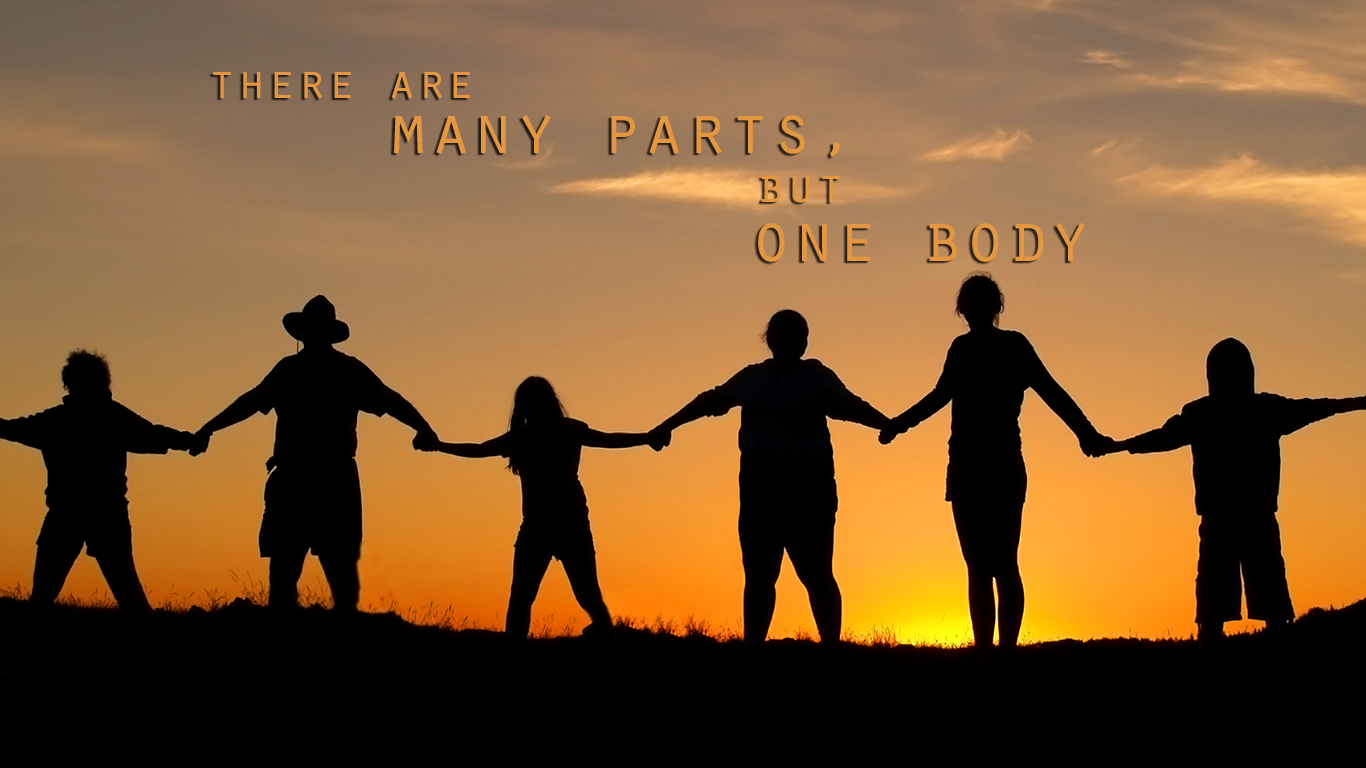
It’s a big job, to be sure, but we are not alone. We are one body, with Christ as our head. Through the Apostles, the bishops, our priests, and our baptism, His mission of saving souls has been given to each of us. Individually we are ill-suited to the task of redeeming the world, but together?

Together we are unstoppable. Continue reading

What Does It Mean to Be a Member?


This past week I finished reading The Weight of Glory, a collection of essays and lectures by the great C.S. Lewis. The piece that made the biggest impression on me was a reflection called “Membership,” in which Lewis explains the fundamental differences between what St. Paul meant when spoke of members of the Church and what we mean today.


Today, when we say someone is a member, whether of a church, a club, a team, or a family, we generally mean a unit—a part or cog in some bigger machine that shares some commonality or purpose. The emphasis is on similarity or even uniformity.

This is nearly directly the opposite of St. Paul’s usage of member in the sense of a part of body. In his first letter to the Corinthians, St. Paul emphasizes the uniqueness and irreplaceability of each part:

Now the body is not a single part, but many. If a foot should say, “Because I am not a hand I do not belong to the body,” it does not for this reason belong any less to the body. Or if an ear should say, “Because I am not an eye I do not belong to the body,” it does not for this reason belong any less to the body. If the whole body were an eye, where would the hearing be? If the whole body were hearing, where would the sense of smell be? But as it is, God placed the parts, each one of them, in the body as he intended. If they were all one part, where would the body be? But as it is, there are many parts, yet one body. The eye cannot say to the hand, “I do not need you,” nor again the head to the feet, “I do not need you.” – 1 Cor 12:14-21

God has created each of us as a unique image of Himself, with a unique purpose in the Body of Christ. That’s an exciting thought, but it also underscores the challenge of a one-size-fits-all approach to sharing our faith and the importance of each of us spending time with God to discern His purpose.

It is also important, however, not to compromise the truth of our faith in an effort to find our own path. The gospel reading a day or so after I finished reading Lewis’s essay was Matthew 5:27-32—in part:

If your right eye causes you to sin, tear it out and throw it away. It is better for you to lose one of your members than to have your whole body thrown into Gehenna. And if your right hand causes you to sin, cut it off and throw it away. It is better for you to lose one of your membersthan to have your whole body go into Gehenna.”

Our Lord is speaking in hyperbole, exaggerating to illustrate how seriously we must take repentance and avoidance of sin with our own bodies. The Body of Christ—the Church—exists for our salvation, but just like any body made with human parts, it too is prone to error and illness, and susceptible to temptation, comfort, and pleasure. Our members sin, and although the Lord desires everyone to be saved, He gives us only one way: Himself—“I am the way and the truth and the life. No one comes to the Father except through me” (John 14:6).

Jesus in Scriptures. Jesus in the Holy Catholic Church. Jesus in the sacraments, especially the Holy Eucharist. This is the path we’ve been given, and the only path we know leads to salvation. As members of the Body of Christ, it is our call to obey the Head, to pick up our cross and follow, and to bring as many others with us as we can.

St. Teresa Benedicta of the Cross (Edith Stein) said, “Do not accept anything as the truth if it lacks love, and do not accept anything as love which lacks truth! One without the other becomes a destructive lie.”

There is no good compromise. Nothing short of the Truth satisfies, and Love cannot exist without it.