Blogger’s Note: This is the latest in a collection of daily posts outlining my journey to the Sacred Heart over the past year or more. See an overview and links to past posts here.
As I mentioned in yesterday’s post, this spring I brought the various tugs on my heart—Divine Mercy, Salesian spirituality, and Sacred Heart—to my spiritual director to consider whether and which of them to pursue. He asked me what I knew about the Sacred Heart revelations to St. Margaret Mary Alacoque—what was the meaning, or what was Jesus trying to share.
At that point, I knew only what I had picked up in the second of the Divine Mercy video series my men’s group is watching: The Church was battling the Jansenist heresy, which said that salvation was only for the elite few, that you had to earn God’s love, and that most people weren’t good enough to receive the Eucharist or salvation—but the message of Jesus’ Sacred Heart message was that God’s love is an endless, burning love for all of mankind regardless of sin or station. He loves us deeply and He deeply desires our love in return.
He told me that was right, then explained that the message of Divine Mercy was a deepening of the Sacred Heart message—that Jesus wants to save all of humanity, and that no one on earth gets to say who is worthy of God’s love and mercy: “It is above our pay-grade.” Continue reading

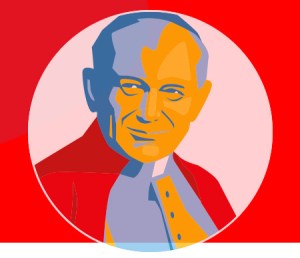 Born Karol Wojtyła in Wadowice, Poland, in 1920. Suffered the loss of his family, freedom, and country by the time he was 21 years old; risked his life under the Nazi regime to promote Polish cultural resistance and study for the priesthood. Recognized as a gifted theologian, pastor, and bishop; elected pope in 1978 and brought the Good News to 129 countries. Instrumental in the fall of dictatorships and Communism; wounded critically in an assassination attempt in 1981; credited Our Lady for preserving his life and met with and forgave the assassin. Served as pope until his death in 2005, despite declining health due to Parkinson’s and old age. One of the most recognized figures of the 20th century.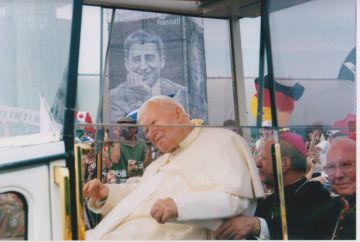
 Archangel Stomp