What Does It Mean to Be a Member?


This past week I finished reading The Weight of Glory, a collection of essays and lectures by the great C.S. Lewis. The piece that made the biggest impression on me was a reflection called “Membership,” in which Lewis explains the fundamental differences between what St. Paul meant when spoke of members of the Church and what we mean today.


Today, when we say someone is a member, whether of a church, a club, a team, or a family, we generally mean a unit—a part or cog in some bigger machine that shares some commonality or purpose. The emphasis is on similarity or even uniformity.

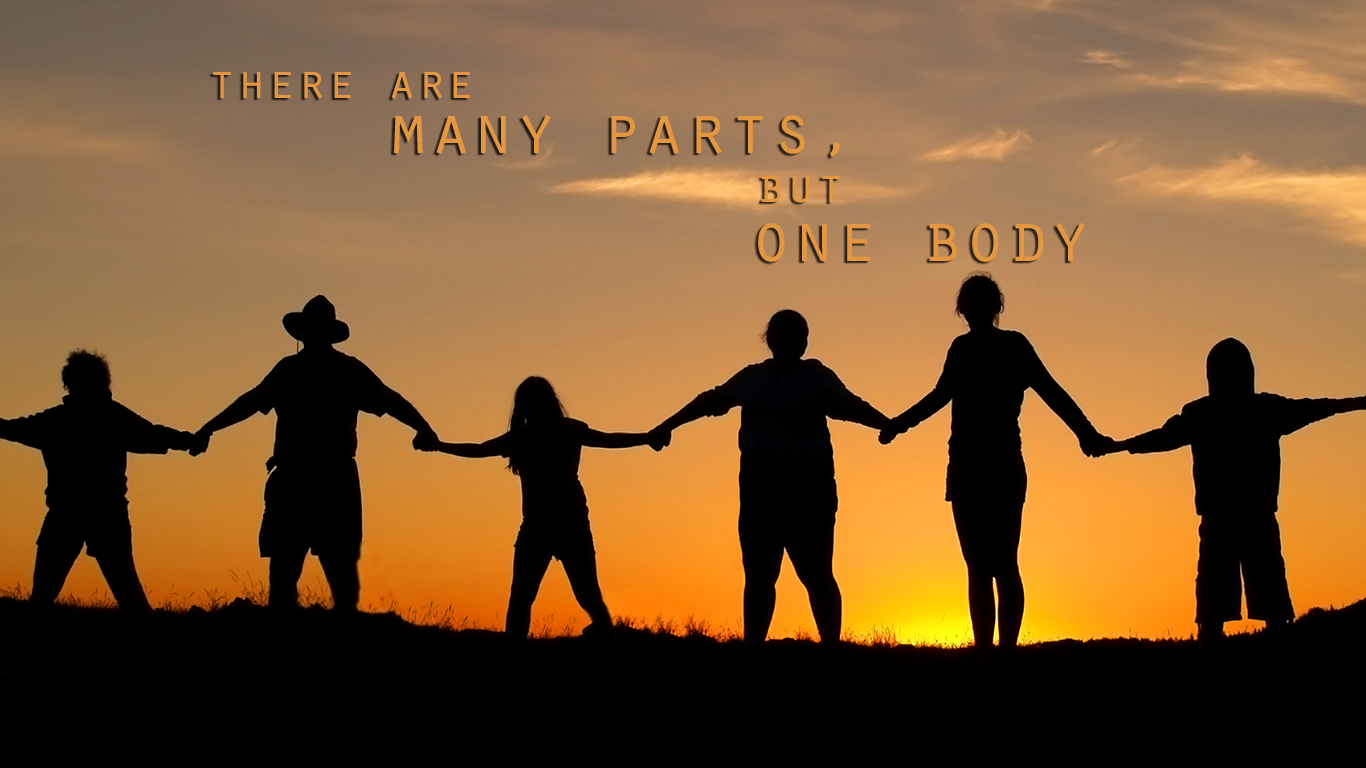
This is nearly directly the opposite of St. Paul’s usage of member in the sense of a part of body. In his first letter to the Corinthians, St. Paul emphasizes the uniqueness and irreplaceability of each part:

Now the body is not a single part, but many. If a foot should say, “Because I am not a hand I do not belong to the body,” it does not for this reason belong any less to the body. Or if an ear should say, “Because I am not an eye I do not belong to the body,” it does not for this reason belong any less to the body. If the whole body were an eye, where would the hearing be? If the whole body were hearing, where would the sense of smell be? But as it is, God placed the parts, each one of them, in the body as he intended. If they were all one part, where would the body be? But as it is, there are many parts, yet one body. The eye cannot say to the hand, “I do not need you,” nor again the head to the feet, “I do not need you.” – 1 Cor 12:14-21

God has created each of us as a unique image of Himself, with a unique purpose in the Body of Christ. That’s an exciting thought, but it also underscores the challenge of a one-size-fits-all approach to sharing our faith and the importance of each of us spending time with God to discern His purpose.

It is also important, however, not to compromise the truth of our faith in an effort to find our own path. The gospel reading a day or so after I finished reading Lewis’s essay was Matthew 5:27-32—in part:

If your right eye causes you to sin, tear it out and throw it away. It is better for you to lose one of your members than to have your whole body thrown into Gehenna. And if your right hand causes you to sin, cut it off and throw it away. It is better for you to lose one of your membersthan to have your whole body go into Gehenna.”

Our Lord is speaking in hyperbole, exaggerating to illustrate how seriously we must take repentance and avoidance of sin with our own bodies. The Body of Christ—the Church—exists for our salvation, but just like any body made with human parts, it too is prone to error and illness, and susceptible to temptation, comfort, and pleasure. Our members sin, and although the Lord desires everyone to be saved, He gives us only one way: Himself—“I am the way and the truth and the life. No one comes to the Father except through me” (John 14:6).

Jesus in Scriptures. Jesus in the Holy Catholic Church. Jesus in the sacraments, especially the Holy Eucharist. This is the path we’ve been given, and the only path we know leads to salvation. As members of the Body of Christ, it is our call to obey the Head, to pick up our cross and follow, and to bring as many others with us as we can.

St. Teresa Benedicta of the Cross (Edith Stein) said, “Do not accept anything as the truth if it lacks love, and do not accept anything as love which lacks truth! One without the other becomes a destructive lie.”

There is no good compromise. Nothing short of the Truth satisfies, and Love cannot exist without it.
The Choice Is Still Before Us

 
“Why do you call me, ‘Lord, Lord,’ but not do what I command?” – Luke 6:46
Recently I was paid a great compliment: I was called a disciple. My reaction surprised me. I didn’t feel pride or embarrassment, but alarm. My immediate concern was that if people consider me disciple, they might strive to be like me and fall short of true discipleship. The closer I get to God the more clearly I see how far I have to go. I am a tall man, but a low bar.
 

We all have a choice to make, to leave our former life behind and follow Christ to Calvary. As Deacon Ralph Poyo shared in his recent visit, it is an all-or-nothing choice. We are called to love the Lord with all our heart, mind, soul, and strength. The only way to put God first is to place everything else behind Him.

The bad news is that we cannot work hard enough or love well enough to earn heaven without God’s grace—but neither can we cease to work and presume God’s grace will carry us.

The good news is that the choice is still before us, in every interaction, every moment here on earth.

How do we make the right choice in the moment? Jesus gives us clear instructions. For example:

  • Renounce your possessions, pick up your cross, and follow—otherwise you cannot be a disciple (Matthew 16:24-16, Mark 8:34-38, Luke 9:23-26).
  • Love God, love neighbor, love enemies—it is not enough to love those who love you (Matthew 5:43-48, Luke 6:27-36).
  • Provide for the needs of others as you would for Jesus Himself—anything less is damnable (Matthew 25:31-46).

These words are like a punch to the gut for me. I have no trouble at all crying out to the Lord, but I’m terrible at doing what He commands. I go to Mass, pray pretty regularly, and try not to sin. But I enjoy my life, I dislike suffering, and I am comfortable in this community, in my circle of friends and family, in a job that suits my skills and pays the bills.

Surely I get bonus points working for the church? Didn’t the Pharisees?

We have hope, however. God seeks us constantly, loves us endlessly, wants to forgive us and welcome us home. God proves His love by sending His son to sinners, to live, suffer, and die in order to save us from our sins. We can choose today to accept this love or not. We can choose to love God back or not. We can choose to follow Jesus or not. We can make this choice right now.

But we can’t do it alone. If you are ready to change your life and follow Christ today, talk to someone today. Ask someone you regard as a disciple what to do next. They might be a little flustered at first, because discipleship is a big responsibility. If they are uncomfortable, it may mean they need someone to walk with, too. Ask them to partner with you. And if you don’t know who to talk to or want help from the parish to get started, send an email to smallgroups@stmcatholicchurch.org or call me at the parish office. 

Don’t wait. The way is narrow, but not so narrow that we can’t walk it together!

A Father’s Greatest Fear

This past week, 130 teens from our parish and school received the Sacrament of Confirmation. A few of these young people are already leaders in the community, drawing others to Christ. More will enter into the fullness of the Catholic faith and begin to live as disciples of Jesus, called to follow, and gifted to reach out to their family, friends, and strangers in new and beautiful ways.

But unfortunately, many others will view Confirmation as the last requirement of “growing up Catholic.” They will be happy to be done with religion classes and will begin almost immediately to drift away from the Church.

Last weekend my bride and I spent Sunday afternoon with three other couples trying to raise Catholic families. We talked about cultivating perseverance in our children: strengthening them to look for ways forward when the going gets tough, to have the courage of their convictions, and to fall and rise again. We talked, in particular, about the difficulty of letting our teens make decisions we don’t agree with in order for them to learn on their own those things that our experience could teach but that they won’t hear.

At least two of us agreed that our biggest fear is our children falling away from the faith. My friend said that when he shares this fear, people will seek to reassure him: You are doing everything you can; they have to make their own choices.

“In reality, it’s not about me,” he said. “I worry, because I know how long a road it is to come back.”

I would add to his observation the sobering reality of eternity, heaven, and hell. We don’t like to think about these things—hell, in particular—but Jesus speaks plainly about them. I remember, in my younger years, seeing TV commercials featuring Carol O’Connor of Archie Bunker fame, after he had lost a son to drugs and suicide, saying: “Get between your kids and drugs any way you can.”

If only we took the same approach in the spiritual life.

So how do we keep our kids Catholic? It is not as simple as demanding they show up on Sundays and Wednesdays and go through the motions. All of us have a choice to make, every day, to follow Jesus and make God and our faith the center of our lives. To deny the reality of that choice is to deny the very thing that makes us special in this universe: bodily creations with rational spirits, with intellect and will, so loved by God that He allows us the freedom to choose for or against Him.

Why would anyone choose against God? C.S. Lewis’s short novel The Great Divorce lays out many reasons, rooted primarily in the earthly things—even blessings—that we put ahead of God and cling to at the expense of Him who is all Truth and all Love. God, spouse, children, everything else—is my house in order? Not as often as I’d like.

So what hope is there for our young people? Well, we have a Redeemer who, undeserving though we are, has already suffered on our behalf, and a Father in Heaven who doesn’t want to lose our children, either. He is constantly calling them, and us, to Himself—as singer-songwriter Jon Guerra puts it: “My Father ever chasing/My Chaser ever keeping/My Keeper ever giving/My ever-living God.”

I’ve referenced before an online article called “Keeping Our Kids Catholic: The Indispensable Minimum.” The writer describes our role as parents as forming “a thread of solid formation in morals and Church teaching that will keep even our most errant kids tethered to God—and which God himself can twitch to bring them back someday.”

Ultimately our children belong to the same heavenly Father that we do, and they are His to love, to call home, to save. We are not alone, and we don’t have to do it all. We only have to do all we can.

Rise and Walk: Looking Ahead to Next Year’s Program

This past week we completed our family faith formation sessions for the year, and this weekend our LIFT first communicants will receive the Blessed Sacrament for the first time. The past year has flown by, and I suspect the summer planning season will pass even faster. We have lots of great for next year, but one of more significant changes has to do with the age of Confirmation. After extensive discussion in recent years, including our priests, committee members, catechists, and staff members at St. Michael and St. Albert parishes, we have decided to gradually shift the age of Confirmation to 8th grade for all our students.

This decision was made for several reasons, but for me, the two most compelling are these:
  • Middle-schoolers are more open to evangelization and catechesis. They are more likely to follow the lead of their parents and parish volunteers, more excited about activities and retreats, and significantly less busy. High-schoolers have other priorities, including sports, exams, driver’s ed, jobs, and social lives—and unless their faith is already a top personal priority, it is difficult to make them care.
  • We already have great success in reaching and converting middle-schoolers. We have tremendous youth ministry programs that change kids’ lives (as almost anyone who has sent their kids to Extreme Faith Camp can attest). We don’t capture the heart of every middle-schooler, but of the high-schoolers we have who stay committed to their faith through graduation and beyond, nearly all of them were hooked in middle school. Each year we have a large “bubble” of students who show up for Confirmation classes—why not move the bubble to the age at which we have proven success in reaching kids and helping to keep them Catholic

What does this mean for you? If your children attend the parish school, they will continue to be confirmed in 8th grade. If your children attend LIFT and our parish Confirmation program, the plan looks like this:

  • Next year: Tenth-grade students will see no change; they will complete the second year of the Chosen program and be confirmed in Spring 2017 as planned. Ninth-grade students will complete a more intensive, one-year Chosen program and will also be confirmed in Spring 2017.
  • 2017-18:Ninth-grade students will complete a more intensive, one-year Chosen program and will be confirmed in Spring 2018. Eighth-grade students will complete either a one-year program (either based on Chosen or the YDisciple model) and will also be confirmed in Spring 2018.
  • 2018-19:Eighth-grade students will complete a one-year program using the YDisciple model from this point forward.

The YDisciple model involves forming small groups of around eight students each, beginning in middle school, with a trained adult leader who walks with those students from middle-school until they graduate. In each discipleship group (or D-group), students continue to learn about their Catholic faith, grow in prayer and discipleship, support each other, and hold each other accountable.


This is a volunteer-intensive effort. We will need people who feel called to work with teens and share their faith, who are willing to be trained and to commit to a group of young people, and who are able to share their own lives as examples of faithful discipleship. It is a daunting task to find and train so many volunteers, but we believe this is where God is calling us, and He will make our efforts fruitful.

In fact, our need for dedicated disciples who are ready to work in the vineyard is not limited to Confirmation. We have such great needs in this parish, and so few workers. It is time for those of us who have been asleep to rise and walk, with our spouses and children, our friends and neighbors, and all those in our lives who need Christ—in short, with everyone!

Book Break: In the Beginning: A Catholic Understanding of the Story of Creation and the Fall

One of the many things I meant to do in the past year was to explore and review several books on the Catholic view of creation and evolution, in order to help parish parents and grandparents answer their questions on the topic and those of their children. My hope was to find a book or two that might be helpful to inquiring minds of all ages.

As usual, I bit off more than I could possibly chew and have completed only one such book. On a positive note, it was excellent.

‘In the Beginning…’ A Catholic Understanding of the Story of Creation and the Fall is an edited compilation of four Lenten homilies given by Pope Benedict XVI in 1981, when he was still Joseph Ratzinger, archbishop of Munich and Freising. His goal was to develop a catechesis of Creation for adults. The four homilies build, one upon the other, to present a clear case for what the Genesis accounts of Creation and the Fall mean and why they continue to matter:

  • The first homily, “God the Creator,” lays out the so-called conflict between the Creation account(s) and science, and discusses how and why we interpret scripture the way we do: in the context of Jesus, to whom the entirety of scripture, written over the course of centuries, points.
  • The second homily, “The Meaning of the Biblical Creation Accounts,” addresses the Creation story specifically, the reasonableness of belief in Creation, the ways in which science points to Creation, the sabbath structure and rhythm of Creation — and the emergence of the view that humanity is at conflict with nature.
  • In the third homily, “The Creation of the Human Being,” Pope Benedict focuses on the heart of the matter for many modern Catholics: where humans come from. He explains that Genesis has more to do with who we are (imago Dei, or image of God) than how we got here, then tackles evolutionary theory directly — what it can explain about our existence, and what it can’t.
  • In the fourth homily, “Sin and Salvation,” Pope Benedict discusses the Fall of Adam and Eve, and the plan for salvation, with Christ as the new Adam. In perhaps the most profound explanation for me personally, he clearly lays out why, because we are creatures created by God, obedience to God’s law is not a restriction of freedom (like we often perceive it) — we are made for this, and thrive under God’s law because it’s in our nature!
The entire book is exactly 100 pages, including the Appendix, entitled “The Consequences of Faith in Creation, which reads like a fifth homily on how we got to the point that, since the Renaissance, understanding of and belief in Creation theology has diminished to the point that it is rarely spoken of in modern Catholicism, and why our fundamental “creatureliness” is essential to our future. Pope Benedict’s style is straightforward and clear; he is obviously well-read and -researched on this topic, but makes it accessible to (though not always easy for) the patient reader. The book is less specifically about evolution that I imagined, but rewarding and worth the time. It’s fun to imagine these as homilies, sitting in the pews, wishing someone was writing all this down.