Fool for Christ: An Easter Reflection

Such fools, these followers of Jesus. Witless tradesmen, traitors, cowards, and louts, smelling of dust and sweat and fish—with a carpenter to lead them! The honest one, Nathanael, spoke well when he asked, Can anything good come from Nazareth? Yet even he was smitten—by a wandering woodworker!

And then what? This Jesus rides into Jerusalem like God’s gift to humanity, picks a fight with the scribes and scholars, and blasphemes before the high priest. Who could stand for it? They had him flogged and humiliated, beaten within an inch of his life—they gave him every opportunity—and still he would not repent. So they had him crucified.

Great wickedness demands great atonement.

Such disciples! Most of them fled when God’s arm was revealed. Only the young one, John, stuck it out to the end. His mother was there, too, I hear. Poor woman. She raised him right, by all accounts, and this is her thanks: a criminal in an early grave. She must be proud.

They’ve been in hiding since. What would you do, if you left your home and livelihood to follow your heart’s desire, only to see it crushed completely and come to nothing? They say he worked wonders: fed the masses, healed the sick, even raised the dead! But how could that be, unless he came from God Himself? And why would God would allow his servant to be profaned so publicly, so completely—on the Passover, no less! Why could he not save himself?

Unless…

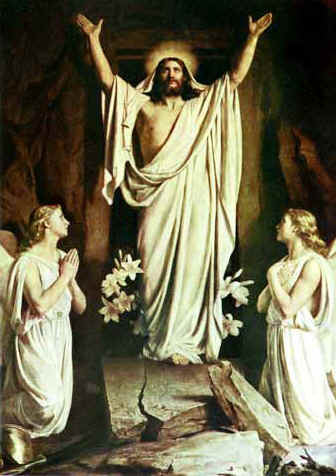
But no. Nothing short of bodily resurrection could make up for so great a loss. For the man Jesus to redeem Himself and his followers, He would have to burst from that tomb of his own accord, bathed in light and breathing God’s own spirit, baptizing in fire as the beheaded Baptist foretold, with angels as His heralds and judgment on His lips. He would have to show Himself victorious over not only worldly powers, but over sin and death itself.

Some say he will. Just imagine: the stone rolled back, an empty tomb, the astonished guards. Imagine the embarrassment of the Romans, the recriminations among the Jewish leaders, the joy and wonder among His followers.

Mercy! Who could stand before so great a Redeemer as that?

On that day, may every knee bend at His holy name. May He find a people worthy to be called His disciples.

And may I be one of them.
The Still, Small Voice of God

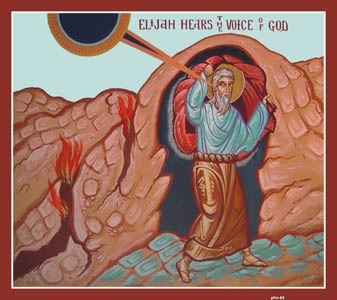
There was a strong and violent wind rending the mountains and crushing rocks before the LORD—but the LORD was not in the wind; after the wind, an earthquake—but the LORD was not in the earthquake; after the earthquake, fire—but the LORD was not in the fire; after the fire, a light silent sound.  When he heard this, Elijah hid his face in his cloak and went out and stood at the entrance of the cave. –1 Kings 19:11-13


It is Tuesday afternoon, and I am writing from home. This column should have been done and in already. It is not, because even a job working for the church is not as important as some things.

Around 9 p.m. last night my youngest son threw up, and my bride informed me she didn’t feel well either.  Between 9 p.m. and 2 a.m. or so, my son was sick probably two dozen times. Jodi did not get as sick, but was as sleepless as Trevor—and I tried to stay clear so that hopefully I could handle little Lily in the morning and keep her from catching whatever this was.

I rose and prayed with Jodi at 5:30. She felt a bit better, and Trevor was sleeping, at last.  At around 6, Emma was sick the first time, and by 8, Lily was complaining that she didn’t feel well either. I was getting ready for work—Day 2 with our new faith formation coordinator, Andrea Zachman—but had the sinking feeling that it was only a matter of time before it hit me, and that my colleagues might rather I stayed home. I was torn—I felt fine, but so had Trevor and Emma before it hit, and I had plenty of work to do. Lily seemed fine, but if she were on the verge, I didn’t want her spreading it to her friends and their families. Jodi was torn, too—she didn’t feel great, but had a mountain of work waiting for her and didn’t feel she could afford to miss a day.

And as fate would have it, we had a blanket of fresh snow on the walk, cars, and roads.

Ultimately we compromised: we both went to work briefly to take care of a few things and bring some additional work home to do around our other duties. We were out of several basic food items in our house, so I fought the blowing snow to stock up on a few things—and now here I sit, writing furiously.

We are all called by God—do you hear Him? I often imagine the God of the prophets speaking to them in a deep, thundering voice, but that’s not what we hear in first Kings, above. Elijah recognizes the Lord in “a light, silent sound”—other translations say “a sound of sheer silence” or “a still, small voice.” God whispers, as it were, drawing us close with his words, into an intimate conversation with Him.

Unfortunately, the noise of the world too often drowns Him out. We hear the voices of our colleagues and bosses ringing in our ears; the ringing of the phone and ping of emails, IMs, and texts…the traffic report…the weather…and nothing of the still, small voice of God.

Excuse me a minute: my other high-schooler, Gabe, just called—he’s sick and can’t drive himself home. Jodi and I need to go get him and the Suburban.

We are all called to a first and universal vocation of holiness. Most of us are called to live out that first vocation in terms of a second vocation to marriage and family life—we sanctify ourselves, our spouses, and our children by imaging God Who is Love. Everything else we do and are come in below that. We are created from Love, and Love is our purpose and end. That’s all. That’s enough.

Because that’s everything.

The Stray: A Christmas Poem


The Stray
Well-groomed for a shepherd, fragrant for a sheep, the sleepless lad lurches, shuffle-stomp, shuffle-stomp, out of town toward the hills. Dawn spills like too much wine, red above the ridges where flock and friends, abandoned, spent the night. Alright, he mutters thickly, steadying himself as for a blow. The sun is up, and now they know.
But what a night!
Ahead a man and donkey walk a slow, steady pace. Full of grace, his wife and infant rock and sway. Clop. Clop. Both stop—and pick their path with care. They see him there. The man measures with a carpenter’s eye. Radiant and shy, the woman offers him a smile as they pass. An ass, an old goat, and a kid—he returns a toothy grin—
But what a woman!
Head pounding, heart pounding, hung-over still. Narrow path, tumbled rock, all uphill. Grumbling and stumbling, the stray finds his way to the herd. Not a word. They are like pilgrims resting at a journey’s end, world-weary and at peace. Eyes bleary, still he sees they also spent the night in light and song. Something’s amiss, he says to one.
What did I miss?

J. Thorp
12/15/16

Who Reigns In Your Heart?

Put no trust in princes, in children of Adam powerless to save. 
Who breathing his last, returns to the earth; that day all his planning comes to nothing. – Psalms 146:3-4

This Sunday is the Feast of Christ the King, celebrating the authority and lordship of Jesus over all of creation and marking the end of the liturgical year. Falling just before the all-consuming holiday season and the secular New Year, this feast provides us with an opportunity to reflect on what holds mastery over our hearts before the avalanche of turkey and tinsel. And since it specifically celebrates Chris’s kingship, it takes on special relevance in the aftermath of a contentious election.

Who is this Jesus who rules over all? We are blessed to have an immense icon of Christ the King in the dome of our church. This image, called Pantocrator or “ruler of all,” depicts our glorified Lord looking down from heaven, holding the Book of Life by which we are judged (God’s justice) but with His right hand raised in blessing (God’s mercy). The three-rayed halo behind His head and Greek letters in the image identify Him simultaneously as Jesus Christ (IC XC) and as “I Am Who Am” (WON), or God Himself.

This God-man is the same Jesus who was born in a stable; who grew up a carpenter’s son; who ate with sinners and challenged authorities; who said to His followers, “This is my Body; take and eat;” who suffered humiliation and torture to die on a cross; who rose from the dead and ascended to heaven; and who sent the Holy Spirit to guide the Church in these latter years. This is the same Jesus about whom Nathanael asked, “Can anything good come from Nazareth?” (John 1:46) and Thomas said, “My Lord and My God!” (John 20:28).

We have a second icon of Christ behind the altar and tabernacle, depicted in the womb of the Blessed Virgin. Though within His mother, He does not appear as an infant or as any child we have likely ever seen. His high forehead and discerning eyes convey wisdom and judgment beyond His years. This is the same Jesus that St. Augustine calls, “ever ancient, ever new” and that dwells in the tabernacle, in the Eucharist. He is the very Word of God referenced in John’s Gospel:

In the beginning was the Word, and the Word was with God, and the Word was God. He was in the beginning with God. All things came to be through him, and without him nothing came to be. What came to be through him was life, and this life was the light of the human race; the light shines in the darkness, and the darkness has not overcome it. – John 1:1-5
What joy, what hope, what light we have when He who is the very source of all blessing sits upon the throne of our hearts—and what sorrow, what despair, what darkness we experience when we yield His seat to idols: to fallen persons or passing things that will not—cannot—sustain us.

Advent begins next weekend: four weeks of penance and preparation Christmas. As the Church year ends and we prepare to welcome the newborn King of Kings, let us ask ourselves in whom we have placed our hope and trust. What or whom have we set upon the throne of our hearts? The time is now to elevate Christ to His proper place, that all else may fall into place and peace may prevail.

What Does It Mean to Be a Member?


This past week I finished reading The Weight of Glory, a collection of essays and lectures by the great C.S. Lewis. The piece that made the biggest impression on me was a reflection called “Membership,” in which Lewis explains the fundamental differences between what St. Paul meant when spoke of members of the Church and what we mean today.


Today, when we say someone is a member, whether of a church, a club, a team, or a family, we generally mean a unit—a part or cog in some bigger machine that shares some commonality or purpose. The emphasis is on similarity or even uniformity.

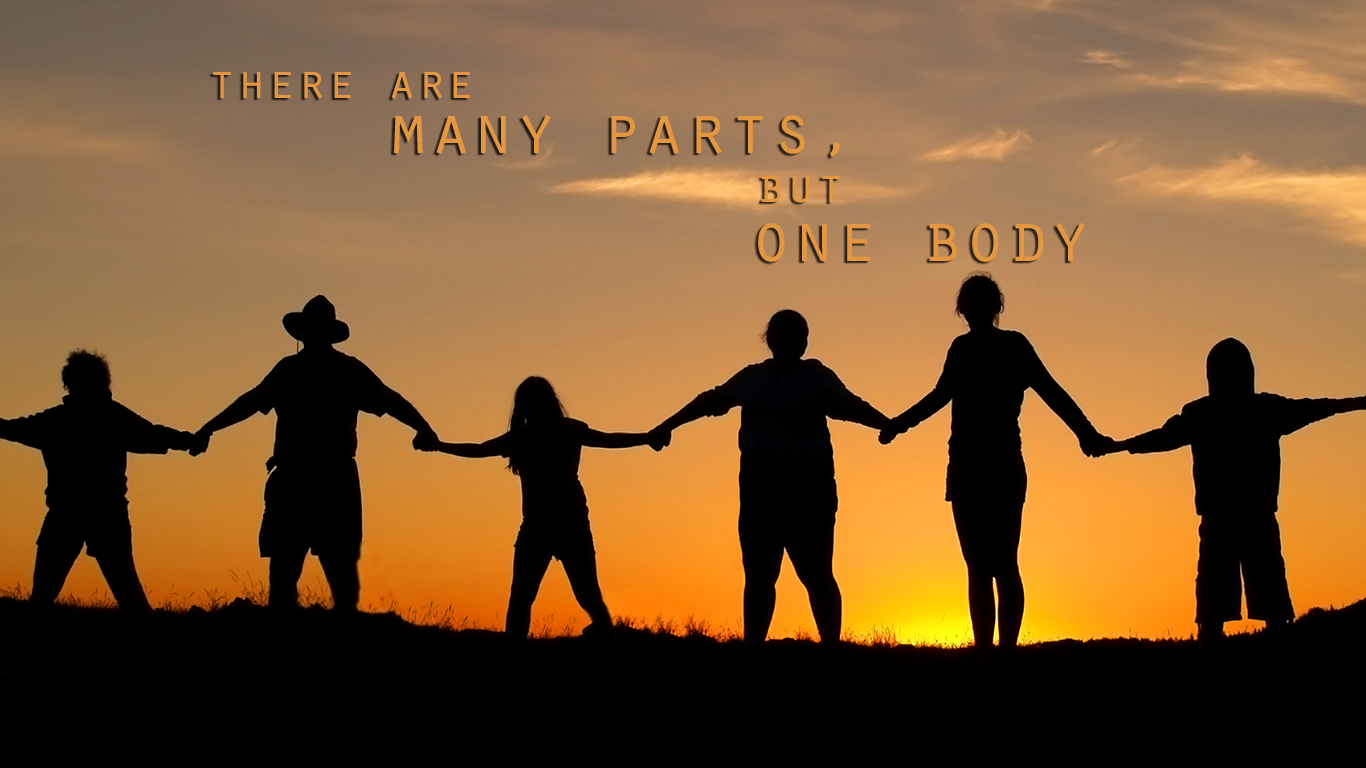
This is nearly directly the opposite of St. Paul’s usage of member in the sense of a part of body. In his first letter to the Corinthians, St. Paul emphasizes the uniqueness and irreplaceability of each part:

Now the body is not a single part, but many. If a foot should say, “Because I am not a hand I do not belong to the body,” it does not for this reason belong any less to the body. Or if an ear should say, “Because I am not an eye I do not belong to the body,” it does not for this reason belong any less to the body. If the whole body were an eye, where would the hearing be? If the whole body were hearing, where would the sense of smell be? But as it is, God placed the parts, each one of them, in the body as he intended. If they were all one part, where would the body be? But as it is, there are many parts, yet one body. The eye cannot say to the hand, “I do not need you,” nor again the head to the feet, “I do not need you.” – 1 Cor 12:14-21

God has created each of us as a unique image of Himself, with a unique purpose in the Body of Christ. That’s an exciting thought, but it also underscores the challenge of a one-size-fits-all approach to sharing our faith and the importance of each of us spending time with God to discern His purpose.

It is also important, however, not to compromise the truth of our faith in an effort to find our own path. The gospel reading a day or so after I finished reading Lewis’s essay was Matthew 5:27-32—in part:

If your right eye causes you to sin, tear it out and throw it away. It is better for you to lose one of your members than to have your whole body thrown into Gehenna. And if your right hand causes you to sin, cut it off and throw it away. It is better for you to lose one of your membersthan to have your whole body go into Gehenna.”

Our Lord is speaking in hyperbole, exaggerating to illustrate how seriously we must take repentance and avoidance of sin with our own bodies. The Body of Christ—the Church—exists for our salvation, but just like any body made with human parts, it too is prone to error and illness, and susceptible to temptation, comfort, and pleasure. Our members sin, and although the Lord desires everyone to be saved, He gives us only one way: Himself—“I am the way and the truth and the life. No one comes to the Father except through me” (John 14:6).

Jesus in Scriptures. Jesus in the Holy Catholic Church. Jesus in the sacraments, especially the Holy Eucharist. This is the path we’ve been given, and the only path we know leads to salvation. As members of the Body of Christ, it is our call to obey the Head, to pick up our cross and follow, and to bring as many others with us as we can.

St. Teresa Benedicta of the Cross (Edith Stein) said, “Do not accept anything as the truth if it lacks love, and do not accept anything as love which lacks truth! One without the other becomes a destructive lie.”

There is no good compromise. Nothing short of the Truth satisfies, and Love cannot exist without it.