Such fools, these followers of Jesus. Witless tradesmen, traitors, cowards, and louts, smelling of dust and sweat and fish—with a carpenter to lead them! The honest one, Nathanael, spoke well when he asked, Can anything good come from Nazareth? Yet even he was smitten—by a wandering woodworker!
And then what? This Jesus rides into Jerusalem like God’s gift to humanity, picks a fight with the scribes and scholars, and blasphemes before the high priest. Who could stand for it? They had him flogged and humiliated, beaten within an inch of his life—they gave him every opportunity—and still he would not repent. So they had him crucified.
Great wickedness demands great atonement.
Such disciples! Most of them fled when God’s arm was revealed. Only the young one, John, stuck it out to the end. His mother was there, too, I hear. Poor woman. She raised him right, by all accounts, and this is her thanks: a criminal in an early grave. She must be proud.
They’ve been in hiding since. What would you do, if you left your home and livelihood to follow your heart’s desire, only to see it crushed completely and come to nothing? They say he worked wonders: fed the masses, healed the sick, even raised the dead! But how could that be, unless he came from God Himself? And why would God would allow his servant to be profaned so publicly, so completely—on the Passover, no less! Why could he not save himself?
Unless…
But no. Nothing short of bodily resurrection could make up for so great a loss. For the man Jesus to redeem Himself and his followers, He would have to burst from that tomb of his own accord, bathed in light and breathing God’s own spirit, baptizing in fire as the beheaded Baptist foretold, with angels as His heralds and judgment on His lips. He would have to show Himself victorious over not only worldly powers, but over sin and death itself.
Some say he will. Just imagine: the stone rolled back, an empty tomb, the astonished guards. Imagine the embarrassment of the Romans, the recriminations among the Jewish leaders, the joy and wonder among His followers.
Mercy! Who could stand before so great a Redeemer as that?
On that day, may every knee bend at His holy name. May He find a people worthy to be called His disciples.
And may I be one of them.
 This urgency is particularly edifying to me. Not only do I have a marked tendency to overestimate what I can achieve in the time I have, but I am also tempted more to presumption than despair. In other words, I’m inclined to coast and hope for the best—which is fine for a thing with wheels, but on two legs, usually turns into a long tumble downhill. Continue reading
 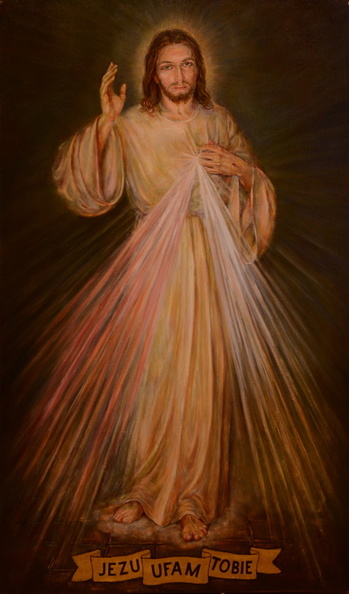 “Proclaim that mercy is the greatest attribute of God.” – Jesus to St. Faustina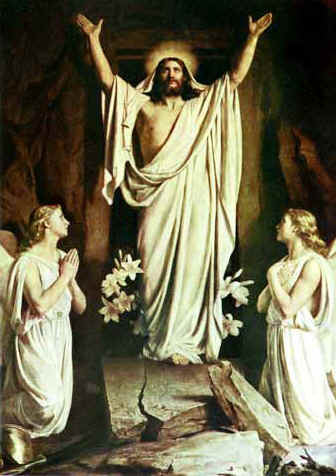
 Archangel Stomp