
Lord, teach me to be generous. Teach me to serve you as you deserve; to give and not to count the cost, to fight and not to heed the wounds, to toil and not to seek for rest,to labor and not to ask for reward, save that of knowing that I do your will.
– St. Ignatius of Loyola
– St. Ignatius of Loyola
This has been the shortest summer of my life.
I realize that speaking about summer in the past tense is part of my problem. But this summer, in particular, has emphasized how brief our time in this world actually is.
It has been a summer of firsts and lasts. Our first child graduated high school, so after his last wrestling banquet, prom, and awards night (and his first trip to the doctor for stitches), we attended our first graduation and registered for classes at the University of Mary for the first time. My own age doesn’t bother me much, but Brendan’s does—I can’t figure out how he could be leaving for college when I’m only just out of college myself.
June and July were relentless, planning and preparing for events at church and on the home front. On July 23, Gabe and I left for Poland with a group from three area parishes to join 2.2 million other pilgrims in Kraków for World Youth Day. It was a beautiful, faith-filled, overcrowded, and exhausting trip, packed with numerous graces and more than a few trials. We returned on Wednesday, August 3, to a house full of guests getting ready for Brendan’s grad party/college send-off on Saturday. On Sunday Jodi and I had our marriage blessed with a number of friends unknown to us when we got hitched 20 years ago, then went home to clean up from the party before Vacation Bible School, which started Monday.
Finally, on Thursday of VBS week, I left with Brendan for the Jesuit Retreat House in Demontreville. After the noise and chaos of the previous few weeks, three days of silence and reflection alongside my soon-to-be college-bound son seemed just what I needed.
On Thursday night, one of the priests advised us to pray specifically for whatever grace we hoped to gain from the retreat. Here I made a mistake: I had been anticipating rest and recuperation, but in that moment, my soul blurted out, “Intimacy with you, Jesus—I want to be close to you!”
I went to bed Thursday night expecting to sleep soundly and long for the first time in weeks. Instead I tossed and turned and woke multiple times, stiff and store and thirsty. In the wee hours of the morning, as the sky began to pale, a single verse from the Gospel of Matthew took root in my head: “Foxes have dens and birds of the sky have nests, but the Son of Man has nowhere to rest his head” (Matthew 8:20).
My eyes opened. I had prayed for intimacy with Christ and had been given the smallest taste: I was lying awake, exhausted, aching, and alone, with no one to talk with but my God. I prayed. I gave thanks for this new perspective. I slept peacefully, if briefly, until the sun rose.
This lesson—that intimacy with Jesus brings both suffering and peace—is not particularly profound, but it is important. Like a child, I had desired the benefits of heaven and God’s love without considering deeply what might be required of me. I think we do this often. Heaven sounds great if admission is free.
The retreat master offered another lesson, throughout the weekend. He told us to remember that the Holy Spirit is the Consoler: God does not motivate through discouragement, but encouragement. He wants us to take heart, not lose heart—and if He gives us a rock, it’s to build, not to bloody ourselves. Whether we seek intimacy with Jesus or not, things will change, people will come and go, time will fly, death will come. But with Christ, we can take heart: He has walked this road before, and it leads home.
O Jesus, our life here is short, and we cannot save time, but only spend it. Help me not to hoard the blessings I’ve been given, but to share them, and to pour myself out completely in union with you. Amen.

 Mark Hart is a former Catholic youth minister, self-proclaimed Bible geek, and vice president of LIFE TEEN…and a recovering cultural Catholic who was just going through the motions in his younger years. Blessed Are the Bored in Spirit: A Young Catholic’s Search For Meaning is a short (less than 150 pages), light, and humorous look at the temptations, attitudes, and obstacles that keep teens and adults lukewarm in their faith. If you’ve heard Hart speak (
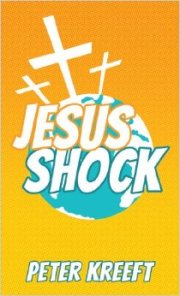 The title and cover of Peter Kreeft’s 176-page Jesus Shock make you wonder if it’s by that Peter Kreeft. It is. Kreeft is a professor of philosophy, lecturer, and author of countless books on theology, philosophy, history, and apologetics — but Jesus Shock is the result of asking God, “What do You want me to write?” The answer, he says, was “Me.” Kreeft asks questions of his readers to help them probe their knowledge of and attitude toward Jesus, and uses Scripture to show how the Incarnation, the God-Man, the Word of God and Savior of the World, is everything we long for and anything but boring. This a somewhat deeper and more academic read that Mark Hart’s book, and more clever than humorous, but still very accessible for adults and motivated teens. It’s a good book for self-reflection or discussion.
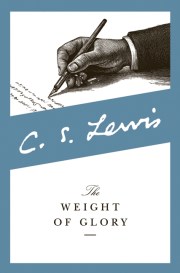 And now for something completely different: The Weight of Glory by C.S. Lewis is a collection of beloved homilies, lectures, and essays by the great writer and apologist, on topics as diverse as the problems with pacifism, why study of the liberal arts matters, the challenge of forgiveness, the incoherence of a strictly scientific worldview, what membership means (and what it should mean), and more. These individual pieces are not directly related to each other, except by authorship, but they present a picture of Lewis’s Christian outlook and concerns about the direction of modern culture that have stood the test of time and are perhaps more relevant today than ever. If you enjoy Lewis’s writings beyond the Narnia series, or if you want to dig more deeply into Christianity in the modern world, brew some coffee, get comfortable, and enjoy. This book is great for personal reflection and deeper discussion, especially if you like stretching your intellectual muscles a bit!
 Archangel Stomp