A Year Apart: Reflecting on My Father’s Passing

One year ago today, my father passed away.

I flew to Michigan early that morning with the experienced observation of a close family friend ringing in my head: It won’t be long. The flight was flawless and landed early. When the rental car clerk learned why I was in Michigan, he expedited everything, and I was on the road in minutes. Traffic moved. The pavement was dry. I drove the limit and made myself relax, reflecting that this was unfolding in God’s time, and I would arrive when I should.

I arrived just in time. My sister came out to greet me in the driveway and said she thought Dad may have just stopped breathing. I went in and held his hand, which was warmer to my touch than it had been in years. I spoke to him softly, telling him it was okay, telling him to go to the Lord and not to be afraid, telling him we were okay and would take care of each other. 

+     +     +

Continue reading
Byline: J. Thorp

I was doing some work for an old friend and former employer today and found myself reflecting on the wide variety of writing I’ve undertaken for pay in the past 30 years. Beginning as an undergraduate working in the Yale School of Music Concert Office, I’ve been creating marketing materials and writing profiles, features, articles, and speeches on everything from interior design to kung fu to the public impact of higher education.

So, just for kicks, here are a few recent bylines I’ve rediscovered. For those that are available online, I’ve included links.

Continue reading

The Prodigal Communicant

I love Sundays. Generally, we begin with Mass, then brunch with whomever is home. We clean up as a family, then maybe read or take a nap. In early afternoon, we might tackle a small project together or go for a drive (maybe to pick up some more flowers for the front yard). Then we’ll have a snack or a treat and play a game or take a long walk. We come home, prepare and eat dinner together (and clean up again), then watch something we can all enjoy before prayers, bed, and the start of a new week.

When Trevor was home, 11:00 AM Mass was the norm: He loved to serve ad orientem, with incense and chant. Lily, on the other hand, struggles with both smoke and crowds of people, so she prefers 7:30 AM—which means most Sundays, even coffee waits until after church.

Unless Jodi and I are serving, arriving early for 7:30 AM Mass has proven to be a challenge, and too often I find myself throwing a quick salute to Father as we scurry to our pew before the processional. As a result, frequently my mind is racing when I kneel to pray and then stand as the music begins. I usually arrive at the Collect (the first “Let us pray…”) with my intentions intact, but—unless I’m a reader—somewhere between first and second readings, my mind begins to rush ahead.

So, brunch this morning…we have enough eggs, but the sausage isn’t thawed yet. And we need fruit. We could stop on the way home. Should probably fill the car, too—but I guess that could wait if we’re going run to Ace later for mulch.

Mulch. What else did we need at Ace?

Continue reading

All That Wasted Time…

Several weeks ago I resumed praying the St. Joseph the Worker prayer on a daily basis for the first time in years. The Church teaches that the Holy Spirit calls us to prayer, and this was definitely a Holy Spirit inspiration. For the past month, time and again, I’ve been convicted by a few brief lines near the end of this prayer:

…having always before me the hour of death and the accounting I must then render of time ill spent, of talents unemployed, of good undone, and of my empty pride in success, which is so fatal to the work of God.

Prayer to St. Joseph the Worker

I don’t know about you, but I waste a lot of time. Oh, I get done whatever needs to get done, but that’s a low bar. The real question is, how do I spend the bulk of the time given to me?

I’m working on my old ’66 Ford pickup this summer. Three years ago it was a daily driver, until it conked out along the roadside between Elk River and home. Since then, it has sat in our driveway, in various stages of disassembly, while I tried to track down the problem and fix it. I’ve had the diagnosis and the parts for two years or so, and finally got it running again last month.

What took so long? First of all, there was the anticipation that the job was harder and the problem likely bigger than I understood. I was so worried I wouldn’t be able to finish the job that I failed to start it!

But more than that, I chose not to do it, because I had other projects, other priorities, other things I’d rather do. For example, in the past three years:

Continue reading

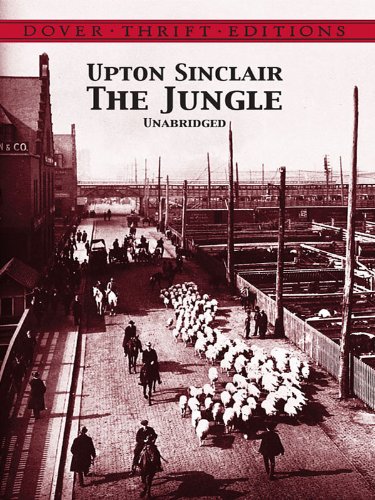
Book Break: The Jungle

A few weeks ago, I attended a day-long training to become a home visitor for our local conference of the Society of St. Vincent de Paul. The most compelling part of the training was the section on what poverty looks like, from the perspective of the person living through it. This segment of the training was led by a man who was born and raised in some of the roughest areas of Chicago and Minneapolis, who was hired by the Society of St. Vincent de Paul as a teen and loved and accompanied for years, through numerous trials and triumphs. Today he is a college-educated husband and father, a successful manager and talented speaker on the state and national level, and a Vincentian for life.

The training was thought-provoking and convicting; it, along with learning more about my own ancestors’ struggles with poverty before I was born, led me to want to dig deeper—which in turn led me to another unread book on my shelf: The Jungle by Upton Sinclair.

Sinclair was an influential muckraking journalist, author, activist, and political candidate at the turn of the 20th century. The Jungle is his fictional but detailed and realistic account of power, corruption, and poverty during this time, particularly in the stockyard district of Chicago. The book follows one immigrant family from Lithuania, who moves to America on the promise of plentiful work for good wages, and finds a corrupt system of capitalists and politicians of every stripe, at every level, keeping prices high and wages low, controlling everything from housing and food supplies in the neighboring slums to law enforcement, inspections, and elections—and driving workers to desperate measures to avoid death by illness, exposure, or starvation.

Continue reading