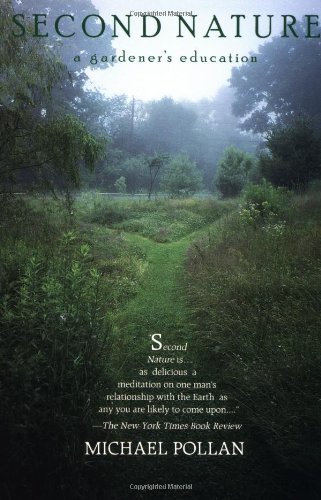
Book Break: Second Nature

I received a somewhat uneven education at Yale University, primarily because I was a 17-year-old kid when I arrived, and given a smorgasbord of courses and little guidance. Yale’s approach was to require a certain number of courses from each of four groupings, plus the prerequisites for your degree. With that as my framework and anthropology as my major, I had plenty of room in my schedule to take whatever caught my eye, from Herpetology to Polish to The History of Jazz.

The history course catalog, in particular, lured me down a rabbit hole: I took two History of the American West courses back to back, essentially two semesters following the colonial frontier westward over the history of Europeans on this continent, then a course called North American Environmental History, which traced our peculiarly American views and impacts on land, nature, and the environment over that same period.

That’s a long preamble to a book review.

Continue reading
A New Christmas Poem

I have a story in my head, of an old shepherd minding the camp while the younger men take the herds out to graze. At first I thought to tell the whole story in verse, but that proved to be too much. Then I began to write the story, with little bits of verse by the old shepherd, interspersed throughout. That also proved too much to finish by today. But the bits of verse hung together fairly well, so I polished them up a bit this morning. The story will come as I have time.

The Shepherd’s Rhyme

by Jim Thorp

O fallen are the souls of men and death the sinner’s doom

And who but you, O Lord of all, can make the desert bloom?

And who but you, O Lord of hosts, can split a winter’s night

To flood the weary world below with wonder, warmth, and light?

The heart, a stony seed within; a man, the dusty ground

And who but you, Creator blest, can make new life abound?

And who but you, O Lord above, our sunshine and our rain,

Can soak and swell a shrivelled soul and make it sprout again?

The crocus blooms, the rocks rejoice, the dry rills run with water

The heavens ring: A king! A king! is born to virgin daughter!

c.f. Isaiah 35

Laughs and Life Lessons at Moonshine Abbey

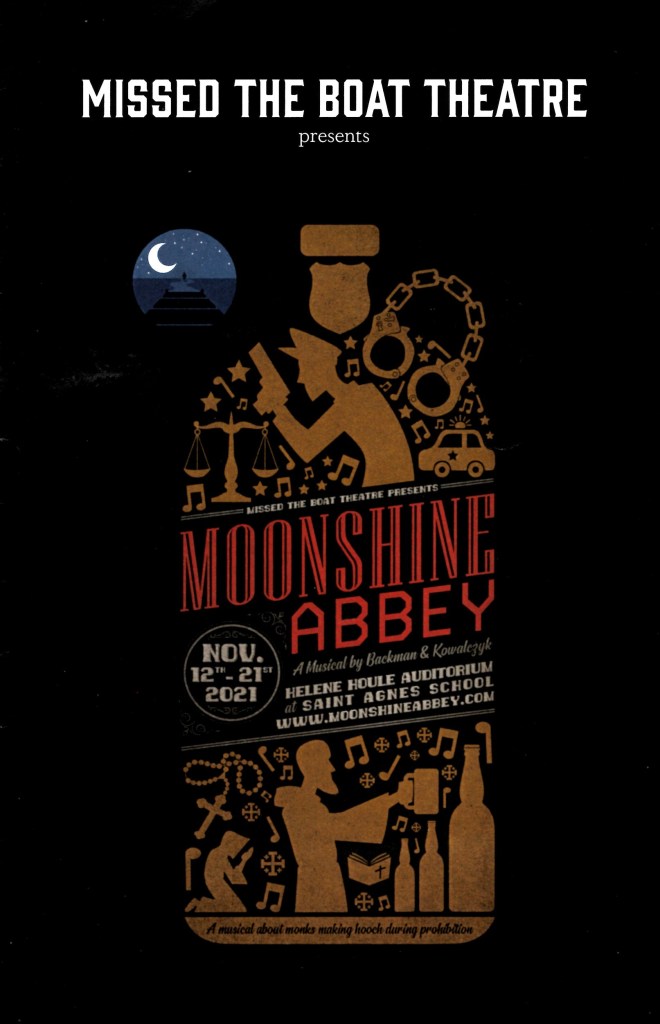
In case you missed the news, we’ve a playwright in the priesthood: Fr. Kyle Kowalczyk, pastor of the Church of St. Maximilian Kolbe in Delano, has also written, directed, produced, and acted in theatrical productions since high school. This week and next, his Catholic community theater company, Missed the Boat Theatre, is performing Moonshine Abbey, an original musical by Fr. Kyle and composer Sam Backman. It tells the story of a community of monks trying to preserve its rule, identity, and livelihood of brewing beer and distilling spirits during Prohibition.

Continue reading

What Discernment Looks Like—for Us

Many of you reading know that Jodi and I have been discerning the possibility of me becoming a deacon. A deacon in the Catholic Church is an ordained member of the clergy, meaning that like priests and bishops, they receive the sacrament of Holy Orders. An ordained deacon is a deacon for life. If unmarried, he remains unmarried; if married, he does not remarry after the death of his wife. They generally serve the Church and assist priests at the altar during Mass, with certain pastoral and sacramental duties, and with teaching and preaching. Generally, they maintain their careers outside the Church, which uniquely positions them as clergy out in the world on a regular basis.

The Church recognizes two types of deacons. Transitional deacons are ordained deacons on their way to becoming ordained priests. Permanent deacons are ordained deacons who do not intend to become priests but have answered God’s call to serve the Church in this deeper way.

 In the Catholic Church, deacon is not a volunteer position or a job, but a vocational call—and for a married couple that has a vocational call as husband and wife, it ought to be a big decision. As the Institute for Diaconate Formation (IDF) here in the Archdiocese of Saint Paul and Minneapolis often puts it, Wives need to be comfortable with their husbands marrying another woman, the Church.

Continue reading

Extended Book Break: The Space Trilogy by C.S. Lewis

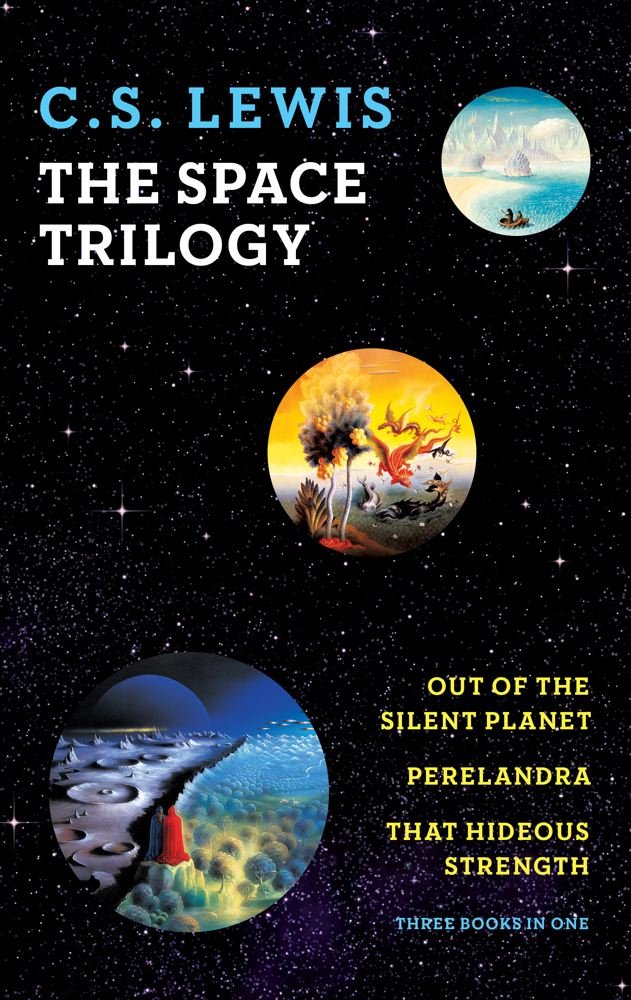
I was blessed, on my trip to Michigan and back in the past few weeks, to listen to The Space Trilogy by C.S. Lewis in its entirety. The version available on Audible, narrated by Geoffrey Howard, is approximately 24 hours of continuous listening, and worth every minute. The three books of The Space Trilogy were certainly inspired by classic science fiction of the last century, but combine these influences with fantasy, mythology, horror and Christian theology.

  • The first book, Out of the Silent Planet, is the most sci-fi of the three, delving into interplanetary space flight and exploration, extraterrestrial life-forms and more. A British linguist named Ransom is shanghaied onto a spaceship bound for a nearby planet known by its native inhabitants as Malacandra. He escapes his captors to discover multiple rational animals with very different appearances, skills and abilities, and cultures, who nevertheless live together in good-humored and mutually beneficial peace. Slowly Ransom abandons his earthly notions of power, control, and desire and strives to help the natives against the other Earthlings who seek to exploit them.
  • The second book, Perelandra, is a science-fantasy tale also involving interplanetary travel and extraterrestrial life to frame a retelling of the temptation of Eve in the Garden of Eden. Ransom agrees to travel to the planet Perelandra on an urgent mission, but with no idea what that mission is. He encounters a lone humanoid woman who lives in harmony with the world and creatures around her and is searching for her man. An old adversary arrives from Earth to tempt the woman into disobeying the higher powers she knows on Perelandra, and Ransom must again fight against his fellow man as well as demonic activity to save a pristine world from importing Earth’s sin.
  • The final book, That Hideous Strength, is as long as the first two books combined and takes place entirely on Earth, specifically, in England. It continues Ransom’s tale in a story combining dystopian fiction, Arthurian legend and horror to critique materialism, modernism, politics, education and contemporary ideas of gender and marriage. It follows a young sociologist striving to get ahead in his career by joining a new and increasingly powerful national scientific insitute, while his wife, who is struggling with bad dreams that appear to predict the future, falls in with a small band of local resistance led by an eccentric old linguist who is rumored to be contact with powerful extraterrestrials who are pure spirit and are preparing for a final battle over the fate of the Earth.
Continue reading