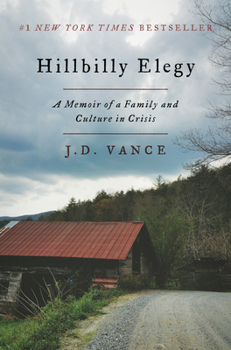
Last summer, when we were visiting Jodi’s parents, her mom gave me a copy of JD Vance’s memoir Hillybilly Elegy. I think she had picked it up for herself, but we were talking about the upcoming election, and she thought I had a better chance of reading it sometime in the near future. She said I could tell her about it when I did.
Well, Momma Venjohn, here you go.
In case you avoid the news: JD Vance is a young, former US senator for the state of Ohio, now vice president of the United States of America. He is a Marine Corps veteran, a graduate of Ohio State University and Yale Law School, and the author of the afore-mentioned memoir, a book-length reflection on a traumatic childhood, poverty and addiction in Appalachia and the Rust Belt, and the dysfunctional family connections that somehow got him through where so many others flounder.
Because this is generally a family-friendly website, I’ll start with a warning: This book is chock full of strong language and adult themes. Vance’s relatives, especially his beloved grandmother, swear like sailors and talk with raw frankness about the vice they see or suspect around them. His story is rife with drugs, alcohol, depression, and violence. It is not for children and may not be for you.
For me, it caught my attention by focusing first on his family history and demographics. Vance is descended from poor Scots-Irish immigrants who settled in Appalachia to scratch out a living in the hills before spreading into Rust Belt cities for industrial jobs. They are a tough and insular people, fiercely loyal to kin, faithful in their way, but not overly religious. They are often vulgar and violent even toward close relations, but tolerate no interference or even criticism from outside the family.
The Thorp side of my family is also Scots-Irish in part, and some of this resonates with stories I’ve heard from within my own family. From what I’ve heard (family: please weigh in!), my father’s family was not well-off, dysfunctional at times but fiercely loyal, mistrustful of outsiders and organized religion—in fact, one of the bits of wisdom Vance shares from his grandmother I heard almost word-for-word from my dad, and I believe he heard it from his Little Grandma.
Another reason the story resonated with me, in particular: Vance’s description of arriving at Yale Law School and realizing he’s not in Appalachia anymore parallels my outside perspective as a Yale undergrad from rural Michigan in the early 1990s.
The book is an engaging mix of family narrative and personal reflection with practical policy discussion around issues of generational poverty, addiction, and trauma. It is a bit repetitive and contradictory at times—the result, I suspect, of being written by a young man still in the process of healing and coming to terms with his past.
For me, it was a compelling and quick read, culminating in Vance meeting his now-wife, Usha, a woman from a very different background who nonetheless saw something in her husband and, instead of throwing up her hands when his upbringing brought out the worst in him, helped him to see that he could break from the anger, violence, and insecurities of his past and still be “loyal” to the hillbillies who raised and encouraged him.
The book stops short of Vance’s conversion to the Catholic Church. Given his citing of Church teaching in his role as Vice President, I don’t doubt that is a interesting story as well. You may take or leave our current national administration, but Vance’s book and faith give me some hope for his (and our) future. His story underscores the possibility, however slim, that someone born without wealth or connections can still rise to lead in America.
Thank you, Grandma Pam. I enjoyed it!
 Archangel Stomp